The eBook version of the just revised Index of Japanese Swordsmiths is now available as e Swordsmiths of Japan (see link here). I made a revision, not an entirely new book, so everyone who has purchased the initial e Index of Japanese Swordsmiths should be able to download the revised edition from their Lulu account for free. However, Lulu changed their eBook publishing system a while ago and those who got the e version of this publication before that time were quasi cut off from future free downloads of revisions. So my suggestion: All those who purchased the e Index of Japanese Swordsmiths, please try to download the revision. If it works, everything is fine as you got it after the change. If it says “This eBook is no longer available for download.”, please get in touch with me via “markus.sesko@gmail.com” and I will provide you with further information about how you get your free revision via a filesharing programm. I kindly ask you to provide me with any info that you indeed got the initial eBook. This is just to keep handing out free copies within limits as this project represents years of hard work and should therefore be remunerated accordingly. I will not stubbornly insist on any “hard evidence” and handle this on the basis of trust. Apart from that, I will keep your emails on file so that I can provide you with any further updates in the future. Thank you.
Category Archives: Uncategorized
NEW: SWORDSMITHS OF JAPAN – 3 Volumes
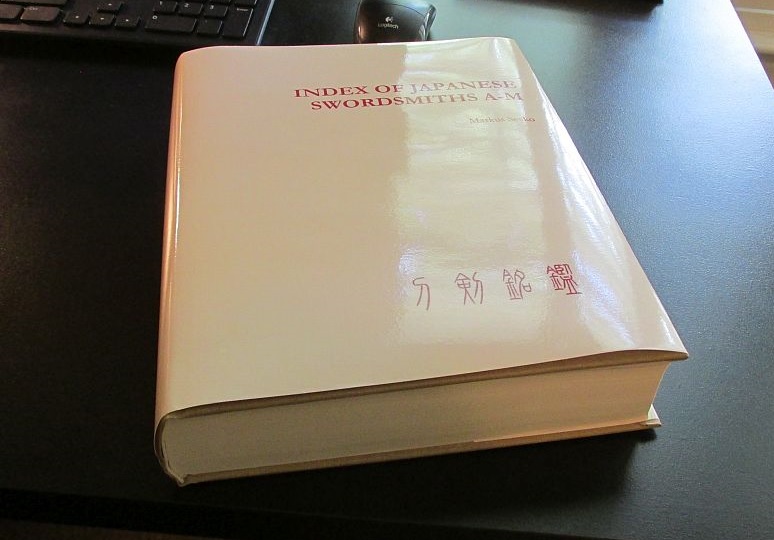
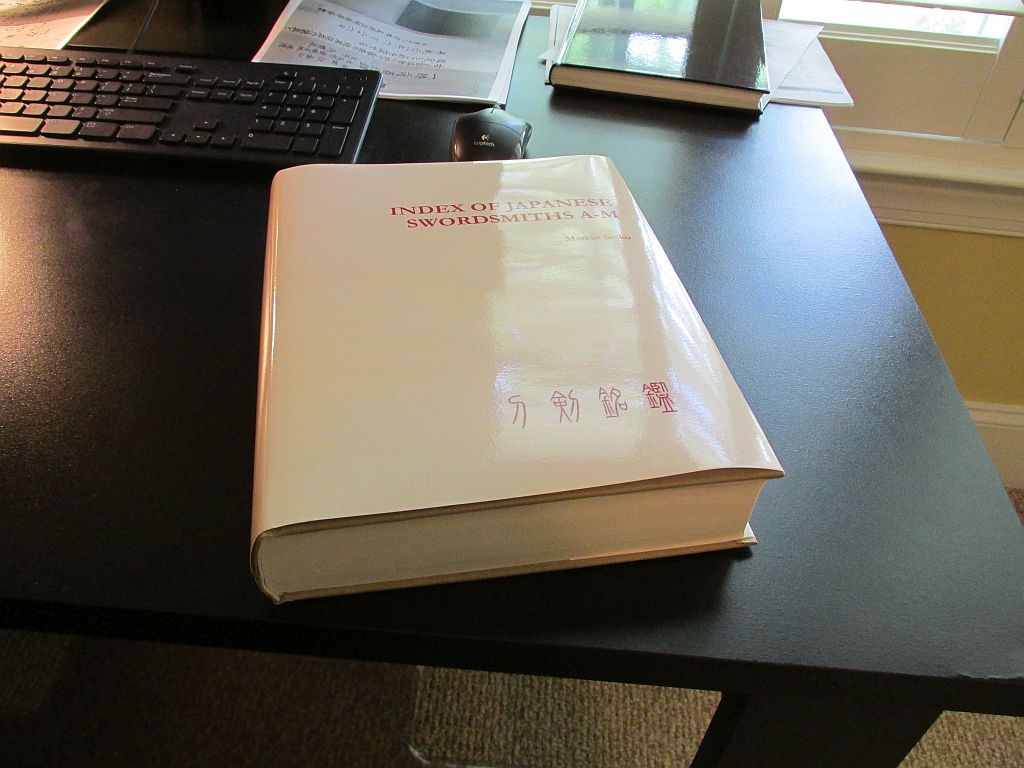
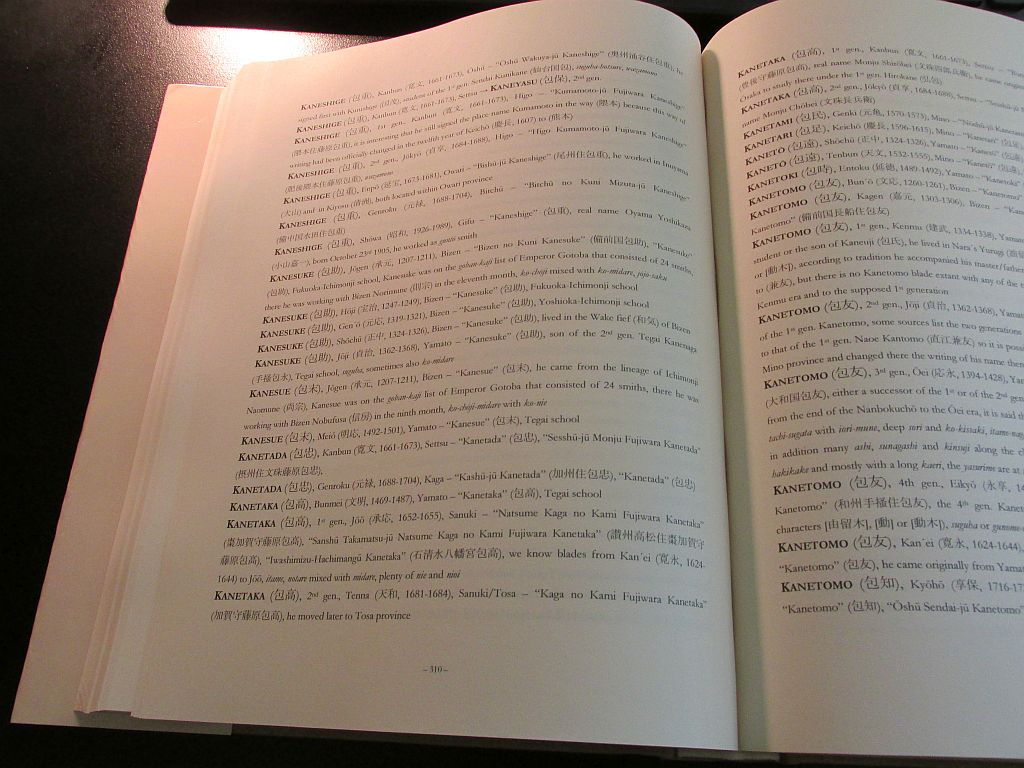
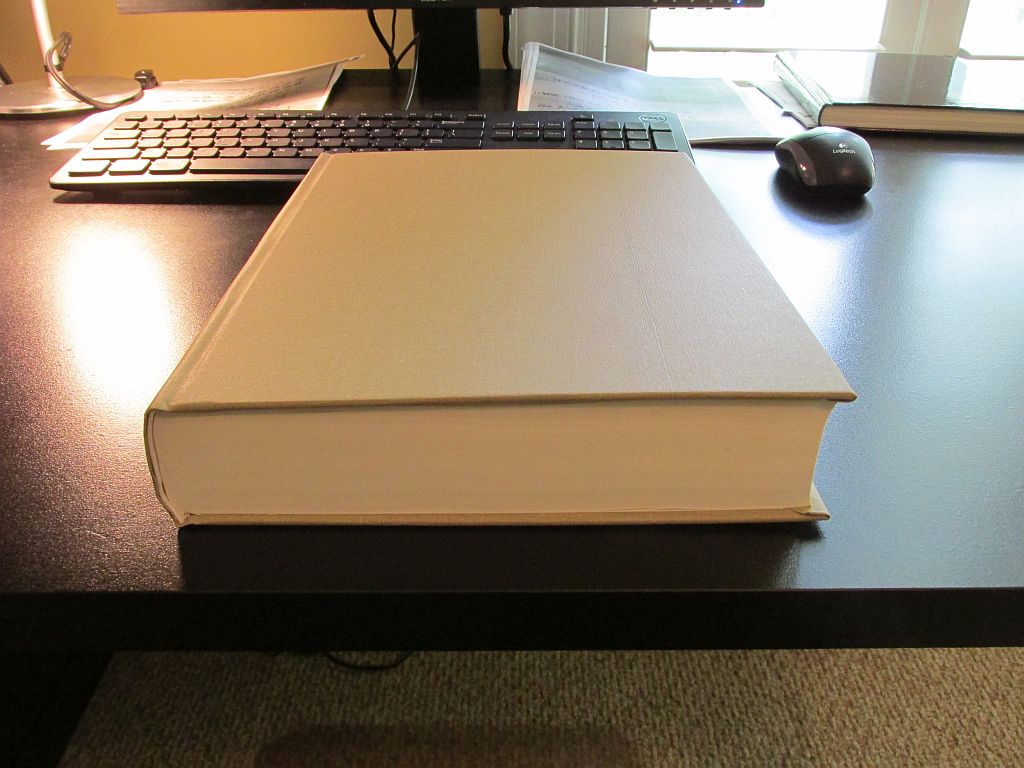
It’s done. The revised and enlarged three-volume hardcover set SWORDSMITHS OF JAPAN AKI-KUNI, KURA-SANE, and SATO-ZEN, formely titled Index of Japanese Swordsmiths, is out now and finally easily available outside of Europe! It is letter format, black & white on cream paper, a tan linen hardcover with a glossy dust jacket, and each volume has about 500 pages. The real thing looks, except for the changed title, pretty much like my test print introduced earlier here (or see picture below).
As for kotō, shintō, and shinshintō smiths, this publication qotes the wazamono ranking that goes back to revised edition of the 1815 published list of wazamono of the Kaihō Kenjaku (懐宝剣尺), and the so-called Fujishiro Ranking used by Fujishiro Yoshio and Matsuo in their 1935 publications Nihon Tōkō Jiten – Kotō Hen and Nihon Tōkō Jiten – Shintō Hen. When it comes to gendaitō and especially WWII-era smiths, this publication includes the ranking of about 300 contemporary smiths carried out by Kurihara Akihide (栗原昭秀) in 1942 under the title Seidai Tōshō Iretsu Ichiran (聖代刀匠位列一覧). In addition, also the five ranks and the special rank of the sixth national sword making contest, the Shinsaku Nihontō Denrankai (新作日本刀展覧会), from 1941 are quoted where about 250 swordsmiths were awarded. Apart from that, I also added the info if there are blades designated as kokuhō and/or as jūyō-bunkazai by a smith (marked by two different symbols).
As indicated in my update posted the other day, I am now more flexible with pricing and offer the set for 179.70 USD (59.90 USD each) instead of the initial 280 USD for the two-volume set. Also the timing is pretty good right now as there are four days left of Lulu’s Mother’s Day sale that saves you 20% on print books. So please use code MOM20 until May 10th to make use of this great offer. Please give me a few more days to finish the eBook version as I have to unite the three volumes into one file.
Links to the books are found below (please click on preview of the first, i.e. the AKI-KUNI copy to lean about the new layout):
Supplement:
The dust jacket version only ships from the US so there is also an “international” version (marked by the supplement “intl.”) that comes as standard casewrap hardcover. Please see link below:
International Volume 1: AKI-KUNI
International Volume 2: KURA-SANE
International Volume 3: SATO-ZEN
*
Preface to the Revised Edition:
“Three years have now passed since I published my two-volume Index of Japanese Swordsmiths and, although it seems to be a pretty short period of time for a second edition, it was indeed necessary for several reasons. First of all, the English version contained left-over fragments of the German version and just too many typos that were missed in the proofreading. This brings us to the second reason for the early update, the layout. It was brought to my attention that the font was just too small to work comfortably with the two volumes. And the third and most important reason for the early update is the fact that the initial English version was never made available to the international market as it was supposed to be. After struggling with makeshift options to make the set accessible to non-European readers, and with the aforementioned shortcomings in mind, I decided that it was time to tackle a revision. First of all, the layout was changed and a different, larger-sized font and even larger capitalized headers (i.e. smith names) which mark each entry were chosen. Due to new reference material not available at the time the initial edition was published, the revised edition was enlarged by more than 300 gendaitō, but of course several other smiths were also added who were missed the first time round. In addition, historic portraits of smiths, about 400 photographs of contemporary smiths, and pictures that contribute to the understanding of an entry were added. This resulted in an increase of about 600 pages which therefore made it necessary to split it up into three volumes. I also integrated the overview of nyūdō-gō used by the swordsmiths to enable the (non-ebook) reader to find smiths on the basis of their pseudonyms. Last but not least, a different title had to be chosen, on the one hand because the now longer set represents more of an encyclopedia of swordsmiths rather than an index, and on the other hand to avoid issues and confusion with the initial publication. With this, I hope that the revised and enlarged Swordsmiths of Japan becomes the standard work in the West for research on Japanese swordsmiths as it is still the only comprehensive non-Japanese publication of its kind.
Early Summer 2015
Markus Sesko”
Index of Japanese Swordsmiths – Update
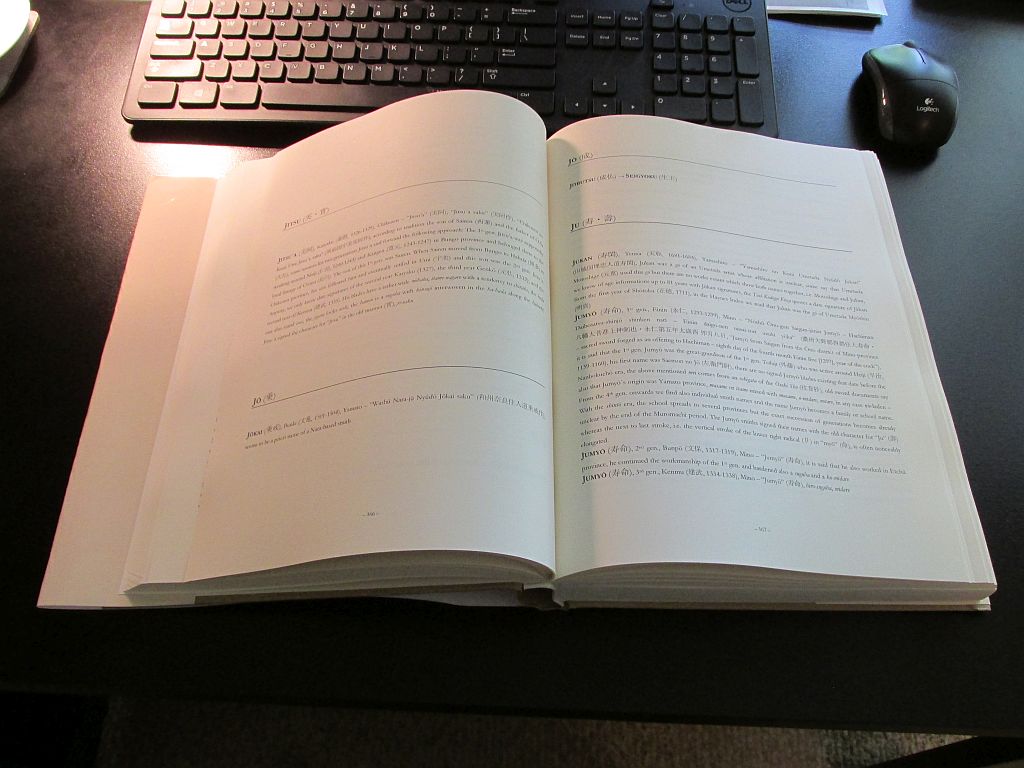
Apart from the eBook version, the poll has shown that by far most are preferring a three volume option that is enlarged with pictures. I ordered a proof copy the other day just to see how this might work and I have to say, I am pleased with the result. It is letter format, black & white on cream paper, a tan linen hardcover with a glossy dust jacket. The pictures below show the test run with about 700 pages so you have to think of about 200 less and imagine the result as three volumes 🙂 That will be the final version I guess. As for the revision, I added quite a bunch of smiths and about 300 gendai smiths and updated the info of about 500 of the gendai guys (due to new material I gathered for the upcoming Gendai project). Also I decided to add illustrations as mentioned but I refrain from posting pictures of blades, at the one hand as a single pic of a blade is mostly not helpful anyway, and on the other hand as this decision provides a good point to stop. That means a small illustration of a characteristic feature of a hamon is ok but adding randomly blade pictures here and there just unneccessarily bloats the project. Also new is a list of gô that I will add, i.e. you are now able to look up all smiths who used for example the gô “Ikkansai” and so on (well, this is more a practical plus for the print books). Below I will present some pics of the proof copy so that you can get a better idea of what this project might look like when finished. Well, I am not sure if I will keep the title Index of Japanese Swordsmiths because on the one hand, the revised edition does no longer feel like an “index,” and on the other hand, it will interfere with the contract I still have with BoD for the initial version and which is not terminable until later this year. So take a look at the pics and feedback is greatly welcomed (still work in progress so nothing too late). Thank you for your attention and the next part of the Kantei series should be online in a bit.
Poll
Whilst doing the correction and revision of my Index of Japanese Swordsmiths, I arrive due to the larger font and the modified layout at a considerably larger number of pages, in concrete terms about 1,500 instead of the about 900 pages of the initial version. This raises the following question: Should I stick with two volumes, i.e. with the initial format of the index, what means a A-M and a N-Z volume but each now about 700 pages? Or should I instead go with three volumes each about 500 pages? At the same time, I am thinkin about adding some pictures, oshigata, signature details, or photos and photos of swordsmiths here and there where they might be useful supplements to the text. This in turn would mean in any case a three volume set as Lulu sets the limit of a single hardcover copy at 800 pages. In any case, I will try to set the price noticeably lower than the 280 USD (260 Euro) for the initial two volume set as the royalty/costs are far better at Lulu than at BoD where the initial set was print.
I can’t decide yet and want to start a poll to see where this might go. So if you have a second, please vote below. Thanks a lot!
And tomorrow I will post the last part of sugata-kantei before the Kantei series continues with jigane and jihada.
Small Compendium
I was informed that a kind of small data base would be nice to go with your tablet that makes looking up certain things easier. Or in other words, a searchable eBook/PDF where you have things like characters used by swordsmiths, nengo, eto etc. in one place and don’t have to work with multiple files. With this, I created an extensive list of characters used by swordsmiths, sorted on the basis of stroke order, that comes with four different grades of simplification in writing for each characters, i.e. from standard printed style over two more hand-written styles to cursive script. This should give you more room to compare, and a greater headache of course due to the increased possibilities when it comes to cursive script 🙂
Also I added an eto list where you can look up which years are possible when a smith just added for example kanoto-ushi and no specific year. And in addition, I added all the poetic and other names of the lunar months which I was able find and a little more.
Most of the information in this compendium is of course found in several versions elsewhere but this is as mentioned before just to have that all in one file. So this is going to be for free and you can download the eBook/PDF below. For those who want that as a real book, I added a plain spiral bound version to Lulu that you can order for just printing and shipping (i.e. not going to add any royalties to that of course). But you are always free to make a little donation to this blog (see link at the very bottom) if you find this file or other articles of mine useful 😉 And by the way, my Easter eBook Super Sale is going to end tomorrow Monday. So last chance to grab a copy as there will be no more sale until Christmas (Lulu is not going to issue promo codes for eBooks, this is only done manually be me, so no sense in waiting for such a code).
Thank you and probably tomorrow I will continue with the Kantei series (two more articles until the topic sugata is finished).
*
Index Of Japanese Swordsmiths – Revision
Some of you might remember the lengthy discussion we had on NMB on a revised hardcover edition of my 2012 published two volume INDEX OF Japanese SWORDSMITHS.
Well, it never worked out and the initial hardcover version never worked to be easy buyable from everywhere in the world. Also an errata and a correction of all the typos seemed to be overdue and so I decided to give it another try as a two volume hardcover copy on Lulu. With this, we don’t have to care about a minimum number of buyers to get the thing started as it is print on demand. Also the price of the set will be noticeable lower as Lulu has way better royalties than BoD.
Now doing so, I will slightly change the layout o ensure a better legibility, coming along with a larger font as I got feedback that the initial font was way too small. I attach a preview who a page of the revised edition might look like.
And with this, you all come into play as I need some feedback to enlarge my own errata done over the three years. I have created an email address of its own for this, “swordsmith.errata@gmail.com”. This is a “fire-and-forget” email address, that means I will not reply from there and just collect your suggestions and corrections. If you really have to discuss a thing or to, please get in touch with me via my regular address “markus.sesko@gmail.com”.
Thank you all for your cooperation!
PS: The eBook version will be updated too of course.
Easter eBook Super Sale
Dear Readers,
Inspired by my last year’s Christmas Super Sale and responding to the”unfairness” that eBooks are always excluded from Lulu offers, I just started an Easter eBook Super Sale where ALL of my eBooks are reduced by 50%! This offer will be valid for a week so you have enough time to decide what you want. So fill up all your tablets (or PC´s) with all the important Nihonto and Tosogu reference material you need four your studies!
If you have any questions or can´t find the one or other book, don´t hesitate and contact me via my “markus.sesko@gmail.com.
Thank you and a Happy Easter to everyone!
http://www.lulu.com/spotlight/nihontobooks
PS: I have two signed Masamune paperbacks and a signed Tameshigiri hardcover here at my place. If you want one of them, please drop my a mail (price as announcted but free shipping).
The specialist for treatment of sword cuts
Whilst translating recently a battlefield-related article, I came across the term kinsô’i (金創医) that referred to “physicians” who were specialized in the treatment of incised wounds in general and of arrow wounds and sword cuts in particular. The article did not go much into detail at this point as it was more of a general nature but that term awoke my interest and as hardly anything is available on the net on this topic, I started to do some research the result of which is this humble article.
Basically, the ancient and medieval Japanese medical system was very similar to he one in the West. That means, there were academic physicians and partly specialized and partly allround practitioners who were considered lower ranking. This lower ranking was either connected to the fact that these practitioners did not undergo that an extensive training as the physicians, or to certain religious and social stigmas associated with unclean things like blood and the like. As for Japan, the records on “physician affairs” go pretty far back, that is to say to the 8th century Taihô and Yôrô Codes. The former was merely an adaption of the governmental system of China’s Tang Dynasty whereas the latter already incorporated Japanese traditions and practical necessities of administration. Pretty much of these codes is known today as it had survived in original and transcribed forms and we find therein also a medical service statute, the ishitsu-ryô (医疾令). Depending on what you base your counting on, i.e. extant original fragments or later transcriptions of the code, the ishitsu-ryô consisted of either 19, 24, or 26 articles. It deals with the regulations regarding the training and appointment of physicians (e.g. regulations of how to become a physician, an acupuncturist, a massage therapist, a spirit-vanquisher by charms [charm healer] and so on), the duties of the court physicians (ten’yaku-ryô, 典薬寮) and the local physicians in the provinces, and the operation of medicinical-herb gardens.
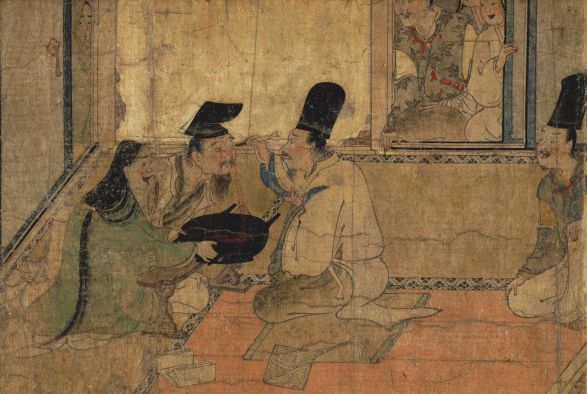
Eye surgery as seen in the late Heian to early Kamakura period picture scroll Yamai no Sôshi (病草紙).
Well, most of the then know-how and the model for the aforementioned codes was imported from Chinese mainland and so it is no wonder that also medical science, i.e. the art of healing and of preventing diseases, came mostly from abroad. There were some indigenous physicians but it is assumed that they were rather healers and shamans and that there was no systematically accumulated and handed-down medical knowledgebase. Records of visits of mainland physicians date back to the 5th century AD but a more continuous and systematic exchange of medical knowledge only started with the missions to Tang China in the 7th, 8th and 9th centuries. The main carriers of this knowledge were Buddhist monks who played a major role in the entire “mainland exchange program.” Court physicians were given court titles, a requirement anyway to be be around in the imperial palace and to see and treat the emperor, and a kind of medical hierarchy started to develop. As far as medical knowledge is concerned, the latest trends, medicines, and treatments were constantly “updated” from Jin, Western Xia, Yuan and Ming Dynasty China. But we can see major changes from the Muromachi period onwards, on the one hand as the then established Ashikaga-bakufu was now introducing a medical service statute itself, i.e. for the ruling warrior class, and on the other hand that the entire approach of applying medicine and treating patients started to change. That means, in former times, physicians basically looked up the patients’ symptoms in their handed-down books and treated them or prescribed them medicine according to what was written in there. But now, physicians started more and more to rely on personal experiences and their own lifelong studies what in turn resulted in an increased body of medical publications, although often kept secret within a school or family.
Returning to our main topic, the kinsô’i specialists for incised wounds, we rightaway have to go back again to the Taihô and Yôrô Codes. In these codes, it was distinguished between internal medicine (tairyô, 体療), surgery (sôshu, 創腫), pediatrics (shôshô, 少小), obstetrics (jo’i, 女医), otorhinolaryngology (jimoku-kushi, 耳目口歯), acupuncture (hari, 鍼・針), massage (anma, 按摩), charm healing (jugon, 咒禁), and herb farming (yaku’en, 薬園). But it has to be pointed out that the then surgeons did not carry out surgeries like we understand that term today. It was more a removing of tumors and swellings (shu, 腫) – thus the name sôshu – and treating external wounds like cuts and also burns. Later on, that means during the Kamakura and Nanbokuchô periods, the terms tairyô and sôshu were replaced by the terms naika (内科) and geka (外科) respectively. With the aforementioned significant changes in medical system over the Muromachi period, more specialists emerged and although some distinctions between tumor, furuncle, or boils removers and those who treat incised wounds had been going round since the Nanbokuchô period, there were now “real specialists” like the haremono-ishi (腫物医師, tumor surgeon), the kizu-ishi (疵医師, general wound surgeon), and the kinsô’i (金創医) and no longer just “surgeons” who performed all surgeries. And it is in my opinion safe to assume that it was the increased warfare during the Sengoku era which demanded specialized cut wound surgeons. Well, incised wounds had always been mentioned separately, for example in the ishitsu-ryô where we read that court physicians are required to provide and have in stock medicine for incised wounds. But now, treating incised wounds became a special field with a body of teachings on its own, very likely born from surgeons who had direct and constant battlefield experience similar to the European barber surgeons who looked after soldiers during or after a battle.
An advancement in the successful treatment of incised wounds came with the exchange with European physicians like the Portuguese Luís de Almeida (1525-1597) towards the very end of the Muromachi period, for example due to the introduction of surgical suture. Well, Japanese records are pretty rare on this matter but just on the basis of thinking about the difficulties of treating larger open wounds and the existence of ancient Chinese records of sutures, I think it is logical to assume that wounds have had been sutured in Japan before the contact with European physicians. On the other hand, it seems as if a kind of “reinvention” of surgical sutures took place in the mid to late Edo period, “reinventure” because Western medicine was soon treated with suspicion or “neglected as a precaution” after the sakoku (鎖国, “locked country”) foreign relations policy enacted in the early Edo period. So it is also possible that even larger open wounds were mostly just treated with compression bandages and the like. For example, we know from Muromachi-eriod records that persons injured by sword cuts were treated with medicine taken internally, e.g. ginseng, Ligusticum wallichii, or peony roots, and that bleeding was stopped by sprinkling powdered resins with names like shôroku (松緑), furuse-ma (古瀬麻), or kirinketsu (麒麟血) onto wounds. And as a painkiller, ointments of rosewood or bulrush were directly applied on the wound. Also we read of urinating in a jingasa and applying the urin to the wound as a disinfectant.
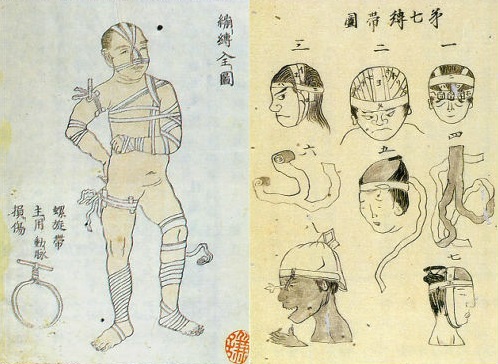
Guidance for putting on bandages from an early 19th century publication.
Last I want to deal with the question who these kinsô’i were. In view of the fact that up to the Muromachi period many of the trained physicians were actually monks and because often priests of the Ji-shû (時衆) group accompanied the warriors onto the battlefield in the role of army chaplains (jinsô, 陣僧), battlefield physicians and thus kinsô’i are often equated with monks. Well, we do know that Ji-shû priests also acted as physicians but experts suggest to be careful in this respect. That is to say, also non-ordained persons who had specialized in treating incised wounds often shaved their heads when operating in or around a battlefield in order to avoid being shot and attacked. In other words, shaving your head identified you as a member of the clergy just like the red crosses or red crescent used by present-day protected persons in armed conflicts as international humanitarian law considers them as non-combatants (whether military or civilian) and thus they may not be attacked and not be taken as prisoners of war. Also because of the fact that kinsô’i were rather of low rank, we can assume that the majority of them did not come from academically trained and “qualified” physicians but were recruited from local and self-trained practitioners.
I hope this was an interesting brief excursion to the history of battlefield-related medical staff in general and to the kinsô’i in particular, a subject that is as indicated not that widely known in sword-related fields.
Masamune Book Update
It should be safe now to re-order or order your book respectively if you were waiting for things being fixed. Please note that you should only re-order if Lulu.com has sent you a notification mail that your order was cancelled (and refunded you). So if you never got any notification from Lulu.com, just wait a little it is likely that your order went through. Again, if there are any troubles (or if you receive a faulty copy), please don’t hesitate and get in touch with me via “markus.sesko@gmail.com.” Thank you all for your patience and I hope that I don’t loose any readers due to this fiasco…
IMPORTANT: Masamune Book Update
Over the last couple of days, Lulu.com and customers of mine have informed me that there was some issue with the PDF file that serves both as basis for the print and for the eBook. In the meanwhile, some of you who already had placed an order on the book were refunded by Lulu.com as the order was cancelled. The problem with the PDF is now solved and I sincerely apologize for the inconvenience as you have to place a new order! This is the first time anything like that happened and I am very sorry for all the trouble!! Please get in touch with me via “markus.sesko@gmail.com” if you have any further questions.