From the Saiga Shokunin Burui (彩画職人部類), Illustrated Compendium of Artisans, a two-volume work published in its first edition in Meiwa seven (明和, 1770) featuring illustrations by painter Tachibana Minkō (橘岷江). Translation of text below.
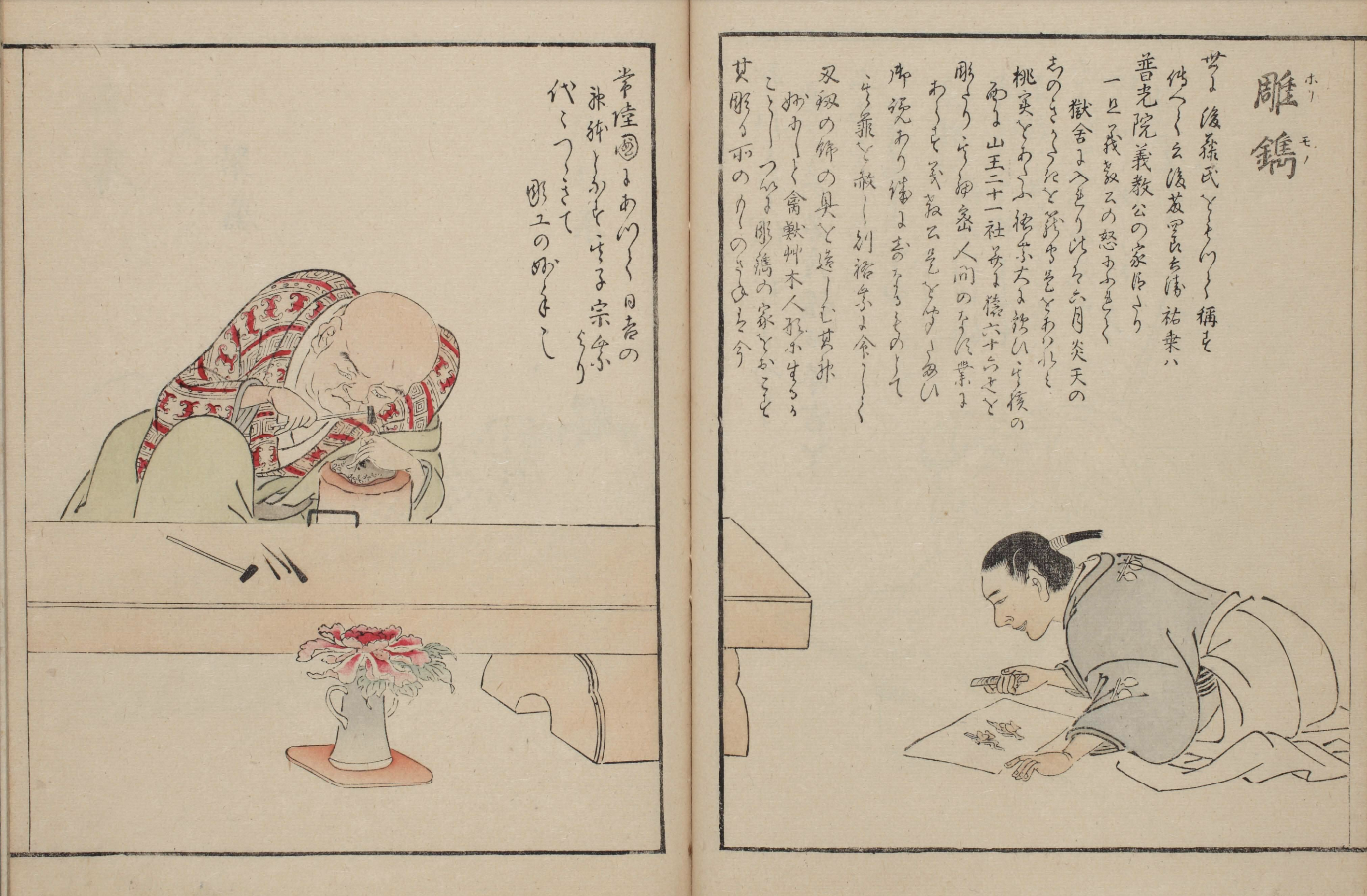
“The Gotō family is renowned throughout the country. According to tradition, Gotō Shirōbei Yūjō was a retainer of Lord Yoshinori (the sixth Ashikaga Shōgun), known by his posthumous Buddhist name Fukō’in. On one occasion, Yūjō incurred Lord Yoshinori’s displeasure and was imprisoned.
It was the sixth month, and the oppressive summer heat was almost unbearable. Taking pity on him as he languished in confinement, someone gave him a peach. Yūjō was greatly delighted and carved upon the surface of its pit the twenty-one Sannō Shrines, together with sixty-six monkeys. The carving was so extraordinarily intricate that it seemed beyond the capabilities of human hands.
When Lord Yoshinori heard of this, he summoned the object for inspection. Astonished by its truly remarkable workmanship, he pardoned Yūjō and immediately ordered him to produce decorative fittings for swords.
Yūjō’s craftsmanship was so exquisite that the birds, beasts, plants, trees, and human figures he carved appeared almost alive. Thus, he eventually established a hereditary lineage of metalwork engravers.
The peach pit that he carved is now said to be preserved in Hitachi Province, where it serves as a sacred representation of the deity Hiyoshi. Beginning with his son Sōjō, successive generations of the family continued the tradition, each becoming a master of the engraver’s art.”

