KANO NATSUO – His Life, his Art and his Sketchbooks
8.25″ x 10.75″ cm, color, hardcover, ~ 250 pages
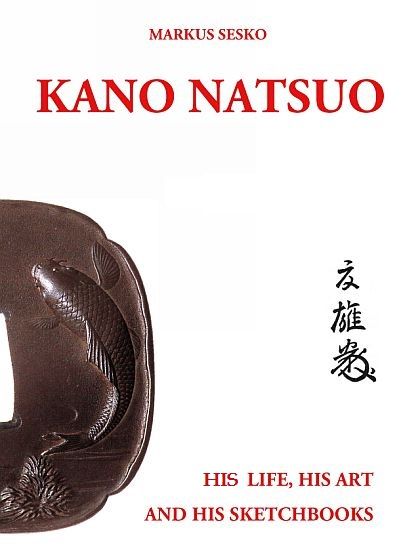
KANO NATSUO – His Life, his Art and his Sketchbooks
8.25″ x 10.75″ cm, color, hardcover, ~ 250 pages
Most of us know that Japan exported swords to China and I also briefly mentioned the official trade (kangô-bôeki, 勘合貿易) between the bakufu and China´s Ming dynasty (明, 1368-1644) in some of my publications. As always, I wanted to get to the bottom of the matter with the sword exports and did some research but it took me a while to bring the results into a comprehensive form, namely this article. We know from the 5th century Book of the Later Han (Gokanjo, 後漢書), a Chinese court document covering the history of the Han dynasty (206 BC-220 AD) from 6 to 189 AD, that Japan had contact with China since the first century BC. But it should last until the 6th and 7th century AD and the basic unification of China and Japan, that the Yamato court sent diplomatic embassies to the Chinese court, namely to the then Sui (隋, 581-618) and Tang dynasties (唐, 618-907). The aim of these embassies was basically to learn from China which was back then advanced in virtually all areas. So political systems, administration, technology, science, culture, and not to forget Buddhism was imported. Incidentally, there were altogether six embassies to Sui, and 16 (successful) to Tang China. Well, the diplomatic relations ended rather abruptly with the downfall of the Tang dynasty, but also Japan had not been able to send the last one planned for 894 because of financial reasons. But the official stop of these missions did not mean the end for Japanese and Chinese cultural, technological and religious exchange and of course also not for the increasing trade. All these free relations ended when emperor Hóngwǔ (洪武, 1328-1368) came to power and founded the aforementioned Ming dynasty after ending the Mongol empire. The major reforms undertaken by Hóngwǔ on all levels brought the law that all international contact had to be by officially legitimized tribute missions. Important to note for a better understanding of the latter sword imports of China is that Hóngwǔ imposed a ban on seafaring. Or at least the government must be informed about all things going on on the ocean because the emperor feared that former enemies could organize themselves over sea routes or that people use ships to desert to the enemy. So private trade was prohibited but a solution had to be found not to nip international and maritime trade in the bud. This solution was that foreign contries which wanted to trade with Ming China had to politically submit and to pay tribute. In return, Ming China handed-out official trading licenses to their submissive allies. But when Hóngwǔ learned later in his reign that the foreigners made a lot of profit with these official licenses and of course did not come just to pay tribute to the Ming court, he even tightened his strict rules and prohibited now all foreign trade and contact with foreigners. It is interesting to read that Japan takes up a chapter of its own in Hóngwǔ´s Instructions of the Ancestor of the August Ming (Huáng Míng Zǔ Xùn, 皇明祖訓) where it belongs to those countries which are no specific danger to China as being to far away but being described as „smart but cunning and mendacious when it comes to evading (imperial) rules“.
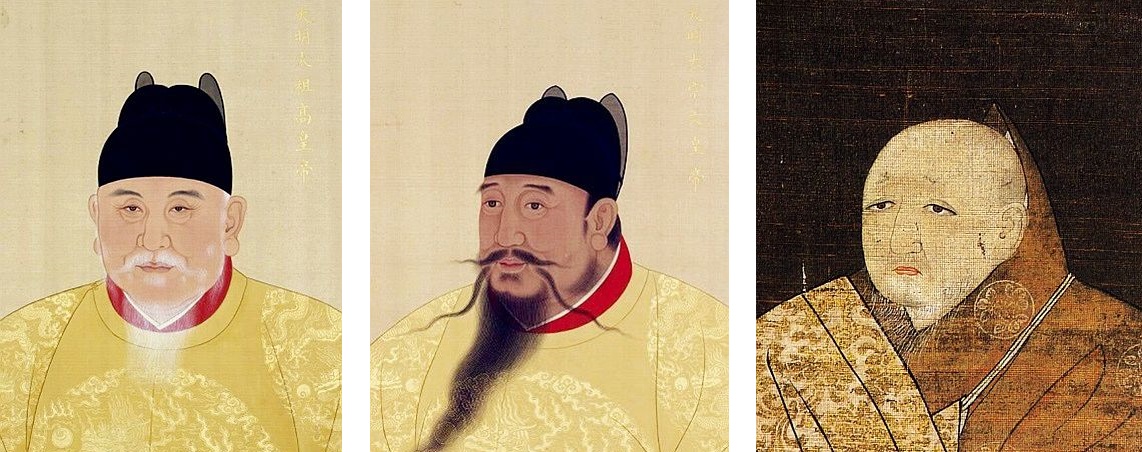
Picture 1, from left to right: Hóngwǔ, Yǒnglè, Ashikaga Yoshimitsu
Things changed when emperor Yǒnglè (永楽帝, 1360-1424, r. 1402-1424) came to power who was much more open for foreign trade and resumed the diplomatic relations to many countries. However, Yǒnglè continued the policy of prohibited seafaring and the tribute system but he sent out a lot of embassies to show that Ming China is now again more willing to welcome tribute missions. But still each trip abroad and commercial voyage needed imperial permission and private journeys and secret private contact to foreigners, even for officials and soldiers, was forbidden and was punished. A problem for the Ming treasury was that generous gifts were given to the countries which came and paid tribute. To counteract this, the tribute missions were again cut back and the foreign contries were informed that only those goods should be brought as tribute which were of use for Ming China. Also the number of persons attending a tribute mission was regulated as they had to be accomodated at public expense. It was shôgun Ashikaga Yoshimitsu (足利義満, 1358-1408, r. 1368-1394) who accepted the new rules and appointed himself as a tributary vassal of Hóngwǔ´s successor Jiànwén (建文, 1377-1402, r. 1398-1402) in the eighth year of Ôei (応永, 1401). Three years later, he received from Jiànwén´s successor Yǒnglè in return for the will to pay tribute the official trade license (kangô-bôeki, 勘合貿易). It is interesting to note that Ming China saw now the shôgun as “King of Japan”, not the emperor, as vassal and liaison for diplomatic relations. But although the official trade meant considerable profit for Japan, organizing a tribute mission, the prerequisite for this trade, had always been quite a task and took often several years. The organization had to base on three groups in order to be successful: The bakufu as official organizer, the merchants for providing the goods and thus the capital, and certain bakufu-loyal daimyô and monks who acted as officials, administrators and aides.
The basic situation of the trade between Ming China and Japan was put in a nutshell by Zhèng Xîao (鄭暁, 1499-1566) in his Wúxúe bian (吾学編): “The foreigners want to sell, and want to buy by all means the hundred of goods the barbarians have and China cannot do without.” Each tribute mission contained three categories of goods: The tribute goods, the official articles for trade, and the so-called “supplementary articles for trade” brought by those accompanying the missions. We have records, the Zenrin-koku-hôki (善隣国宝記), of the first tribute goods sent by Ashikaga Yoshimitsu in 1401. These were: 10 horses, 1.000 sheets of thin Japan paper, 100 fans, 3 screens, 1 yoroi, 1 dômaru armour, 10 tachi, 1 katana, 1 ink stone, and 1 small desk. The next mission from 1403 contained some different goods, namely: 20 horses, 10.000 pounds sulphur, 32 smaller and bigger agates, 3 gold-decorated screens, 1.000 yari, 100 tachi, 1 boxed armour, 1 boxed ink stone, and 100 fans. So far the tribute goods. Regarding the official articles for trade, we know detailed records from the Boshi-nyûmin-ki (戊子入明記) compiled by the monk and diplomat Sakugen Shûryô (策彦周良, 1501-1579). Interesting is, that Sakugen noted also the investment necessary for each good to be made and transported to Ming China. This information served later for the projections and the profit maximization of the merchants. For example, Sakugen quotes the price of 150 kan for 100 tachi swords and 53 kan 700 mon for two fancy tachi with dragon ornamentation and nashiji lacquer saya. Before we continue it has to be mentioned that the Ashikaga-bakufu did not mint coins but imported Chinese copper coins to be used as national means of payment. It is interesting to observe that Japan had in face numerous copper mines but exported the copper to China and Korea and reimported minted coins. Chinese copper coins were a much sought-after return present for tribute goods as they stimulated the national economy and were mostly accepted throughout Southeast Asia. We even know of records that the bakufu explicitly asked for copper coins as one and only return gift for certain coming tribute mission. So 1 kan (貫), a coin string weighing 3.75 kg, consisted of 1.000 copper coins (mon, 文).
We know that already the first tribute mission to Ming China using the official kangô-bôeki license from Ôei eleven (1404) took swords with them. There are numerous Chinese records of how cherished Japanese swords were, first of all because of their shaprness and cutting ability, but also because of their splendid mountings. With the restrictions initiated by Hóngwǔ, the Ming court had the monopoly on buying and distributing weapons. Some experts assume that the massive import of Japanese sword was to systematically disarm the Japanese pirates (wakô, 倭寇, Chin. wokòu) which were raiding Chinese coasts since the 13th century. Others assume that the court equipped certain soldiers with them but no definite answer can be read out of the extant documents. I deliverately used the term „certain soldiers“ because the Ming court decided – after the Japanese brought too many swords in their first tribute missions – that it will accept and buy not more than 3.000 swords per mission. Theoretically the Ming court could have had as many swords as needed. However, it can be assumed that the aim of this restriction was to maintain an overview on weapons going round in the country. At the beginning of the sword trade, the Japanese were able to sell them for a multiple of the cost of manufacture. From the diary Roku´on-nichiroku (鹿苑日録) we know that at the time of the tribute mission from Eikyô four (永享, 1432), the costs of one tachi were around 800-1.000 mon but was sold for around 10 kan, i.e. 10.000 mon, what meant a considerable profit and an important source of income for the bakufu. Japan did not follow the 3.000 sword limit very strictly and the mission from Kyôtoku two (享徳, 1453) brought 9.968 swords with them. As a counter-reaction and to somehow stop Japanese merchants from bringing to many swords into the country was, after realizing that the official limit was not obeyed, to push down the price. So it was decided that the Ming court pays no longer 10.000 but 5.000 mon per swords. And when the Japanese brought about 30.000, i.e. ten times the allowed number of swords in the course of their Ônin two (応仁, 1468) mission, the price was further pushed down to 2.500 mon. The whole system was then in a downward spiral when the Japanese tried to maintain the same profit by even increasing the number of export swords. This namely resulted in a considerable decline in quality which in turn prompted the Chinese to further push the price. At the time of the Bunmei 15 (文明, 1483) mission, only 600 mon were paid per sword, and at the time of the Eishô eight (永正, 1511) mission, the price had finally dropped to 300 mon. Incidentally, please note that these years might vary depending on how the missions are counted. Some quote the year the official planning began, others the year the mission left Japan, and others in turn the year it arrived at the Chinese authorities. Regarding, the Bunmei 15 mission, there is a report of a Chinese official extant who complained that besides of the 3.610 swords brought as tribute, the Japanese had 38.610 swords on board as their official articles for trade. This was ten times the permitted number, so the then minister Zhou Hóngmó (周洪謨). Also we learn from the chronicles and tribute records that there were each time discussions between the Japanese and the Ming officials on the acceptance of the swords exceeding the 3.000 limit and the price they are bought for. And to bear the expenses of the bakufu, it was decided on Japanese side that the merchants had to pay tax for what they sold abroad. So the merchants were quasi forced to sell as many goods as possible to reach a certain profit margin which makes the missions attractive at all. But we know that even with these difficulties, the overseas trade, including swords, was quite lucrative.
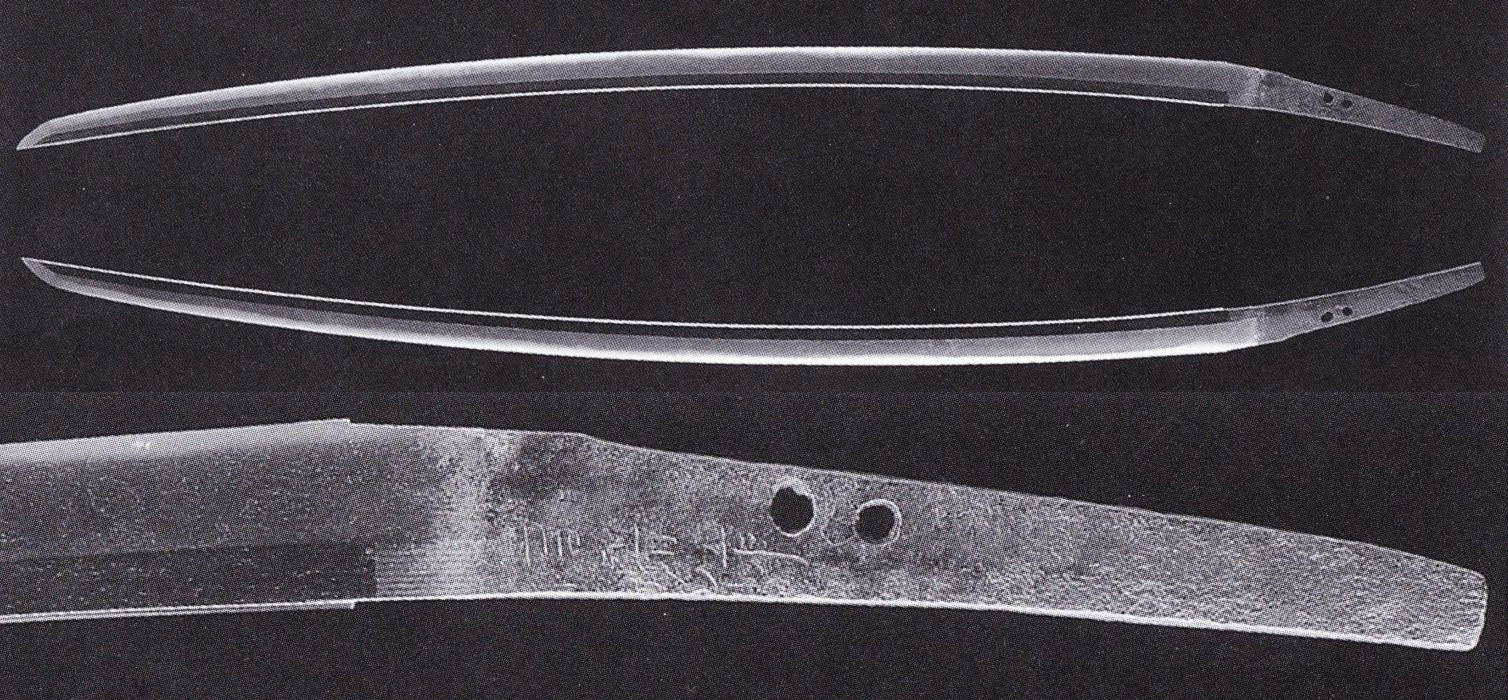
To summarize: The Eikyô four (1432) mission had loaded 3.000 swords, the Eikyô six (1434) mission also 3.000 swords, the Kyôtoku two (1453) mission 9.968 swords, the Ônin two (1468) about 30.000, the Bunmei eight (1476) mission around 7.000, the Bunmei 15 (1483) mission 38.610, the Meiô two (明応, 1493) and Eishô eight (1511) missions each around 7.000, and the Tenbun eight (天文, 1539) mission 24.152 swords. That makes altogether around 128.000 swords, an average of about 12.800 swords per mission. The very last tribute mission was undertaken in Tenbun 16 (1547) before the system collapsed due to the domestic political problems and the appearance of European competitors in the East Asian waters. Incidentally, I wasn´t able to find a list of how many swords were brought in the course of the last mission or if it contained any swords at all. But the aforementioned number of 128.000 swords over about one century gives us nevertheless a general idea of how many swords were exported to China. The Boshi-nyûmin-ki tells us also something about the lead time for a tribute mission. The preparations for the Ônin two (1468) mission started already in the Hôtoku era (宝徳, 1449-1452), i.e. more than 15 years in advance. On the other hand, the preparations for the Bunmei eight mission took only about two years. So when we take here an average of let´s say five years lead time, around 2.560 swords had to be made in that time to arrive at the aforementioned average of 12.800 swords per mission. This means 512 swords a year, thus more than a sword a day. So when the Bunmei eight mission had only a lead time of two years, 6.400 swords must had been made each year what calculates around 17 swords per day! So the smiths involved in the Ming trade system must had been quite busy. According to contemporary records, most of the export swords were made in Nara and Bizen and the production was mainly managed by Kyôto-based sword dealers who in turn were of course in touch with the bakufu. Another factor which should not be overlooked is the fact that the Ôuchi family (大内), which was largely involved in the overseas trade and tribute missions, were shugo military governors of Buzen and Chikuzen province during that time. So the number of smiths settling there in the early Muromachi period was probably also connected to the mass production of export blades. For example, there exists a tachi signed „Nobukuni“ (信国) which bears a Chinese nengô, namely „ninth month Chénghùa two“ (成化二年九月), what corresponds to the first year of Bunshô (文正, 1466) (see picture 2). This is an important reference pieces as it is one of the very few export swords which did not make it abroad for whatever reason. And this Nobukuni blade is also of special interest as it backs up the transmission of the Kyôto-based sword dealers where the origins of the Nobukuni school were, and the founding of the Kyûshû-offshoot the Tsukushi Nobukuni school (筑紫信国).
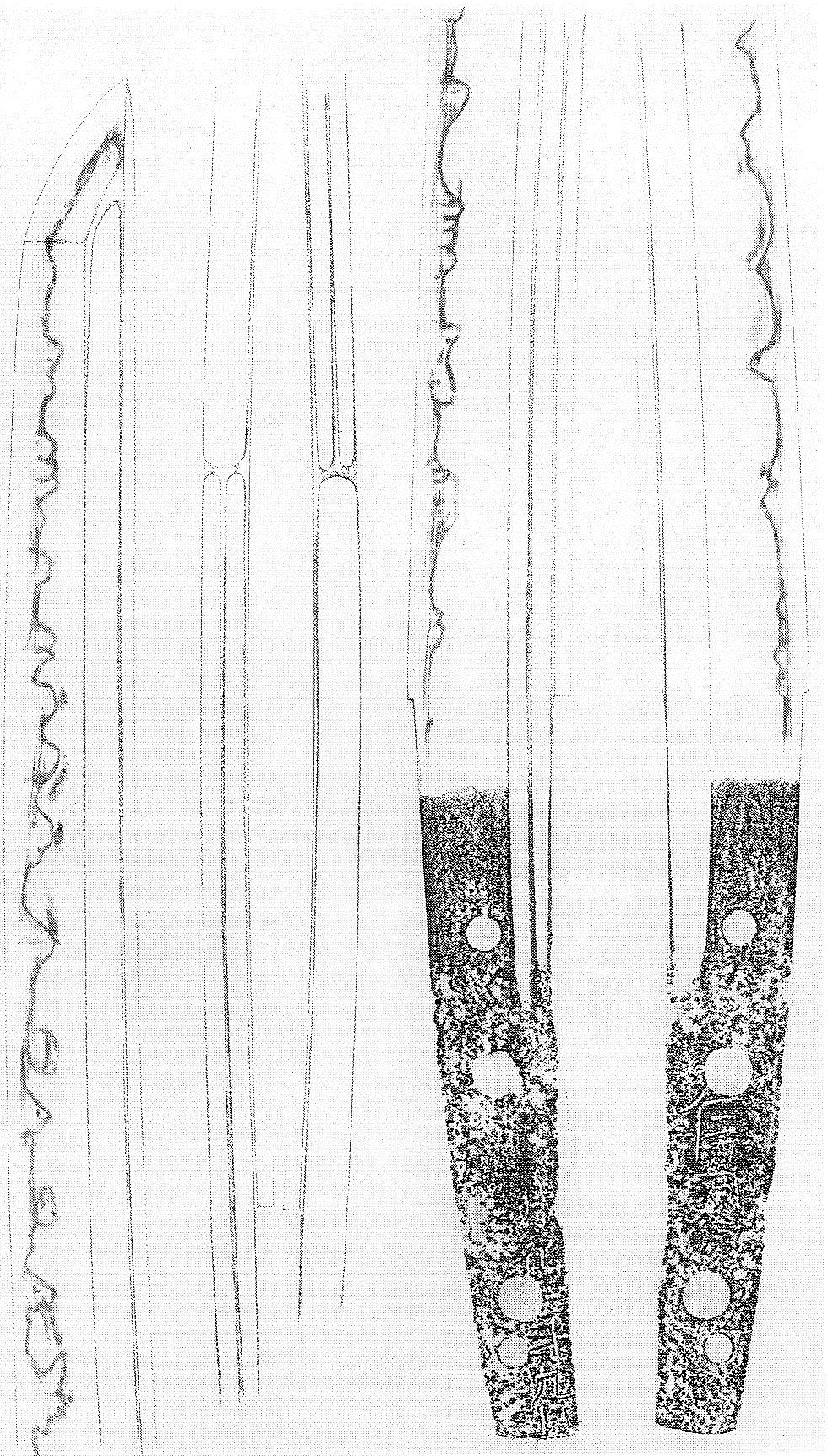
Picture 2: tachi signed „Nobukuni“ and dated „ninth month Chénghùa two“
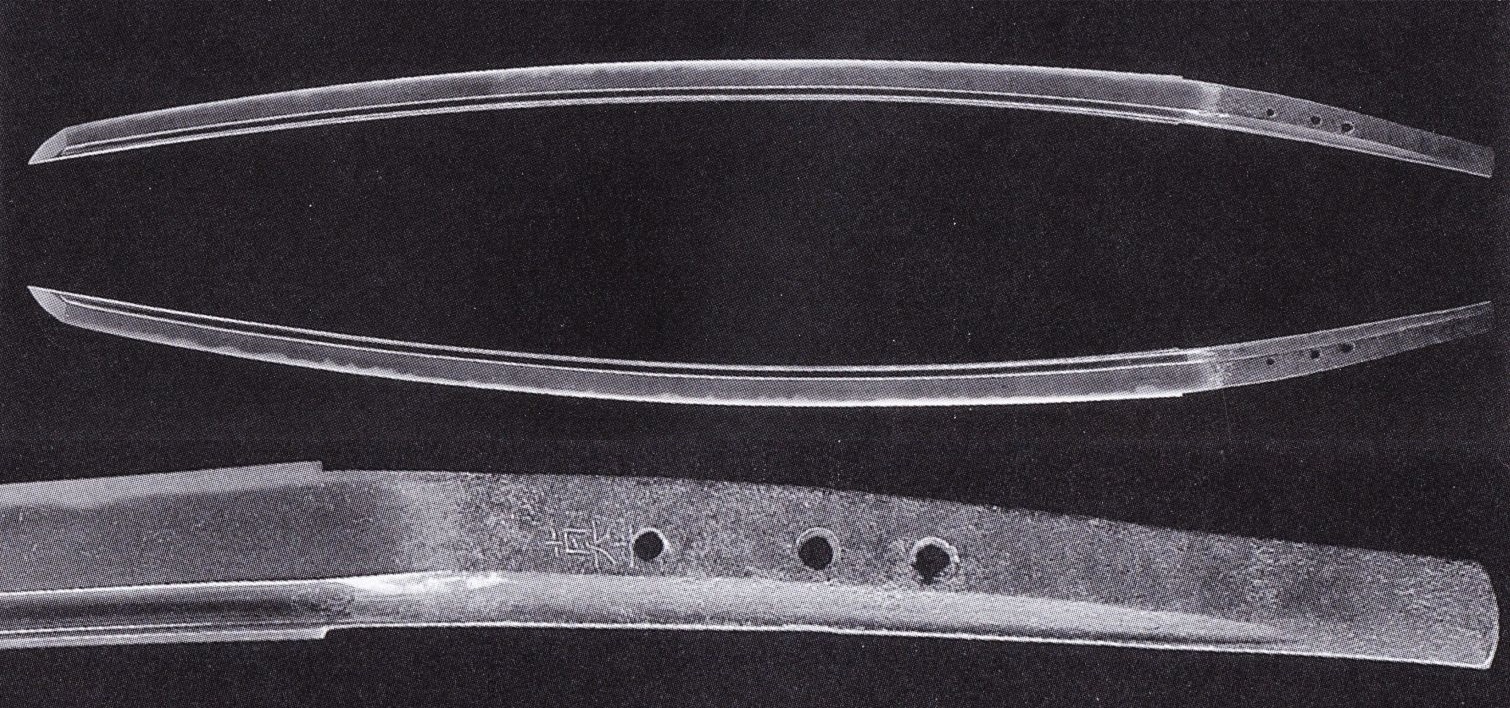
Back to the prices of the swords. From an intresting entry in the Boshi-nyûmin-ki we learn that the price the Ming court paid was for the blade and the koshirae. The entry in question deals namely with 300 swords which arrived damaged with the Eishô eight (1511) mission. According to the records, the Ming officials sorted out those swords whose hilts and scabbards were damaged and beyond repair and threw them away. So the blade alone was obviously not worthy purchasing, maybe just because there came anyway 4.000 swords more than allowed with this mission. Also we read that swords were damaged by Chinese port staff during unloading the cargo upon which the Japanese got angry as they were not able to repair them locally and lost so a part of the calculated profit. Apart from that there are several Sue-Bizen swords extant which show the value of the sword on the tang. For example a katana by Osafune Norimitsu (則光) dated Kanshô five (1464) worth 5 kan, a wakizashi by Osafune Katsumitsu (勝光) dated Bunmei nine (1477) worth 20 kan, a wakizashi by Osafune Tadamitsu (忠光) dated Entoku two (延徳, 1490) worth 1.000 hiki (疋 = 10 kan), a tantô by Osafune Katsumitsu dated Eishô three (1506) worth 1 kan 500 mon (see picture 3), or a katana by Osafune Sukesada (祐定) dated Eishô twelve (1515) worth 5 kan.
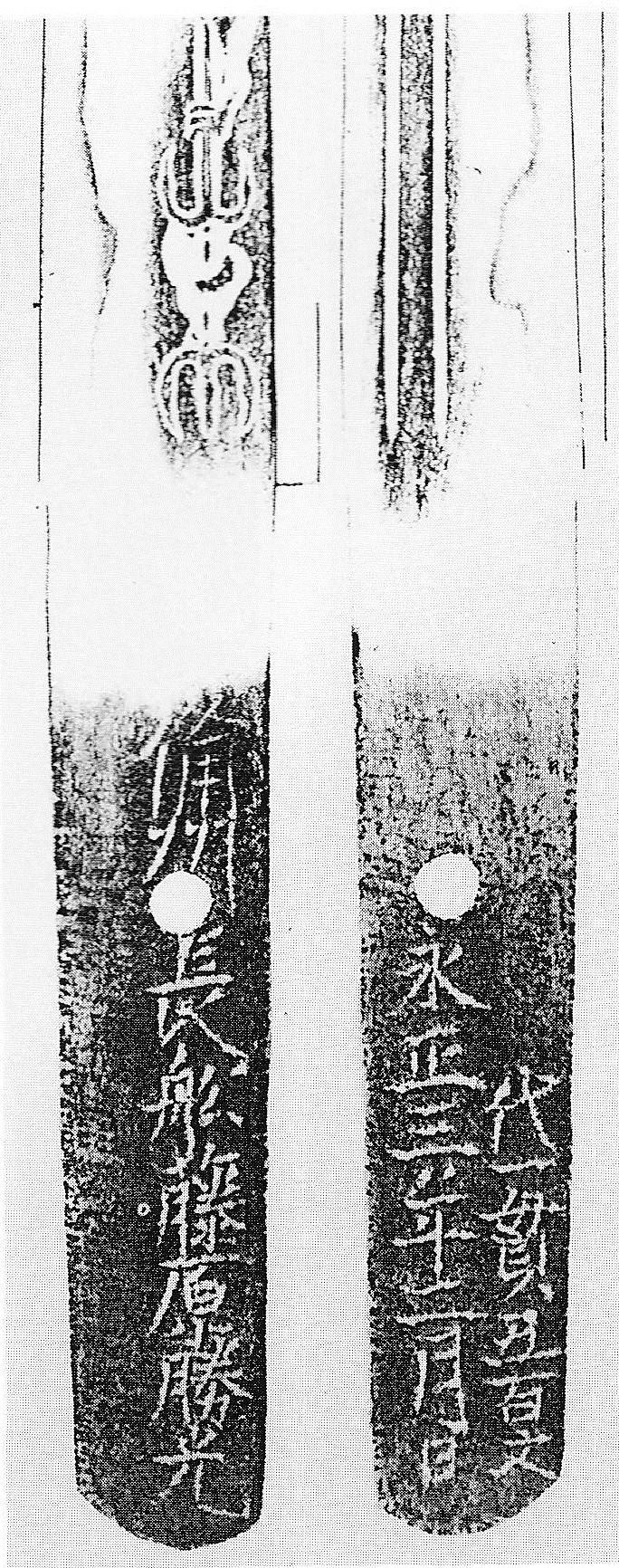
Picture 3: tantô, mei: „Bishû Osafune Fujiwara Katsumitsu“ (備州長船藤原勝光) – „Eishô sannen nigatsu-hi – dai ikkan gohyaku-mon“ (永正三年二月日・代一貫五百文).
Although it is hard to define inflation and price fluctuation in Muromachi Japan, the prices mentioned on the tangs of these Sue-Bizen blades indicate that they were probably not made for export. As mentioned earlier, the costs for one tachi for the Eikyô four (1432) mission were around 800-1.000 mon, i.e. 0.8-1 kan. The Norimitsu katana from 1464 was worth 5 kan but as we have heard, the Ming court pushed the price for the Ônin two (1468) mission down to 2.500 mon, i.e. 2.5 kan, per blade. So exporting this Norimitsu blade would have meant a loss. And when the Sukesada blade from Eishô twelve (1515) was worth 5 kan, the Japanese swords from the Eishô eight (1511) mission four years early had to be sold for 300 mon, i.e. 0.3 kan. This in turn indicates that the smiths making the export swords really must had been making low-quality kazuuchi-mono that a salling for 0.3 kan still brought some profit! Of course there were surely some fine swords reserved for certain persons but maybe this is a reason why there are not that many swords extant in China which were once bought by the Ming court. We can assume that a sword made for considerably less than 0.3 kan did not survive much fighting action, not to mention repeated battles in the cases handed down within a family. That means the Sengoku-era kazuuchimono extant today must be considered as being of even better quality than the majority of the swords made for export.
This latest publication is for all “decipherers” out there which need a guide and reference when struggling with Japanese cursive script (sôsho). When you are facing a character written in cursive script, identification by the number of strokes cannot be applied any longer as the abbreviated writing style omits certain strokes. So the only effective way of identification is by its radical. What makes identifying cursive script so difficult is that the radicals of course are also written in an abbreviated manner and that several radicals look quite the same in their abbreviated form. For that, this dictionary offers a RADICAL SECTION which provides several examples of how each radical appears in its cursive writing. A match with the supposed radical of the cursive character takes you to the page which lists characters grouped under that radical. This dictionary contains approximately 5.300 characters, but is not meant as a cursive script dictionary with different handwritings of each cursive character, as the aim is to provide a basic guide and reference for identifying them.
6 wide x 9 tall, 472 b/w pages, price $ 44.90
There is a paperback, a hardcover, and an eBook version available.
Whilst working on a longer article on Japanese sword exports to China during the Muromachi era, I found an interesting line in Táng Shùnzhi´s (唐順之, 1507-1560) Ode to the Japanese Sword (nihontô no uta, 日本刀歌) which lead me to further studies as I am waiting for a book to arrive from Japan to confirm certain parts of the article in question. Incidentally, we know several of such Odes to the Japanese Sword by Chinese authors, and the earliest is said to go back to the Song Dynasty Ōuyáng Xiū (欧陽脩, 1007-1072). Anyway, the line which attracted my attention was:
身上竜文雑藻荇
shinjô no ryûmon wa sôkô ni majiwaru “The dragon engraving on the blade is embedded in seaweed.”We know that Japan exported many swords to Ming China at the time of Táng Shùnzhi and most of them were made in the manufacturies of Osafune, and so I started to do some research on horimono from that time and region. First of all it has to be pointed out that contemporary records on swords made for export or the infamous „bundle swords“ hardly ever mention horimono, so most of the data we have goes back to actually extant pieces and some oshigata. The next thing that strikes is that elaborate and complex horimono on Osafune swords, i.e. not suken or bonji and the like, are very rarely found before the Meiô era (明応, 1492-1501) and concentrate on sword dated with the Bunki (文亀, 1501-1504) and Eishô eras (永正, 1504-1521). Just to recollect, the official and regulated trade (kangô-bôeki, 勘合貿易) with Ming China started in Ôei eleven (応永, 1404) and lasted in the mid 16th century when the system collapsed by independent contacts and trades of rich traders with Ming China and the Asian mainland as well as by the appearance of European competitors inthe East Asian waters. Also we observe that horimono in general and elaborate horimono like kurikara-ryû in particular are mostly found on Osafune blades which don´t mention the first name (zokumyô, 俗名) like „Yosôzaemon“ (与三左衛門), „Hikobei“ (彦兵衛) or „Genbei“ (源兵衛) and the like in their signatures. Of course there are some exceptions but experts agree that Osafune blades which mention the zokumyô in their signature are chûmon-uchi (注文打), i.e. made according to an order, whereat those just signed „Bizen no Kuni-jû Osafune“ (備前国住長船) followed by just the name of the smith, e.g. Sukesada (祐定), Kiyomitsu (清光), Tadamitsu (忠光), Katsumitsu (勝光) or Munemitsu (宗光), are by tendency rather kazuuchi-mono (数打物), mass produced swords, or so-called „tabagatana“ (束刀), „bundle swords“. One of the aforementioned exceptions for example is a blade by Yosôzaemon no Jô Sukesada dated Eishô 18 (永正, 1521) which shows a shin no kurikara on the omote and the characters „Kasuga Daimyôjin“ on the ura side (see picture 1).
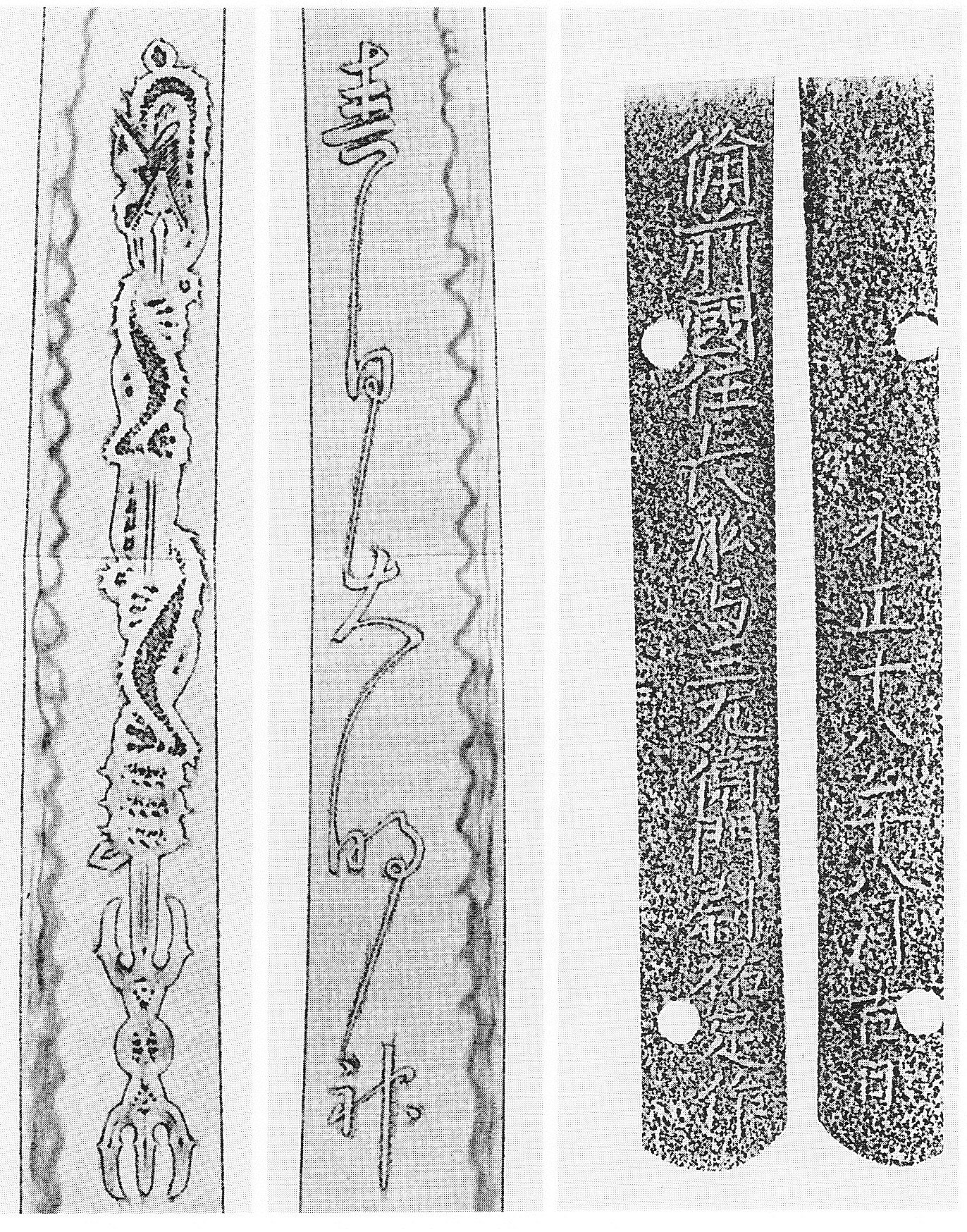
Picture 1: katana, mei: „Bizen no Kuni-jû Osafune Yosôzaemon no Jô Sukesada saku“ (備前国住長船与三左衛門尉祐定作) – „Eishô jûhachinen hachigatsu kichijitsu“ (永正十八年八月吉日, „on a lucky deay of the eighth month Eishô 18 [1521]“)
Let us stay with these names of deities for a while. I was able to find an article of Yokota Takao (横田孝雄) published in „Tôken-Bijutsu“ 493 (February 1998) in which he provides a quantitative survey on engraved names of deity on Sue-Bizen swords which goes as follows:
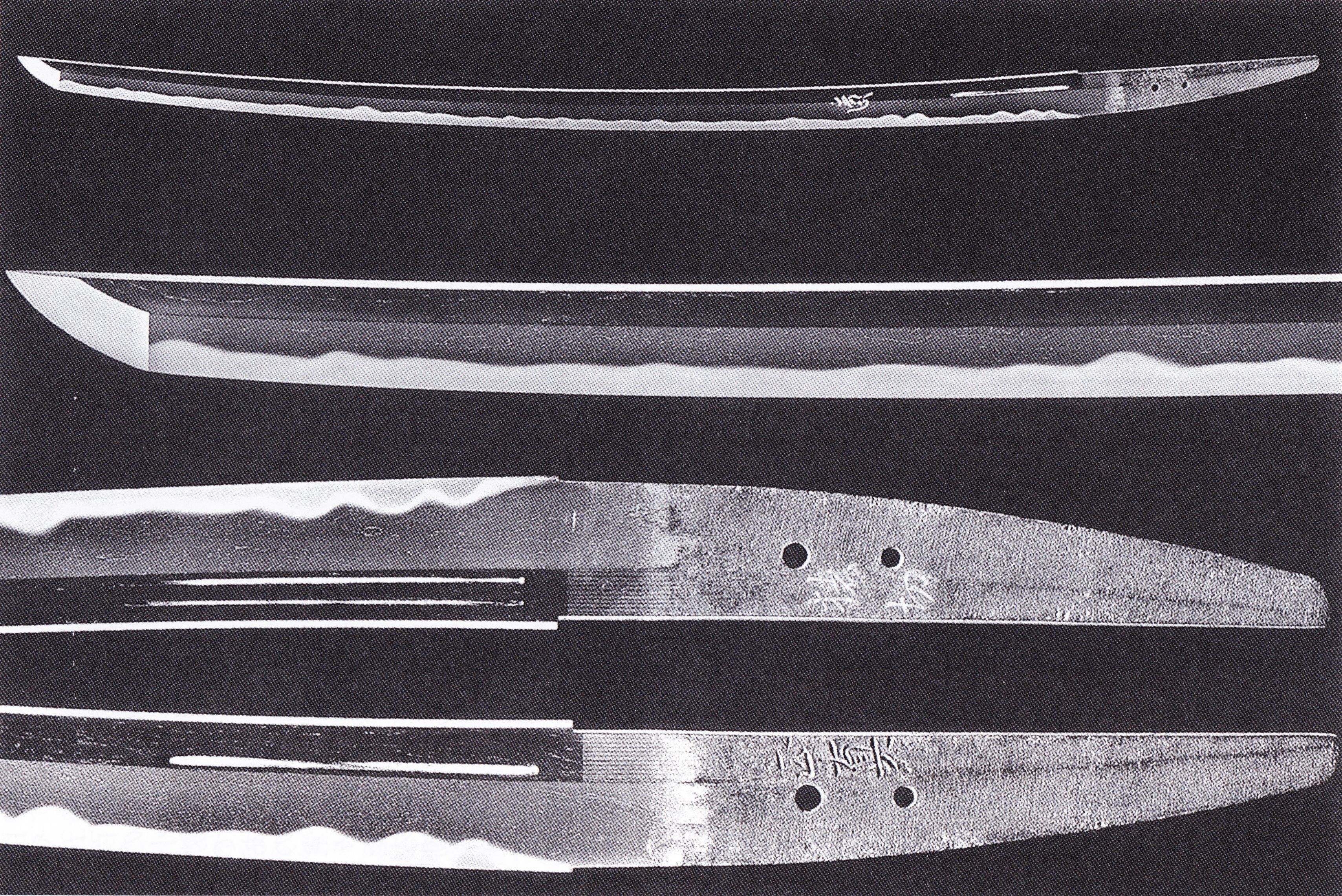
So with the mentioned observance in mind we can assume that elaborate horimono like dragons and the like were by tendency more applied to mass produced Osafune blades and that wealthy clients had, if at all, by tendency more simple horimono and/or the names of deities engraved. Unfortunately we hardly know any names of horimono-shi before the transition to the shintô era and the great carving masters coming from the school of Umetada Myôju (埋忠明寿). But we know a single name connected to Sue-Bizen horimono, namely those of „Matashirô“ (又四郎), the younger brother of Hei´emon no Jô Tadamitsu (平右衛門尉忠光) who was active around Eishô (永正, 1504-1521). This info goes back to a katana with the nagasa of 63,4 cm which is listed in my Index of Japanese Swordsmiths N-Z, p. 211, and which can be seen in picture 2. The mei reads: „Bizen no Kuni-jû Osafune Tadamitsu no ko Hei´emon no Jô kore o saku horimono otôto Matashirô saku“ (備前国住長船忠光子平右衛門尉作之彫物弟又四郎作, „work of Hei´emon no Jô son of Bizen Osafune Tadamitsu, horimono carved by his younger brother Matashirô“). The blade is dated „Eishô gannen hachigatsu-hi“ (永正元年八月日, „a day in the eighth month Eishô one [1504]“). Apart from this blade, the name of Matashirô only appears at one more blade (picture 3) which is signed: „Bizen no Kuni-jû Osafune Hei´emon no Jô Fujiwara Tadamitsu dô Matashirô kore o saku“ (備前国住長船平右衛門藤原忠光同又四郎作, „made by Hei´emon no Jô Fujiwara Tadamitsu and Matashirô from Osafune in Bizen province“), dated „Bunki ninen mizunoe-inu nigatsu kokonoka“ (文亀二年壬戌二月九日, „ninth day of the second month Bunki two [1502], year of the dog“). Well, it is assumed that this blade is not a joint work (gassaku, 合作) in the strict sense in terms of sword forging as we don´t know any (signed) blade made by a Matashirô Tadamitsu alone. So it is very likely that the blade in question is insofar a joint work as Hei´emon no Jô Tadamitsu forged it and his younger brother Matashirô engraved the horimono.
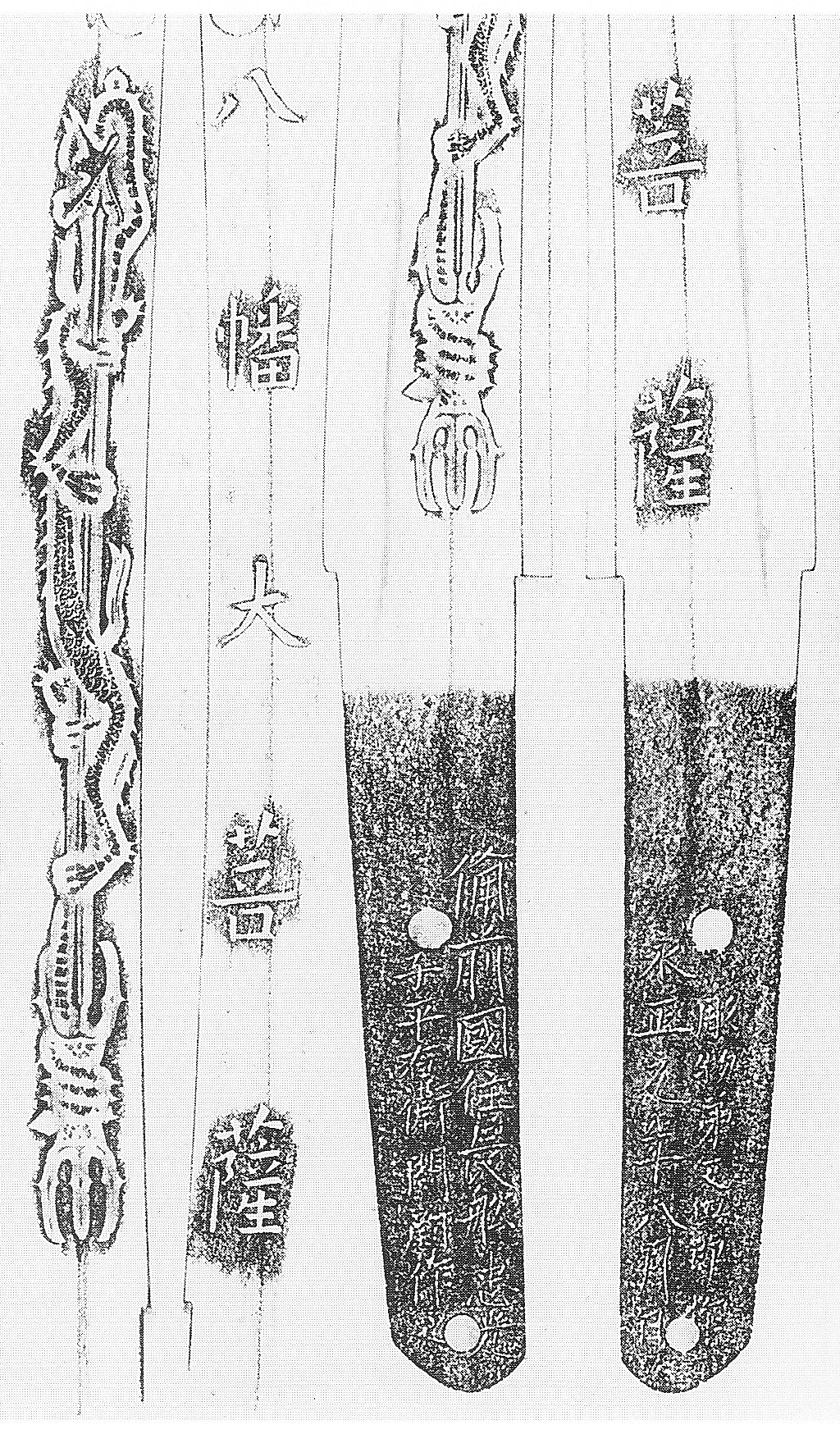
Picture 2: katana, mei: „Bizen no Kuni-jû Osafune Tadamitsu no ko Hei´emon no Jô kore o saku horimono otôto Matashirô saku“ (備前国住長船忠光子平右衛門尉作之彫物弟又四郎作) – „Eishô gannen hachigatsu-hi“ (永正元年八月日).
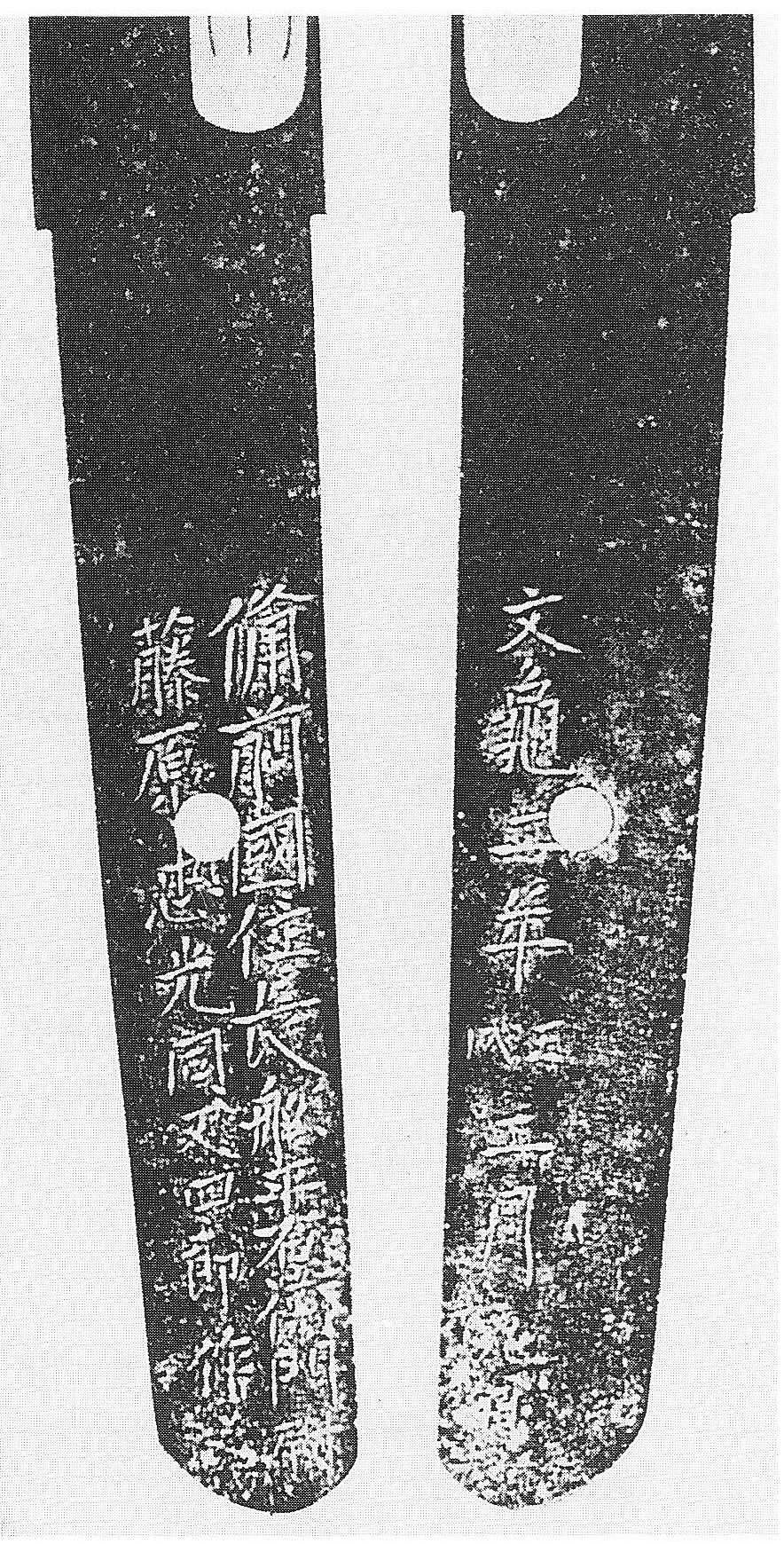
Picture 3: katana, mei: „Bizen no Kuni-jû Osafune Hei´emon no Jô Fujiwara Tadamitsu dô Matashirô kore o saku“ (備前国住長船平右衛門藤原忠光同又四郎作) – „Bunki ninen mizunoe-inu nigatsu kokonoka“ (文亀二年壬戌二月九日)
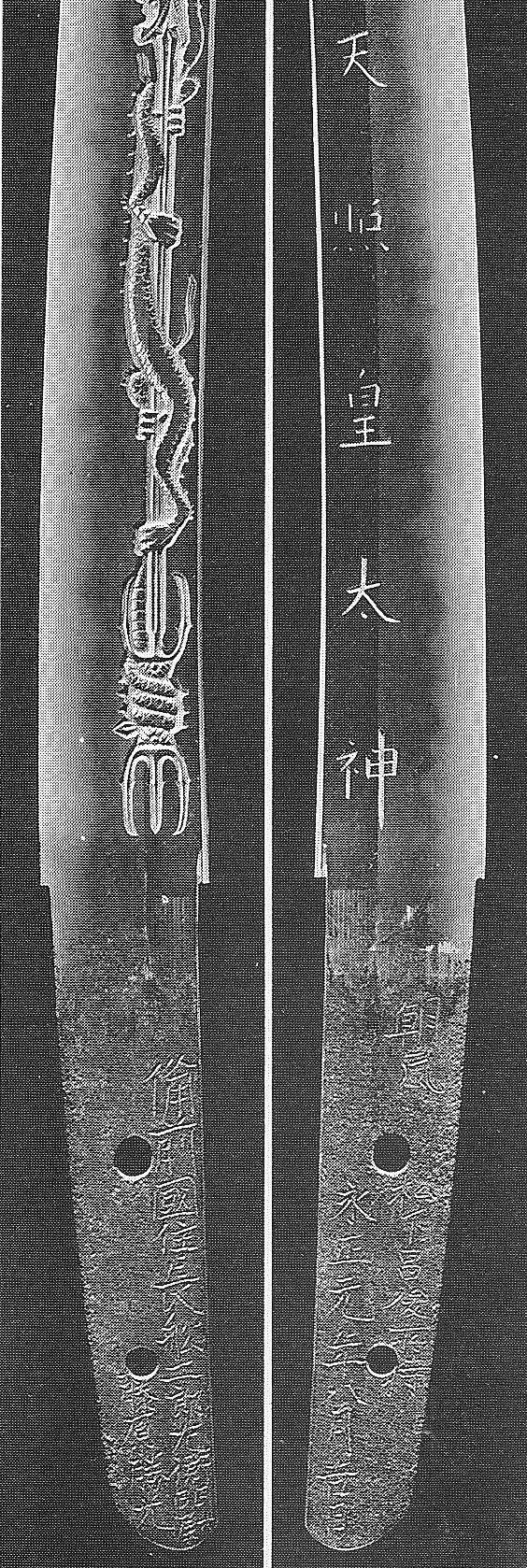
Picture 4: katana, mei: „Bizen no Kuni-jû Osafune Jirôzaemon no Jô Fujiwara Katsumitsu“ (備前国住長船次郎左衛門尉藤原勝光) – „Asakaze“ (朝風, „morning wind“, the nickname of the blade) – „Matsushita Masatoshi shoji“ (松下昌俊所持, „owned by Matsushita Masatoshi“)
Than there is a blade from the very same year and month, i.e. eighth month Eishô one, made by Jirôzaemon no Jô Katsumitsu (次郎左衛門尉勝光) (see picture 4) which shows almost identical horimono. Thus it is assumed that they too were engraved by Matashirô. And then there is a very similar kurikara-ryû found on a blade by Hei´emon Tadamitsu from the eight month Eishô one, but which was made when he stayed in Innoshô (院庄) in Mimasaka province as it is mentioned on the tang. Even when we take into consideration that the eight month might not point out the month the blade was actually made (as stated in one of my previous articles), it is still rather unlikely that Matashirô accompanied his brother to Mimasaka province and engraved at the same time horimono to blades of Jirôzaemon no Jô Katsumitsu. Because modern horimono-shi also say that even if you take into consideration the working conditions of that time, it still took probably a month or so to engrave such an elaborate kenmaki-ryû. So it is likely that Matashirô was the head of a specialized workshop which just did horimono and maybe various hi. And the craftsmen under his command surely used the sketches of the master and engraved them as faithfully as possible onto blades for which horimono were ordered.
So far this little excursus to the world of Sue-Bizen horimono and a lengthy article on the Japanese sword exports to Ming China will follow after receiving reference material from Japan.
Yesterday we had another very interesting meeting of our Nihonto Club Deutschland which was founded in 2008 and I would like to take this occasion to present a brief article on a sword club from 125 years before.
Around June 2012, Arai Shigehiro (新井重凞), the former president of the Kyôto branch and former board member of the NBTHK, presented the association with a rare document (33,3 x 24,2 cm, 26 pages), namely the articles of the kantei club Hôryûsha (宝隆社) founded in Meiji 16 (1883). This document is insofar also very interesting as it shows us that such clubs were founded just six years after the ban on swords. Article 1 also shows us that by then, sword experts were fully aware of where the journey has to go, namely to swords being regarded as national treasures and art works. The club was located in Kyôto and the document lists three founding members, namely Nose Kakuemon (能勢角右衛門), Kishimoto Gensuke (岸本源助) and Tsujimoto Shigeyuki (辻本繁之). Kishimoto Gensuke and his son Shônosuke (岸本正之助, might also read „Masanosuke“), who is found in the Hôryûsha member´s list, runned the sword shop Kusanaginoya (草薙廼舎) which was famous as being purveyor of the imperial family in terms of swords since the end of the Edo period. By the way, Satô Kanzan published in 1973 the book „Kusanaginoya-oshigata“ (草薙廼舎押形) which bases on the vast oshigata collection of Kishimoto Kannosuke (岸本貫之助), Gensuke´s adopted son. Kannsouke was also a member of the executive board in the early days of the NBTHK. Well, the Hôryûsha was eventually dissolved and basically continued by the sword clubs Kurotani Tokenkai (黒谷刀剣会) and Gosho-Hachiman Tokenkai (御所八幡刀剣会), and with the establishment of the NBTHK, it finally merged into its Kyôto branch. In the following I want to share the articles of association of the Hôryûsha kantei club:
Articles of Association
1. Swords are treasures of our nation. Apart from the fact that they must be treated with utmost care, discussions on the quality of a smith and his work shall be carried out with a quiet voice.
2. The mutual replies to a bid on a smith might be corrected by Hon´ami Nagane (本阿弥長根).
3. Mumei blades without any of the three Hon´ami certifications origami, soejô or sagefuda shall not be presented for kantei. But mumei blades with ubu-nakago can be brought to the meeting to get an external opinion.
4. Each member is encouraged to bring one blade to the meeting. The kantei blades are presented regardless of their quality.
5. Legendary meibutsu or famous swords from certain families are presented separately at a meeting. But owners who are uncertain of their authenticity can present them as kantei swords to get an external opinion.
6. For the moment, there are six meetings per year. Each year two members are responsible for holding a meeting, taking turns every other second month.
7. Alcohol is prohibited until the end of the meeting.
8. Members should not leave until the meeting has ended.
9. The fee for a meeting which is charged at the very day of a meeting for both members and guests is at the moment 50 sen. [Today about 20 USD]
10. In the event of a „no-show“ or if the member does not cancel his attendance one day prior to the meeting by notifying the member in charge of holding the meeting, the association will charge the aforementioned fee. This rule does not apply in case of emergency or accidents.
11. If a regular meeting is delayed or has to be cancelled because of a member without any particular reason, half of the amount of all the fees of the meeting in question must be paid by this mamber..
12. The participation of guests is with the usual reserve. This does not apply to guests known to members and/or guests announcing their arrival one day prior to the meeting.
13. Swords of guests which should be presented to kantei must be discussed in advance with the member holding the meeting and are accepted with reservation.
14. Entering the association comes with a membership fee of 15 Yen [today about 600 USD]. But the full amount is immediately returned after holding a meeting or if the person has to leave the association due to extraordinary circumstances.
15. If a member is not able to hold a meeting before he leaves the association, half of the amount of a meeting´s fee is charged. The half of a meeting fee is about 5 to 10 Yen [today about 200 to 400 USD]. Anyway, the final amount might be determined by the founding members and other members.
16. Each member has to follow the articles of association. Otherwise the founding members and other members reserve the right to exclude a member from the association.
17. For the maintainance of the association, the articles may be changed but each change needs to be discussed by the members in a special session.
Ninth month Meiji 16 (1883), year of the sheep, Hôryûsha
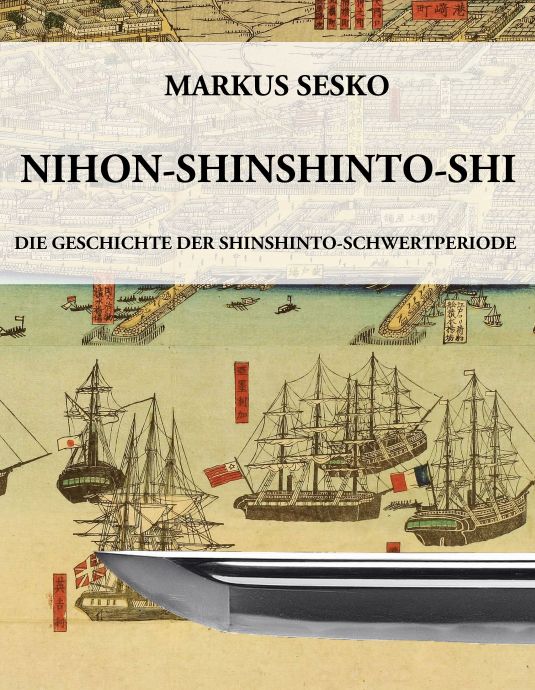
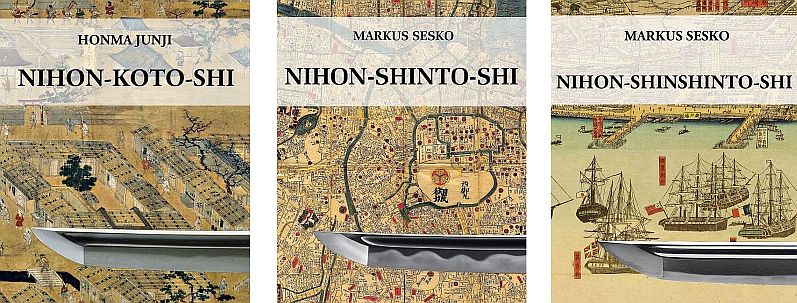
Out now, my “Nihon-shinshinto-shi”, the history of the shinshinto era of Japanese swords, which completes Dr. Honma Junji´s standard work „Nihon-koto-shi“ and my follow-up the „Nihon-shinto-shi“, starting from Suishinshi Masahide´s initiation of a new trend around An´ei (1772-1781) to the ban on swords issued by the Meiji government in 1876. As with the „Nihon-koto-shi“ and the „Nihon-shinto-shi“, the reader should be able to grasp a coherent picture of the backgrounds and scholastic activities around the Japanese sword at the end of the feudal era. The shinshinto era requires a slightly different approach than the shinto era, just like between shinto and koto. We have namely a combination of the trend towards old traditions initiated by the aforementioned Masahide on the one hand, and on the other hand the local trends which were established after certain students had returned to their home lands where they founded their own schools. Finally, the time scale must not be overlooked: The „Nihon-koto-shi“ had to deal with roughly 800 years, from the Nara to the end of the Muromachi period, and the „Nihon-shinto-shi“ comprised „just“ about 200 years, whereas the shinshinto era lasted only about a century. In this sense I hope that the „Nihon-shinshinto-shi“ serves, like the „Nihon-koto-shi“ and my own publication the „Nihon-shinoto-shi“, as a standard or at least as a reference work for this era of the Japanese sword.
Paperback, 7.44 wide x 9.68 tall, 296 pages, b/w pictures – $ 65.00
It can be purchased here or shortly also on amazon.
And the eBook version for $ 30.00 is available here.
And as a special introductory offer for those who haven´t got any of the books yet, I will sell the entire set of three volumes, i.e. „Nihon-koto-shi“, „Nihon-shinoto-shi“ and „Nihon-shinshinto-shi“ on request for $ 150 instead of $ 200. If you are interested, do not hesitate to contact me (email address can be found on the section Imprint on top of this blog).

Well, nengô (年号), the Japanese era names, are well known to every sword enthusiast. And most of you probably also know basically what they were about. But interesting for me was and is how fast the information of a newly proclaimed nengô made the rounds and arrived eventually in the forges of swordsmiths far away from the capital Kyôto. Fortunately there are minute records of when exactly each era was changed in Japanese history and but before I come to my actual examination I briefly want to introduce the practice of nengô, or gengô (元号) how they are also called. As so often, the Japanese nengô system has its origins in China where everything started with the Kengen era (建元, Chinese Jiànyuán ) in the year 140 BC when Emperor Wu of Han (漢武帝) ascended the throne. In Japan, the nengô system was adopted in the course of the Taika Reform in 645 but interrupted a decade later and once again re-adopted in 701 which became the first year of Taihô (大宝, 701). So far, so good. A nengô was basically connected to the ascension of a new emperor but was sometimes also changed due to other felicitous events or natural disasters. The emperor and his court officials now decided what motto the new era should have, picked the appropriate characters, and picked on which day it should come into effect. That means in earlier years, the change in nengô took not automatically place when a new emperor ascended the throne. So the first year of the new nengô (gannen, 元年) continues until the next lunar new year, which is understood to be the start of the nengô´s second year. To give an example: The Bunmei era (文明) came into effect on the 28th day of the fourth month Ônin three (応仁, 1469). Thus 1469 was both Ônin three and Bunmei one. And the other way round, the first year of Bunmei lacks accordingly a first, second and third month as these months lied in the previous Ônin era.
Bureaucracy had always been elaborate in Japan and so the news of the death of an emperor and the proclamation of the start of a new nengô – sometimes even up to two years after the ascension of the next emperor – reached the most distant provinces surely within weeks, or in some cases maybe months. And signatures on swords are also a good way to proof the speed of an era change. To do so, we have to focus of course on the first year of a nengô, the gannen. But also we have to be careful about the custom to date swords by default with the second and eighth month regardless in what month they have actually been made. This „second month eighth month thing“ is said to go back to the auspicious change in season, i.e. from winter to spring in the case of the second month and from summer to fall in the eighth month. At the same time it is said that the water and the air are especially apt for the sword forging process in these months. Others assume that as both the characters for the numbers „two“ (二) and „eight“ (八) have quasi two halves and that these halves allude to the sharpness of a sword which cuts things in half. However, it is interesting to note that the custom of using the second and eighth month regardless of when the sword was forged started about with the Kanshô era (寛正, 1460-1466). That means a trend towards these two months can not be confirmed in Kamakura and Nanbokuchô era date signatures. In short, pre-Ôei (応永, 1394-1428) date signatures show about equally all twelve months.
A good example for the speed the change in nengô made the rounds is a tantô of Osafune Norimitsu (則光) which is dated „Ônin gannen sangatsu-hi“ (応仁元年三月日, „a day in the third month Ôei one [1467]“). According to transmission, the Ônin era was proclaimed by emperor Go-Tsuchimikado (後土御門天皇, 1442-1500) and his court because of repeated severe calamities, namely to come into effect on the fifth day of the third month of the second year of the previous Bunshô era (文正). So as the tantô of Norimitsu is dated with the third month, we learn that the information of the era changed had reached Bizen in the very same month. To remember, Osafune is about 170 km from Kyôto. But the same works also for the way north. For example there exists a katana of Uda Kunimune (宇多国宗) which is dated with the 16th day of the eighth month Chôkyô one (長享, 1487). The Chôkyô era was proclaimed by the same emperor Go-Tsuchimikado for the 20th day of the seventh month Bunmei 19 (文明, 1487) because of the ongoing turmoils initiated by the Ônin War and an epidemic. So Kunimune knew about the change in nengô at the latest after 27 days after it started. His production site was about 250 km from Kyôto. Another example for blades of a smiths around the border between two nengô. There are a katana and a tantô extant by Osafune Sukesada (祐定) of which the katana is dated with the second month Bunki four (文亀, 1504) and the tantô with the second month Eishô one (永正, 1504). The Bunki era was changed by emperor Go-Kashiwabara (後柏原天皇, 1464-1526) to the Eishô era on the 30th day of the second month of its fourth year because the sexagenary circle changed. The latter was namely also a reason to change a nengô because the year it happened was considered as inauspicious. Quasi better have a new era name to counteract the inauspicious cosmological signs. It was namely belieced that one could, in fact, change fortune by changing the motto of an era. Anyway, the two blades show that the katana was made right before, and the tantô right after the change of the nengô.
But sometimes the smiths missed a change in nengô. For example there exists a wakizashi by Osafune Katsumitsu (勝光) which is dated with a day in the sixth month Meiô ten (明応, 1501). But the Meiô era had already been changed by the aforementioned emperor Go-Kashiwabara on the 29th day of the its second month to Bunki (文亀). So Katsumitsu was four months behind with his date signature in question. Of course we also know even „worse“ examples like a wakizashi by Osafune Yukimitsu (幸光) dated with the 15th day of the second month Eiroku 16 (永禄, 1573). But Eiroku had changed to Genki (元亀) about three years before, i.e. in Eiroku 13 (1570). Rare on swords but still existing are the so-called „shi-nengô“ (私年号), unofficial era names popping out here and there throughout Japanese history. They were used locally and by certain institutions like temples and shrines and represent a denial of the ear name established by the emperor, thus they concentrate in periods of political and social unrest. In many cases, just a certain shi-nengô year appears in a text and so we don´t know of most of them how long they actually lasted. One such shi-nengô can be found in a 32-plate suji-kabuto helmet bowl of Myôchin Nobuie (明珍信家) depicted in Matsumiya Kanzan´s (松宮観山, 1686-1780) „Meikô-zukan – zokushû“ (名甲図鑑続集). It is described in the latter publication as bearing the date Hôju ninen kinue-uma shôgatsu-hi“ (宝寿二年甲午正月日, „a day in the first month of the second year Hôju, year of the horse“). The Hôju era seems to have been in use in and around Kai province. It lasted two years and Hôju two was equivalent to Tenbun three (天文, 1534). I wasn´t able to find an oshigata with a shi-nengô on a sword blade yet but I would be very pleased if somebody could provide me with one.
Now available, the German version of the “Nihon-shinshinto-shi”, the history of the shinshinto era of Japanese swords. I would take to liberty and quote from the German blurb:
Als Abschluss meiner Erweiterung Dr. Honma Junjis Standardwerk „Nihon-koto-shi“ folgt nun nach dem „Nihon-shinto-shi“ das „Nihon-shinshinto-shi“, also die Geschichte der shinshinto-Schwertperiode von ihrem Gründer Suishinshi Masahide bis zum während der Meiji-Zeit verhängten Schwerttrageverbot des Jahres 1876. Gleich der „Nihon-koto-shi“ und der „Nihon-shinto-shi“ soll auch hier der Leser wieder ein schlüssiges Bild über die Hintergründe und schulischen Aktivitäten vom Ende des japanischen Schwertes in seinem feudalen Kontext bekommen. Wie schon mit der zunehmenden Urbanisierung der Edo-Zeit erfolgte die Aufarbeitung der shinshinto-Zeit in ähnlicher Weise wie dies schon im Vorgängerwerk „Nihon-shinto-shi“ der Fall war, und zwar beginnend mit den großen Zentren und im konkreten Fall mit der Wiederbelebung der Schwertschmiedekunst durch Suishinshi Masahide, gefolgt von den einzelnen Provinzen, die wieder anhand ihrer „Signifikanz“ für die Schwertwelt als auch im Kontext zu einander abgehandelt werden.
ISBN: 9781291584202, paperback, 296 pages, 205 b/w pictures, price: €59,90
It can be ordered here or in a few weeks at amazon.de (and of course directly through me).
And the eBook version is available here for €25,00.
Will be a great set when finished.
„Tokugawa-shitennô“ (徳川四天王), lit. „Four Heavenly Kings of the Tokugawa“, is a summarizing nickname for four of Ieyasu’s best generals. The term itself alludes to the Four Heavenly Kings (shitennô, 四天王) of Buddhist iconography. In the following, I want to introduce the Tokugawa-shitennô one after another and introduce some of their favourite swords or swords of which we know that they were in their possession.
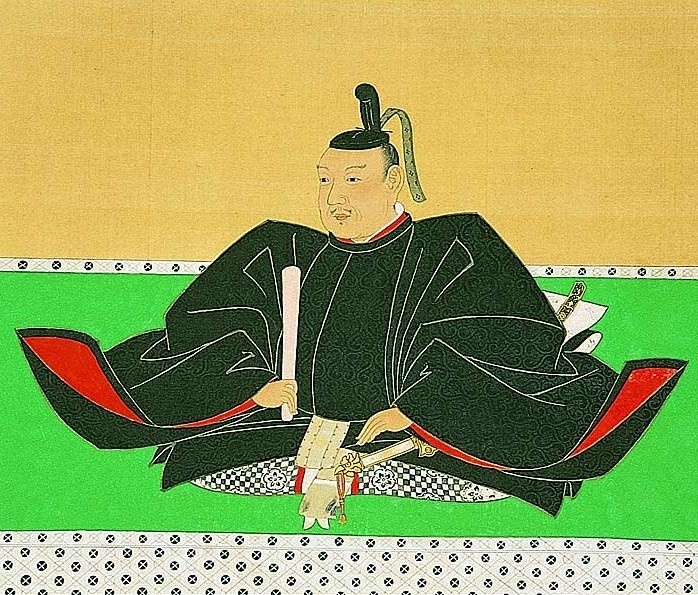
1. Sakai Tadatsugu (酒井忠次, 1527-1596)
Let´s start with the eldest of the four, Sakai Tadatsugu. Tadatsugu war born in the seventh year of Daiei (大永, 1527) as second son of the Matsudaira-retainer Sakai Tadachika (酒井忠親) in Ida Castle (井田城) in Mikawa province. After coming of age, he served first Tokugawa Ieyasus´s father Matsudaira Hirotada (松平広忠, 1526-1549), the then lord of Okazaki Castle (岡崎城) of Mikawa province. By the way, Tadatsugu was 15 years older than Ieyasu. The latter spent his childhood as so-called „human pledge“ and was raised within the Imagawa family (今川). When he broke with the Imagawa in Eiroku three (永禄, 1560), Tadatsugu changed to the service of Ieyasu and was four years later made lord of Yoshida Castle (吉田城) which was located in Mikawa too. He made himself a naw in the battles of Anegawa (姉川の戦い) in Genki one (元亀, 1570), of Mikatagahara (三方ヶ原の戦い) in Genki three (1572), of Nagashino (長篠の戦い) in Tenshô three (天正, 1575), and of Komaki and Nagakute (小牧・長久手の戦い) in Tenshô twelve (1584). In Tenshô 16 (1588) he handed over the leadership of the family to his son Ietsugu (酒井家次, 1564-1618) and withdrew to his mansion in the Sakurai district (桜井) in Kyôto where he got a pension of 1.000 koku. He died there on the 28th day of the tenth month Keichô one (慶長, 1596) at the age of 70.
1.1 A tachi of Bizen Sanemitsu (備前真光), kokuhô
When Oda Nobunaga conquered in Tenshô ten (1582) the provinces of Shinano and Kai and quasi eliminate the Takeda clan (武田), he stopped on his way back at Yoshida to thank Sakai Tadatsugu for his service. He presented him 200 ryô in gold and this highly elegant and magnificent tachi of Bizen Sanemitsu which came in an itomaki-tachi-koshirae. The blade has a nagasa of 76,9 cm, a sori of 2,7 cm, is in shinogi-zukuri, has an iori-mune, a deep koshizori, funbari and an ikubi-kissaki. The kitae is a very densely forged ko-itame with ji-nie, and the hamon is a chôji mixed with gunome with a wide nioiguchi and which is a bit more flamboyant on the ura side. The tang is ubu and bears the niji-mei „Sanemitsu“. It is said the itomaki-tachi-koshirae dates to the time of Nobunaga. It shows a kin-nashiji lacquer saya and the fittings are en suite shakudô with nanako ground and show the takabori-iroe ornamentation of the 3-5-3 kiri crest.
1.2 A tachi of Ko-Bizen Nobufusa (古備前信房), kokuhô
Tadatsugu got this tachi from Ieyasu for his military achievements in the Battle of Komaki and Nagakute. It also comes in an itomaki-tachi-koshirae with a kin-nashiji lacquer saya and en suite fittings with the aoi and kiri crest made by the Shônai-kinkô Yûrakusai Sekibun (遊洛斎赤文), that means the mounting dates to the Edo period. The blade has a nagasa of 76,6 cm, a sori of 2,4 cm and a motohaba of 2,7 cm. It is in shinogi-zukuri, has an iori-mune, a deep koshizori, funbari and a ko-kissaki, and so its sugata dates it clearly to the early Kamakura period. The kitae is a somewhat standing-out ko-itame mixed with ko-mokume. There is ji-nie and a faint midare-utsuri and the hamon is a quite nie-loaden mix of ko-chôji and ko-midare with nijûba and kinsuji whereat the yakihaba gets wider towards the tip. The bôshi is a wide yakitsume with hakikake and appears almost as ichimai. The tang is ubu, has a kijimomo-gata, shallow katte-sagari yasurime, a shallow kurijiri and bears the sanji-mei „Nobufusa saku“ (信房作). It is interesting that there were two more swords of Nobufusa in the possession of the Sakai family. The one is a rather small tachi with the sanji-mei „Nobufusa saku“ which belonged to the Sakai branch which ruled from the mid Edo period onwards the Himeji fief (姫路藩) of Harima province. And the other one was a tachi signed in the very same way which belonged to the Sakai branch which ruled the Obama fief (小浜藩) of Wakasa province.
1.3. A katana of Masazane (正真)
I have introduced this katana, the so-called „Inoshishigiri“ (猪切), some months ago in this article.
1.4 The yari „Kametôshi“ (瓶通し)
According to transmission, Tadatsugu killed with this yari an opponent whi was hiding behind a large water jug (mizukame, 水瓶・水甕), namely by piercing (tôshi, 通し) the entire jug and the person behind. This earned the blade the nickname „Kametôshi“. It is said that it was a hira-sankaku-yari of Heianjô Yoshifusa (平安城吉房) with a nagasa of 21,2 cm but the whereabouts of the famous piece are unknown. But the yari must had been quite famous as there were several utsushimono made in the Edo period which all mention the provenance in the signature, namely in the way: „Mo Sakai Saemon no Jô Kametôshi-yari“ (模酒井左衛門尉瓶通槍), „made modelled on (mo, 模) the Kametôshi-yari of Sakai Saemon no Jô.“ Some of these copies are still in the possession of the Sakai family.
1.5 A tachi of Tegai Kanenaga (手掻包永し), jûyô-bijutsuhin
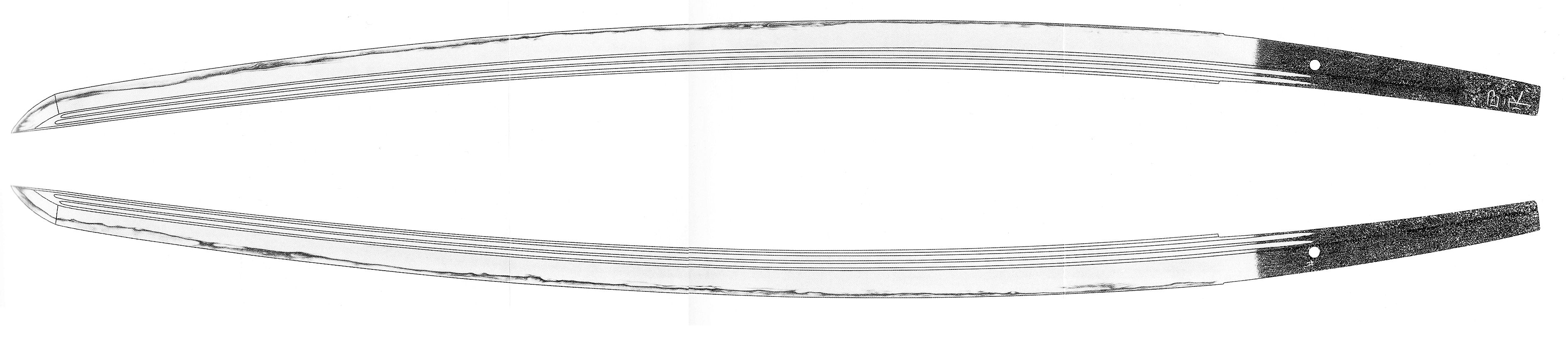
This tachi was in the possession of the Shônai-Sakai family since the Edo period. It has a nagasa of 70,9 cm, a sori of 2,1 cm and a motohaba of 2,9 cm. The blade is also featured in my latest publication Kantei Supplement 2. With the extant signature at the very end of the tang, we can calculate an original nagasa of about 83 cm. The kitae is a dense and beautifully forged itame with nagare towards the ha. Especially the haki-omote side shows many areas of a very densely forged hada. In addition, there is plentiful of ji-nie and chikei. The hamon is a rather low and slightly undulating notare-chō to suguha with hotsure, uchinoke, kuichigaiba, nijūba, yubashiri, sunagashi and kinsuji. The nioiguchi is wide, bright, clear and very nie-loaden, and the yakiba gets somewhat wider in the monouchi area. The bôshi shows much hakikake, tends to kaen, and runs out as yakitsume. Incidentally, the futasuji-hi are untypical for Kanenaga but the accompanying documents to the blade show us that they were once added in Kansei eight (寛政, 1796) by the Hon´ami family, namely on orders of the Sakai family.
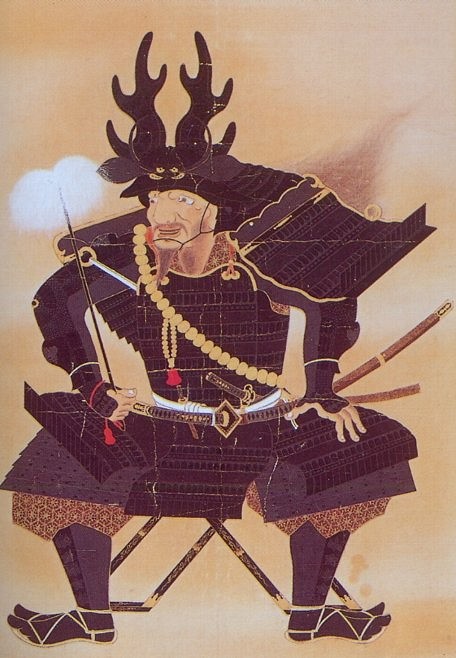
2. Honda Tadakatsu (本多忠勝)
Tadakatsu was born in Tenbun 17 (天文, 1548) as oldest son of Honda Tadataka (本多忠高) in Kuramae (蔵前) in Mikawa province. He served Ieyasu since his youth and participated in his first battle at the age of twelve (or 13 according to the Japanese way of counting years), namely in Eiroku three (永禄, 1560) on the occasion of an initiating fighting to the Battle of Okehazama (桶狭間の戦い). He took his very first head at the age of 15, namely those of the Imagawa-general Ohara Bizen (小原備前). Later he participated in numerous battles, among others those of Anegawa, of Hitokotosaka (一言坂の戦い) in Genki three (元亀, 1572), of Mikatagahara, of Nagashino, and of Komaki and Nagakute. After Sekigahara, which he fought of course at the side of the Tokugawa, he received the Kuwana fief (桑名藩) of Ise province which had an income of 100.000 koku. He handed over the control of the fief to his son Tadamasa (忠政, 1575-1631) in Keichô 14 (慶長, 1609) and retirned, but died shortly later, namely on the 18th day of the tenth month of the following year at the age of 63.
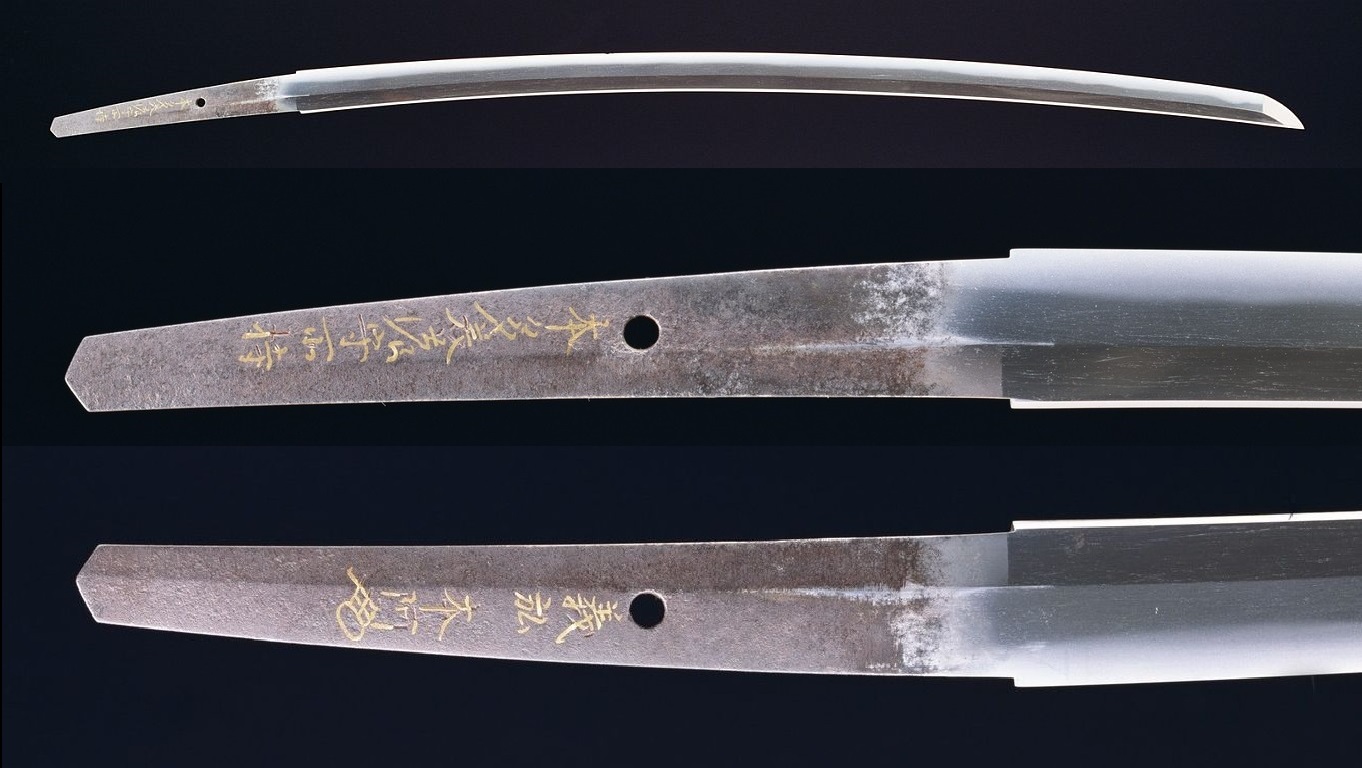
2.1 The meibutsu Kuwana-Gô (桑名江), jûyô-gunkazai
According to transmission, Tadakatsu´s son Honda Mino no Kami Tadamasa participated once in a falcon hunt when he decided to take a break at the house of a local man. This house had a special room marked with gohei streamers where a special sword was worshiped. Tadamasa asked the owner about the sword and he said that each family that had preserved that sword so far was free of vices and sins. He was eventually allowed to inspect the blade hands on and after some negotiations, he bought it from the man for an unknown sum. As the blade was ô-suriage and thus mumei, Tadamasa had it appraised by Hon´ami Kôtoku (本阿弥光徳) who attributed it to the famous master Gô Yoshihiro (郷義弘). And the appraisal was inlayed in gold on the tang via the kinzôgan-mei „Yoshihiro Hon´a + kaô“ (義弘本阿) and on the ura side „Honda Mino no Kami shoji“ (本多美濃守所持, „in the possession of Honda Mino no Kami“). Henceforth the nickname of the sword was „Kuwana-Gô“ as Tadamasa was the lord of Kuwana fief. By the way, (江) is another, shorter way to note Yoshihiro´s name „Gô“ (郷). The blade has a nagasa of 69,4 cm, a sori of 2,0 cm, is in shinogi-zukuri, has an iori-mune, and a normal mihaba and kasane. The kitae is a ko-itame with plentiful of ji-nie and magnificent chikei which tends a little to masame. The hamon is a ko-notare mixed with gunome whose wide, bright and clear nioiguchi is quite ko-nie-loaden and shows some kinsuji. The bôshi tends to ichimai what is typical for Gô Yoshihiro.
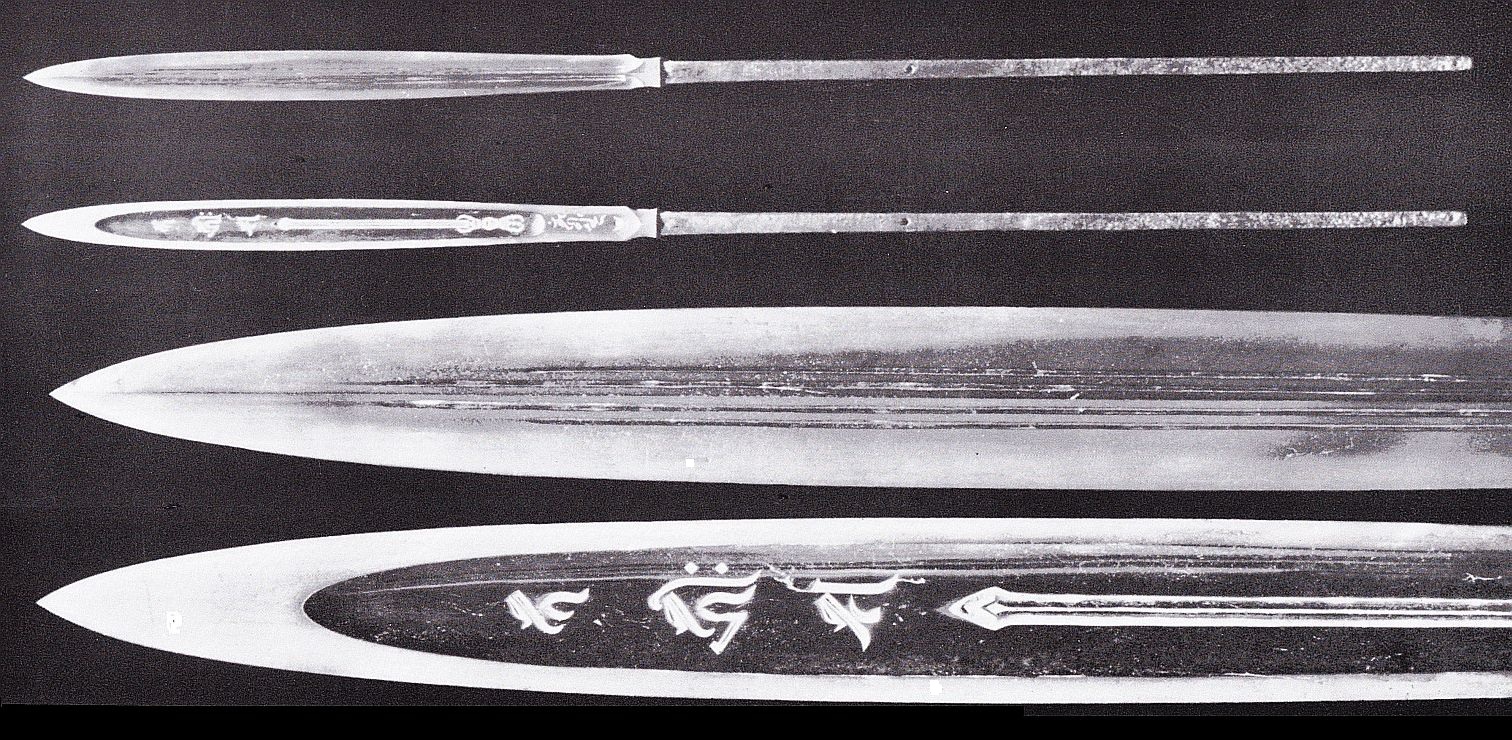
2.2 The yari „Tonbôgiri“ (蜻蛉切)
At Komaki and Nagakute, the 35.000 men army of the Tokugawa-Oda alliance faced a twice as strong army of Hideyoshi. When Hideyoshi learned on the ninth day of the fourth month Tenshô twelve (1584) that a part of his army had lost the Battle of Hakusanmori (白山林の戦い), he ordered 20.000 of his men to the close river of Ryûsenji (竜泉寺). Honda Tadakatsu faced him there with only 500 warriors and he was so brave as stopping his horse inmidst the river, only about 500 metres in front of Hideyoshi, to let it calmly drink. His aim was to delay Hideyoshi´s attack on his lord Ieyasu and succeeded with this daring manoeuvre. At that time, Tadakatsu wore his famous helmet with the deer antlers and the spear Tonbôgiri with a 6 m long shaft. Incidentally, he had it later shortened to 90 cm when he gew older. The nickname goes back to the story that once a dragonfly (tonbô, 蜻蛉) tried to land on the blade of the spear but was cut in half. The spear itself is a work of the same Masazane (正真) who made the aforementioned Inoshishigiri. The blade has a nagasa of 43,7 cm and a nakago length of 55,6 cm. The hi shows a relief of a bonji and a sankozuka-ken.

3. Sakakibara Yasumasa (榊原康政)
Yasumasa was born in Tenbun 17 (天文, 1548) as second son of Sakakibara Nagamasa (榊原長政) in the Ueno district (上野郷) of Mikawa province. He came into the service of Ieyasu quite early, namely as one of his pages. Later and for his outstanding achievements in the crushing of the Ikkô-Ikki rebels (一向一揆) of Mikawa province, Ieyasu granted him his character for „yasu“. Before he was just called „Koheita“ (小平太). Yasumasa too participated successfully in the battles of Anegawa, Mikatagahara, Nagashino, and Komaki and Nagakute. He criticized Hideyoshi´s quasi annexation of the Oda clan after Nobunaga´s death in 1584 whereupon Hideyoshi placed a bounty on his head in the height of 100.000 koku. In Tenshô 18 (天正, 1590), Yasumasa leaded Ieyasu´s vanguard at the siege of Odawara Castle (小田原征伐) and when his lord was transferred to the Kantô region in the very same year, Yasumasa was made lord of Tatebayashi Castle (館林城) in Kôzuke province. He restructured the surrounding land and turned it into the Tatebayashi fief of the same name which had later an income of 100.000 koku and remained in the possession of the Sakakibara family even after Sekigahara. Yasumasa also died there, namely on the 14th day of the fifth month Keichô eleven (慶長, 1606) at the age of 59.
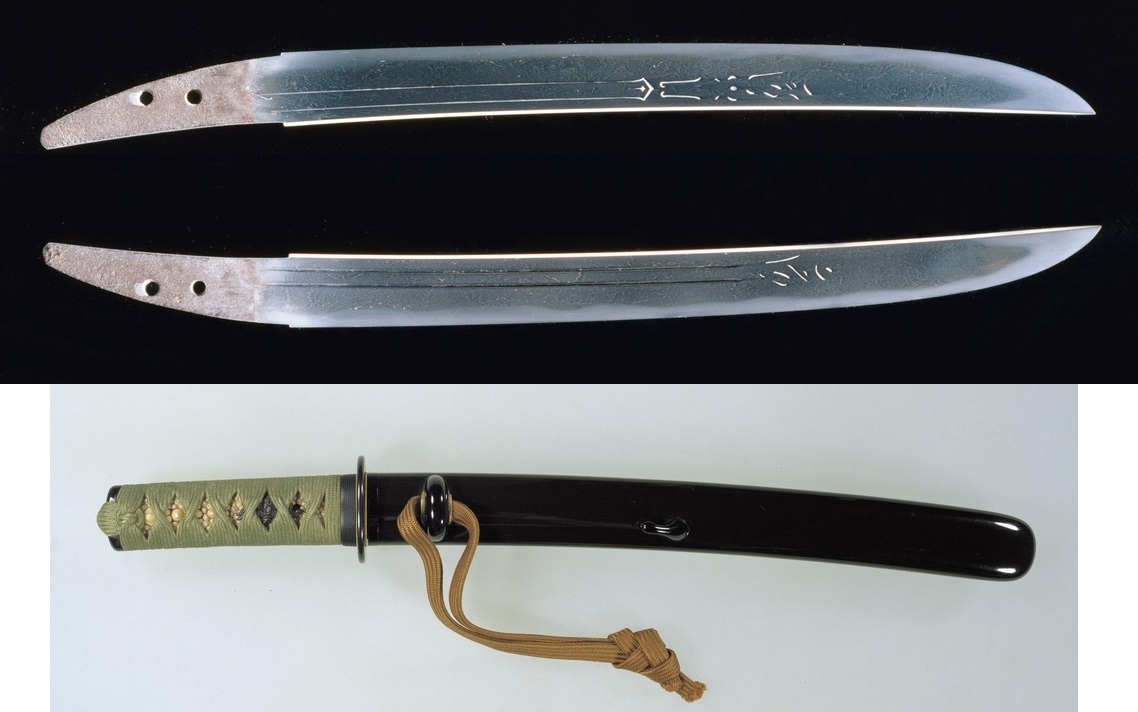
3.1 The meibutsu „Ishida-Sadamune“ (石田貞宗), jûyô-bunkazai
There is the legend that Ieyasu showed mercy with Ishida Mitsunari (石田三成, 1559-1600) after winning Sekigahara and that he hid him at Sakakibara Yasumasa where he got old and died a natural death. For this great favour an maintaining strict silence, he presented Yasumasa with a sunnobi-tantô of Sôshû Sadamune. However, the more common transmission says that Mitsunari gave the sword in question as a memento to his friend Tanaka Yoshimasa (田中吉政, 1548-1609) who namely found and arrested him when he hid in Ômi province after his defeat at Sekigahara. But it remains unclear how the sword came in this version from the Tanaka into the possession of the Sakakibara family. Anyway, the blade has a nagasa of 31,2 cm, a sori of 0,5 cm, is in hira-zukuri and has a mitsu-mune. The kitae is a standing-out itame with plentiful of ji-nie and quite prominent chikei. The hamon is a Sadamune-typical ko-notare in ko-nie-deki with a wide nioiguchi and plentiful of kinsuji. The bôshi is in midare-komi with hakikake and a rather long running-back kaeri. The omote side shows a bonji, a rendai, a kuwagatga and a suken, and the ura side a bonji and gomabashi. The tang is ubu, mumei, has a funagata and a kengyô-jiri. The koshirae is a work of the early Edo period.
3.2 A tachi of Rai Kuniyuki (来国行)
A transmission says that the favourite sword of Yasumasa was a 73,3 cm long tachi of Rai Kuniyuki which he got as a present from Ieyasu for his military achievements. One theory assumes now that this was the meibutsu „Fudô-Kuniyuki“ (不動国行) which I have introduced recently in this article. As the Fudô-Kuniyuki was since the Battle of Komaki and Nagakute a heirloom of the Tokugawa family, the only way the mentioned theory could work is that Ieyasu had presented the sword to Yasumasa but the latter, or the Sakakibara family, gave it later as a return gift to the Tokugawa.
3.3 A katana if Motoshige (元重)
Records show us that Ieyasu presented a katana of Bizen Motoshige to Yasumasa on the 25th day of the eleventh month Keichô eight (1603) together with two yari of a not further described Kunitsuna (国綱) and a raise of his salary by 5.000 koku. Unfortunately, the blade suffered a fire damage at an earthquake in Ansei two (安政, 1855) but was successfully rehardened.
3.4 A sasaho-yari
According to extant records, Yasumasa received this yari in Tenshô twelve (1584) on the occassion of the Battle of Komaki and Nagakute. It is a hira-sankaku sasaho-yari with a nagasa of 19,1 cm. It is said that the shaft was originally 1,8 m long. The blade is signed „Morinaga“ (守長) and is still in the possession of the Sakakibara family.
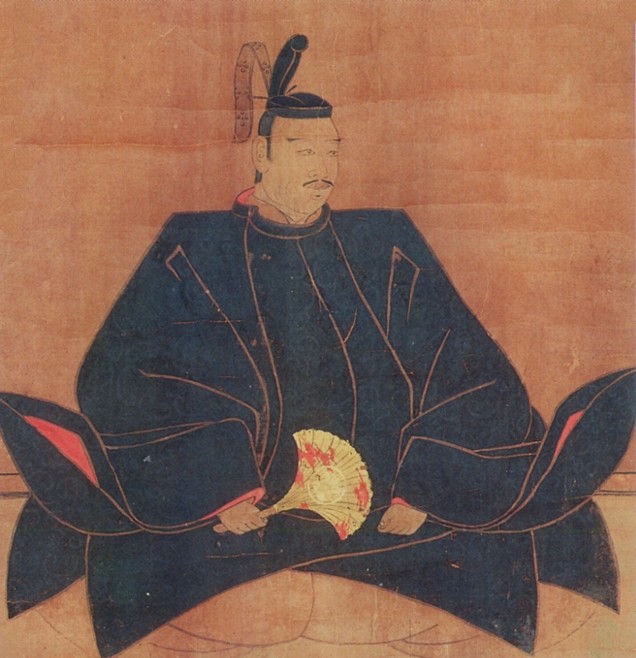
4. Ii Naomasa (井伊直政)
Naomasa was born on the 19th day of the second month Eiroku four (永禄, 1561) as oldest son of the Imadegawa-retainer Ii Naochika (井伊直親) in Iinoya (井伊谷) in Tôtômi province. That means he was the only one of the four Tokugawa-shitennô who came not from Mikawa. When his father was executed because of a false accusation in Eiroku five (1562), the situation of the Ii family was unclear until Naomasa became Ieyasu´s page in Tenshô three (天正, 1575) and the decision was made that the Ii lineage should be continued. Naomasa showed a great political talent when he was acting as messenger at the peace negotiations of the Tokugawa with the (北条) after the Tenshô-Jingo Incident (天正壬午の乱) in Tenshô ten (1582). After Ieyasu annexed the former Takeda lands in Shinano and Kai, he gave Naomasa the command over the elite troops „Ii no Akazonae“ (井伊の赤備え, about „the Red Ii“) or also called „Ii no Akaoni (井伊の赤鬼, „the Red Ii Devils“), which were as the name suggests equipped with red-lacquered armours. Two years later and at the Battle of Komaki and Nagakute, Naomasa was able to make himself a name as leader of this troop and in Tenshô 18 (1590), he leaded his men at the siege of Odawara Castle in an unequalled night attack where they were able to enter the castle grounds. When Ieyasu was transferred to the Kantô region, Naomasa became castellan of Minowa (箕輪城) in Kôzuke province and was thus in the possession of the lands with the highest income (120.000 koku) amongst all Tokugawa retainers. At Sekigahara he was hit by a bullet in his right arm and fell of his horse but insisted to participate until the battle was over. For his service and achivements, he received the Sawayama fief (佐和山藩) of Ômi province worth 180.000 koku which was before ruled by Ishida Mitsunari. But he died shortly later, namely on the first day of the second month Keichô seven (1602).
4.1 A tachi of Bizen Kunimune (備前国宗), jûyô-bunkazai
Naomasa got this tachi from Ieyasu in Tenshô 18 (1590) for his military achievements at the Siege of Odawara. Later his descandants offered the sword to the Ii-jinja (井伊神社) in Ômi province which was erected to honour Naomasa, but the shrine returned it to the Ii family after World War II. It became kokuhô in 1922 but received later „just“ the status jûyô-bunkazai after the re-submittal in the course of the new system. The blade has a nagasa of 70,0 cm, is in shinogi-zukuri, has an iori-mune, is rather slender and has a deep koshizori. The kitae is a very densely forged ko-itame with ji-nie and a midare-utsuri. The hamon is a suguha with ko-ashi and a relative tight nioiguchi, and the bôshi is sugu too with a roundish kaeri. The tang is ubu and bears quite high and towards the nakago-mune a rather small niji-mei. The blade is attributed to the 2nd generation Kunimune, i.e. to the son of Saburô Kunimune (三郎国宗).
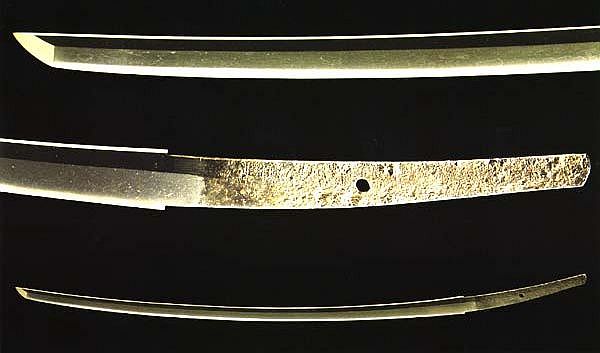
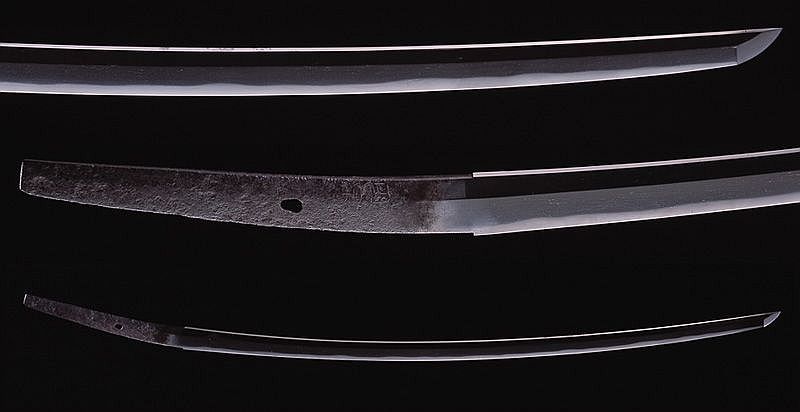
4.2 A tachi of Hôki Kunimune (伯耆国宗), jûyô-bunkazai
This blade is also ubu and signed „Kunimune“ but is not a work of Bizen-Saburô but of Hôki Kunimune. It has a nagasa of 79,0 cm, a sori of 2,9 cm, a deep koshizori and funbari. The kitae is a standing-out itame with ji-nie and chikei and the hamon is a quite ko-nie-loaden suguha-chô mixed with ko-midare, kinsuji and sunagashi. The nioiguchi is subdued and the bôshi is midare-komi with a ko-maru-kaeri.
 Markus Sesko