Yagyû-tsuba

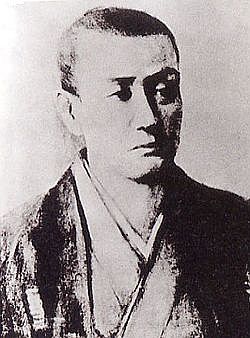
This is the first time I post an article at the special request of a reader. I was namely asked to write a synopsis on the origins of Yagyû-tsuba or at least what we know about their origins today, so let´s get started right away. First of all it is essential to know that they go back to the famous swordsman Yagyû Ren´ya Toshikane (柳生連也厳包, 1625-1694) and thus we have to start to introduce him before we can start to talk about Yagyû-tsuba. Ren´ya was born in the second year of Kan´ei (寛永, 1625) as third son of Yagyû Toshiyoshi (柳生利厳, 1579-1650) and Tama (珠), the youngest daughter of Shima Sakon Kiyooki (島左近清興, 1540-1600). For whatever reason, he was raised by Hayashi Gorôdayû (林五郎太夫), the station master of Goyu (御油) in Mikawa province, and bore back then the name Hayashi Shinroku (林新六). Gorôdayû in turn was the husband of Toshiyoshi´s younger sister, which means Ren´ya was raised by his uncle. When he was nine or ten years old, he went to Nagoya whereas at that time he had returned to his mother´s maiden name calling himself Shima Shichirôbei (島七郎兵衛). There in Owari he was trained in the martial arts by his very own family, together with his two older half-brothers Kiyoyoshi (清厳, also reads as “Kiyotoshi”) and Toshikata (利方). It is said that he trained really hard and that he had distinguished himself already at the age of twelve or thirteen. When Ren´ya was 14, his eldest brother Kiyoyoshi died at the young age of 24 in the Shimabara Rebellion. Also at about that time, Toshikata became the official fencing instructor of Tokugawa Mitsutomo (徳川光友, 1625-1700), the future second daimyô of the Owari fief. It is said that Ren´ya kept training hard as he was anxious of being inferior in swordsmanship to his father. But it paid off, as he mastered his own style at the young age of 16, calling himself Yagyû Shichirôbei Heisuke (柳生七郎兵衛兵助). Two years later, i.e. in Kan´ei 19 (1642), the then Owari-daimyô Tokugawa Yoshinao (徳川義直, 1601-1650) gave him the post of a guard at audiences (o-tôri-ban, 御通番) when being in Edo in the course of the sankin-kôtai. During this post in Edo, Ren´ya was able to overcome some weakness in his swordsmanship, which preoccupied him for a long time. He was very pleased with that and won more than thirty fencing duels in the presence of Yoshinao without getting hit once. Later that year, he changed his name to Yagyû Shichirôbei Toshitomo (柳生七郎兵衛厳知), and in the subsequent year, his o-tôri-ban salary of 40 koku was raised by 30 koku. And in Shôhô four (正保, 1647) when he was 23 years old, he got another raise by 70 koku, meaning a total income of 140 koku at that time. In the following year, his father retired and he was appointed to the post of official fencing instructor of the Owari fief. One year later his father inaugurated him as fifth head of the Shinkage-ryû by writing at the end of the certificate: “This person [= Toshitomo] was the most outstanding among the students being taught so far in this school. This extraordinary praiseworthiness must be highly appreciated. The more, he is under obligation to show no negligence. The person described here is unequalled.”

 YagyuToshikane

Picture 1: Yagyû Ren´ya Toshikane

In Kei´an three (慶安, 1650), both Ren´ya´s father Toshiyoshi and his lord Tokugawa Yoshinao died. That means he inherited his father´s salary of 500 koku and the family residence and became a retainer of Tokugawa Mitsutomo who was of the same age. In the following year he fought in Edo at the presence of the shôgun a duel against Edo-Yagyû Munefuyu (宗冬, 1613?-1675). Munefuyu was smashed by Toshitomo with a single stroke of his bokutô and it is said that the Edo-Yagyû and the Owari-Yagyû branch broke ties since that time. In Kanbun eight (寛文, 1668) – Ren´ya/Toshitomo was 44 years old at that time – his salary was once again raised, namely to 600 koku. However, he expressed the wish to retire from his official post. Mitsutomo agreed, the salary was reduced to 200 koku, and a residence in Kobayashi (小林) right outside of Nagoya was granted to him. In the course of this early retirement, he changed his name from “Toshitomo” to “Toshikane” (厳包). Well, Toshitomo/Toshikane was neither ill nor weak at that time but wanted to focus somewhere off the family´s dôjô on the more spiritual aspects of swordsmanship not being busy with training students all day long. He had inaugurated Mitsutomo as sixth head of the Yagyû Shinkage school and later, i.e. in Enpô three (延宝, 1675), Mitsutomo´s son Tsunanari (徳川綱誠, 1652-1699) as seventh Shinkage-ryû master. Somewhat later, in the second year of Jôkyô (貞享, 1685), Toshikane entered priesthood and called himself  “Ura Ren´ya” (浦連也). “Ura” was quasi his new family name and “Ren´ya” his first name. And thus it should just read “Ren´ya” and not “Ren´yasai” (連也斎) as quoted by many authors. The latter name does not appear before the bakumatsu era and it is assumed that it goes back to a mistake of Imaizumi Gennai Nobuharu (今泉源内延春) who thought it is a nyûdô-gô and not a name and added the nyûdô-typical suffix “sai” (斎). Incidentally, Nobuharu was a close friend to the Yagyû family and compiled the „Yagyû-tsuba zufu“ (柳生鐔図譜) which is explained later. And as Ren´ya was back then on his path to attaining enlightenment, he was referred to as “oshô” (和尚, meaning “Buddhist priest”). According to Mitsutomo, the samurai of the Owari fief called him respectfully “Kobayashi-oshô” (小林和尚, i.e. “the priest from Kobayashi”). Ren´ya died on the eleventh day of the tenth month Genroku seven (元禄, 1694) at the age of 70. Five years after his death, the Kobayashi residence was pulled down and the Shôjô-ji (清浄寺) was erected there.

Now we come to Yagyû-tsuba. As mentioned in the beginning, they go back to Yagyû Ren´ya and that is why they were called “Yagyû-tsuba” later. But also the term “Kobayashi-tsuba” (小林鐔) existed which goes back to Ren´ya´s place of retirement. Everything started with his granted retirement and the name change to “Toshikane”. Extant documents suggest that he was concerned about tsuba from that time on and that he also experimented with yakite-kusarakashi, i.e. a certain surface finish applied by a combination of acids and heat treatment. In late Edo-period tsuba related publications like the „Kokon-kinkô-benran“ (古今金工便覧), published in Kôka four (弘化, 1847), we read that Ren´ya and others tested back then their tsuba by smashing them in a mortar. None of them met the expectations of the swordsman except those with ground plates made by Kotetsu Gozaemon (古鉄五左衛門) from the Akasaka district of Edo which namely did not change their shape. Thus Ren´ya entrusted him with forging the ground plates of 36 tsuba into which a certain Gotô (後藤) cut the sukashi motif designed by Kanô Tan´yû (狩野探幽, 1602-1674). Well, it is very likely that the Gotô craftsman in question was not from the bakufu-employed Gotô family of kinkô masters as opening sukashi into iron ground plates was not really their métier. But we find an interesting entry in the „Ishikawa-mekiki-densho“ (石河目利伝書) which says: „Gotô Shôbei Mitsuteru (後藤庄兵衛光輝), lived once in Mino but moved later to Edo. He received from Yagyû Ren´ya a stipend for the support of three persons and went from time to time to Owari to work from there.“ Gotô Shôbei and the Seto potter Yanosuke (弥之助) were those craftsmen directly stipended by Ren´ya as the latter developed also a liking for pottery in his later years. Ren´ya also made some bowls himself, probably under the guidance of Yanosuke. And the fittings of his Yagyû-koshirae go probably back to a joint work of Ren´ya and Gotô Shôbei. We know notes for examples which say that Shôbei made fuchi according to the liking of Ren´ya and so it suggests itself that it was Gotô Shôbei Mitsuteru who was reponsible for the carvings and sukashi openings of the initial Yagyû-tsuba. The transmission of Kanô Tan´yû as designer of the sukashi motifs is doubted. Already the scholar Inaba Michikuni (稲葉通邦, 1744-1801) who was from the Owari fief himself wrote in his „Yagyû-tsuba-kata zenzu” (柳生鐔形全図): „The design goes back to Hata Kuninari (秦国成) and not to Tan´yû as it is mostly believed.“ Hata Kuninari was a painter employed by the Owari fief. He was later allowed to bear the family name „Kanô“ as he became a student of Kanô Yasunobu (狩野安信, 1614-1685). There is also the theory that Kuninari was the same person as Kanô Tsunenobu (狩野常信, 1636-1713) as there are namely also tsuba sketches extant of the latter. Well, here we are obviously in the then world of common embellishments. That means sketches of a certain Kanô painter mentioned in a certain document quickly became designs of master Kanô Tan´yû in the next publication.

 YagyuTsuba2

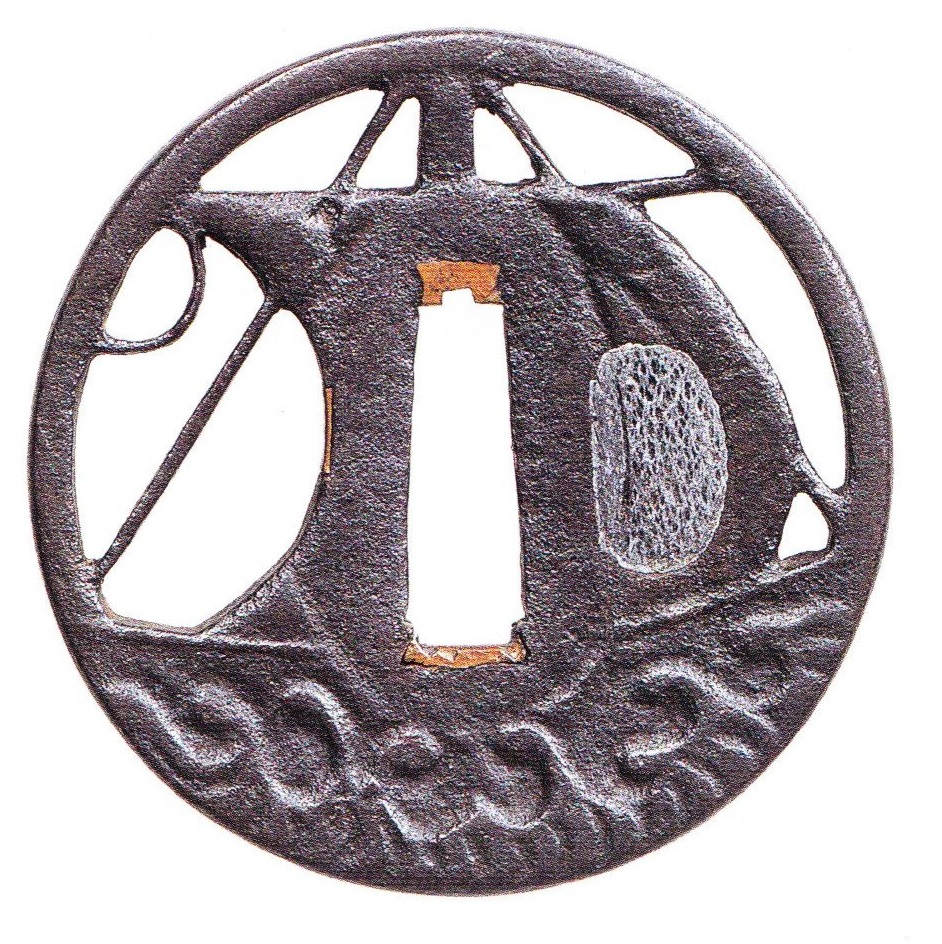
Picture 2: Yagyû-tsuba with the kazeho motif. It is said that the mind of the practitioner of the Yagyû-Shinkage-ryû should advance by assimilating the teachings of the school just as the ship advances through the strength of the billowing sail.

So in the course of this tsuba project initiated by Yagyû Ren´ya Toshikane, 36 designs were created. Later, these 36 tsuba were called „kasen-tsuba“ (歌仙鐔) because the number matches with the „Thirty-six Immortal Poets “ (Sanjûrôkkasen, 三十六歌仙) from the Nara, Asuka, and Heian periods. Several designs were added later to this pantheon of Ren´ya´s tsuba, even some by Tokugawa Mitsutomo himself like for example the so-called “kazeho” (風帆, lit. “billowing sail”) motif (see picture 2). And by the Meiji period, the total number of Yagyû-tsuba motifs had arrived at more than 120. However, Yagyû-tsuba were not that famous at all back then and brushed rather aside as “something mid Edo from the lineage of Owari and Kanayama-tsuba”. Only slowly their historic value was recognized and it took until Sasano Masayuki (笹野大行) until Yagyû-tsuba were also appreciated for their artistic value. But from that on, they experienced a great demand, also from outside of Japan, as it is of course very attractive to own tsuba so obviously connected to swordsmanship in particular and martial arts in general. Anyway, there are only very few of the initial 36 kasen-tsuba extant but as the enjoyed a certain popularity right away, copies and hommages were made throughout the Edo and until the bakumatsu era. The Yagyû family called the 36 initial kasen-tsuba of Ren´ya either „Kobayashi-tsuba“, „ie no tsuba“ (家の鐔, lit. „our family tsuba“) or „Ren´ya-shikomi“ (連也仕込み, about „Ren´ya´s stock tsuba“). The later copies made around Hôreki (宝暦, 1751-1764) were referred to as go-ryûgi-tsuba (御流儀鐔), i.e. about „tsuba in the style of the Yagyû school“. Today these works are also called „second generation Yagyû-tsuba“. Towards the end of the Edo period, even more Yagyû-tsuba or Yagyû-style tsuba were made and they in turn are referred to as „third generation“ Yagyû-tsuba. The term „Yagyû-tsuba“ by the way appears for the first time in Inaba Michitatsu´s (稲葉通龍, 1736-1786) „Sôken-kishô“ (装剣奇賞) published in Tenmei one (天明, 1781).

 YagyuTsuba1

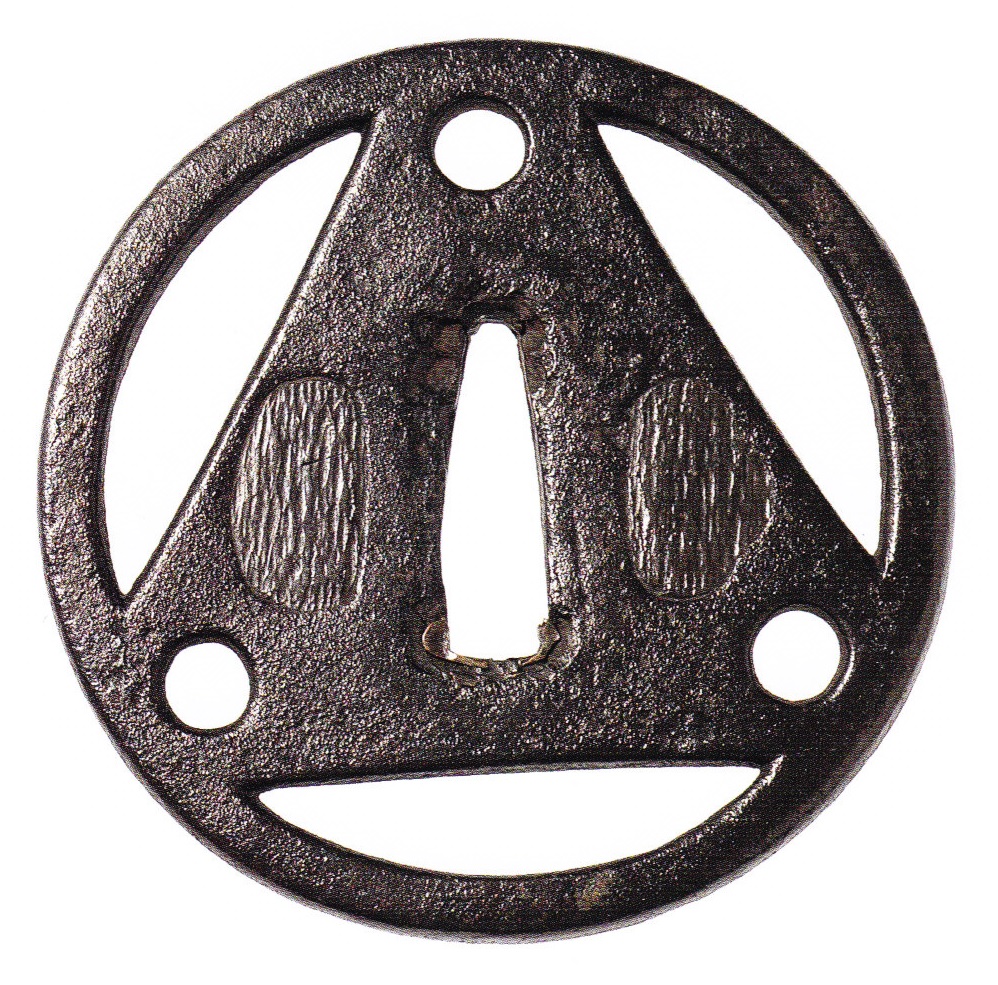
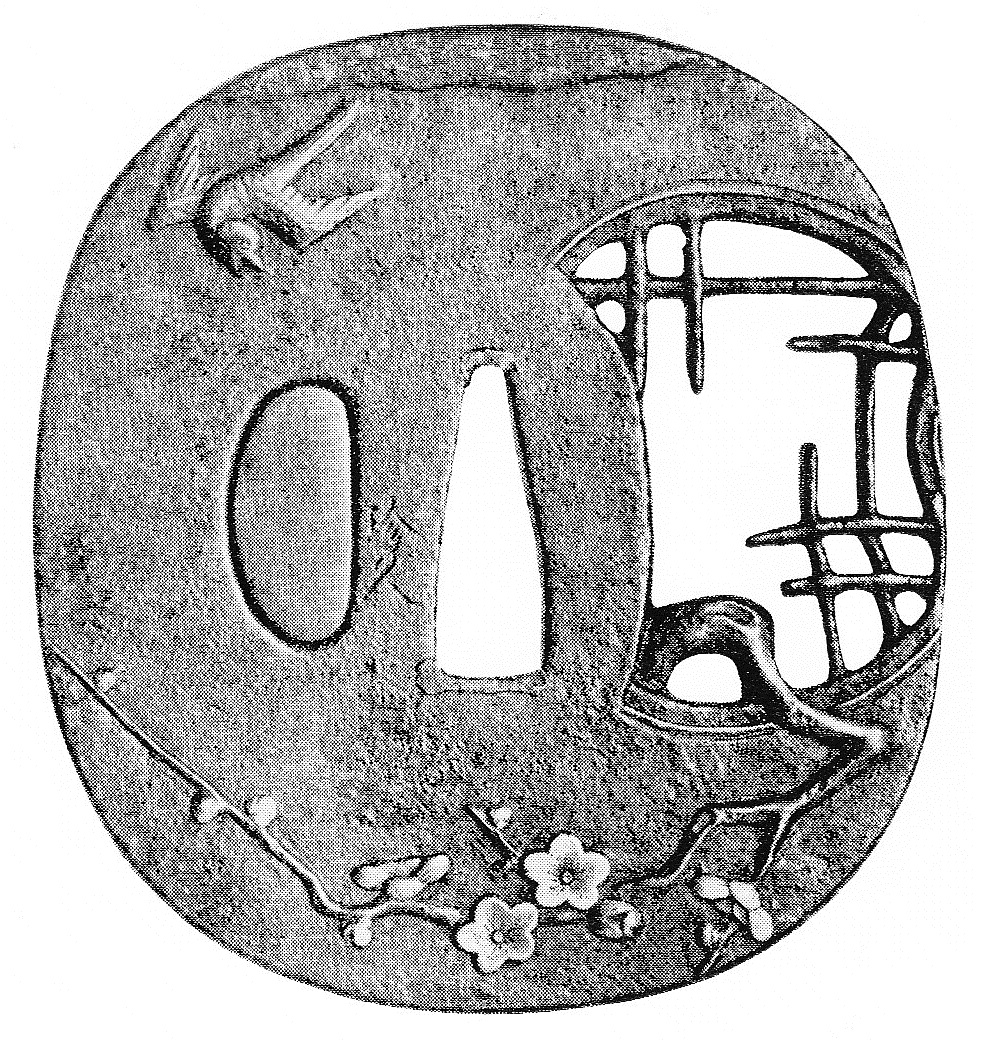
Picture 3: mitsuboshi-sankaku no zu tsuba (三星三角図鐔, three stars in a triangle)

The tsuba shown above is probably one of the most representative of the 36 kasen-tsuba. Some say the motif represents the so-called „Three Basic Studies“ (sangaku, 三学) of Buddhism which are kaigaku (戒学, precepts), jôgaku (定学, contemplation and meditation), and eigaku (慧学, wisdom). But in Ren´ya´s teachings we find also the term „sanma no kurai“ (三磨の位), the „Three Ways of Learning“, which are narai (習い, learning), keiko (稽古, training), and kufû (工夫, to work actively on what you have learned and trained). According to Ren´ya, these three elements are essential when you want to make any progress in swordsmanship. Others in turn suggest that the mitsuboshi-sankaku motif stands for the so-called „sangaku´en no tachi“ (三学円之太刀), a group of sword kata of the Yagyû-Shinkage-ryû. And Yagyû Toshinaga (柳生厳長), the 20th head of the Yagyû-Shinkage-ryû, speaks in his „Shôden-Shinkage-ryû“ (正伝新陰流) of the mind/heart, the sword, and the body, embedded into a circle, which in turn stands for the desired ability to change techniques at will and to flow smoothly from one movement to another (as described in another context by Karl. F. Friday in his book Legacies of the Sword, p. 74, University of Hawai´i Press, 1997). Well, we can imagine that the mitsuboshi-sankaku motif comprises all of this. But the philosophical aspects of Yagyû-tsuba is another topic as I was asked to shed some light on the historical aspects of their origin. And in this sense I hope this article was of general interest.

And here the genealogy of the Owari and Edo-Yagyû branch as a reference:

YagyuGenealogy

New (Old) Translation: JUKKEN

cover-kl

For those of you seeking more references (and until my next Kantei supplement is finished), I have uploaded a translation to Lulu I have done a while ago. It is the 1967 published JUKKEN which most of you probably know. It is a full translation, that means with all the oshigata. It features about 130 fine blades, one of it is designated kokuho, seven juyo-bunkazai and twelve juyo-bijutsuhin.

142 pages, paperback, b/w, A4, $55.00 (+ $10.00 flat shipping rate)

This is not going to be made public and is meant as personal study reference so everyone who wants a copy, please contact me via “markus.sesko@gmail.com”. I would suggest payments via PayPal but bank transfer is of course also possible. After an order is received, I will have a copy print and sent from Lulu directly to the buyer.

The eBook can be downloaded here:

Preview

Contents

Gassan Sadaichi

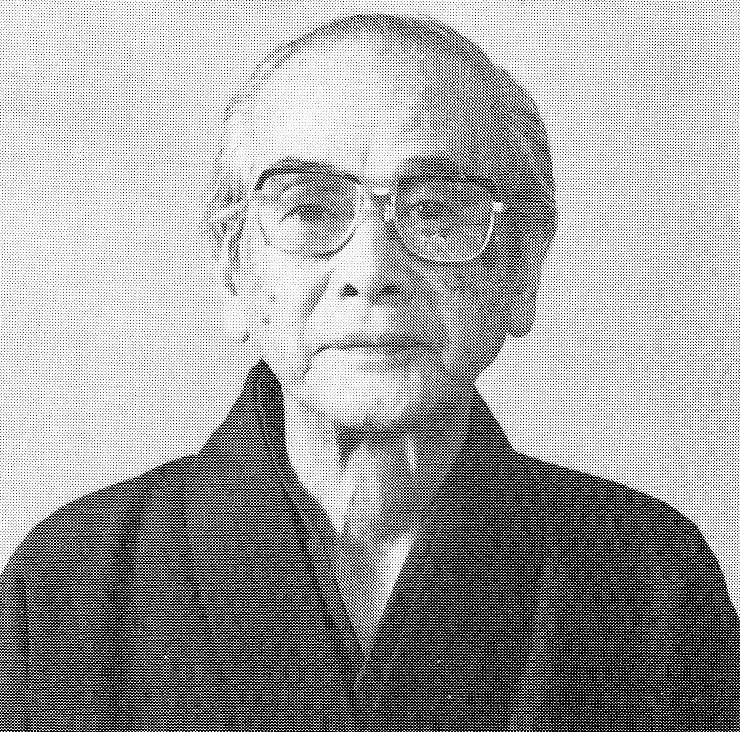
Sadaichi was born on 8 November 1907 in Ôsaka into the young but already established lineage of the revived Gassan school. His civilian first name was „Noboru“ (昇). The Gassan reviver was his great-grandfather Sadayoshi (月山貞吉, 1800?-1870) who had studied under the famous shinshintô smith and reviver of old traditions himself, Suishinshi Masahide (水心子正秀). In the fourth year of Tenpô (天保, 1833) Sadayoshi had moved to Ôsaka where he founded his own school, namely as mentioned with reviving the Gassan school from which he derived. Incidentally, the Gassan school became extinct in the late kotô period and the first later descendant who reappears in the records is Sadayoshi´s father Sadachika (貞近, 1771-1851) who lived in Sasagawa (笹川) in the Nishimurayama district (西村山郡) of Dewa province, i.e. just right where his kotô ancestors were active. However, Sadachika´s family name was not yet „Gassan“ but „Okuyama“ (奥山). It was namely Sadayoshi who adopted it as family name for his lineage. Both Sadaichi´s father and grandfather, Sadakatsu (月山貞勝, 1869-1943) and Sadakazu (月山貞一, 1836-1918) respectively, were noted swordsmiths.

 Gassan

Picture 1: Gassan Sadaichi

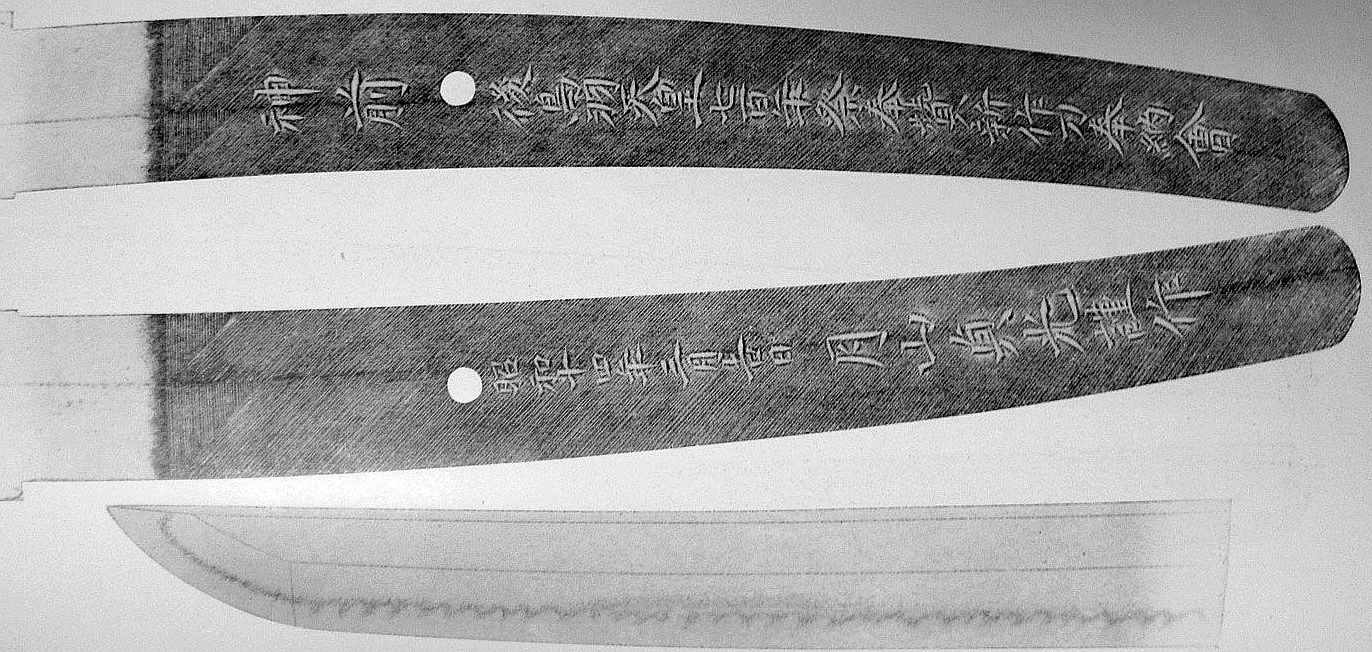
Sadaichi started his training as swordsmith when his grandfather Sadakazu died. He was then eleven years old and his father Sadakatsu introduced him not only into the Gassan, but also into the gokaden techniques. First he signed with the „Sadamitsu“ (貞光) and a sword with that mei was accepted (nyûsen) for an exhibition of the Ôsaka Art Association (Ôsaka Bijutsu Kyôkai, 大阪美術協会). In 1927, he and his father got a special order from Ise´s Shrine Bureau (Jingû-jichô, 神宮司庁), affiliated with the prewar Ministry of Home Affairs (Naimushô, 内務省), to forge in the following three years 68 tachi and 43 hoko to be offered to the Ise Shrine at the 58th Rebuilding Ceremony in 1933. In between, more precisely in 1929, he and his father forged Emperor Shôwa a so-called „daigenshi-tô“ (大元師刀), the sword for him in his function as supreme commander of army and navy. Pictures of some genshi-tô (元師刀, „marshal swords“) can be found here. Ten years later in 1939, he forged a tachi to support the 700th anniversary of Emperor Gotoba´s death. There was an association founded for this anniversary which held also a sword exhibition. Sadaichi, back then still under the name „Sadamitsu“, was one of 25 smiths to contribute to this exhibition. An oshigata of this blade is seen in picture 2.

 Gassan1

Picture 2: tachi, mei: „Shinzen – Gotoba-tennô shichihyakunen-sai-hôsan shinsakutô-hônôkai „ (神前・後鳥羽天皇七百年祭奉賛新作刀奉納会) – „Shôwa jûyonnen sangatsu-kichijutsu – Gassan Sadamitsu kinsaku“ (昭和十四年三月吉日・月山貞光謹作)

In 1943, Sadaichi was 36 years old, the family and school moved from Ôsaka to the city of Kashihawa (橿原) in Nara Prefecture where they erected the Gassan Nihontô Tanren Dôjô (月山日本刀鍛錬道場). Shortly later his father died, namely on 24 December 1943. Sadaichi took over the family and became also responsible for the guntô forge affiliated to the Ôsaka Army Arsenal (Ôsaka Rikugun Zôheishô, 大阪陸軍造兵廠). When the war ended two years later, he faced the same difficulties as his colleagues namely that for the time being, sword forging as prohibited. He was 38 years old and just in the prime of his life. The following year his third son Kiyoshi (清), the later Gassan Sadatoshi (月山貞利) was born. Things changed and started to improve with the foundation of the NBTHK in 1948. Only one year later namely he was already able to contribute four tachi to the next Ise Shrine Rebuilding Ceremony to be held in 1953. However, he received his now obligatory official licence as a swordsmith, issued by the Committee for the Protection of Historical Buildings and Monuments (Bunkazai Hogo Iinkai, 文化財保護委員会) in 1954 when he was 47 years old. Two years later he changed his smith name from „Sadamitsu“ to „Takateru“ (貴照).

1965 was another important year for Sadaichi and the Gassan school. It was namely when he opened the new Gassan Nihontô Tanren Dôjô in 228.8 Chiwara (茅原) in the city of Sakurai (桜井) in Nara Prefecture, zip code 633-0073. It is only about 8 km to the northeast of Kashihara and lies in idyllic setting at the foot of Mt. Miwa. You can find pictures of the forge at the official Gassan site here. If you are in the region, don´t miss to visit the dôjô and its Gassan Kinen Kan (月山記念館) museum. In the same year he took the name „Sadaichi“, in a ceremony at the close Ômiwa-jinja (大神神社) to which he also presented a tachi in this course. Important for Sadaichi was the 3rd Shinsaku Meitôten, the sword forging competition held in 1967 by the NBTHK, in the course of which he received both the Masamune Award and the Bunkachô Chairman´s Award for his copy of the famous spear Nihongô (日本号). He was already 60 years old at that time. In 1969 he made another copy, this time of the ancient so-called „Heishishôrin-ken“ (丙子椒林剣) which was intended to be a temple treasure of the Shingon sect Chikurin-ji (竹林寺) of Kôchi Prefecture.

Another important year for Sadaichi was 1970. He had received by then successively the highest prize of the sword forging competion, i.e. three times since 1967. For this he was rewarded with the rank of mukansa and Intangible Cultural Property of Nara Prefecture. Apart from that he became a juror for the sword forging competition and forged another tachi for the next Ise Shrine Rebuilding Ceremony to be held in 1973. Only one year later, in April 1971 and at the age of 64, he finally received the status of ningen-kokuhô, an honour which was accompanied by an exhibition of its own at the Mitsukoshi department store of Kobe. One year later the Yomiuri Shimbun held their „Kyoshô-ten“ (巨匠展), the „Maestro Exhibition“ featuring exhibits by artists decorated with the Order of Culture, members of the Japan Art Academy, and ningen-kokuhô. Sadaichi was of course qualified and selected for this exhibition. In 1973 he held his own exhibition called „Nihontô ni ikiru“ (日本刀に生きる) and an exhibition just for him was held at the Matsuzaka department store in Ueno, Tôkyô. In the same year he received the Medal of Honor on the Purple Ribbon (Shiju-hôshô, 紫綬褒章), awarded by the Japanese government to individuals who have done meritorious deeds and also to those who have achieved excellence in their field of work.

In 1976 it was again time to make another copy of the aforementioned Heishishôrin-ken, namely together with another famous ancient sword of the Shitennô-ji (四天王寺) in Ôsaka, the so-called „Shichisei-ken“ (七星剣). The copies were meant as offerings for the same shrine. In the same year the monument honouring the Gassan smiths on the grounds of the Yachi-Hachimangû (谷地八幡宮) in Yamagata Prefecture, i.e. at the birthplace of the school, was finished. Sadaichi forged for the ceremony together with his son Sadatoshi a tachi in front of the shrine. In 1978 he became chairman of the Zen Nihon Tôshôkai (全日本刀匠会), the swordsmith association of Japan, replacing Miyairi Yukihira (宮入行平). One year later the Marukatsu department store of Hokkaidô´s city of Asahigawa held another Gassan Sadaichi exhibition and he received the Order of the Rising Sun 4th class (kyokujitsu-shōjushō, 旭日小綬章). In 1980 Prince Takamatsu (高松宮宣仁親王, 1905-1987) visited his forge in Sakurai and he participated in the „Nihon no kyoshô-ten“ (日本の巨匠展, „Japanese Masters“) exhibition held by the Takashimaya department store for their 150th anniversary. The next year the Matsuzaka department store of Yamagata city held another Gassan Sadaichi exhibition and just one year later he participated in the „Ningen Kokuhô“ exhibition of the Boston Museum of Fine Arts where he was invited to set up a forge and create a sword for the exhibition. Another Gassan Sadaichi exhibition was then held in 1983 at the Ôsaka Shinsaibashi branch of the Daimaru department store, whereat the latter initiated another one just one year later for Sadaichi´s 77th birthday. In 1984 he forged again five tachi for the next Ise Shrine Rebuilding Ceremony to be held in 1993. The following year, Sadaichi offered a sword to the Gassan-jinja (月山神社) where the school once originated. 1986 he became managing director of the NBTHK and advisor for the Zen Toshô Kai. In 1988 he went once more to Boston, namely for the Gassan exhibition held again by the Museum of Fine Arts. Two years later the art gallery of the Takashimaya department store Tôkyô held an exhibition for father and son Sadaichi and Sadatoshi. In the same year he forged a mamorigatana for Princess Akishino and a tachi on the occasion of the coronation of Emperor Akihito. In 1994 he forged a tachi for the 65th Sumo yokozuna Takanohana (貴乃花) and the art gallery of the Shinsaibashi branch of the Daimaru department store held the „Ningen-kokuhô Gassan Sadaichi and his School“ exhibition, one of the last big events in his life. He died in the following year, on 1 April 1995 at the age of 87.

A kinzôgan-mei with a deeper meaning

Some years ago, or to be more precise, early in 2010, I read Oura Sôgorô´s (小浦宗五郎) article on a hira-zukuri wakizashi blade of Kaga Ietsugu (加賀家次) – probably by the Kôji-era (弘治, 1555-1558) Ietsugu – which bears a very interesting kinzôgan-mei (pictures 1 and 2). This kinzôgan-mei reads „Toya-ire – Masashige + kaô“ (鳥屋入・政重). Toya-ire, also called „toya-gomori“ (鳥屋籠) or „toya-bumi“ (鳥屋踏) are special bird houses similar to chicken coops (the toya, 鳥屋) where the hawks retreat towards the end of summer to moult. The inlayed name „Masashige“ refers to Honda Masashige (本多政重, 1580-1647) and can be confirmed by comparison to another blade from his possessions, namely the Kanemitsu katana (兼光) with the kinzôgan-mei „Honda Awa no Kami shoji kore – Masashige + kaô“ (本多安房守所持之・政重, lit. „from the possession of Honda Awa no Kami Masashige“). And with this blade (it can be seen at the bottom of this link), we are right at why this article was of special interest for me. The Kanemitsu is an important heirloom of the Honda family and preserved in the Hanrô Honda Zôhinkan (藩老本多蔵品館), a small but very fine museum in Kanazawa, Ishikawa Prefecture. Over a couple of years, I spent some months in that area and visited the museum a few times, admiring the highly interesting objects. At my very last visit, I met there the present-day head of the Honda family, Honda Masamitsu (本多政光), and after a quick chat in the course of which I told him from my special interest in swords, he invited me to come back when his schedule allows to see the Kanemitsu hands on. How sad it was that I was leaving Japan at that time! But let´s get back to the topic.

 HondaIetsugu1

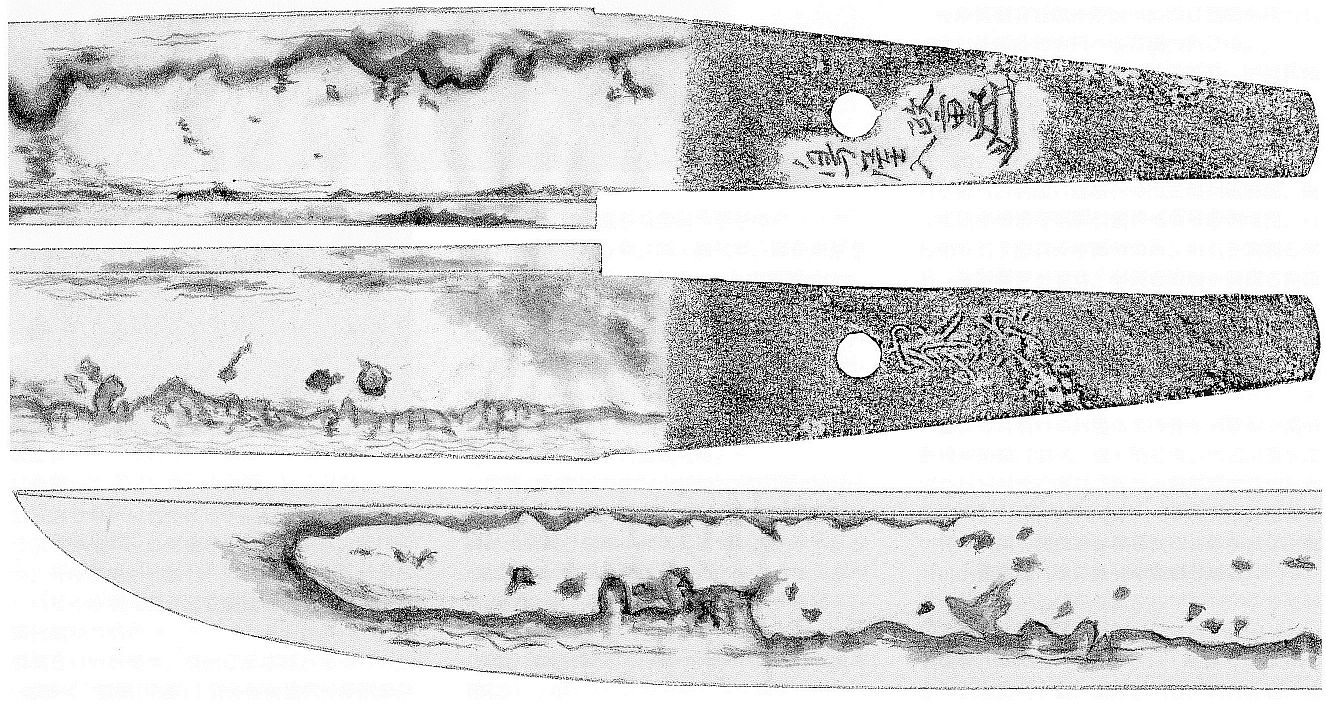
Picture 1: oshigata of the wakizashi, mei „Ietsugu“, kinzôgan-mei „Toya-ire – Masashige + kaô“, nagasa 37,3 cm, sori 0,3 cm, some more pictures of the blade can be found here

 HondaIetsugu-tang1

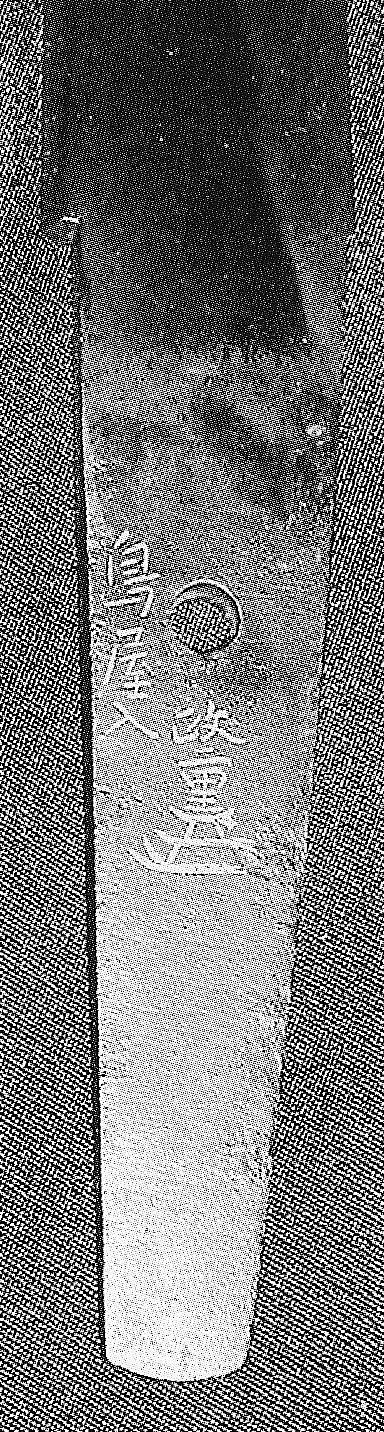
Picture 2: picture of the tang with the kinzôgan-mei

The question is, why has Honda Masashige „moulting hut“ inlayed in gold on one of his blades? The aforementioned Oura does not provide a definite answer but a very comprehensive approach. For this approach, we have to go further and take a closer look at Honda Masashige´s life. Masashige was born in the eight year of Tenshô (天正, 1580) as second son of Honda Masanobu (本多正信, 1538-1616) who was a retainer of Tokugawa Ieyasu and who held at that time the Tamanawa fief (玉縄藩) in Sagami province with an annual income of 10.000 koku. When Masashige was twelve years old, he was adopted by another Tokugawa-retainer, namely by Kurahashi Chô´emon (倉橋長右衛門). With this adoption, he got the name „Kurahashi Chôgorô“ (倉橋長五郎). Two years later, at the age of 14, he also entered the services of the Tokugawa family. Some say he served Ieyasu but extant documents show that his employer and lord was actually Ieyasu´s son Tokugawa Hidetada (徳川秀忠, 1579-1632). Well, in Keichô two (慶長, 1597) – he was (according to the Japanese way of counting years) 18 years old – he killed in a quarrel Okabe Shôhachi (岡部庄八), the son of Hidetada´s nurse Ôuba no Tsubone (大姥局, 1525-1613). Thereupon he fled Edo in the very same night and hid in Yamada (山田) in Ise province for about half a year. During that flight he had his genpuku ceremony and bore henceforth the name „Masaki Sahyôe“ (正木左兵衛). But in Keichô four (1599) he was able to become a retainer of the Toyotomi-retainer Ôtani Yoshitsugu (大谷吉継, 1558-1600). In the same year he was in turn employed by another Toyotomi-retainer, namely by Ukita Hideie (宇喜多秀家, 1572-1655), who granted him lands with an income of 20.000 koku. So he fought eventually at the side of Hideie against the his old lords the Tokugawa at Sekigahara. However, he was back then still treated as son of the faithful Tokugawa-retainer Honda Masanobu and was therefore able to get off scot-free. After a short service under Fukushima Masanori (福島正則, 1561-1624), he entered the service of Maeda Toshinaga (前田利長, 1562-1614) and moved to Kaga with an income of 30.000 koku.

 HondaMasashige1

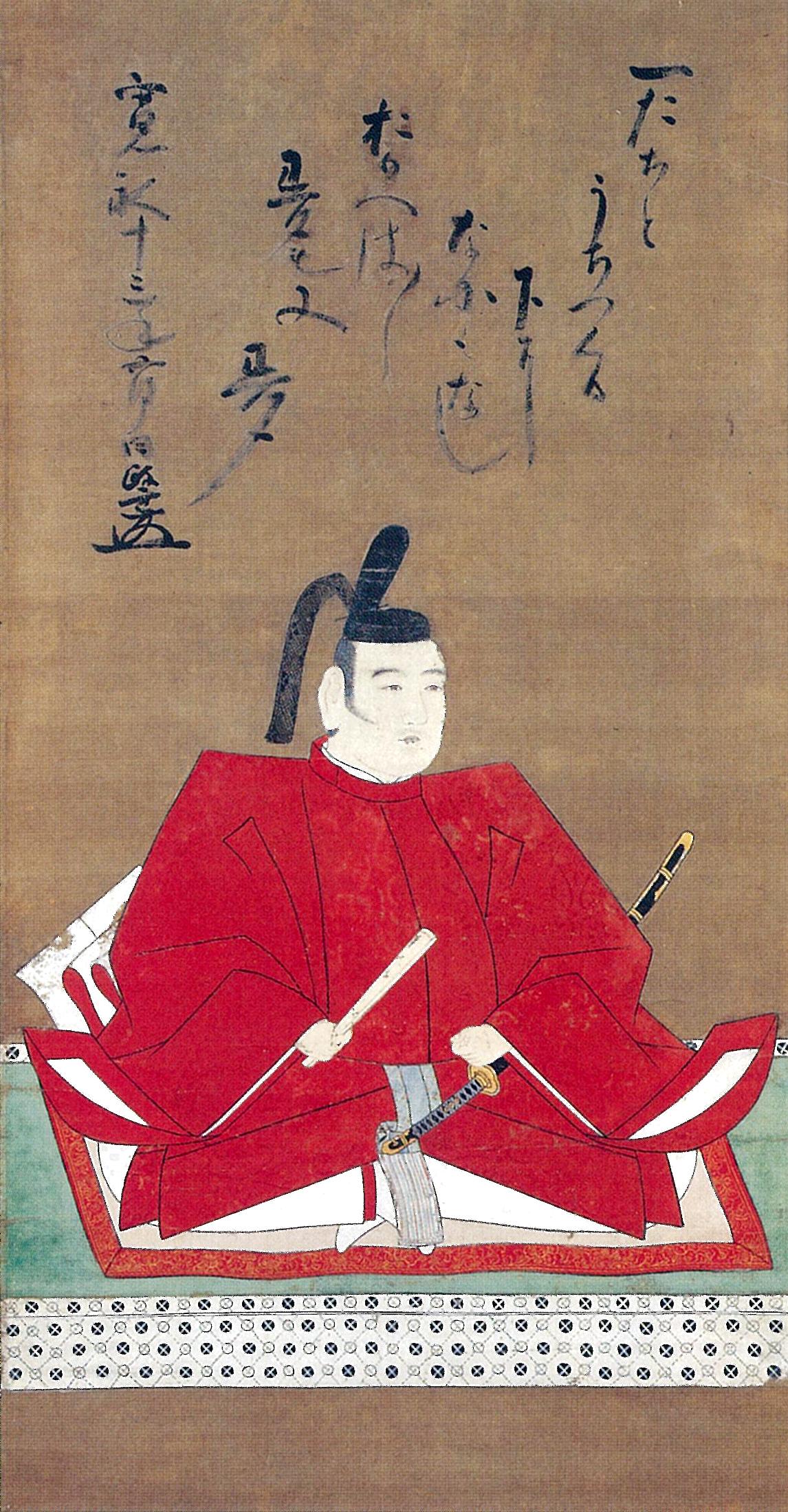
Picture 3: Portrait of Honda Masashige whereat the poem is written by himself. This painting is also preserved in the Hanrô Honda Zôhinkan. The kaô is similar to the kinzôga-kaô but as the latter is an inlay on a sword tang, it is of coure not 100% identical with the handwritten one.

Only one year later, i.e. in Keichô nine (1604), Masashige – back then still under the name „Masaki Sahyôe“ – married Omatsu (於松), the daughter of Naoe Kanetsugu (直江兼続, 1560-1619) and was thereupon adopted by the latter and took the name „Naoe Katsuyoshi“ (直江勝吉). He received the character for „Katsu“ from Kanetsugu´s lord Uesugi Kagekatsu (上杉景勝, 1556-1623) who had already planned that Omatsus son should become his heir. But when shortly later, i.e. in the fifth month of Keichô nine his own son Sadakatsu (上杉定勝, 1604-1645) was born, Omatsu´s and Masashige´s or rather Katsuyoshi´s future son was right out of the question. As a result, he returned to his original family name and was called since that time „Honda Masashige“. And some years later and by recommendation of his Ise acquaintance Tôdô Takatora (藤堂高虎, 1556-1630), he again returned in Keichô 16 (1611) – some sources say it was in Keichô 17 (1612) – into the service of the Maeda, namely of Toshinaga´s half-brother and adopted heir Toshitsune (前田利常, 1594-1658).

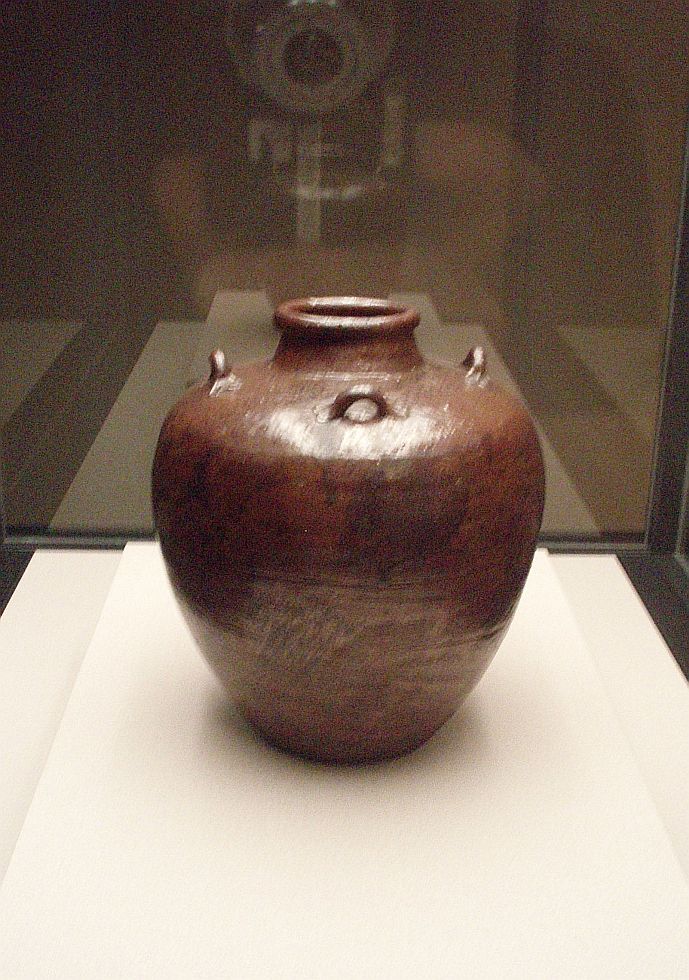
One of Masashige´s greatest accomplishments for his repeated lords the Maeda was his negotiation with the bakufu when there was a dispute on who should receive the Niikawa district (新川郡) of the neighbouring Etchû province worth 190.000 koku, i.e. either Tokugawa Hidetada or Maeda Toshitsune. Hidetada feared that the already wealthy Kaga fief gets too powerful. But with the support of his father Masanobu and his older brother Masazumi (本多正純, 1565-1637), Masashige was able to decide this in favour of the Maeda which offered him an increase of his salary by 50.000 koku. This would have earned him the incredible income of 100.000 koku but he refused according to transmission and took instead a personal gift, a famous and precious Momoyama-period jar called „Murasame no tsubo“ (村雨の壷) which came from the possessions of Hideyoshi. Because of this decline of the 50.000 koku salary increase, the jar got the nickname „Gomankoku no tsubo“ (五万石の壷, „the 50.000 koku jar“, picture 4).

HondaMurasame

Picture 4: The Murasame no tsubo (preserved in the Hanrô Honda Zôhinkan). Please apologize the blurry picture and the reflection of my camera.

On now we come once again back to the kinzôgan inscription in question. Oura namely found an incident recorded in the „Honda Awa no Kami Masashige shoseki-basshô“ (本多安房守政重事蹟抜抄) which reports from a meeting with Maeda Toshitsune. The latter had already retired (his year of retirement was Kan´ei 16 [寛永, 1639]) and invited Masashige once summer to his tea house in Komatsu (小松) which is about 25 km to the southwest of Kanazawa. There, Masashige saw a furosaki-byôbu (風呂先屏風) – a special smaller screen used in tea rooms – which showed paintings of the famous master Kanô Tan´yû (狩野探幽, 1602-1674). The motif were flocks of wild geese (karigane), wild ducks and mandarin ducks flying across the tips of pines. According to the aforementioned record, Masashige was deeply moved and liked the screen a lot and the servants asked why he had such a special interest in this item. Masashige responded that he has to reply in the form of an old poem which goes: „Karigane no koshiji no michi no tôkereba, hane o yasumen to Yonejima no matsu“ (雁が音の越路の道の遠ければ羽をやすめんと米島の松), about „The wild geese flew a long distance along the Koshiji (an old name of the northern Hokurikudô) but is now able to rest its wings at the pines of Yonejima“. Well, Masashige actually recited the poem from the „Nijûichidai-shû“ (二十一代集) anthology wrong but that doesn´t matter here. Important for the understanding of the kinzôgan-mei is that he compared himself with a bird, a wild geese, finally arriving at Yonejima, a flowery description of a peaceful place with enough food and drink. In short, Yonejima refers to his then and again „employer“, the rich Kaga fief. So by seeing this screen Masashige, then 60 years old, recapitulated his own eventful life so far and realized that now he had found his final place to stay at the Maeda which accepted him once more as retainer. So Oura sees the nickname „moulting hut“ of the blade in the context of this comparison of Masashige himself with a wild geese and his then stage of life. I.e. he regarded the Kaga fief as safe place to moult. By the way, he was 32 years old when he was hired by the Maeda the second time.

So we have here just a three-character nickname inlayed on a small but fine wakizashi but which unfolds a comprehensive insight into the entire life of the blade´s owner. This is very fascinating and shows us how profound kinzôgan-mei can be.

Short summer break

I give you notice that it´s time for a short summer break. I am still around and work on other projects but my holiday starts towards the end of next week and on this occasion I will pause this blog from today until our return around mid July. In the meantime I wish all readers pleasant summer days and I will be back with more interesting articles in a couple of weeks. Many thanks for your attention!

The Kotegiri-Masamune

This time I would like to introduce another Masamune whose attribution is dubious, namely the meibutsu „Kotegiri-Masamune“ (籠手切正宗, lit. „kote cutter Masamune“). Today the sword is in the imperial collection since it was presented by the Maeda family (前田) to emperor Meiji in 1882 but preserved in the Tôkyô National Museum. The sword came into the possession of the Maeda at the time of the 2nd Kaga-daimyô Maeda Toshitsune (前田利常, 1594-1658). It is said that back than it already bore the Masamune appraisal by the 8th Hon´ami mainline-generation Kôsatsu (本阿弥光刹, 1518-1581). But we can assume that the origami on Masamune was issued either shortly before the death of Kôsatsu or by another Hon´ami member. Because when Kôsatsu died in Tenshô nine (天正, 1581), Sano Nobuyoshi (佐野信吉, 1566-1622), the previous owner of the Kotegiri-Masamune, was only 15 years old. Nobuyoshi was the daimyô of the Sano fief (佐野藩) located in Shimotsuke province and when he owned the blade, it bore an attributed to Masamune´s supposed father Yukimitsu and was therefore called „Sano-Yukimitsu“ (佐野行光). I assume that the sword came into the possession of the Maeda family after Nobuyoshi´s death and that it was in this course that Toshitsune „had“ a later Hon´ami member than Kôsatsu issuing an origami to Masamune.

Before Nobuyoshi, the sword was treasured by Ôtsu Denjûrô Nagamasa (大津伝十郎長昌, ?-1579). Denjûrô in turn received it as a gift from Oda Nobunaga of whom he was a page and close retainer since Eiroku eleven (永禄, 1568). At that time he was responsible for the issuing of important tax documents but was appointed to the post of inspector ten years later in the course of the attack of Kanki Castle (神吉城) in Harima province in Tenshô six (1578). Right afterwards he was entrusted with a guarding post of Takatsuki Castle (高槻城) in Settsu province which was held back then by father and son Takayama Tomoteru (高山友照, ?-1595) and Takayama Ukon (高山右近, 1552-1615). However, Denjûrô died of an illness in Tenshô seven (1579).

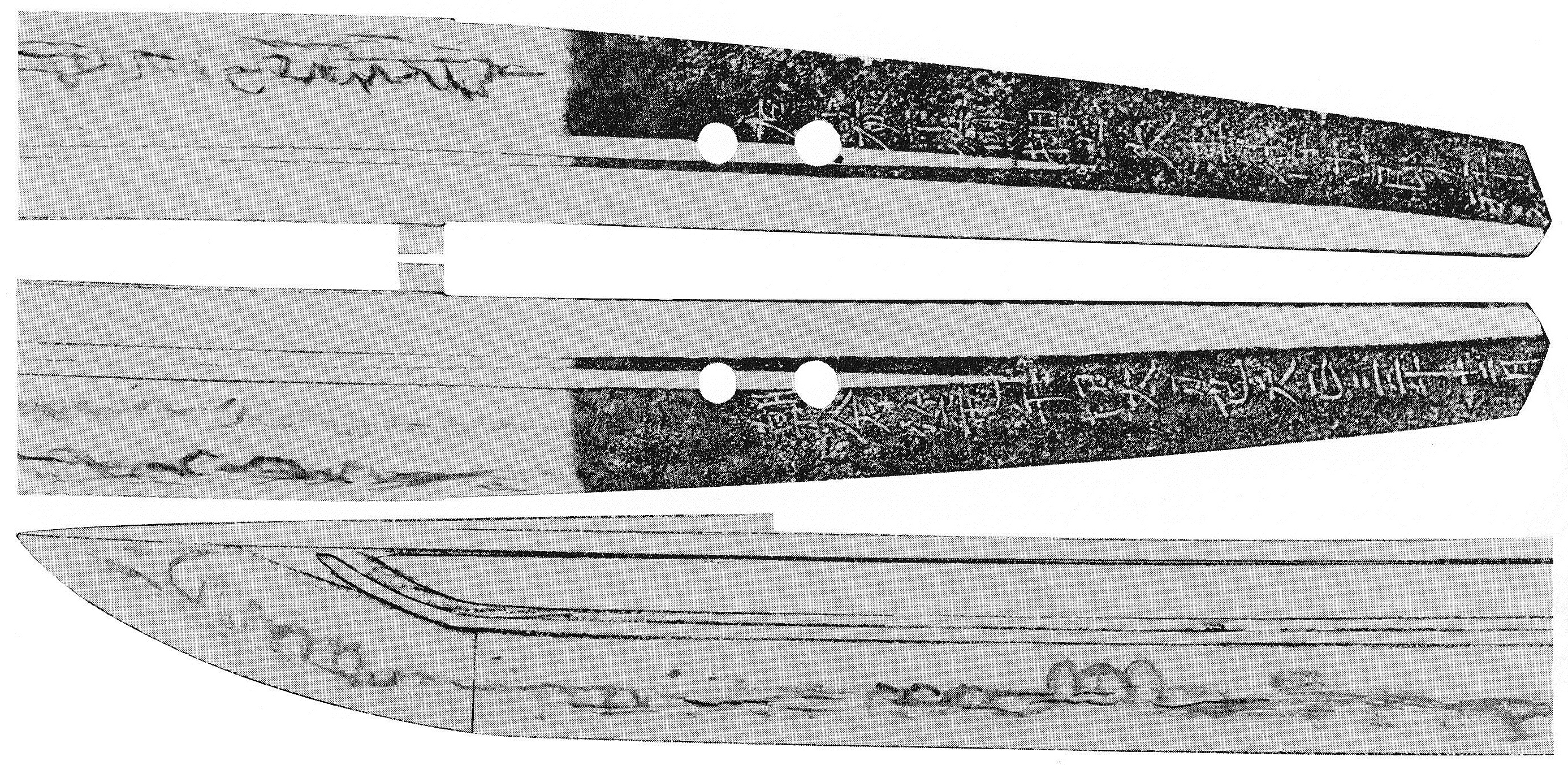
The present-day condition of the blade goes back to the time of Nobunaga and Ôtsu Denjûrô as does its signature which reads: „Asakura Kotegiri-tachi nari – Tenshô sannen jûnigatsu – Ubakka suriage – Ôtsu Denjûrô hairyô“ (朝倉篭手切太刀也・天正三年十二月・右幕下御摺上・大津伝十郎拝領, „this Kotegiri-tachi from the Asakura [family] was shortened by Oda Nobunaga in the twelfth month of Tenshô three [1575] and presented to Ôtsu Denjûrô“). Please note that the character „ko“ in the nickname „Kotegiri“ (籠手切) is written on the tang with the character (篭). „Ubakka“ is an abbreviation of the title of „Ukon´e no daishô“ (右近衛大将), a title given to Nobunaga in the eleventh month of Tenshô three (1575), that means one month before the inscription was chiselled onto the bew tang. According to the records, the blade was before an ôdachi measuring 3 shaku 2 sun (~ 97,5 cm). Since the ô-suriage it measures 2 shaku 2 sun 6 bu 5 ri (~ 68,6 cm).

 KotegiriMasamune

Picture 1: oshigata of the Kotegiri-Masamune

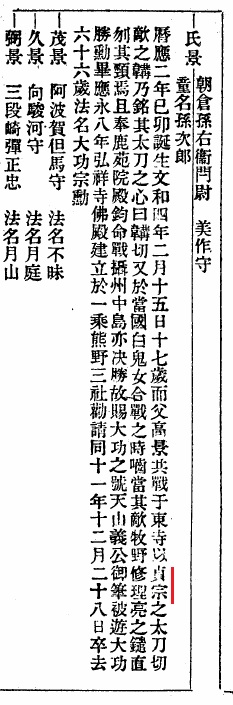
From the mei we also learn that the sword came from the Asakura family of Echizen province and was already nicknamed by them „Kotegiri“. Well, in the Kusakabe genealogy („Kusakabe-keizu“, 日下部系図) – the Asakura were descendants of the Kusakabe – we read that Asakura Ujikage (朝倉氏景, 1339-1405) wore a tachi of Sadamune (貞宗) when he was departing for the front on the 15th day of the second month Bunna four (文和, 1355) for fighting at Kyôto´s Tôji (東寺). Ujikage was, according to the Japanese way of counting, 17 years at that time and it is said that he severed with the blade the arm of an enemy right at his yugake glove (鞲). The genealogy also mentions that Ujikage had thereupon the nickname „Yugakegiri“ (鞲切) chiselled onto the tang of the ôdachi. Oda Nobunaga captured the sword when he defeated Ujikage´s descendant Asakura Yoshikage (朝倉義景, 1533-1573) and destroyed the Asakura clan. So when Nobunaga had the blade shortened by about 30 cm, the entire original tang and thus a possible mei of Sadamune and the inscription of the nickname „Yugakegiri“ were of course lost. It is assumed that the new nickname „Kotegiri“ was chosen in the course of the shortening, i.e. in this very case as a contracted version of „yugote“ (弓籠手) which in turn is another term for „yugake“.

 KotegiriMasamune2

Picture 2: The entry from the Kusakabe genealogy concerning Ujikage (from a 1910 reprint). The mention of the name „Sadamune“ is highlighted in red.

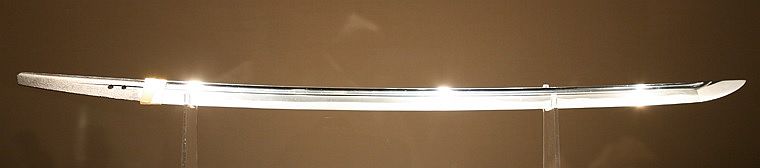
By the time Ujikage wore the sword at one of his earliest battles, only about three decades have passed since the height of Masamune´s, and about two decades after the height of Sadamune´s active period. That means back then, Masamune was surely a master smith but there was not that hype around him as it was towards the end of the Momoyama period. And even by the time of Sano Yoshinobu the name „Masamune“ was quasi out of question. It took until the Edo period and the time of Maeda Toshitsune until Masamune came into play. Well, based on gut feeling and the oversized nanbokuchôesque sugata with the wide mihaba and the ô-kissaki I would first of all rule out Yukimitsu but also Masamune. So Sadamune might be the man but of course I am far away from making such a judgment from my computer never having the blade in hand 😉

  KotegiriMasamune1

Picture 3: Kotegiri-Masamune

Chinkyû´s enkô-hogetsu motif

Whilst doing some research on Satô Chinkyû (佐藤珍久), I found three tsuba of him with the same sujet of which two are almost identically interpreted. First of all, his name is often also read as „Yoshihisa“ and not much is known about his life and career. We do know that his civilian name was „Satô Yagobei“ (佐藤弥五兵衛). His father was, according to transmission, a certain Shôami Shirô´emon (正阿弥四郎右衛門) who was supposedly active around Kanbun (寛文, 1661-1673) but of whom nothing is known except this connection to Chinkyû. Well, the date Kanbun might be dismissed for the following two reasons: Chinkyû studied later in Edo under Nara Toshiharu (奈良利治). His year of death is unknown but due to an extant work with the signature „gyônen nanajûissai“ (行年 七十一歳, „at the age of 71“) and the date „Kanbun-san koyomi-rokugatsu“ (寛文三暦六月, „sixth month of the third year of [1663]“), we can calculate his year of birth to Bunroku two (文禄, 1593). There exists a further work which is signed with the information „at the age of 85“, that means Toshiharu was active at least until around 1678, i.e. until the second half of the Enpô era (延宝, 1673-1681). And Chinkyû´s famous student and son-in-law Tsuchiya Yasuchika (土屋安親) was born in Kanbun ten (1670). So if Chinkyû was the son of Shôami Shirô´emon, the latter was surely not active around Kanbun as otherwise his son would not have been able to get in touch with Nara Toshiharu and would have been too young to be the master and father-in-law of Yasuchika.

 chinkyu1

Picture 1: Nara-style tsuba of Chinkyû, spring scenery, signed „Chinkyû“, iron, nadekaku-gata, takabori-iroe, sukashi, one hitsu-ana (plugged).

 chinkyu2chinkyu3

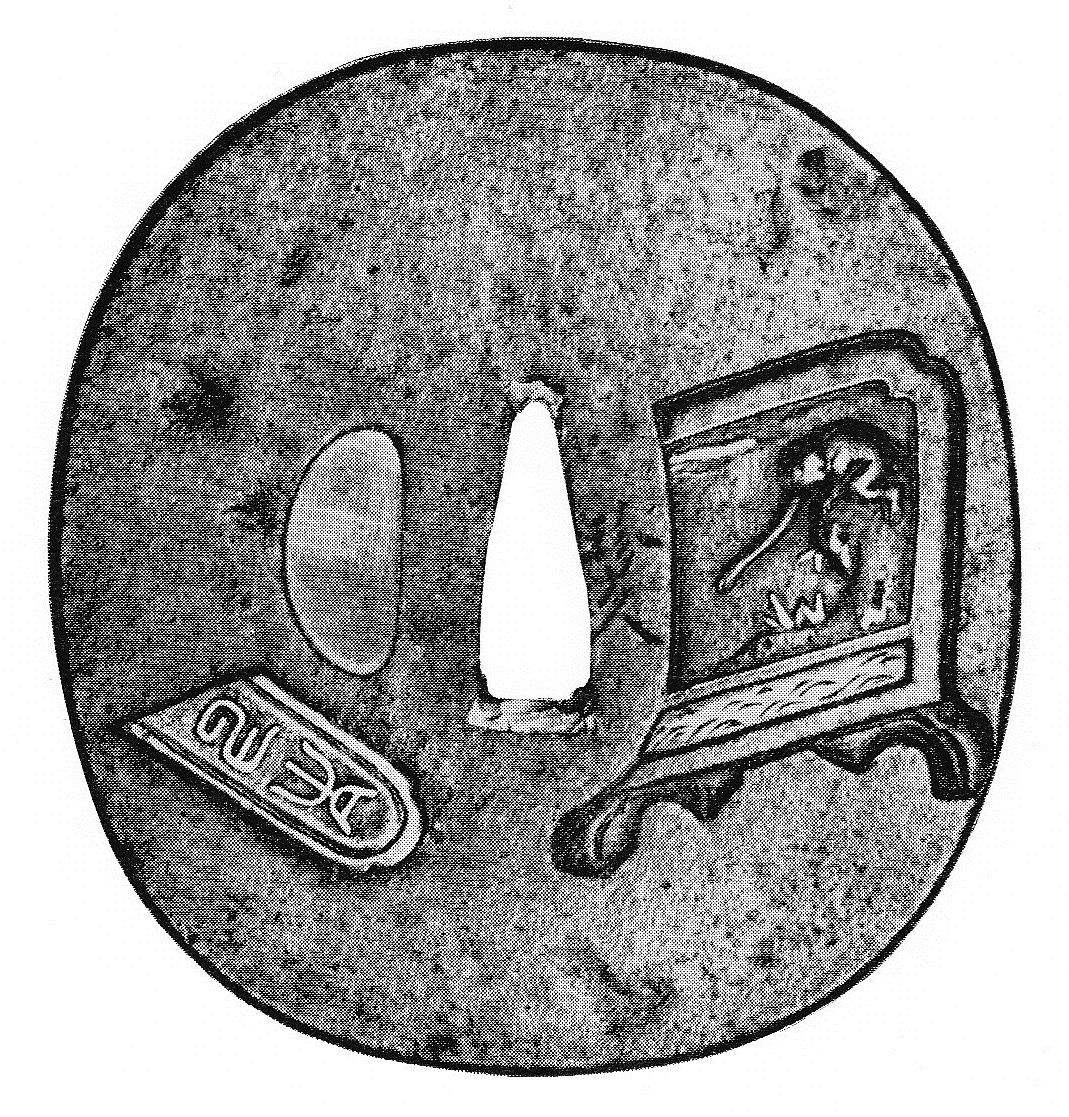
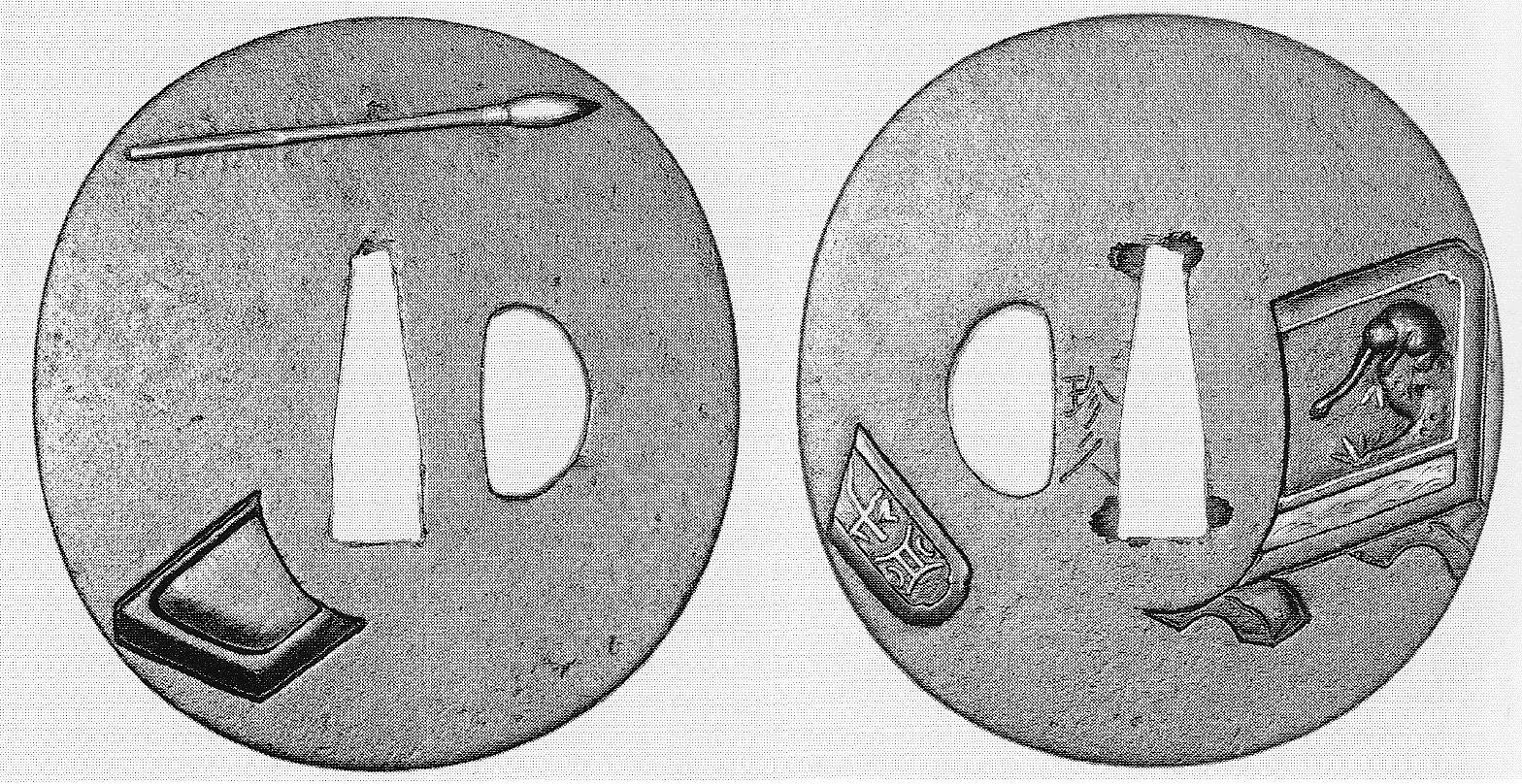
Picture 2 and 3: Shôami-style tsuba of Chinkyû, writing utensils, signed „Chinkyû“, iron, tatemaru-gata, takabori-iroe, one hitsu-ana (plugged at one tsuba)

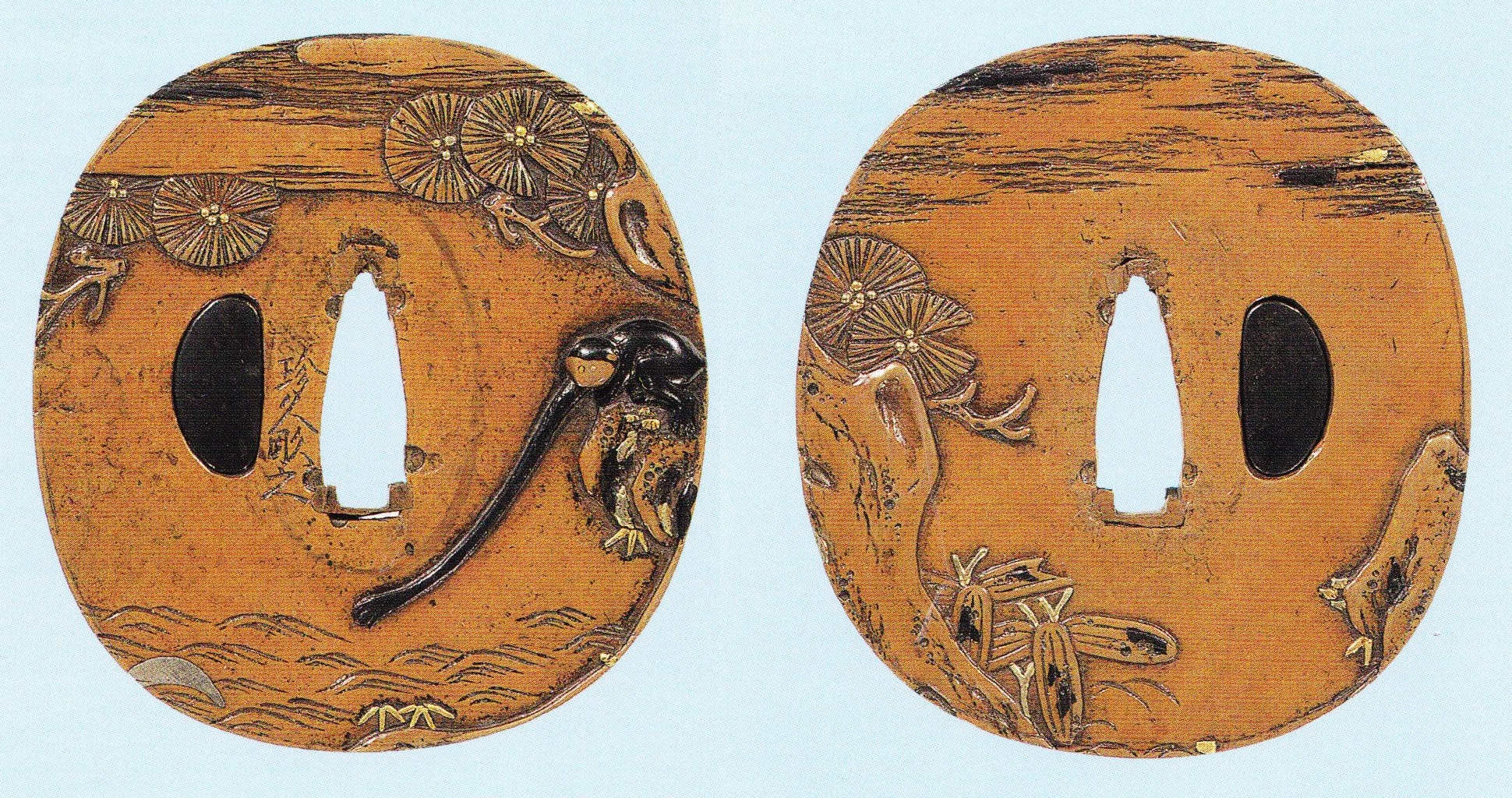
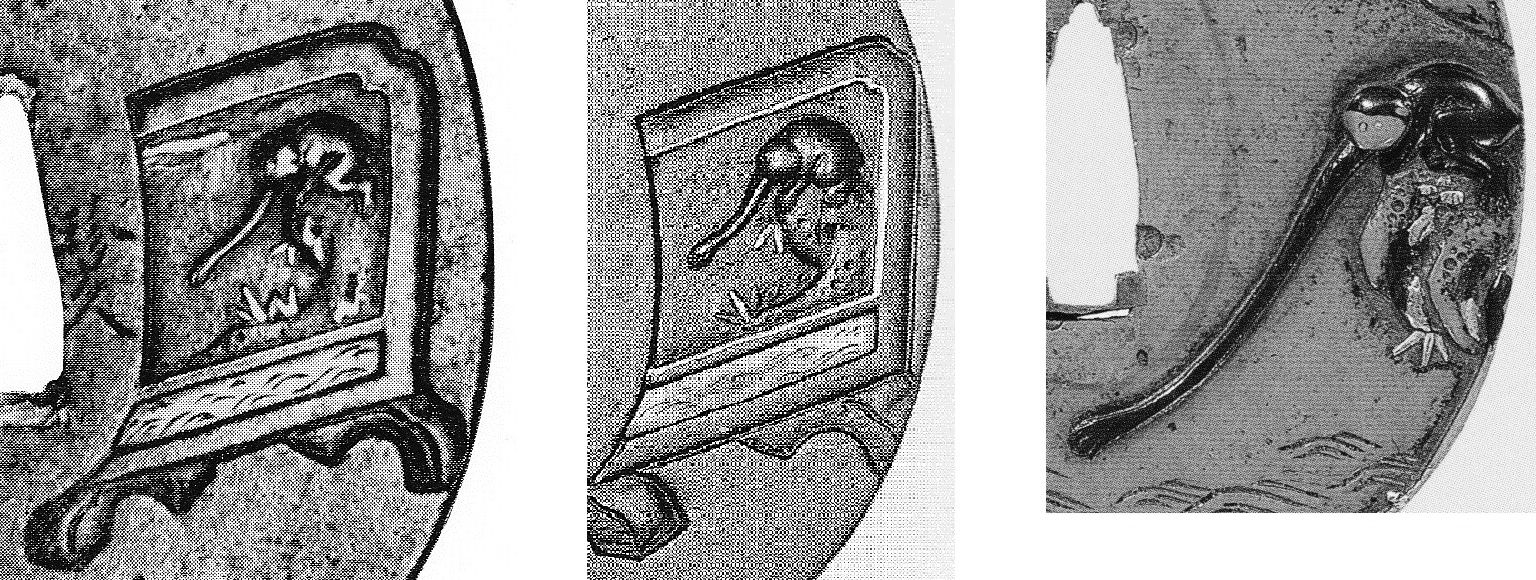
Anyway, Chinkyû brought the Nara style to his home of Shônai (庄内) in Dewa province and is therefore regarded as the founder of the Shônai branch of the Nara school. That means his works are of course strongly Nara-influenced what concerns first and foremost those from his earlier period which are done in iron. A good example from this artistic period can be seen in picture 1. But the two very similar tsuba I mentioned before (pictures 2 and 3) were probably made even before his studies in Edo as they show pretty good the Shôami influence of his supposed father. Both show on the right side of the omote a so-called „kenbyô“ (硯屏), a decorative small table screen which protects the writing area from dust and the like. On the left side we see ink and on the ura a brush and an inkstone. That means writing utensils (bunbôgu, 文房具) or calligraphy in general are the motif of the tsuba. The interpretation is tasteful and the workmanship surely of a certain quality but most interesting is the monkey depicted on the table screen. It sits on a small rock with some grass highlighted in gold and stretches his rather long arm out to the left, the area of the screen which is not seen because of the seppa-dai. The same monkey in the very same posture (also with the rock and the gilded grass) is namely seen on Chinkyû´s most famous tsuba (picture 4), the suaka-tsuba with the so-called „enkô-hogetsu“ motif (猿猴捕月).

 chinkyu4

Picture 4: Yasuchika-style tsuba of Chinkyû, enkô-hogetsu motif, signed „Chinkyû kore o horu“ (珍久彫之), suaka, takabori-iroe, suemon, one hitsu-ana (plugged)

The term „enkô-hogetsu“ derives from an Buddhist parable where a monkey tries to catch the reflection of the moon in the water. The picture stands for the useless attempt of striving after goals which are beyond the limits of oneself or the human nature in general as the limit of the monkey´s smartness is to realize that there is nothing in the water he can catch even if it is shining. The name of the sujet is also quoted in slightly different formulations like „enkô-sokugetsu“ (猿猴捉月), „enkô shugetsu“ (猿猴取月) or just „enkô ga tsuki“ (猿猴が月), where „enkô“ means „monkey“ and „ho/torae(ru)“ (捕), „soku/torae(ru)“ (捉) and „shu/to(ru)“ (取) „to grasp, to catch“. The style of Chinkyû´s enkô-hogetsu tsuba anticipates what is later one of the most representative styles of his master-student Yasuchika. That means the shape of the monkey, the obviously too large pine needles and bamboo grass bushes on the ura play with a pretended „amateurishness“ but are of course perfectly executed. Also very subtle is the contrast between the black shakudô monkey to the right and the deliberately applied shakudô plug of the hitsu-ana to the left. The moon is found on the very left bottom of the omote and please note also the delicate sukinokoshi-mimi at the bottom right area which is a continuation of the rock on which the monkey sits. That means with this and the small gilded bamboo grass elements, the artist obviously tried to make the monkey not appear as if he is sitting somewhere on a high cliff which would make his attempt of „catching the moon“ innately impossible. Thus this small detail also shows the attentiveness of Chinkyû regarding the effect and impression of his motif. There is also a different approach to this motif where the monkey hangs down from a branch with one hand trying to catch with the other one the moon in the water which is depicted more or less directly beneath him.

chinkyu5

Picture 5: Detail of all three monkeys.

So the enko-hogetsu motif forges an interesting bridge between Chinkyû´s early period and his full artistic maturity when he was already training his student Yasuchika. And when we give free reign to our imagination we might assume that Chinkyû had this table screen somewhere at his home, seeing it every time when writing and having him inspired to use the very same motif for some of his tsuba. Maybe he still had and used this table screen later in his life and he once again decided to make a tsuba with a motif so familiar to him…

„Mondo no Shô“ and „Shume no Kami“

In the last but one issue of the Tôken-Bijutsu (No 676), Hinohara Dai (日野原大) forwarded a very interesting theory on why Masakiyo (正清) and Yasuyo (安代) received the uncommon honorary titles „Mondo no Shô“ (主水正) and „Shume no Kami“ (主馬首) respectively. I want to present you a brief outline of his article, introducing all relevant approaches. First of all we have to elaborate on the notorious forging contest initiated by the eighth Tokugawa-shôgun Yoshimune (徳川吉宗, 1684-1751). Yoshimune was unhappy with the general decline in the quality of blades and, in Kyôhô four (享保, 1719), he ordered his elder Kuze Shigeyuki (久世重之, 1659-1720) to register all the swordsmiths in the fiefs with an income of more than 10.000 koku, a project which was called “Kyôhô-shokoku-kaji o-aratame” (享保諸国鍛冶御改). Shigeyuki compiled a list of 277 smiths (other sources mention 257 smiths) of which 48 presented a sword for the qualification. In early spring of Kyôhô six (1721), that means two years after the project was started, the actual contest took place at the Hama-goten (浜御殿), the residence of the shôgun at the mouth of the Sumida River. As we know, Masakiyo and Yasuyo from Satsuma, Nobukuni Shigekane (信国重包) from Chikuzen, and the 4th generation Nanki Shigekuni (南紀重国) turned out to be the winners of this contest. All of them received permission to engrave one leaf of the Tokugawa aoi crest on their tangs and got ten pieces of silver as additional price. Masakiyo and Yasuyo did especially well and received thereupon the aforementioned honorary titles and were supported by a program of orders and recommendations after the contest. But why such uncommon titles “Mondo no Shô” and “Shume no Kami” and not something straightforward like “Yamato no Kami” or “Kawachi no Kami”? For Hinohara´s theory, we have to go back a bit.

The first honorary titles conferred to swordsmiths date back to the Kamakura period and some assume that they originate in the goban-kaji project of the abdicated emperor Gotoba (後鳥羽天皇, 1180-1239, r. 1184-1198). At that time, almost all honorary titles conferred to swordsmiths were from the so-called „kyôkan“ sphere (京官) of court offices. The term „kyôkan“ referred to all offices which resided permanently in Kyôto and which were responsible for issues dealing with the capital itself. For examplies the so-called „Eight Minstries“ (hasshô, 八省), the gate-keeper and bodyguards (emonfu, 衛門府) or the palace guards (konoefu, 近衛府). As we know, the swordsmiths bearing these titles did not have any special rights or functions connected with the actual office. They were as the name suggests „honorary“ titles. By the end of the Muromachi period and the total decline of imperial power, there was a shift in the granting of honorary titles towards the then more influental so-called „gekan“ (外官). The term „gekan“ referred to all offices which resided and/or were responsible for issues outside of the capital Kyôto. For example the provincial (kokushi, 国司) or district governors (gunji, 郡司). Of course by then, most of the gekan had lost their powers and had become merely a shadow of what they had been originally when they were established in the course of the ritsuryô system.

By the Muromachi period, many of the earlier kyôkan titles had been adopted to be used in first names, not only among swordsmiths of course. That means palace guard titles like „saemon no jô“ (左衛門尉), „uemon no jô“ (右衛門尉) or „hyôe no jô“ (兵衛尉) were now used as part of the first name by adding it either to the so-called „haikô“ (輩行) or the clan name like „Minamoto“ (源, also read as „Gen“) and „Taira“ (平, also read as „Hei“ or „Hyô“). The haikô by the way was the system to call sons according to the order they were born, i.e. „Tarô“ (太郎) for the first-born son, „Jirô“ (次郎) for the second son, „Saburô“ (三郎) for the third son and so on. Thus people frequently named their sons on the basis of combinations like „Tarôzaemon“ (太郎左衛門) or „Genbei“ (源兵衛), occasionally also with the suffix „“, for example the swordsmiths Jirôzaemon no Jô Katsumitsu (次郎左衛門尉勝光) or Gorôzaemon no Jô Katsumitsu (五郎左衛門尉清光). So these names like this were actually no granted honorary titles but earlier honorary titles used as part of a first name.

Besides of the stimilus for the craft of sword forging, Tokugawa Yoshimune introduced an array of economic policies called „The Kyôhô Reforms“ (Kyôhô no kaikaku, 享保の改革). The reforms were aimed at making the bakufu financially solvent but also included an appeal to all daimyô and vassals to remember the old values of the bushi and act firm, prudent and modest. In a document which deals with the swordsmiths mentioned in the Kyôhô-shokoku-kaji o-aratame project, the “Kyôhô-chô tôkô-meiba” (享保調刀工名簿), we find an interesting entry which alludes to the motivation of Yoshimune in having Masakiyo and Yasuyo conferred the honorary titles “Mondo no Shô” and “Shume no Kami”. In this document we find namely the comment “Gotoba´in no kyûrei o motte chokkyo no yu” (後鳥羽院以旧例勅許之由), “[the conferring of the honorary titles] was inspired by the old example of ex-emperor Gotoba.” So Tokugawa Yoshimune knew that at his time it long had become custom to grant swordsmiths gekan-related honorary titles and that kyôkan-related honorary titles conferred by Gotoba were a too common occurrence as they were used as part of first names. Out of this “dilemma” and because he wanted to especially honour these smiths as a symbol for the revival of the craft of sword forging and as an incentive for the then bushi to remember the old values, he had chosen old kyôkan titles which were totally uncommon for swordsmiths so far. Incidentally, Mondo no Shô was in earlier times the head of the imperial water office, an office which was introduced in the course of the ritsuryô system towards the end of the 7th century. Back then the title was „mondo no tsukasa“ (主水司), also read „muitori no tsukasa“ or „shusui-shi“. And Shume no Kami was the officer responsible for the horses, carriages and affiliated equipment of the court. The title was also read „mikoshimiya no uma no kami“.

That means the titles “Mondo no Shô” and “Shume no Kami” were a very special honor and definitely not second or third-class titles because Masakiyo and Yasuyo lacked the talent to receive common titles like “Yamato no Kami” or “Kawachi no Kami” and the like as one might think uncommon titles “Mondo no Shô” or “Shume no Kami” suggest. This special honor is also underlined by the fact that these titles were not conferred to any swordsmiths before and after these two great masters. Thanks to Hinohara Dai for pointing that out because I was asking myself a long time why exactly those titles. More details on the life and work of Mondo no Shô Masakiyo and Shume no Kami Ippei Yasuyo can be found in my Nihon-shintô-shi.

On Sengoku-era inscriptions on Nobuie-tsuba

According to Katsuya Toshikazu´s (勝矢俊一) article “New Studies on Nobuie” (“Nobuie no shin-kenkyû”, 信家の新研究), the 1st generation Nobuie (信家) was active around Eiroku (永禄, 1558-1570), Genki (元亀, 1570-1573), and Tenshô (天正, 1573-1592) in Kiyosu (清洲) in Owari province. That means he lived right in the turbulent period when the so-called “Three Unifiers”, i.e. Oda Nobunaga, Toyotomi Hideyoshi and Tokugawa Ieyasu, brought a close to the no less turbulent Sengoku period. We know that the Sengoku period, which arouse out of the local Kyôto Ônin War (Ônin no ran, 応仁の乱, 1467-1477), brought a century of political instability and warfare, but not of constant warfare as some suppose. However, it was a time when old power structures were overthrown, the “underlings were conquering the overlords” (gekokujô, 下克上), and an almost entirely decentralized state system under more or less independent warlords had emerged. Living over three or more generations in uncertainty about whom to serve and where resulted in a very own world of ideas and taste. The Sengoku period was also a great stimulus for the changes in Buddhism and the shift towards Zen and aestheticization. That means many formerly religious or upperclass activities “slopped over” to the common warriors and common people, for example the tea ceremony, painting and poetry. In terms of painting, landscapes and other secular subjects were increasingly depicted. That all resulted in certain guiding concepts of the arts, namely wabi (侘び, the spirit of quiet simplicity), sabi (寂び, aesthetic melancholy), and yûgen (幽玄, the unfathomable mystery). In that age of struggle, when warriors often risked death and witnessed the rise and fall of their friends and foes, constant awareness of and preparation for death were necessary and the impermanence of human life and achievement was omnipresent. In short, the inevitability of death was fully accepted and lived, supported by then very modern approaches of Zen Buddhism of a total affirmation of human life just as it is and regarding all daily activities as Zen-Buddhist practice.

Tsuba were of course not excluded from these changes. By the time of Nobuie, more attention was paid to a “perfected imperfection” in the aforementioned sense of wabi and sabi, i.e. a work which looks as if created with no ulterior motives and no preconceptions by nature but by the use of perfected craftsmanship. In short, slightly irregular shapes and an uneven surface and rim were desired by those following this approach. With this in mind, Nobuie´s tsuba have much in common with tea ware because with the forging and hardening of the iron, many aspects show up only at the finished piece just like it is the case at firing a tea bowl. As indicated before, also the tea ceremony had experienced a shift from an expensive and exclusive furnishing to simple and kind of everyday implements, brought into a certain concept by Murata Jukô (村田珠光, 1423-1502), Takeno Jôô (武野紹鴎, 1502-1555) and Sen no Rikyû (千利休, 1522-1591). But with this article I want to focus on the inscriptions found on Nobuie-tsuba which transport perfectly the attitude of the Sengoku period.

First I want to start with a tsuba of Nobuie which shows the inscription “Namu Hachiman Daibosatsu” (南無八幡大菩薩) on the ura and carvings of a bow and arrow on the omote (picture 1). The inscription means “Hail Hachiman, the God of War”, but with the depiction of bow and arrow, the motif represents the so-called “Yumiya-Hachiman” (弓矢八幡), i.e. Hachiman in his function as God of Archery. The name “Yumiya-Hachiman” was also called when a warrior was taking an oath. The Yumiya-Hachiman approach was also adopted by the next tsuba (picture 2). It bears on the side with the mei the inscription “un wa ten ni ari” (運有天, “Fate lies with heaven”) and on the other side the hiragana inscription “Yumiya-Hachiman – kamafu-maji hito ga kamahaba kamafu beshi“ (ゆみやはちまん・かまふまじ人がかまはばかまふべし) which means about „one should only interefere when asked“. That means all three inscriptions are not connected to each other and have to be interpreted as an arrangement of Sengoku-era proverbs or mottoes. The same arrangement of the un wa ten ni ari motto can be seen on the next tsuba (picture 3) which comes in a quite pronounced mokkô-gata. The ura side of this piece bears the Buddhist prayer “Namu Myôhô Renge Kyô” (南無妙法蓮華経, “Glory to the Sutra of the Lotus of the Supreme Law”). This prayer or mantra is chanted as the central practice of Nichiren Buddhism and is referred to as “daimoku” (題目). That means a tsuba with daimoku motif depicts the Nichiren-mantra “Namu Myôhô Renge Kyô”, and if the ends of the strokes are noticeable elongated, we speak of a so-called “hige-daimoku” (髭題目, lit. “daimoku with beard”). The daimoku is also the central motif of the two tsuba shown in picture 4. Both are in mokkô-gata, although not that pronounced as the last piece, and show a ko-sukashi opening in the form of an axe. The axe has to be seen in the aforementioned context of depicting ordinary everyday objects.

 Nobuie1

Picture 1

Nobuie2

Picture 2

Nobuie3

Picture 3

 Nobuie4

Picture 4

The tsuba shown in picture 5 has a two-segmented so-called “ryô-mokkô-gata” (両木瓜形) but rotated about 45 degrees counterclockwise. It bears the inscription “kirimusubi-tachi no shita koso jigoku nare, fumikomi yukeba ato wa gokuraku (切り結ぶ太刀の下こそ地獄なれ踏み込みゆけばあとは極楽). This is a proverb from swordsmanship and means “to be under crossed swords is hell, to make a sudden attack is heaven”. Also there exists a maru-gata tsuba of Nobuie with the inscriptions „ie ga mazushikunatta, tomo wa sukunai“ (家貧双月少, once a family becomes poor, friends will make themselves scarce“) on the omote and side „yabureta koromo no nakaba ni, shirami ga ôi“ (衣破半虱多, “in badly damaged clothes, there are many lice“) on the ura side, inscriptions which can be considered as general warnings. A mokkô-gata tsuba shows a waka poem of the Zen priest Ikkyû Sôjun (一休宗純, 1394-1481) which goes „yakeba hai umeba tsuchi to naru mono nani ga nokorite, tsumi to naruran“ (焼けば灰埋めば土となるものを何が 残りて罪となるらん, „when everything is burnt to ash and buried under the earth, all what remains is the sin“). Sôjun was well known for such nihilistic and drastic poems. Another inscription on a Nobuie-tsuba goes „ningen-banji saiô ga uma“ (人間萬事塞翁馬) which means „inscrutable are the ways of heaven“ or „fortune is unpredictable and changeable“. Literally, the characters mean „all things (banji, 萬事) of mankind (ningen, 人間) are like the horse (uma, 馬) of the old man from the border area (saiô, 塞翁)“. This saying refers to a story from ancient China when an old man living near the northern border of the country once lost his horse, but as soon as it escaped, it came back with another horse. This shows how close sometimes fortune and misfortune are and the saying is also used as warning that the people’s fortunes can´t be predicted. The piece shown in picture 6 combines the Nichiren-mantra “Namu Myôhô Renge Kyô” with the inscription “shôja-hitsumetsu“ (生者必滅, „all living things must die“), another reminder for the transitoriness of life. And tsuba with an irregular mokkô-gata combines the provers “un wa ten ni ari” with the sentence “gusoku wa shichiya ni ari” (具足有質屋, lit. “the armour is in the pawnshop”). It is assumed that the latter inscription refers to the large number of poor samurai who had to pawn their armour and when that was not enough even their swords.

 Nobuie5

Picture 5

 Nobuie6

Picture 6

And last but not least I would like to introduce two Nobuie-tsuba which represent the transitoriness of life not via inscriptions but via a pictorial design. At the first one, the motif is quite obvious as we see on the ura side two skulls. But we also see stylized and on the omote side non-stylized water wheels. Water wheels are usually called “suisha” (水車) but when they show ladles (hishaku, 柄杓) like here, also the term “tsuchi-guruma” (槌車) is used. The wheel stands for the continuous carmic rebirths within the six domains (rokudô, 六道) of the desire realm (yokukai, 欲界). By the way, the gold plugs of the tsuba shown in picture 7 were added by Kanô Natsuo (加納夏雄). He signed the one plug with “Natsuo” using the characters (なつ遠).

Nobuie7

Picture 7

 Nobuie8

Picture 8

I hope this was an interesting trip into the world of ideas of Sengoku-period bushi as seen on Nobuie-tsuba and I would like to continue this matter in the future by presenting some tsuba with inscriptions by Tsuchiya Yasuchika (土屋安親).