Genji-hachiryô – The Eight Armors of the Minamoto

We find ourselves in the time right before the Hôgen Rebellion (Hôgen no ran, 保元の乱) which took place in the first year of Hôgen (1156). According to the „Hôgen-monogatari“ (保元物語), Minamoto no Tameyoshi (源為義, 1096-1156), the grandson of the famous Minamoto no Yoshiie (源義家, 1039-1106), dreamed that the eight famous armors inherited by his Seiwa-Genji line (清和源氏) of the Minamoto would be scattered to the four winds. Well, he turned out to be right in the end. Tameyoshi handed half of them secretly over to his oldest son Minamoto no Yoshitomo (源義朝, 1123-1160) and kept the remaining four. The ones he handed over were the Genta-ga-ubukinu (源太が産衣), Hizamaru (膝丸), Omodaka (沢瀉) and Hachiryô (八龍). He was now in charge of the Usukane (薄金), Tatenashi (楯無), Tsukikazu (月数) and Hikazu (日数). Tameyoshi lost his armors right in the turmoils of the Hôgen Rebellion and when Yoshitomo was defeated at the subsequent Heiji Rebellion (Heiji no ran, 平治の乱) of the first year of Heiji (1160), the armors where left back when he and others fled from Kyôto and were struggling through a snowstorm in the mountains of Mino on their way to the eastern provinces. Yoshitomo was killed while fleeing in Owari province. As usual, there exist several transmissions and theories on the whereabouts of the armors. In the following I would like to present the most common ones. I follow the order by which the armors are introduced in Ise Sadatake´s (伊勢貞丈, 1718-1784) publication „Genkô-hachiryô no yoroi-kô“ (源家八領鎧考, 1776). By the way, „Genkô-hachiryô“ (源家八領) was apart from „Genji-hachiryô“ (源氏八領) and „Genji-hakkô“ (源氏八甲) another term for these eight armors.

The Genta-ga-ubukinu (源太が産衣) was the armor worn by the eldest Minamoto son and heir at the so-called „yoroi-ki-zome“ (鎧着初), the ceremony when a 13 or 14 year-old son of a warrior family put on an armor for the first time. It is said that prince Atsuakira (敦明親王, 994-1051), the son of emperor Sanjô (三条天皇, 976-1017), presented it to his loyal retainer Minamoto no Yoriyoshi (源頼義, 988-1075) on the occasion of the birth of his son Minamoto no Yoshiie. Yoshiie´s youth name was „Genta“, thus the nickname „Genta-ga-ubukinu“ which means lit. „clothes for the newborn Genta“. The chronicles say that the armor showed the deities Amaterasu and Hachiman on the muna-ita and the left and right sode were laced to represent Wisteria blossoms. Well, it is said that at the time of the Heiji Rebellion, the Genta-ga-ubukinu was worn by the then 12 years-old Minamoto no Yoritomo (源頼朝, 1147-1199). Yoritomo was the son of Yoshitomo. The armor was lost when he had to take it off on their flight in the mountains of Mino province to be faster.

The term „usukane“ (薄金) was used to refer to a yoroi whose lamellae consisted entirely of thin metal plates. Therefore the name appears in several records what makes it a bit difficult to trace down the Usukane armor of the Minamoto. For example the „Taihei-ki“ (太平記) says it was later worn by Nitta Yoshisada (新田義貞, 1301-1338) but another transmission says that Minamoto no Yoshiie presented it to Ban Jirô Sukekane (伴次郎助兼) due to his military achievements and bravery in the Later Three-Year War (Gosannen no eki, 後三年の役) which took place in the late 1080s. Sukekane was hit by a stone-throwing ishiyumi crossbow. The helmet was destroyed but Sukekane survived and so he offered the armor of gratitude to the Sanage-jinja (猿投神社, Aichi Prefecture). An armor and the written provenance of this offering is still preserved in the shrine and the suit is designated as jûyô-bunkazai but it is doubted that it is the Usukane from the Genji-hachiryô. The extant armor is depicted below.

 Kashidori

Picture 1: kashidori-ito-odoshi yoroi (樫鳥絲威鎧) preserved in the Sanage-jinja

As the provenance of the Sanage-jinja´s armor is doubted, we come to the one and only extant armor from the Genji-hachiryô, the Tatenashi (楯無). The nickname goes back to the saying that the armor is so robust that otherwise no (nashi, 無) shield (tate, 楯) of whatever kind is necessary. Like the Genta-ga-ubukinu, it was worn at the time of the Heiji Rebellion by Minamoto no Yoshitomo but had to be left behind in the mountains of Mino. However, this does not match with the aforementioned transmission which says that the Tatenashi stayed with Yoshitomo´s father Tameyoshi. Another transmission says that after the flight, the armor was rediscovered by Takeda Nobumitsu (武田信光, 1162-1248) who made it a heirloom of his family. But Nobumitsu was not even born when the Heiji Rebellion took place and so this transmission can be dismissed. The Takeda family in turn claims that the Tatenashi was in their possession since the time of their ancestor Minamoto no Yoshimitsu (源義光, 1045-1127), the third son of Yoriyoshi and the younger brother of Yoshiie. Takeda Shingen (武田信玄, 1521-1573) offered it later to the Kandaten-jinja (菅田天神社, Yamanashi Prefecture) but when the Takeda were destroyed, his son Katsuyori (武田勝頼, 1546-1582) ordered that it should be buried under a cedar at the grounds of the Kôgaku-ji (向嶽寺, Yamanashi Prefecture). When later Tokugawa Ieyasu occupied Kai province, he had the armor excavated and offered it once again to the Kandaten-jinja. During the Edo period the armor was damaged by a theft and some transportations and had to be repaired several times. In 1952 it was designated as kokuhô as kozakuragawa-odoshi yoroi (小桜韋威鎧). The suit is still preserved in the Kandanten-jinja and not on public display but a replica can be seen in the Yamanashi Prefectural Museum. Link to the repica.

 Tatenashi

Picture 2: kozakuragawa-odoshi yoroi preserved in the Kandanten-jinja

The Hizamaru (膝丸) has its name from the transmission that it was made of durable leather from the knees (hiza, 膝) of thousand oxen. Therefore purification rituals were required so that the spirits of the animals did not devolve upon the armor and bring bad luck. It was lost after the Heiji Rebellion.

The Hachiryô (八龍) is one of the more famous armors of the Genji-hachiryô. It has its name from the kanamono decorations in the form of the Eight Great Dragon Kings (hachi-dairyû-ô, 八大龍王). One dragon was the tatemono of the helmet, two were on the fukigaeshi, two on the kanmuri no ita of the sode, one on the munaita, one on the saidan no ita and one was on the kyûbi no ita. The „Genpei-seisui-ki“ (源平盛衰記) says that it was not lost but later eventually in the possession of Minamoto no Yoshitsune (源義経, 1159-1189) who presented it to a certain Kobayashi Jingo Muneyuki (小林神五宗行) for his military achievements during the Battle of Yashima (屋島の戦い, 1185). However, in later times the name „Hachiryô“ was used for other armors with an ornamentation of multiple dragons. The modern armorer Miura Suke´ichi (三浦助市) made in the Shôwa era a faithful reconstruction of the Hachiryô.

Hachiryo

Picture 3: Replica of the Hachiryô by Miura Suke´ichi.

According to the „Heiji-monogatari“, the Omodaka (沢瀉) was worn during the Heiji Rebellion by Minamoto no Tomonaga (源朝長, 1143-1160), the second son of Yoshitomo. It was named after the the triangular multi-color lacing which should resemble the leaf of an omodaka (water-plantain). Such a lacing was quite common at that time and called „omodaka-odoshi“ accordingly.

The Tsukikazu (月数) was worn during the Hôgen Rebellion by Tameyoshi´s fourth son Minamoto no Yorikata (源頼賢, ?-1156). According to transmission, its lacing was of brownish (kuchiba, 朽葉) braids made of twilled silk fabric imported from China with a hemp core. Such a lacing was called „kara´aya-odoshi“ (唐綾縅) in earlier times. The name „tsukikazu“ (lit. „number of months“) goes back to the multi-colored lacing of the sode which consisted namely of twelve different colors. Another theory says that the name came either from the twelve hoshi rivets per plate of from the twelve plates the helmet bowl was made of.

And last but not least the Hikazu (日数). It was worn during the Hôgen Rebellion by Tameyoshi´´s fifth son Minamoto no Yorinaka (源頼仲, ?-1156). The transmission says that the name „hikazu“ (lit. „number of the days“) goes back to the incredibly high number of about 360 hoshi rivets on the helmet. But such an interpretation was totally uncommon during the Heian period, thus the origin of the name is doubted.

Kiyomaro oshigata comparison

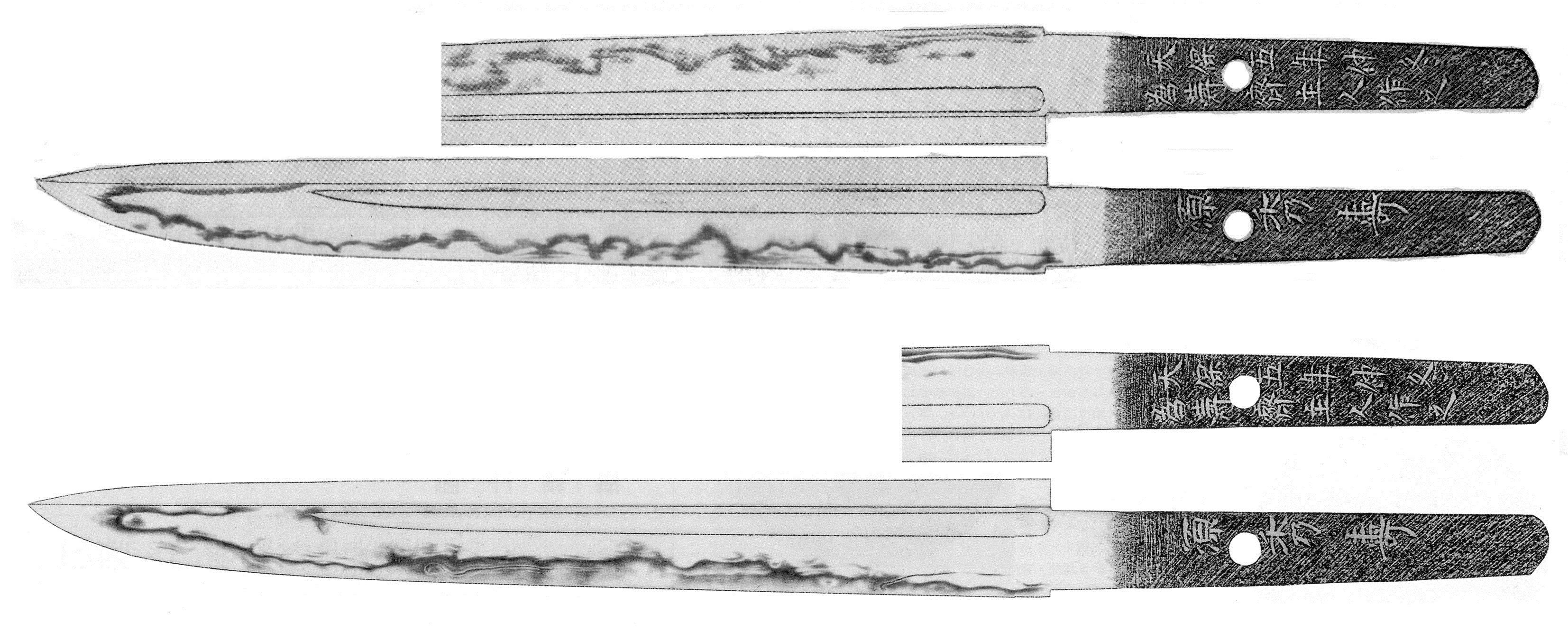
Again I want to present a comparison of two oshigata which show considerable differences. First of all something about the blade. It is a tantô in yoroidôshi style by Kiyomaro but from his early years. It is dated Tenpô five (天保, 1834) and signed with his former name „Hidetoshi“ (秀寿), that means he made the piece when he was 22 years old and after he signed with „Masayuki“ (正行). When you take a look at the oshigata depicted below you will see that the blade is obviously interpreted in the Sôshû tradition, or to be more precise in the style of Samonji (左文字). There are plentiful of nie and nie-based hataraki like conspicious kinsuji and sunagashi. Also we see some tobiyaki and yubashiri. By the way, Kiyomaro used that name „Hidetoshi“ only in that very year Tenpô five and this is also the only known work of him which is entirely interpreted in pure Sôshû tradition. Another sidenote: There exists a second blade dated Tenpô five signed with „Hidetoshi“ but this one, a tantô, is completely different as it is forged in the Inshû-Hamabe style (因州浜部) of his master Toshitaka (寿隆), i.e. it shows a chôji-based midareba in nioi-deki. That means this yoroidôshi-style tantô is an important reference for this phase of his career where he aimed at the Sôshû tradition and was just at developing his own style.

KiyomaroComp

Picture 1: tantô, mei „Minamoto Hidetoshi“ (源秀寿) – „Tenpô gonen chûtô“ (天保五年仲冬, „mid-winter of Tenpô five [1834]“) – „Tôsai-shujin no tame ni kore o tsukuru“ (為濤齋主人作之, „made for the head of the Tôsai family“), nagasa 22,8 cm, some uchizori, hira-zukuri, iori-mune

Interesting at this comparison is that we see this time how differently the blade was „read“. At the older oshigata depicted above, obviously more attention was payed to the supposed course of the hamon. That means hataraki like tobiyaki and yubashiri were interpreted as togari elements belong to the actual hamon (see picture 2, marked in red). Also the ashi were seen as indentation of the hamon and reproduced that way (marked in blue) on the upper oshigata. Apart from the fact that the lower oshigata is much more detailed, we have again a discrepancy in the course of the hamon itself, even the two oshigata are pretty identical in proportions. The area up to the blue marks (from the side of the kissaki) are matching but then the creator of the oshigata above „saw“ the third togari-like element marked in red at a considerable distance whereas the subsequent course is again about identical.

KiyomaroComp1

Picture 2: Questionable discrepancies.

I assume that this might go back to the massive kasane of this tantô. That means when the blade is laid down on the table padding, you either have to put something under the ha so that the ji lies parallel to the table, or you have to stop drawing from time to time and rotate the blade so that you can see all details. Maybe this is the reason for the discrepancy here because otherwise I can´t explain why the course of the hamon shifts all of a sudden right before the third togari element in question.

By the way, a detailed biography of Kiyomaro can be found in my work Legends and Stories around the Japanese Sword 2.

The difficulties with elegance

Regardless of whether translating texts on swords or sword fittings, it is often difficult to convey precisely what the author meant. The problem is not that you don´t understand what is written but to find „correct“ or most suitable equivalents of certain Japanese terms. The consequence is that some texts may sound awkward, clumsy or just monotonous, or – the other way round – too confusing by trying to explain as much as possible. One such example is translating words like „elegance“. Here the Japanese offers a variety of subtle differentiations on the basis of which a native speaker is able to grasp right away what the author is trying to say. As translator you usually have to use word combinations like „classical elegance“ or „unobtrusive elegance“ to stick as much as possible to the original text. However, often a term or a context is too complex to fit into a simple word combination and you have to use footnotes as an alternative.

At this point I would like to focus as indicated on the term „elegance“. A prime example can be found in Sasano Masayuki´s (笹野大行) 1993 ed. of his „Sukashi-tsuba“ (透鐔). Therein he writes: „Shodai Hikozô wa kôga, Matashichi wa seiga to iu naraba, shodai Kanshirô wa fûga de aru.“ (初代彦三は高雅、又七は清雅というならば、初代勘四郎は風雅である。). These three terms kôga, seiga and fûga are more or less just translated as „elegance“, depending on how sophisticated your dictionary is. Trying to convey what Masayuki´s says, this sentence might be best translated as: „When the works of the 1st generation Hikozô are of noble/refined elegance and those of Matashichi of pure/clear elegance, than those of the 1st generation Kanshirô might be described as being of tasteful elegance.“ As one can see, the fundamental part is here „miyabi/ga“ (雅), or as adjective „miyabiyaka“ (雅びやか), which means itself „elegant“, „gracious“, „graceful“ or „refined“. Starting with these three word combinations I would like to introduce some of the difficult to translate terms which have the part „miyabi/ga“ as basis.

kôga (高雅) – The emphasis here is on „noble“, „classy“, „refined“ or „grand“, that means the term can be translated as „noble elegance“ or „refined elegance“. The term kôga is often used to describe tachi-sugata of the mid or late Heian and subsequent Kamakura period for example as they are noble and classy but no longer of the ancient or archaic elegance of tachi prior to the early Heian period.

koga (古雅) – By using the prefix „ko“ (古, old), the emphasis is on „ancient“. That means the term koga describes an object or feature whose elegance is largely attributable to age. For example Heian-period or earlier swords or tôshô or katchûshi-tsuba are often described as having koga.

fûga (風雅) Fûga describes an elegance which is bit more deliberately achieved or individual, either through a surface treatment, lacquer finish, choice of clothes, or choice of words in a poem/text and so on. That means in this case terms like „fashion“ or „personal taste“ of the artist come into play.

bunga (文雅) – By the prefix „bun“ (文, literature), the term bunga might be translated best as „poetical elegance“ or „poetically elegant“. It is often used to describe a tsuba with a motif of poetical or lyrical background or which can be associated with classical poetical sujets.

tenga (典雅) – „Ten“ (典) means „ceremony“, „law“ or „rule“ so the term tenga describes, if you like, a „classical proper elegance“. That means tenga implies certain classy expectations towards a dance, dress or feature of an object.

yûga (優雅) and yûbi (優美) – These terms refer, in the sense of an object, much more to an elegance achieved by the artist or craftsman. For example an old, plain and simple ko-tôshô-tsuba would rather not be described as yûga or yûbi as much elegance caused by the charme of age comes here into play.

toga (都雅) – The prefix „to“ (都) refers to Kyôto (京都), that means the term toga describes the classy elegance which was preferred in the old capital. For example the well-known tsuba of Umetada Myôju (埋忠明寿) might be circumscribed by using terms like toga.

onga (温雅) – „On“ (温) means „warm“ and thus the essence of the meaning is towards a „gentle“, „unobtrusive“ or „peaceful“ but also towards a „familiar elegance“. That means a tsuba with flower motif for example is often described by using the term onga.

kanga (閑雅) – By the prefix „kan“ (閑) which means „leisure“ or „calm atmosphere/mood“, a „calm and unobtrusive elegance“ is described with this term. For example a blade in suguha by a shinshintô smith who worked mostly in a more flamboyant style might be described as kanga, but rather not a classical kotô Rai or Awataguchi-suguha for example as this was anyway the „default“ and basic style of these schools. Explained in an exaggerated manner, the Rai or Awataguchi smiths did not have to restrain themselves to achieve a calm suguha.

As you see it is rather difficult to explain these terms without context and I did not try to present here clear definitions. My intention was basically to make readers aware of a certain aspect of a translator´s problem but not to „create panic“. That means often terms like „elegant“ or „graceful“ are adequate and when you read of an „elegant sukashi design“, there is usually not a myriad of hidden meanings. In other words the design is just elegant, period.

Nihon-shinto-shi

Out now, the English version of my recently published Nihon-shinto-shi.

I quote from the blurb:

“This book should bring the reader more near to the no less interesting era of the „New Sword“, the shinto. With the transition to the peaceful Edo period, the Japanese sword experienced considerable changes which are briefly touched in some other sword publications. This book now tries to present the historical and scholastic changes of the shinto in a comprehensive manner. The reader should get an idea about the activities of the Edo-period swordsmiths in all the provinces and how – if at all – they were connected in terms of school or workmanship. The classification based on the traditional gokaden is no longer applicable in shinto times and so a more geographical processing suggests itself. In the beginning we have the large sword centres of Kyoto, Osaka and Edo. Subsequently, all other provinces follow, arranged according to their „significance“ in the sword world and in context with each other to avoid as much as possible big geographical and theoretical jumps.”

Paperback, 440 pages, b/w pictures, 7.44 wide x 9.68 tall, $75.00

It can be obtained here.

And the eBook version here.

Cover-engl-kl1

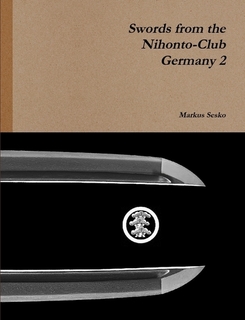
Swords from the Nihonto-Club Germany 2

After about two years we are proud to present the second catalogue of the Nihonto-Club Germany. Again, and with the support of our members, we have collected and catalogued altogether 31 blades whereas this time tsuba and kodogu also appear in the catalogue. This publication not only introduces „well-known“ and „classical“ items but also fine blades by rare masters like Jitsu´a, Ko-Hoki Sadatsuna, or the 3rd generation Hizen-Tadayoshi for example. The order follows the usual way, i.e. Koto, Sue-Koto, Keicho-Shinto, Shinto, Shinshinto, and Gendaito.

Again, I would like to take this opportunity to express my sincere thanks to all those who contributed to the compilation of this catalogue, and also to those who have taking an active part in our club meetings by providing blades, articles, tips, and advice.

The English version is available here.

And the German one here.

ClubCatalogue2

The tabe of contents can be seen here.

Contents

From the life of Unno Shômin 2

To show some more aspects of Unno Shômin´s live, I would like to translate parts of an extant correspondence of the master with Mitsumura Toshimo´s manager Matano Kagetaka (俣野景孝). As mentioned in the earlier article, Toshimo was one of Shômin´s „bulk buyers“ and played so surely an important rule in supporting the artist. Somewhat later than the Kanzan and Jittoku tsuba, Toshimo placed an order for a suaka-tsuba in mokkô-gata with hell motif (jigoku, 地獄) whose mei is: „Meiji sanjûnana-nen kika Mitsumura Toshimo-kun no motome ni kotae“ (明治三十七年季夏応光村利藻君之需) –  „Teishitsu-gigei´in shô-roku´i Unno Shômin rokujûichi“ (帝室技芸員・正六位海野勝珉六十一), „Made according to an order of Mr. Mitsumura Toshimo in late summer of 1904, Unno Shômin, Imperial Craftsman and holder of the sixth court rank at the age of 61.“ One letter of Shômin to Kagetaka from April 20th of 1904 reads:

„I gratefully received your registered mail with the attached cheque of 335 Yen. As planned, I was able to basically finish the figures of the God of Wind and Thunder and apart from that I also started with the preparatory work for silver tachi mountings for which I already have been paid for. The tsuba in question with the hell motif is, as you surely know, a very costly and sophisticated work and just recently I was able to finish the carvings for the ground plate. I am an old man with increasing difficulties to use my hands and thus I also had to reject orders for an exhibition held by a local dealer. With my situation in mind I would ask you to transfer the outstanding amount so that I am able to finish all the pieces [for Mr. Toshimo] without delay. I also have to pay the assistents I had to hire especially for the preparatory work of the zôgan inlay. Thus I humbly ask for your understanding. The work on the tachi-koshirae will be finished soon and if everything runs smoothly I will send it to you right after it is finished. Again I ask you to take into consideration my situation. Yours faithfully, Unno Shômin.

Post scriptum and to Dr. Matano Kagetaka in person: Regarding the gold mitokoromono set with the bird motif, I just finished the preparatory work.“

And in a letter from April 25th we read:

 „With regard to your request to hurry up with the tsuba in question I must inform you that I work on it all day and night to finish it as soon as possible. One side which shows the ´Expulsion from Hell´ will be finished around the tenth of the next month and the other side with the hell itself probably around the twentieth of the same month.“

On June 25th Shômin wrote:

„Dear Mr. Kagetaka. I have taken note of your reprimand regarding my demand for a loan of several hundred Yen to finish the tsuba in question. I only did this because of the circumstances and was by no means meant to make extra personal profit out of the tsuba with hell motif. All money will be spent for the completion of the piece and I really had difficulties to pay my students their wages.“

And from a postcard dated June 29th we learn about the completion:

„Dear Mr. Kagetaka. I completed the tsuba with hell motif yesterday but had to add some additional coloring. Regarding the slight delay, I had to finish two habaki for Mr. Shimaya (嶋屋) which I had to deliver to him together with a shirasaya. Yours sincerely.“

In 1905, one year after the order for the tsuba with hell motif was placed, the Japanese government commissioned Mitsumura´s Kôbe-based company Kansai Shashin Seihan Insatsu (関西写真製版印刷) to document the Russo-Japanese War in the Lüshunkou District, the former Port Arthur. That means we can assume that he was quite busy at that time and did not wait every day at the doorstop for the tsuba to arrive. But maybe he did, as he was an enthusiastic collector. We further learn that his manager also had to deal with the artwork commissioned by his boss. By the way, Toshimo published in 1904 the first two volumes of the fancy tôsôgu set „Tagane no hana“ (鏨廼花, lit. „Flowers of the Chisel“). In 1919 the other four volumes followed and a limited special edition of 500 copies of all the six volumes were reprinted in 1971 by the publisher Tsuru Shobô (鶴書房). Some pics of the latter publication can be found here.

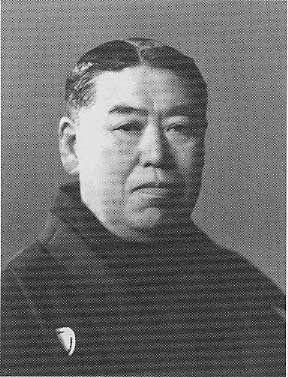
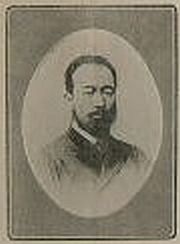
MitsumuraToshimoMatanoKagetaka

Mitsumura Toshimo (left), Matano Kagetaka (right)

From the life of Unno Shômin

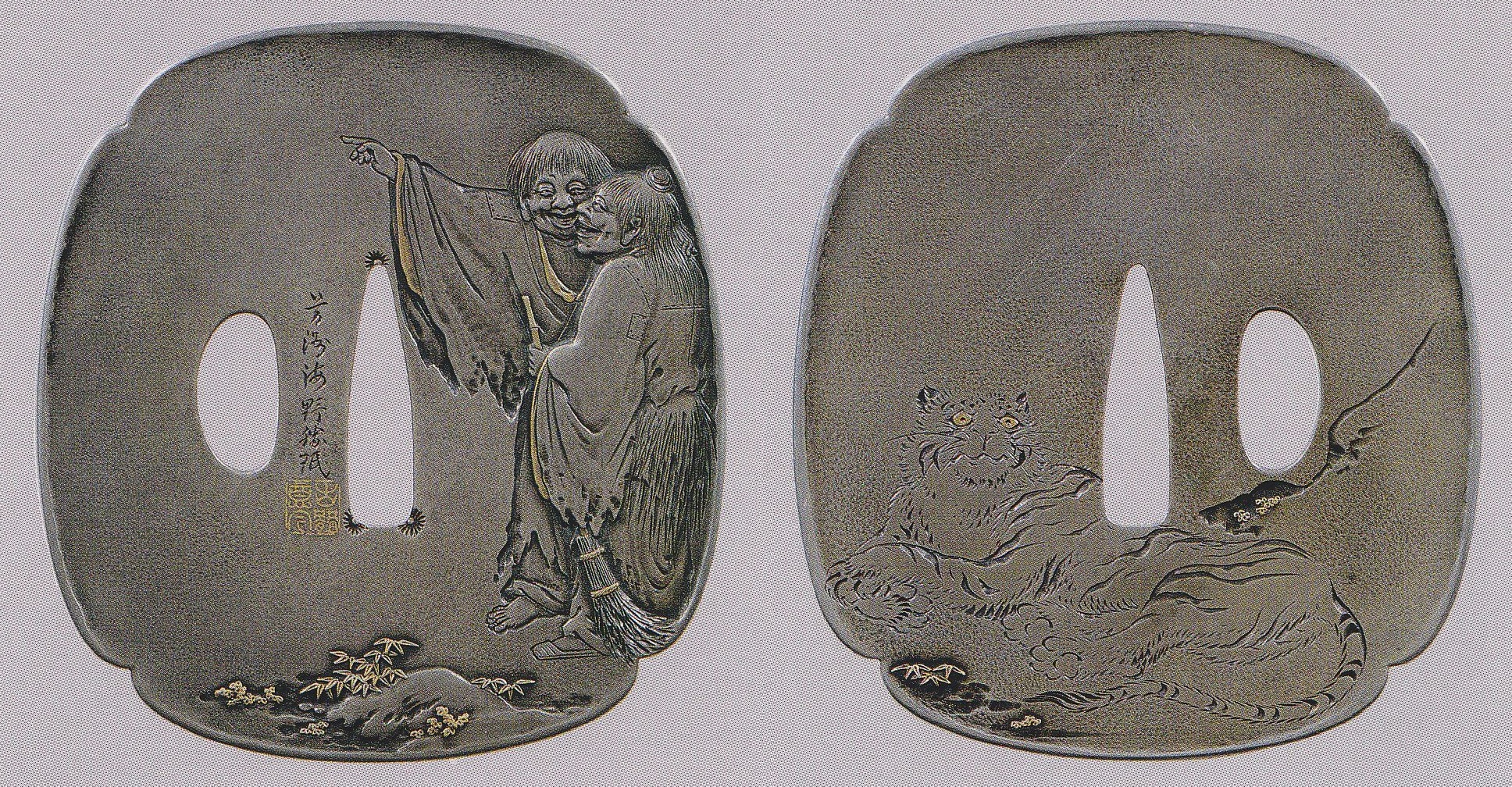
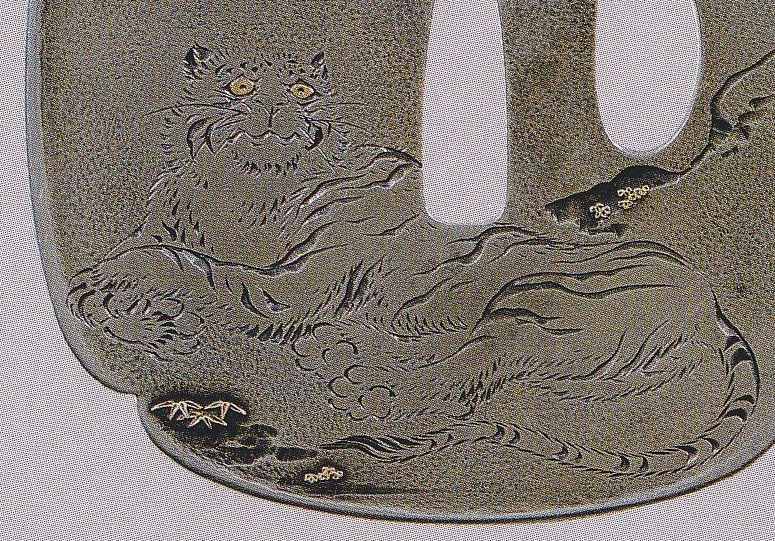
By way of an introduction, I would like to present one of my favourite tsuba (see picture 1). At this point I would also like to thank to owner for allowing me to study this fantastic work hands-on. The tsuba has jûyô papers, is of oborogin, depicts Kanzan (寒山), Jittoku (拾得) and a tiger, and is signed „Hôshû Unno Shômin“ + seal (芳洲海野勝珉). It has a slight tsuchime surface and Kanzan and Jittoku are represented by to the combined application of sukidashi-usunikubori and shishiai-bori. The gentle and rather sketchy tiger is done in katakiribori (see detail picture 2). It was made according to a special order of the Kôbe millionaire Ryûshidô Mitsumura Toshimo (龍獅堂光村利藻, 1877-1955) who had an especially profound appreciation of sword fittings. Shômin made it in Meiji 36 (1903), meeting his 60th birthday. It was made at a time when he was way out of the woods, having left behind the difficulties of the haitôrei, the Sword Abolishment Edict. In the eleventh and fourteenth year of Meiji (1878 and 1881), at the first and second „Exhibition for the Industrial Promotion of the Country“ (kokunai-kangyô-hakurankai, 国内勧業博覧会), he won prizes for his metalworks. And for the fourth exhibition held in Meiji 28 (1895), he was already appointed as a judge. Five years earlier, i.e. in 1890, Unno Shômin had entered the Tôkyô School of Fine Arts and studied there under Kanô Natsuo. One year later he became assistant professor and in November 1894 he was a regular professor. And in 1896, he finally became a teishitsu-gigei´in (帝室技芸員, lit. „Imperial craftsman“), the forerunner of the later ningen-kokuhô. To demonstrate the exciting but hard times back then for Japanese metal workers I would like to translate from the records of Mukai Katsuaki (向井勝明, also read „Shômei“), one of Shômin´s students.

shomin

Picture 1: Kanzan, Jittoku and tiger

shominTigerDet

Picture 2: Detail of the tiger

„My master to was faced with the Meiji-era haitôrei and had to see to make somehow his living. At certain times he even runned a wheeled oden stall (a classical winter dish of different ingredients stewed in a light broth) or performed shinnai songs (新内) at various stages in Asakusa. But he was one of the first kinkô artists who expanded his repertoire by making vases, okimono ornaments, tee utensils, jewelry, accessories and the like and so he was able to survive these difficult times. At the time I became his student, one hour lesson was 50 Yen, an amount not easy to find for an extended family like mine. That means the kitchen often remained cold and my master also had to go to the pawnbroker on a regular basis. There was even a special wall closet at the pawnbroker just for my master.

When times improved we moved from Komagome (駒込) to Banba-machi (番場町) in Edo´s Honjo district (本所). The new house and workshop was so stately that we jokingly called it ´the Banba palace´. At that time, bonsai were the hobby of our master. Every morning they had to be moved out on the veranda and every student was instructed by Shômin in thir care and handling. When he became professor at the Tôkyô School of Fine Arts he took the horse-drawn carriage every day, also back home for lunch. He often dressed-up like a bushi back then, wearing the montsuki-hakama (紋付き袴), the formal wear consisting of a crested kimono and a hakama. He also had got into the habit to stalk with a demonstratively stretched-out elbow. All this set tongues wagging of course.

During his last years my master had a high blood pressure and from time to time he suffered from paralysis symptoms because of his swollen arms and legs. He also drank a lot and his wife and all persons around had to take care of him when he drank his bottle of sake every evening. And when there were guests or customers, this habit regularily developed into a drinking bout but there were also days where I had to ´play´ the guest to initiate a drinking bout. From about the second or third year of Taishô (1913/14) the paralysis worsened and if I did not help him with his work, sometimes nothing would have moved on. Often he had to take a nap during working hours and we had to be quiet. That means in fact we had to pause or work for one or two hours. When he woke up it was my job to hand him the chisels or sometimes even to guide his hands to carry out certain chisellings. That means one can imagine that there were times when you were not even able to work on your own projects for more than one our without interruption.

But our master pointed out again and again that he has ´tough Mito bones´ [Translator´s note: Shômin was born in Mito in Hitachi province.] But one day he collapsed in the lavatory, probably because of his high blood pressure. He was able to get eventually out by his own and the doctor said that he rarely has such tough patients but regardless of what he tried, our master died two days later on the sixth of September 1915 at the age of 72.” [Translator´s note: The sources vary in this respect and quote also the eighth or tenth of October as his day of death.]

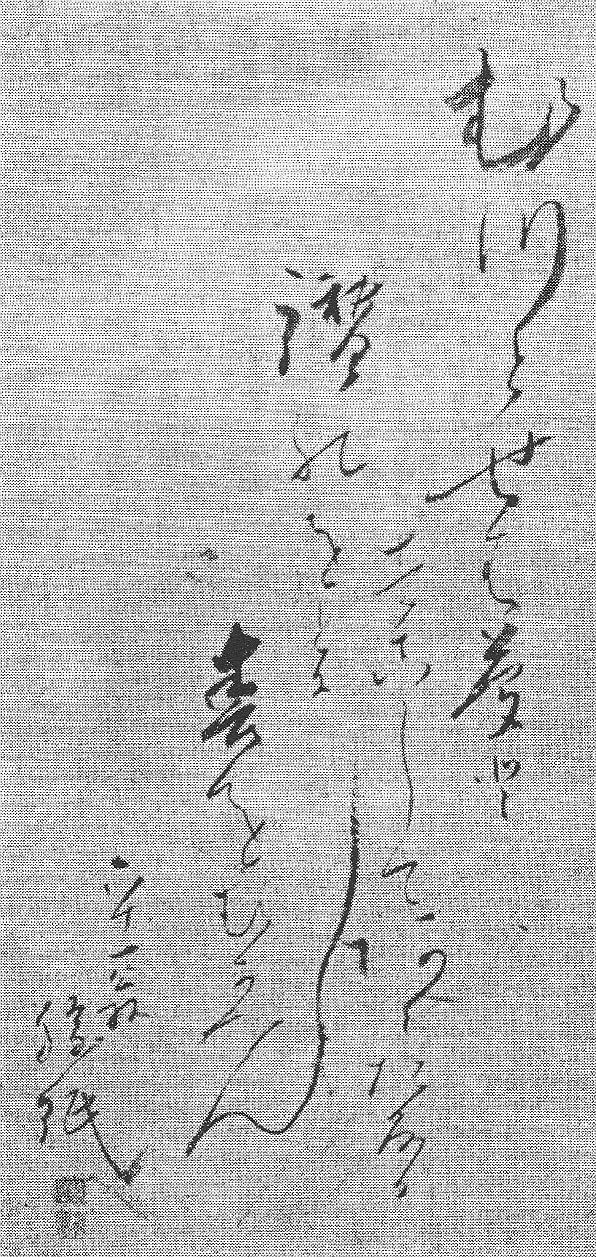
 ShominCalligraphy

Picture 3: Calligraphy of Shômin: „Mutsu tose wa yume to sugoshite ashita-naru tagane no oto ni haru o mukahen – rokujûichi-ô – Shômin“ (むつとせは夢とすごしてあしたなる鑽のをとに春をむかへん 六十一翁    勝珉, „Six decades are nothing but a dream when I am awakened by the morning sound of the chisel in the approaching spring – The 61-years-old Shômin.“)

Later, I would like to present parts from an extant correspondence of Shômin and Mitsumura Toshimo´s manager Matano Kagetaka (俣野景孝). Some info on Toshimo can be found here.

Kantei Reference Book out now

I would like to introduce the announced Kantei Reference Book – Hamon & Boshi and quote from the blurb:

“Towards the end of 2012, I published the two-volume project Koto-kantei and Shinto & Shinshinto-kantei, depicting 358 blades from all schools and styles. Recently, I was able to continue with the first Kantei Supplement 1 introducing another 61 blades. In between I received feedback which suggested that a kind of „reverse version“ would be practical. This means a guidebook where specific examples of hamon and boshi are depicted instead of more or less detailed schematic representations. The result is this small publication which shows about 400 hamon and 230 boshi interpretations. I hope this humble guide will be helpful for identifying specific works, or at least guide you on the right track enabling you to look for further information and confirmation. It also might come in useful for oshigata-based kantei riddles where only the hamon and the boshi are provided.”

It is available at Lulu.com via this link.

And the eBook version can be found here.

CoverFinished


Kuji-kiri – A very special koshirae

About six years ago, my friend from the japanische-schwert-galerie (see blogroll) and I were classifying a koshirae to a blade by the 5th generation Hizen Tadayoshi (肥前忠吉, 1696-1775). Please note that all pictures of the blade and koshirae shown in this article are copyright of the japanische-schwert-galerie so please do not resuse them. Right at this point I would like to thank the owner for allowing me to present the pictures on my blog as this koshirae was kind of special and remained in my memory over all the years. At a glance, the mounting looks like a tachi-koshirae from the mid or second half of the Edo period (see picture 1), but on a closer look it turns out that firstly, all the fittings are en suite of mokumegane and decorated with different golden characters, and secondly, the ashikanamono hangers have hinges and can be removed so that the sword can be worn as handachi thrusted through the belt. Of course the first thing to do is to decipher the characters and find out what is their context. The fuchi shows at the lower end a grid pattern which gives about the direction to where the context is to be found. Such a grid pattern is namely known as kuji-kiri (九字切り), a symbol deepy interwoven with the esoteric Buddhism (mikkyô, 密教). So when we sort and read the characters which are found on the fuchi, the kabutogane and the metal fitting of the saya (see picture 2), we get „rinpyô-tôsha-kai-jinretsu-zaizen“ (臨兵闘者皆陣烈在前), a saying or rather prayer from a Taoist lyrical text from the 4th century AD with about the following meaning „May the presiders over warriors be my vanguard!“ Later this line got more and more a religious connotation and was eventually used as mantra. That means the original characters were still used when writing down or as mnemonic when reciting the mantra but should not be taken literally any more.

 OLYMPUS DIGITAL CAMERA

Picture 1: Blade in shirasaya and its koshirae

Kuji2

Picture 2: The inscriptions on the fittings.

Many associate the kuji right away with ninjutsu but this is not what it is all about. The kuji-kiri grid was known long before certain ninjutsu teachings emerged, namely for warding off  dangers. The grid was painted or written over the potential danger, for example seafarer and fishermen wrote the grid over the character for „sea“ (umi, 海) or „water“ (mizu, 水), but mostly it was written over the character for „demon“ (oni, 鬼) to act as a general protection. Quite early certain mudra (hand seals/gestures) were asssociated with the nine characters or syllables respectively. A mudra is a very old spiritual gesture and used among others for meditation or to support the mantra. There are hundreds of them and they did not have the magical powers modern ninjutsu interpretations read into them. But of course we can ascertain connections. When esoteric Buddhism was introduced to Japan at the beginning of the Heian period, it found fertile ground in certain and similar shintô rituals and folk-traditions connected with sacred mountains and the like. This gave soon rise to the shugendô (修験道), a mysitcal-spiritual interpretation of mikkyô and shintô approaches of understanding the world and with a focus on ascetism, preferably practiced in the mountains. Only centuries later when the turmoils of the Sengoku era gave rise to a continuous need for espionage and assassinations, families organized themselves and established an early form of curriculum and body of thought which in turn was inspired by esoteric Buddhism. However, we can agree that the commissioner and/or owner of the koshirae was somehow involved either in shugendô or maybe also in ninjutsu as at the peaceful time the mounting was made, the few remaining families which preserved the ninjutsu focused more on spiritual aspects and thus formulated a more sophisticated philosophical and spiritual background of their teachings.

But there is more to it than that at this koshirae. As seen in picture 3 we find on the menuki and on the habaki two family crests. One is the so-called „fundô“ (分銅, weight), the other one the so-called „futatsu-hikiryô“ (二つ引両, two crossbars). The former was used among others by the Horio family (堀尾). The Hideyoshi-retainer Horio Yoshiharu (堀尾吉晴, 1542-1611) switched sides after his lord´s death and became a follower of Tokugawa Ieyasu. Well, because of an injury he was unable to participate at Sekigahara but as his son Tadauji (堀尾忠氏, 1578-1604) did, Ieyasu granted them lands in Izumi province worth 240.000 koku and the new Toda fief (富田藩) was founded. But Tadauji died young and so Yoshiharu´s underage grandson Tadaharu (堀尾忠晴, 1599-1633) became the successor of the Horie family. Shortly before Yoshiharu´s death, i.e. in 1611, Matsue Castle (松江城) was completed whereupon the administration of the fief moved there and it was renamed to „Matsue fief“ (松江藩). Now also Tadaharu died young and without heir and as the Horie family asked the bakufu for the permission to adopted his older cousin Sôjûrô (宗十郎) as successor, this was not granted and the government decided that the Horie main line should end at this piont. The Matsue fief was given to the Kyôgoku family (京極) for the time being but four years later in 1638 finally to the Matsudaira family (松平). With this the bakufu sent the remaining Horie family members on the one hand into service of the Matsudaira, that means they remained Matsue-retainers, and on the other hand into the service of the Hosokawa family (細川), the daimyô of the Kumamoto fief (熊本藩) of Higo province. And now we come back to the koshirae. The futatsu-hikiryô crest was namely used by the Hosokawa, but also within the line of Matsudaira Naomasa (松平直政, 1601-1666), the daimyô who received the Matsue fief from the Kyôgoku family. It was a customary practice since oldest times that the two cross bars-crest was given to the second son of a family. Ieyasu did the same and thus it came to be used by Naomasa as Naomasa´s father Yûki Hideyasu (結城秀康, 1574-1607) was the second son of Ieyasu. The tsuba shows the tsuta crest (蔦紋, ivy) which was used by several Matsudaira branches too as it is very similar to the aoi crest of the Tokugawa but officially not the same. In conclusion we can say that the owner of the koshirae wanted to display that he was a retainer of the Matsudaira or Hosokawa (there are not enough facts to rule one of them out) but in the context of having Horio origins. So all in all we have a very well thought out mounting you don´t see every day.

 Kuji3

Picture 3: menuki and habaki with the two family crests