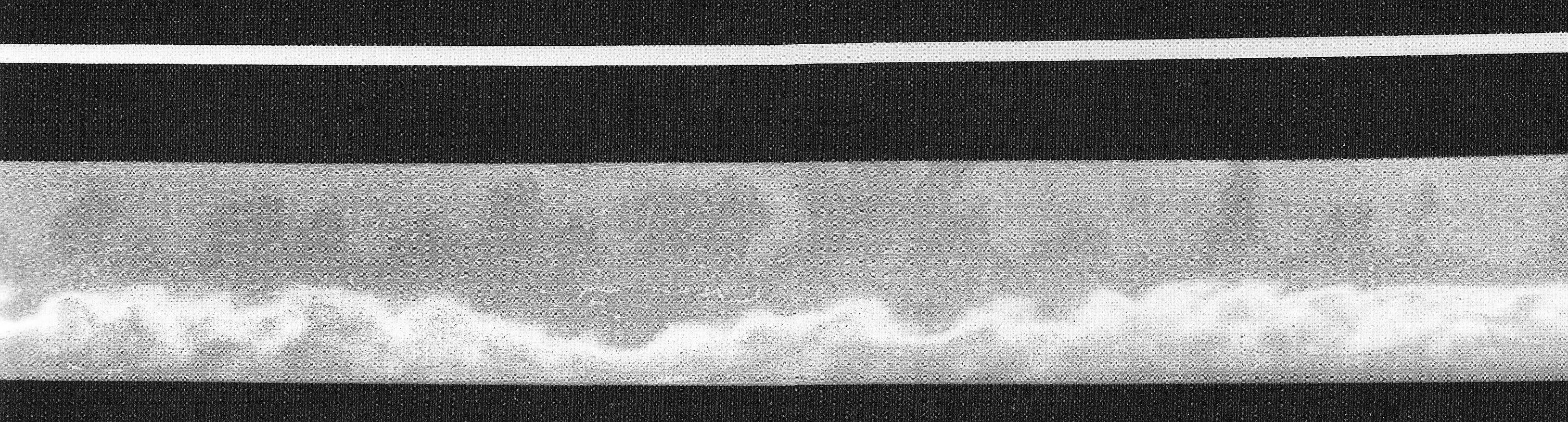
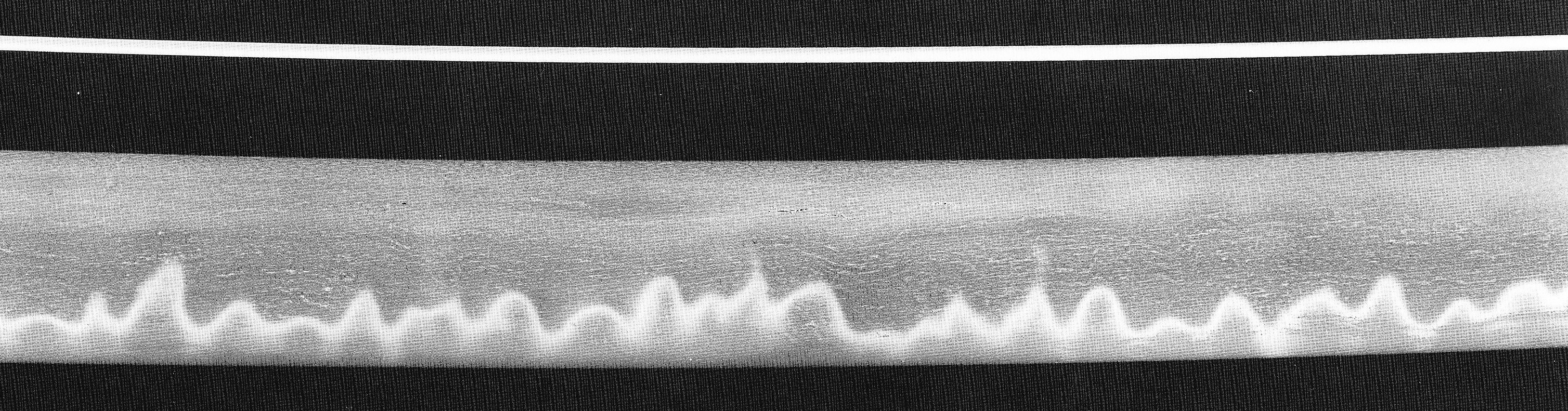
Copies, homages, and reinterpretations

Just a couple of weeks ago I was following a discussion on NMB but couldn’t find the time to participate, and when I was finishing the reformatting of the Keichô-shintô project the other day, this thread and the discussions we had on the topic of utsushimono at two of our NBTHK-EB meetings (in 2009 and in 2014) came back to my mind. So before I continue with the kantei series, I would take the liberty of forwarding my two cents on this topic.

When talking about copies of blades, the term utsushimono (写し物) comes into play which means, well, “copy” but which can be used in a pretty broad sense. And that is the crux of the matter because when the term utsuhimono – or short utsushi (写し), e.g. as a suffix – is dropped, we need to differentiate. First of all, there is the “true copy,” that means a work that copies as faithfully as possible a concrete blade. For example the meibutsu Koryû-Kagemitsu (小竜景光) made by the Bizen smith Kagemitsu in the second year of Genkô (元享, 1322). Several smiths made copies of this blade, some of them on their own initiative but most because of being asked to do so by a customer. In my Tameshigiri book I introduced two Koryû-Kagemitsu-utsushi by the shinshintô smith Koyama Munetsugu (固山宗次). Interesting in this case is that Munetsugu made first, i.e. in Kôka four (弘化, 1847), a “reconstructed copy” of how the blade must have looked like initially (see picture 1 left). The Koryû-Kagemitsu has been shortened, although it still measures magnificent 80.6 cm in nagasa (see picture 1 center). Considerably later, i.e. in Bunkyû two (文久, 1862), Munetsugu made a 1:1 copy of the then condition of the meibutsu, and interesting this time, he also copied the signature of the original 1:1 and signed himself on the back of the tang (see picture 1 right). Please note that this does not come under the category of gimei as the smith added his name at least somewhere on the tang. But even if Munetsugu had not added his name on the back of the tang we would not see this blade as gimei. Meibutsu blades of the calibre of a Koryû-Kagemitsu can be compared to the Mona Lisa. So even if you make a perfect copy of the Mona Lisa, everybody knows that the original hangs in the Louvre and it is next to impossible to trick anyone buying it as original. Of course there were also schemes around meibutsu but they almost always evolved around a famous blade that was long believed to be lost but suddenly popped up somewhere, for sale of course. Details on the backgrounds of why and for whom Munetsugu made these copies can be found in my Tameshigiri book but it should be mentioned here that Munetsugu must have had the original in hand as the copy is indeed pretty close, that means much closer as you can make one just on the basis of oshigata drawings and plain measurements.

Copies1

Picture 1: The Koryû-Kagemitsu and its two Koyama Munetsugu utsushi

I was already briefly talking about utsushimono in this post and like in the case above, the Fudô-Kuniyuki-utsushi of Nobukuni Shigekane (信国重包) can be considered as a “true copy.” That means even if the original meibutsu had to be retempered about 70 years before Shigekane got to work with it, his approach was still the attempt to copy as faithfully as possible a concrete blade. This brings us to the first “grey area.” Namely even supposing the Fudô-Kuniyuki had been missing at the time of Shigekane and all he had was good enough oshigata and descriptions, the result would still be considered as utsushimono as he copied, or tried to copy a concrete blade, although no longer existing. So the term utsushimono applies here too but it might not be paraphrased as “true copy.” In other words, the farther away the oshigata and descriptions from the original, the more we are entering the realms of a mere homage and eventually end up at a “free interpretation” of the Fudô-Kuniyuki if for example all that Shigekane had to work with was the order to “make me something like the famous but lost Rai blade” and the brief description that it had a this and that horimono and that it measured 1 shaku 9 sun 9 bu in nagasa. But of course also a smith (or his client) can specifically decide to make more like an homage, even if the original is still extant and could act as a model. An example for that are some of Echizen Yasutsugu’s (越前康継) copies of the meibutsu that were damaged by fire when Ôsaka Castle fell in 1615 and which he was ordered to retemper. So Yasutsugu made some “true copies” of these blades whilst he had the chance to study them hands on – or at least what was left of them in terms of steel, shape, and engravings – but he sometimes also copied just the sugata and horimono and added his own hamon. That means he did not even try to recreate the kind of hamon that the blades once might have shown. Again, they are still referred to as as utsushimono. By the way, I was talking about one of Yasutsugu’s “true copies” here.

Then there is the next category of “copies,” namely utsushi not of concrete blades but of styles of a smith or school. For example, if Koyama Munetsugu had made a blade that tries to reproduce the style of Kagemitsu, we would speak of a Kagemitsu-utsushi. Remember, the copy of the Koryû-Kagemitsu is not a Kagemitsu-utsushi but a Koryû-Kagemitsu-utushi. Many many blades were made over the centuries that try to copy the style of a certain school or master. I want to leave out the cultural backround but just one remark, it is common in East Asia for a craftsman to measure his own skill with that of a great master by trying to copy his works over and over again, not seldom over decades. Its just a learning and maturing process (artistically and spiritually) – learning through imitation – and does not mean that one uncreative. But lets get back to the topic. So if a smith tries for example to recreate a blade that is interpreted just like Osafune Kanemitsu (長船兼光) would have made a blade, it is referred to as Kanemitsu-utsushi, and if he tries to recreate a blade in the style of the Aoe School, it is referred to as Aoe-utsushi. And as borders between true copies and homages are fluid, there are other terms than utsushi or utsushimono which might nail the subtle differences better. For example nerau (狙う), “to aim at,” and narau (倣う・傚う), “to emulate, to imitate.” Incidentally, the term for learning, narau, has the same etymological origins (not going into detail on the sophisticated etymological differences of the characters for narau here). A little weaker form of saying “to aim at, to emulate, to imitate” is omowaseru (思わせる) which translates as “gives the impression of,” “has the appearance of” or “sth. reminds of sth.” For instance, a free interpretation that reminds of the style of Kanemitsu or of the Aoe School might be described as “Kanemitsu o omowaseru (兼光を思わせる)” or “Aoe-mono o omowaseru (青江物を思わせる)” respectively. It now depends on the writer, i.e. we see texts where such a free interpretation is still referred to as utsushi, but also such where it is stated that A tried to emulate B, that C aimed at D, and that a certain work reminds of X. So what its gonna be also depends on the context. Some smiths are known for focusing on concrete utsushi, for example Taikei Naotane (大慶直胤) who often copied or aimed at famous Osafune masters like Kanemitsu and Kagemitsu, whereas others rather reinterpreted certain things, for example Hankei (繁慶) and his working with the Sôshû tradition.

That brings us back to the different approaches of the smiths and it must be mentioned at this point that an utsushi is not considered as a forgery. Also forgeries try to reproduce a certain style, or even a concrete blade, as faithfully as possible, but they then “claim” to be a work of that school or smith or to be that very blade. In short, different intention. Or in other words, it doesn’t have to be by a great master or a very close copy but if the buyer/owner knows that the blade was made as copy of or as an homage to a certain school or smith, everything is fine. Like indicated above, it was very common to approach a smith and order a blade with the requirement it should be in the style of Kanemitsu or of the Rai School for example. Did myself so about ten years ago when I commissioned master Matsuba Kunimasa (松葉國正) with making me a naginata-naoshi style wakizashi that bases, freely, on a certain Ko-Aoe blade. What about the historic aspect? It is safe to assume that copies and forgeries coexisted from earliest times onwards. That means, learning through imitation was there what creates copies/imitations and making money from selling someone something cheap as something more valueable is is as human as it gets. So swords are of course no exception. It is hard to say for pre-Nanbokuchô smiths but one of the earliest examples of copying/imitating/recreating – isolated from the works left from the mere learning-through-imitation process – is the Ôei-Bizen group. When the turmoils of the Nanbokuchô period were over the Ashikaga family reinstalled the post of shôgun back in Kyôto and the upper warrior class was again trying to catch up with the cultural world of the aristocracy, after having tried something new and different, something more martial and bold in Kamakura. This is very well reflected in the sword fashions when the Bizen tradition, which was predominating during Kamakura times, was given up in the Nanbokuchô era in favor of the wild Sôshû tradition, which was given up again with the relocation of the bakufu to Kyôto in favor of the Bizen tradition. That means we see a significant backwards orientation at Ôei-Bizen as the group made blades in reminiscence of their great Kamakura predecessors. Another example for early utsushi are the numerous Rai or Yamashiro copies of the Sue-Seki smiths. My theory on the success of these copies is as follows: By that time, i.e. later Muromachi, sword forging in Yamashiro, that means Kyôto, was with entering the 1500s virtually non-existing and it is assumed that one reason for that was the massive “urban exodus” of the local smiths with the outbreak of the Ônin War. But unlike the changing fashions for long swords, classical koshigatana were always in demand. The koshigatana market had been predominated by the Yamashiro smiths as they equipped the warrior elite from the start with their fine daggers. Thus the peak of highest-quality tantô production is in the Kamakura period. The larger hira-zukuri ko-wakizashi that became increasingly in use with the Nanbokuchô period were a hint more utilitarian than the koshigatana, or at least more utilitarian than the “status symbol koshigatana” that were worn with formal costumes. So by the late Muromachi period, there were no Yamashiro masters at whom one could place an order for a classical koshigatana, i.e. a medium-sized tantô with harmonious proportions, a fine hada, and an elegant sugaha hamon. And thus warriors were approaching the then Seki masters who made them classical and high-quality koshigatana but which were much more affordable than looking for the real thing, i.e. trying to buy an Awataguchi or Rai original which always had been expensive. The Momoyama era experienced a “rediscovery” of the great early Sôshû masters and details on that like the upper warrior classes “need” for owning certain masters and the effect on then sword fashion can be found in my recent Masters of Keicho-Shinto and my Masamune book. But this much is to say: Sôshû was the order of the day and virtually every master or aspiring master was making Sôshû copies or a stab at the Sôshû tradition at that time.

And then came the shintô era of sword making which brought a lot of changes. The continuous peace, urbanization, accumulation of wealth for a higher number of individuals, and the conservative formation of an upper bourgeoisie had the effect that swordsmiths saw themselves more than ever as artists rather than as craftsmen. As a result, faithfully imitating certain predecessing masters or styles was no longer enough. Kotô blades are pretty much form follows function coupled with a special sense of aesthetics, i.e. simply put, the aesthetics of nativeness or natural simplicity. The great Ôsaka-shintô, Edo-shintô and early Hizen masters (just to name a few) developed with their strong creative power certain concepts, that means they started to separated the individual aesthetics of a blade like the sugata, jigane, hamon, and bôshi, just to rearrange them according to their overall idea of a sword blade. And utsushimono were no exception. Still “true copies” were made but we see more and more idealized reinterpretations of certain styles. In other words, these shintô masters reflected what constituted for example the Yamashiro tradition or for which the Yamashiro tradition was recognized for and banned these very elements onto canvas, in their case onto a sword blade. To stay with the example Yamashiro, the Yamashiro tradition is first of all famous for a densely forged, uniform jigane and a highly elegant suguha or suguha-chô. Accordingly, the great shintô masters focused on these elements and highlighted them at their own discretion. This changed again with shinshintô times as the shinshintô masters so to speak had to – after almost a decade of lean spell and a decrease in demand for swords and a decline craftsmanship – “reinvent” the whole wheel and were first of all aiming again at the kotô models. Rephrased, they first had to “learn” again through imitation before they were able to go over to free reinterpretations (which are by the way hardly seen in shinshintô anyway). Using the example of car makers and the Jaguar E-Type, the shinshintô masters were making as faithful as possible Jaguar E-Type retros whilst the shintô masters took everything for what that icon of a car stands for and created something new that might only remind of the original at a glance, or that can only be recognized as being Jaguar E-Type inspired when you have a decent undertanding of classic cars. But if the master was a great master, you can see what his inspiration was, how he skillfully highlighted certain elements, and how he really conveyed the aesthetics of the E-Type, oh pardon me, the Yamashiro tradition. But if a master was not that good, you might get what he was aiming at but the result is in the worst case a “Yamashiro grotesque.” Just like the thin line between an outstanding and a “too much” concept car.

Perfect timing, Aoi Art just put an interesting piece on sale. Link here (and picture below). It is a copy of a copy, that means Kasama Ikkansai Shigetsugu (笠間一貫斎繁継, 1886-1965) copied a blade by Taikei Naotane (大慶直胤, 1778-1857) which the latter had modelled, rather freely if you compare it to the three originals introduced in my Masamune book, on one of the Hôchô-Masamune. Like Koyama Munetsugu, Shigetsugu also copied the signature “Mo Hôchô-Masamune Naotane + kaô” (模包丁正宗直胤) of Naotane’s copy (or rather homage). Shigetsugu himself signed on the ura side, interestingly with “Ikkansai kore o tsukuru” (一貫斎造之), i.e. just with his and omitting his smith name (blade got papered to Shigetsugu by the way, so it is none of the other numerous Ikkansai smiths).

Copies2

Leaving aside the art aspect, making a convincing and “true copy,” for example making a Koryû-Kagemitsu-utsushi, requires quite a high level of skill. Imagine how perfectly you have to master the craft to know how to arrange, fold, and forge your initial steel bundle and harden the blade to get in the end the exact same kinsuji at the exact same spot as on the original. You can do a lot with tsuchioki but in general, there are no tricks or shortcuts. That means you can’t “draw” a kinsuji onto a blade. It is just amazing how some smiths did this!

Gendaito Project Update 2

GendaitoProjectLogo1

Just want to add a few thoughts on the upcoming Gendaito book but first of all, a big THANK YOU to all who provided me with material via the separate gendaitoproject@gmail.com address, facebook, the NMB, and everywhere else. Please understand that I will wait with replying and asking specific questions until the actual writing job starts. As mentioned earlier, I have gathered about 1,100 smiths and aim is to record and publish once and for all as many smiths as possible. I have also mentioned that there are quite many where no pictures or oshigata are available but which will be published too, or course, and this most likely collected and in a separate section. Apart from that, I am facing certain page limits, 800 pages to be precise, but it doesn’t make much sense to approach this limit anyway as I have learned that anything that big is prone to fall apart or get “wobbly.” The “sound barrier” is somewhere around 600~650 pages, which is within easy reach at more than 1,000 smiths. And I am not going to make it two volumes. As picture quality is also an issue, this will definitely not be a coffee-table book with details of hamon or jigane and an ouvre of each smiths works (much as I would like).

To sum it up: This book will not be a “Jack of all trades, master of none.” Top priority is as indicated recording the CV’s of as many smiths as possible, accompanied by pictures/oshigata of signatures so that the book also work as a reference for mei comparisons. To leave the focus on the smiths, I also don’t want to toss off a half-hearted chapter on the history of gendaitô, but what I want to do is to follow up something like a Nihon Gendaitô Shi, so to speak continuing my Nihon Shinto Shi and Nihon Shinshinto Shi, that contains all that information like production sites, programs, contests, etc.

That should do it for tonight and thanks for your attention.


Gendaito Project Update

GendaitoProjectLogo1

I just want to give you another short update on my upcoming Gendaito book. As some of you already know via direct correspondence with me, I had to rethink and postpone the project due to an unexpected “setback” when it comes to references. This of course does not apply do those who already and unhesitantly shared their information with me and who offered me further support when the project is entering the final and crucial phase of writing. But I have collected enough so far and kind of started to sort out data a while ago. After finishing my revised Swordsmiths of Japan and taking the info on the gendai guys therein as a basis, I arrived at about 1,100 smiths for the upcoming book. Of course I will not have pictures and reference blades/oshigata for all of them. Also I had to sort out whom to include and whom not and came to the following conclusion: Included will only be smiths whose career (or major part of the career) started after the ban on wearing swords (1876) as there were just too many shinshintô smiths active who were still making swords in the early years of the Meiji era and who I don’t want to include as they really don’t classify as gendaitô smiths. Also I will not include smiths whose career only started after WWII. But there might be some exceptions to these limits. Apart from that, I was experimenting with the layout and came to the conslusion that the book has to be two-part, that means it will consist of a large picture reference part and a part with basic info on those smiths of whom I don’t have any blade pictures of. Both parts will be structured alphabetically and aim of the second part is, as good as possible, not to leave any smith out. So the two pictures below are a very first attempt to see how this all might look like in the end. So to all of the gendaitô collectors out there, there is still enough time to give me feedback and forward me material as the crucial writing phase will not be started for a while. Also please note that in case you send me files, descriptions and further info to “gendaitoproject@gmail.com” (and I would appreciate that everything is going there and not to my regular address), everything is gathered there fore the time being and I will only reply later on to say thank you (and if there are further questions). Oh, and if anybody wants to financially support the preparative work on this project in the form of a small donation, what would be very very much appreciated, there is a humble button at the very end of this site for this 😉 Thank you all for your attention!

GendaiPreview1

GendaiPreview2


The wakizashi

Inspired by an article that appeared in the Tôken Bijutsu about a year ago and on which I will elaborate in the second part of this post, I was once again reflecting on the entire topic of the wakizashi (脇指・脇差). Well, due to the nature of the article, I was first focusing on mere blade lengths and restrictions but as my thoughts were spreading wider and wider, I thought it might be a good idea to write all that down in order to provide a general overview of this sword type. I guess when the term wakizashi is dropped, most of us automatically think of the shorter twin brother of the katana that represents one half of the famous daishô (大小) sword pair. Also many know that the wakizashi emerged sometime during the Muromachi period and that later on, it was so to speak the “maximum” of a sword a civil person was allowed to carry. This is all correct, so nothing has to be set straight right away, but the matter is of course much more complex. First of all, some etymological explanations. In earlier times, especially before entering the mid to later Muromachi period, the term katana (刀) was not referring to the katana as we know it today but to a short, dagger-sized and single-edged blade, or to a dagger in general if you want, and was mostly used as suffix (also with the Sino-Japanese reading ) in a compound term. For example, in historic sources we find terms like koshigatana (腰刀), uchigatana (打刀), tsubagatana (鐔刀), futokorogatana (懐刀), chiisagatana (小サ刀), wakigatana (脇刀), kogatana (小刀), or shôtô (小刀). From the context we often get a pretty good idea about what kind of sword or dagger was meant but many entries are ambiguous, e.g. when a later edition of a work quotes the very same paragraph with a different term than the initial one. The matter is further complicated by the fact that some terms were just used interchangably and that there were no universal dictionaries that defined terms and made their use mandatory, at least not until rather recent times. The first real scientific approaches that tried to put all that together, i.e. doing etymoligical studies and comparative researches of the sources, do not date before the mid-Edo period. So we are entirely relying to context interpretations of the original sources on the one hand, and on the more or less accurate views and interpretations of Edo period experts on the other hand. And with experts I mean that the Edo period scholars who wrote down their definitions were usually not sword but military historians and experts on the warrior class. Also important to note is that when reading their texts, we learn that by the mid-Edo period, that means at a time when the country had seen no larger battle for at least over a century, a great deal of sword and armor knowledge of the past had already been lost as some of them openly admit that they are merely guessing on what certain elements and features were for or how and by whom certain sword forms were worn and used. But we are not entirely groping in the dark, that means due to many many studies we have today a quite decent overview of what was going on in terms of swords for each era.

Actually, it is all not that complicated if you leave aside the Japanese terms for the time being and think in general sword/weapon terms. The pre-Edo period warrior, i.e. we are talking about the times before the big regulations came into play with the Tokugawa-bakufu, had (when it comes to swords) basically the following options: Long sword, shorter side, companion or ersatz sword, and dagger. It was now up to the rank, wealth, social status, field of application of his military unit, occasion, and other factors for what sword or what combination of swords a warrior was going. Over time, different terms came into use to refer to different interpretations and to different fields of application but basically they were all just talking about the one or other of these basic three sword types or sword combinations. All that we have to do is to find out what time, what clientele or wearer (aristocracy, bushi, or civilan class), and what occasion (e.g. battle, ceremony, civil service, private life) we are facing to break down the different terms. So there were approaches to classify these three sword types according to length, or to blade length to be precise, what resulted in the umbrella terms daitô (大刀) for the long sword, shôtô (小刀) for the shorter side, companion or ersatz sword, and tantô (短刀) for the dagger. Others tackled this need for proper naming from the point of view of use and introduced the term honzashi (also pronounced honsashi) (本差) for the the main, the longer sword, and the terms wakizashi (脇指・脇差), wakigatana (脇刀), wakimono (脇物), or sashizoe (差添), for the companion or ersatz sword. Incidentally, it is assumed that the terms wakizashi and wakigatana were actually shorter forms of the term wakizashi no katana (脇差の刀), for example noted that way in the late 14th century epic Taiheiki (太平記) wherein we read that “[when the tip of Fuchibe’s sword broke,] he threw it away and drew his companion sword” (sono katana o nagesute, wakizashi no katana o nuite, その刀を投げ捨て、脇差の刀を抜いて). And as the text is referring to the person in question wearing the other sword in a pocket at his chest, we learn that the ersatz sword was in this case a dagger and not a wakizashi-length companion sword. So as mentioned, we are talking about (more or less neutral) umbrella terms and terms like honzashi or wakizashi do not make clear without context to what kind of sword they are referring to, only that it was either the main or the side/companion/ersatz sword.

wakizashi1-oyoroi

Picture 1: Higher ranking samurai wearing an ô-yoroi.

Back to the sword form wakizashi. Companion swords were worn early on to the main sword when going into battle. The main sword had, as far as battles are concerned, always been the tachi (and later on to a certain extent also the uchigatana) and the companion sword was by default a dagger. Please note that I stick to the Japanese way of addressing and also refer to daggers as “swords” in the first place. Well, some bushi opted for longer companion/ersatz swords, occasionally even to go with rather than instead of the initial companion dagger, and it is assumed that the origins of this trend have to be found within the turmoils of the Sengoku era. With all that had happened after things were escalating in Kyôto during the Ônin War, warriors of all ranks were eager not to be caught off guard at any time and have an “as full as possible” ersatz sword in case something happened with the main sword. Let me demonstrate that on the basis of some illustrations as a picture is worth a thousand words. In picture 1 we see the so to speak default armament of a mid to higher ranking mounted warrior throughout all periods. The armor and armor parts changed of course over time so please don’t pay too much attention to details of the armor shown. As you can see, the warrior is wearing a tachi suspended from the belt via two hangers and a companion sword, in this case a koshigatana-style dagger, that is thrusted through the belt. The bow was the main weapon, the tachi was for for attacking and defending at closer ranges (and of course for possible duels), and the dagger was an allpurpose “tool” and used as last resort in hand-to-hand combat and when the tachi was, for whatever reason, not available or applicable.

wakizashi2-sashizoe

Picture 2: Warriors wearing companion swords that are conspicuously longer than daggers.

 wakizashi3-aikuchi-uchigatana

Picture 3: Uchigatana in aikuchi-style mounting intended to be worn thrusted edge-up through the belt as companion sword to the tachi.

Picture 2 now shows about how the Muromachi-period trend of wearing longer side swords had looked like. These swords were pretty much what we understand today of early wakizashi but please note that back then, the term wakizashi was a more neutral one as for example also an uchigatana mounted with a 70 cm long blade could have come under the category of side/companion/ersatz sword. To avoid confusion, it has become custom to refer to these longer swords by their other term sashizoe instead of wakizashi but strictly speaking, something like seen in picture 2 would come, when worn with the tachi, under the category of a wakizashi as it was not the main sword. Well, it is unclear when the term wakizashi became synonymous for companion swords that were in terms of length somewhere in between the main, i.e. the long sword and the dagger but reading between the lines of historic documents and analyzing their context, it seems that this “shift” in meaning took place sometime between the Momoyama and the early Edo period. Probably this was connected to the development of the “civilian samurai uniform” consisting of a kataginu/hakama ensemble and a pair of swords thrusted edge-up through the belt that took place at that very time (please see here for additional information). It was namely then when a quasi more standardized side sword started to form, or in other words, with entering the Edo period and the establishment of the daishô, it was no longer ambiguous to what kind of sword the term “side/companion word” was referring to and so the neutral term wakizashi slowly became the synonym for the smaller companion sword of the sword pair. And with that we are right at where for the first time nationwide sophisticated sword laws were issued.

So with the establishment of the Tokugawa-bakufu, the Tokugawa government regulated now very strictly all swords, i.e. how long a sword had to be, who was allowed to wear what kind of sword, and when certain swords had to be worn by whom. The honzashi of the samurai, i.e. the katana, was limited to a blade length of 2 shaku 8 sun (~ 84.8 cm) and the wakizashi to 1 shaku 8 sun (~ 54.5 cm). However, these measurements were slightly adjusted later. In the eighth year of Kanbun (寛文, 1668), the Tokugawa-bakufu issued the so-called mutô-rei (無刀令) with which it prohibited all persons not belonging to the samurai class to wear swords with a blade length over that of a ko-wakizashi (小脇指). Therefore a ko-wakizashi blade was determined to measure maximally 1 shaku 5 sun (~ 45.5 cm). Later this law was relaxed and so travellers of the partial dangerous Tôkaidô – the then main road between Kyôto and Edo – were allowed to wear swords with a nagasa up to 1 shaku 8 sun (so to speak a wakizashi instead of a ko-wakizashi) for their self-defence. So basically the Tokugawa government was saying that as a civilian, you were legally maximally allowed to carry the side/companion sword of a samurai. Everything between a wakizashi and a honzashi, i.e. a sword with a blade length of 54.5 to 60.6 cm, was classified as ô-wakizashi (大脇指). Please note that these measurements varied over time. For example, we also find law texts wherein a ko-wakizashi is defined as measuring maximally 1 shaku 3 sun (~ 39.4 cm) instead of the aforementioned 1 shaku 5 sun (~ 45.5 cm). Also please note that for wakizashi that measured in between a ko-wakizashi and an ô-wakizashi, also the more specific term of chû-wakizashi (中脇指) existed.

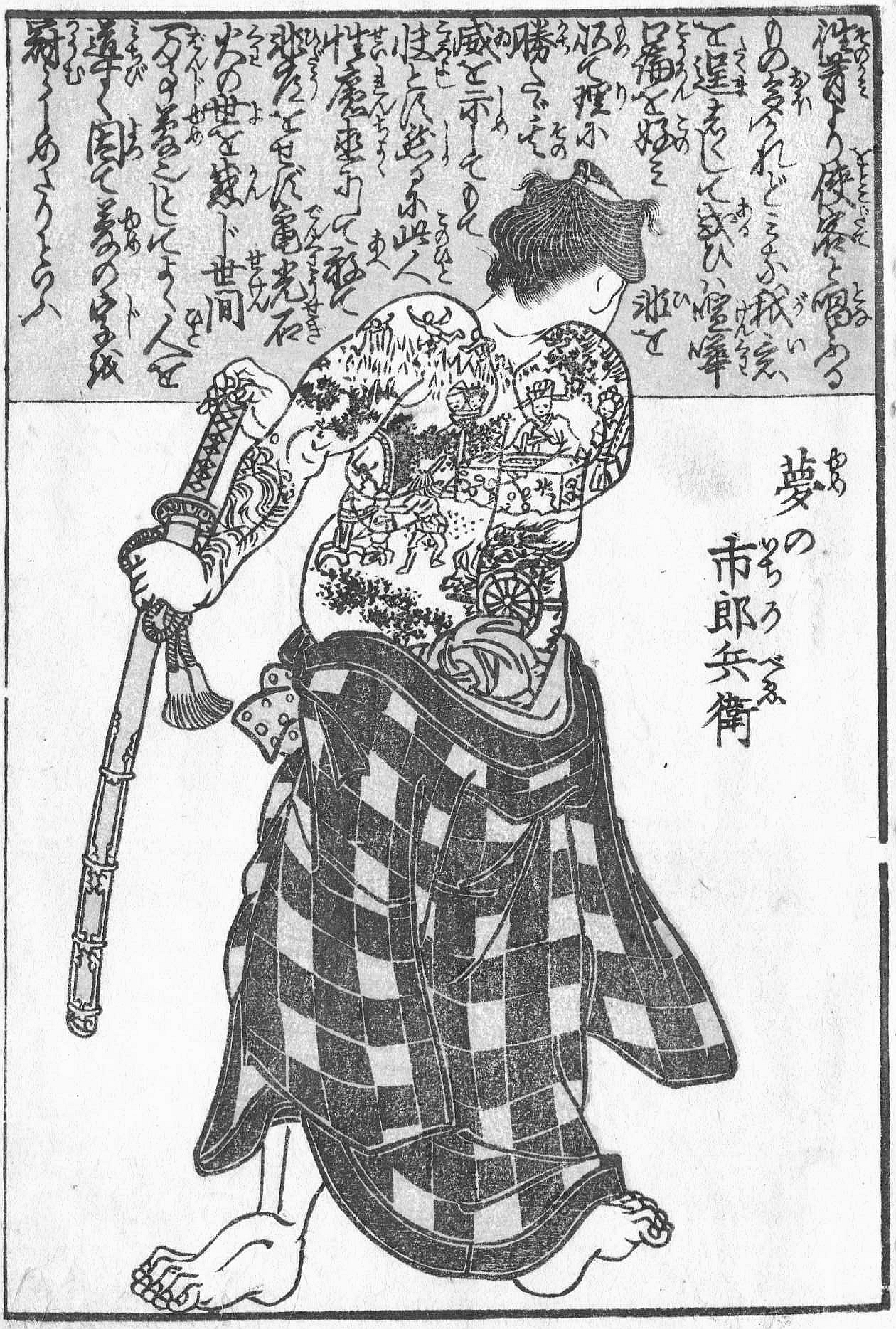
But although these laws sound quite strict, the transition between ko-wakizashi, chû-wakizashi, and ô-wakizashi were fluid and even if the eyes were surely on the bushi who were walking through the streets of Edo during their sankin-kôtai stay, there was no official “sword police” going through the rural fiefs making all samurai unsheath their swords and measure the nagasa of their mounted blade. So basically it was like no plaintiff, no judge and when there was no sword incident caused by a civilian that had to be officially investigated, it can be assumed that no one would take notice if you wore a chû-wakizashi instead of a ko-wakizashi on one particular day. When I say “sword incident caused by a civilian,” I am also referring to the fact that civilians were not only allowed to arm themselves with wakizashi because of robbers and similar risks but also to defend themselves against members of the samurai class who were going to make (unjustified) use of their right of kirisute-gomen (切捨御免), their right to strike with sword anyone of a lower class who compromised their honor. Parallel to the rigid hierarchic social class structure that was eventually cemented in the Edo period, underground organizations and outlaws were emerging in not to be underestimated numbers. There were for example gamblers (bakuto, 博徒) and peddlers (tekiya, 的屋) whose partially strict internal codes made them the predecessors of the modern yakuza. “Heroic” members of these groups who defended the “poor” townsmen against unlawful and arbitrary acts of local samurai were romantized as kyôkaku (侠客), lit. “men of chivalry.” Of couse these kyôkaku did not follow the law and as they actually saw themselves as “Robin Hoods,” they were wearing longer than allowed (often handachi-style mounted) wakizashi (see picture 4), which were not named ô-wakizashi but naga-wakizashi (長脇指・長脇差) in this context. In addition and in order to restore local peace, the bakufu had sometimes no other choice than granting the heads of these “organizations” certain rights so that they were at least able to keep other underground groups in check, and one of these rights was actually the permission to carry a naga-wakizashi instead of a ko-wakizashi. As you can see, the bakufu sometimes rather preferred to turn a blind eye to certain things as long as they were no longer bothered with it. Incidentally, these kyôkaku were thus also referred to as naga-wakizashi, i.e. about “those with the long wakizashi.” As these naga-wakizashi were from their outward appearance pretty much identical to a katana, also terms like ipponzashi (一本差) and ippongatana (一本刀) came in use to refer to the kyôkaku. These terms have to be understood as allusion to the term nihonzashi (二本差), lit. “the two sworders” or “the two-sword-wearers,” which was another name for a member of the samurai class.

wakizashi4-kyokaku

Picture 4: Tattooed kyôkaku with a handachi-style mounted naga-wakizashi.

*

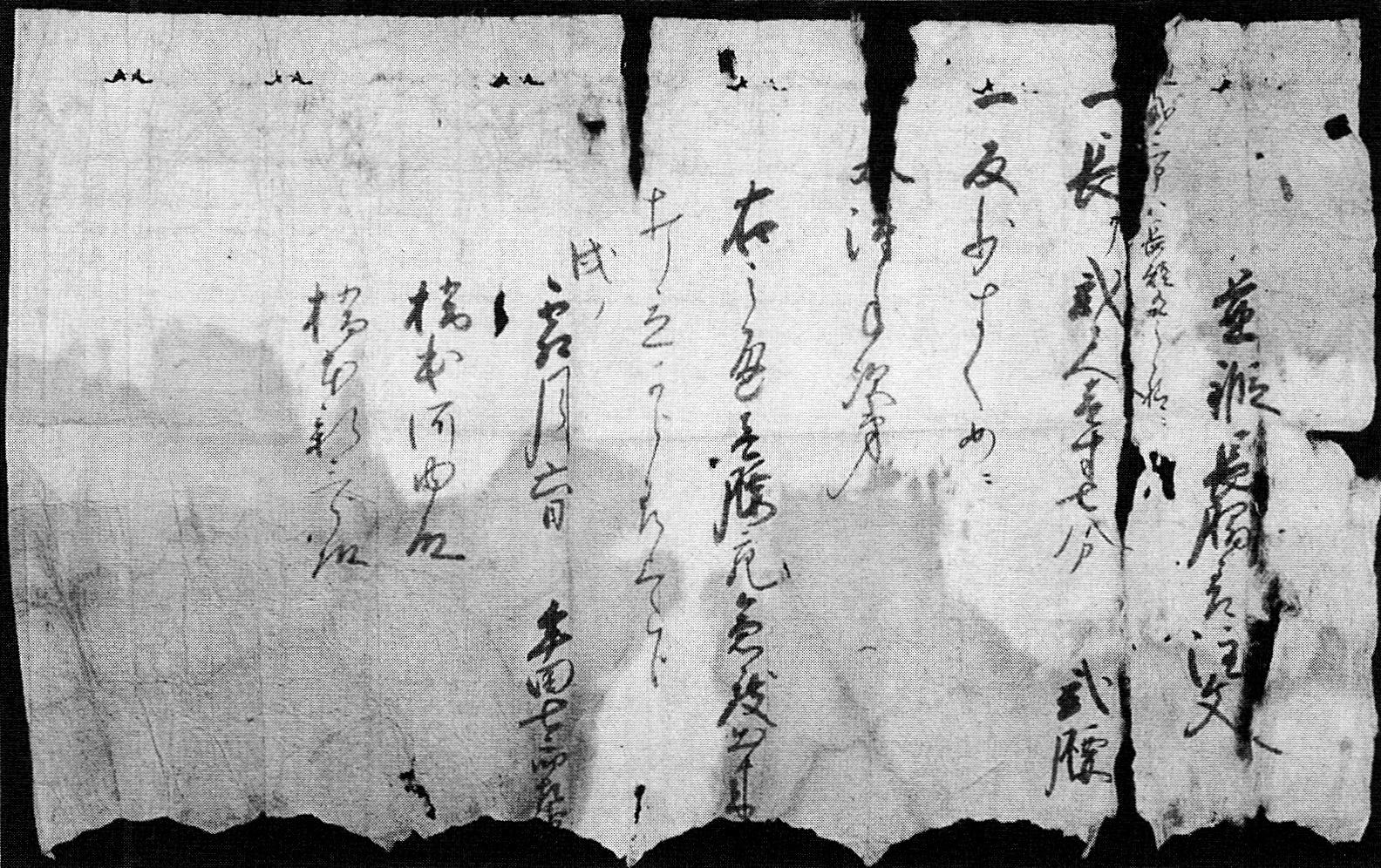
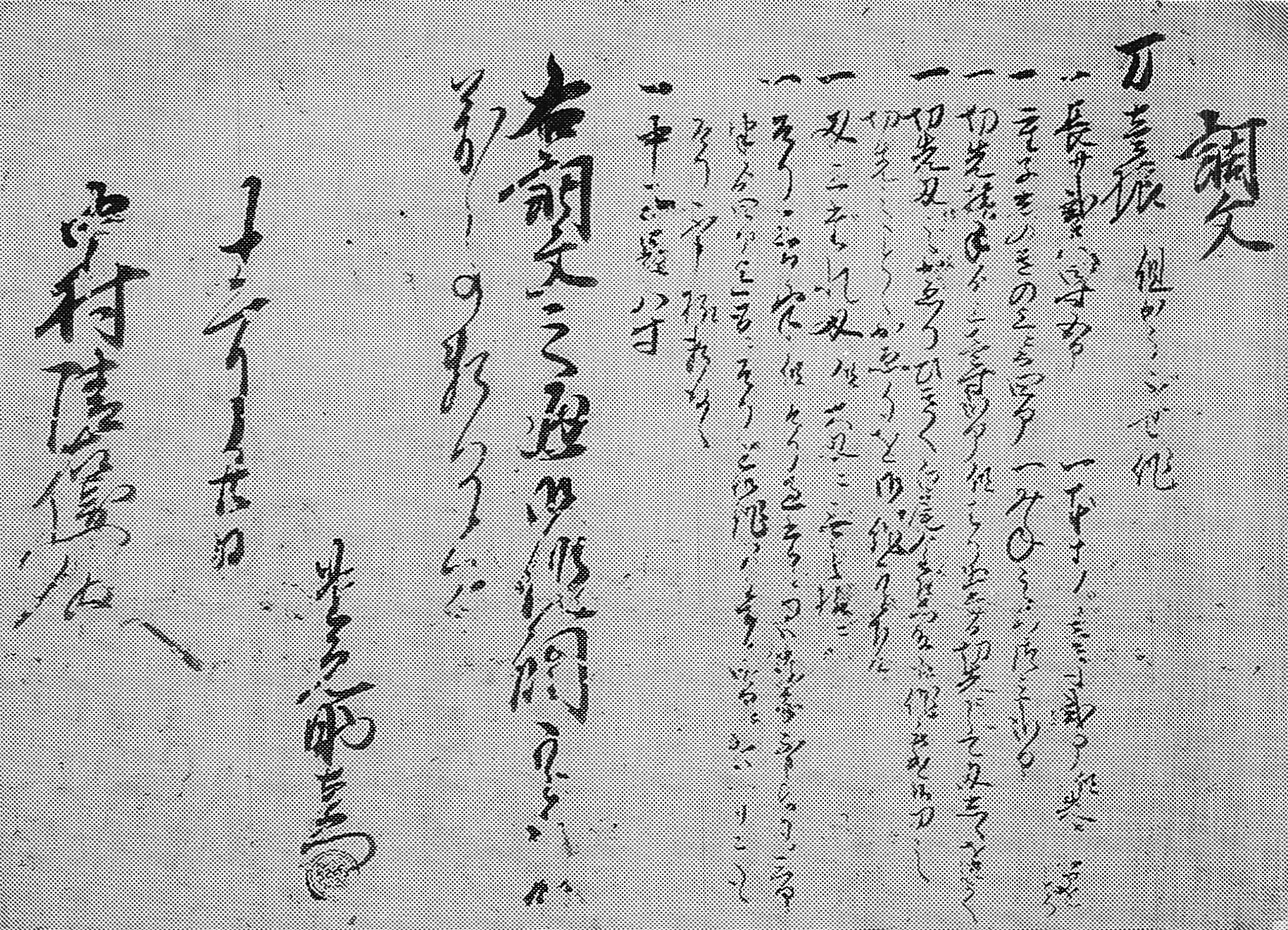
But naga-wakizashi were not only worn by outlaws. They could also have been the choice for a samurai who preferred to wear, for whatever reason, a longer sword pair. And with this we arrive at part two of this post. Sometimes it is hard to tell if a shinogi-zukuri blade, or a shinogi-zukuri shintô or shinshintô blade in particular, that measures slightly less or slightly over 2 shaku was intended as katana or as wakizashi. As mentioned earlier, transitions were fluid and the historic sword order I am introducing next is an important reference as it does not leave any doubt about what we are facing. It is a sword order placed by the Saga fief to two of their smiths, the 2nd generation Kawachi no Kami Masahiro (正広, 1627-1699) and the 4th generation Tadayoshi (忠吉, 1669-1747), who are addressed as Hashimoto Kawachi (橋本河内) and Hashimoto Shinzaburô (橋本新三郎) respectively, and reads:

wakizashi5

Picture 5: Extant sword order from the archives of the Masahiro lineage (preserved in the Saga Prefecture Library (佐賀県立図書館).

並鍛長脇差注文
一 長サ 弐尺壱寸七分 弐腰
一 反  少しすくめニ
一 刃  得手次第
右之通壱腰宛急度出来
打立可被差上候 以上
戌ノ
霜月六日 牟田七郎左衛門
橋本河内殿
橋本新三郎殿
Namigitae naga-wakizashi chûmon
• nagasa 2 shaku 1 sun 7 bu – futakoshi
• sori sukoshi sukume ni
• ha ete shidai
Migi no tôri hitokoshi ate kitto deki 
uchitate sashiagarubeshi-sôrô, ijô.
inu no
shimotsuki muika Muta Shichirôzaemon
Hashimoto Kawachi dono
Hashimoto Shinzaburô dono 
Order for ordinary forging quality naga-wakizashi:
two blades with a nagasa of 65.7 cm
• sori rather on the shallow side
• ha(mon) dependent upon the forte of the smith
Please make each sword according to these points.
Year of the dog (Genroku seven, 1694)
Sixth day of the eleventh month, Muta Shichirôzaemon (probably an official of the Saga fief)
to Mr. Hashimoto Kawachi
to Mr. Hashimoto Shinzaburô


wakizashi6-NidaiMasahiroPicture 6: 2nd generation Hizen Masahiro.

Hizen mainline swords in particular are very good for distinguishing between short katana and oversized wakizashi as their tangs were strictly finished according to the intended use. This means, blades that were intended as long swords or honzashi, in short as katana, were signed in tachi-mei, i.e. on the side of the tang that faces towards the wearer when wearing the mounted sword thrusted edge-up through the belt. Apart from that, the tangs of honzashi were finished with a somewhat roundish nakago-mune. Wakizashi in turn were signed in katana-mei and finished with a flat nakago-mune. So if you find a Hizen- with a nagasa of about 2 shaku and you are not sure if it is a katana or a wakizashi, check for these two features and they tell you exactly what the sword initially was.

As for the wakizashi-sized blades in general, there are certain rules of the thumb that can be applied to find out what the sword initially was. If you have a shinogi-zukuri shôtô that is obviously longer than dagger (e.g. sunnobi-tantô) size and shorter than katana size and that dates from the early to the late Muromachi period, you can assume that it was worn as wakizashi or sashizoe just like shown in picture 2. And the longer the blade, the more likely it is that they were mounted with a tsuba. If the blade is shorter and in hira-zukuri, it was probably worn as koshigatana like shown in picture 1. Please note that there were also longer, for example 45~50 cm measuring shôtô in hira-zukuri worn as wakizashi/sashizoe. Now with the approaching the Momoyama era, chances are increasing that a shinogi-zukuri shôtô was worn as wakizashi to the civilian samurai uniform. If you have a later Muromachi blade but that predates the Momoyama era and that measures somewhere around or slighty lesser than 2 shaku and comes with a relative short nakago, you are most likely facing a katateuchi. Katateuchi were intended for single-handed use, thrusted edge-up through the belt, and often worn as wakizashi/sashizoe to the honzashi, the tachi. So these blades too were worn just like shown in picture 2, although with the difference that katateuchi were by default mounted with a tsuba. Entering the Edo period, it is, as indicated, sometimes hard or even impossible to tell if a blade that measures somewhere around 2 shaku was ordered by a member of the samurai class to be his hon or his wakizashi. Many factors like personal preferences, body height, fencing style and so on come into play that might have influenced his choice of wearing an over or an undersized daishô pair. Also it is very difficult to tell in concrete numbers how strong the “impact” of kyôkaku and other outlaws were on the output of around 2 shaku measuring blades but the fact that the term naga-wakizashi was synonymously in use to refer to these guys suggests that there must had been a considerable number of such blades made for them.

 wakizashi7-kodachi

Picture 7: Wearing the kodachi.

And then there is another category of swords that must be addressed when talking about side swords, and that is the kodachi (小太刀), the lit. “small tachi.” A theory says that the kodachi was born from the necessity that aristocrats wanted longer blades than koshigatana to wear in coaches (kuruma, 車) for their self-defence, i.e. after having handed over the main sword, the tachi, to the sword bearer. Therefore also the terms kuruma-gatana (車刀) and kuruma-dachi (車太刀) were in existence for shorter swords which were no daggers. Kodachi blades measure somewhere between 1 shaku 7 sun (51.5 cm) and 2 shaku (60.6 cm) and what distinguished them from contemporary uchigatana was that they were interpreted in shinogi-zukuri and basically maintained the proportions of a tachi. Uchigatana in turn were made prior to Muromachi times in hira-zukuri and were usually rather wide. Well, some speculate that kodachi were smaller tachi of the younger sons of the aristocracy or higher-ranking bushi (or especially for their genpuku ceremony) whilst others even assume that they were worn by women. The former approach and the approach that kodachi were alternative swords of higher-ranking persons is supported by the fact that many of the extant and unaltered kodachi were made by great master smiths, although it is of course quite possible that all the others, i.e. the ones that were not cherished as treasures, were just lost over time. Interesting is that also the term hakizoe-kodachi (佩き添え小太刀) existed what means that some kodachi were worn – edge down suspended from the belt as the prefix haki (佩き) implies – worn as side/companion/ersatz sword to a honzashi. Problem again is here the very limited evidence base, and that is especially true for kodachi-koshirae. But it is most likely that the kodachi was worn as seen in picture 7, i.e. with a simple hanger-system to formal and semi-formal outfits. One of the major references in this respect is the signed kodachi by Rai Kunitoshi (来国俊) that was once offered with its koshirae to the Futarasan-jinja (二荒山神社, Tochigi Prefecture). As experts assume that the mounting is original to the blade, the sword as a whole, i.e. not only the blade, was designated as kokuhô. The koshirae is interpreted in hirumaki style (蛭巻), that means hilt and saya were spirally wrapped with leather which was lacquered black. The fittings are of yamagane and the fukurin of the tsuba, the seppa, and the kabutogane were gilded. The area between the two ashi hangers bears a red-lacquer inscription which reads: “Kishin-tatematsuru Kaneko Genchû + kaô” (奉寄進金子玄忠). So it is assumed that this Genchû was the one who offered the sword to the shrine and that he was one of the ancestors of the Kaneko Tôdayû (金子頭太夫) family which later held one of the shrine offices. Very interesting historical piece but way too unique to draw conclusions on the appearance of kodachi in general.

wakizashi8-RaiKunitoshi

Picture 7: kokuhô, kodachi, mei: “Rai Kunitoshi” (来国俊), nagasa 54.4 cm, sori 1.67 cm, motohaba 2.3 cm, sakihaba 1.4 cm, shinogi-zukuri, iori-mune, very dense and fine ko-itame with ji-nie, suguha in ko-nie-deki with a rather tight nioiguchi, ko-ashi, sunagashi, and kinsuji.wakizashi9-kodachi

Picture 8: kokuhô, kuro-urushi hirumaki tachi-koshirae (黒漆蛭巻太刀拵), overall length 88.8 cm

*

I hope I was able to give you a decent insight into the vast world of the side sword, the wakizashi, and I should be back in a little with the next part of the Kantei series.

KANTEI 4 – YAMASHIRO #3 – Sanjô (三条) School 3

With this chapter, I would like to close on the Sanjô School. Apart from Munechika and a few blades of (one) Yoshiie that are most likely Sanjô works, there are really not that many blades extant from this school. One Sanjô smith by whom at least a handful of works are known is Chikamura (近村) who is traditionally listed as son of Munechika. Well, some sources say he was the son of Yoshiie and the grandson of Munechika and in terms of workmanship, his blades come indeed pretty close to those of Gojô Kanenaga (兼永) who was the son of Munechika’s son Arikuni (有国) and Munechika’s grandson accordingly. In terms of sugata, Chikamura’s blades show an elegant and conspicuously curved tachi-sugata that is typical for early Yamashiro works but they are not that slender as those of Munechika. So we have here again a certain gap that speaks more for the grandson than for the son approach. The probably most famous blade of Chikamura is the one that was once preserved in the Tanzan-jinja (談山神社, Nara) and that went into the possession of the Imperial family before it was transferred into the Tôkyô National Museum where it is preserved today (picture 1). It shows a somewhat standing-out itame with ji-nie and a ko-midare in ko-nie-deki that is mixed with many ko-ashi and , kinsuji, and nijûba along the monouchi. The nioiguchi is rather subdued and hajimi appear in places but it has to be mentioned that the blade is a little tired. The bôshi is sugu with a ko-maru-kaeri and shows some nijûba too. The tang is ubu, tapers to a shallow kurijiri, shows kiri-yasurime, and bears over the mekugi-ana a large and finely chiselled niji-mei that is positioned more towards the nakago-mune.

Chikamura1

Picture 1: tachi, mei “Chikamura” (近村), nagasa 78.1 cm, sori 2.7 cm, shinogi-zukuri, iori-mune

In picture 2, that shows another signed Chikamura tachi, you can seen some remnants of the “multi-layered” aproach of Munechika but not that “extreme” as it is the case at the Sanjô founder. On the other hand, Chikamura’s blades have in general a more ancient feel than those of Yoshiie and if I had to decide whether Chikamura or Yoshiie was the son of Munechika, I would go for Chikamura for the time being. The blade seen in picture 2 shows an itame with plenty of ji-nie and chikei. The hamon is nie-laden ko-midare that is mixed with kinsuji, yubashiri and plenty of sunagashi. The bôshi is a narrow sugu with a ko-maru-kaeri. The tang is a little machi-okuri, has a shallow kurijiri, katte-sagari yasurime, and bears just like the former gyobutsu a large and fine, ancient looking niji-mei that was chiselled above the initial mekugi-ana and towards the nakago-mune.

 Chikamura2

Picture 2: tachi, mei “Chikamura” (近村), nagasa 68.8 cm, sori 2.4 cm, shinogi-zukuri, iori-mune

When we are talking about Chikamura, the famous mei has to be mentioned that gave birth to some controversial theories in the Meiji era. The original signature was “Chikamura tatematsuru” (近村上), “offered/presented by Chikamura” (i.e. either to a high-ranking client or to a religious facility), but someone later added the character for “Mune” atop of it to allude to Munechika and to create the mei (宗近村上). This mei was then interpreted by some as “Munechika Murakami,” i.e. the character “mura” (村) from Chikamura and the character “tatematsuru” (上) which also reads “kami” were interpreted as the family name Murakami and the theory was forwarded that this must had been Munechika’s family name. But comparative studies have shown that, as mentioned, the character for “Mune” was a later add-on as another blade of Chikamura was discovered that was signed “Chikamura tatematsuru” (see picture 3). Incidentally, this kind of mei is not that uncommon. For example, there are also offering/presentation blades with the prefix or suffix tatematsuru extant by Rai Kunimitsu and Fukuoka-Ichimonji Sukeyoshi (助吉).

 Chikamura3

Picture 3: The enlarged Chikamura mei right and the other “Chikamura tatematsuru” mei left.

Well, when it comes to Chikamura and to several of the other Sanjô smiths – first of all Yoshiie as mentioned in the last chapter – we are facing one interesting similaritiy, namely that were homonymous early Bizen smiths active for many of them. For example, there was a Ko-Bizen Chikamura who worked, depending on source, around Genkyû (元久, 1204-1206) or Bunryaku (文暦, 1234-1235). The same goes for Munetoshi (宗利), Muneyasu (宗安), Munenori (宗則), Sanenori (真則), and Sanetoshi (真利). And then there were the two smiths who had a certain relation to Kawachi province, Arikuni (有国) and Arinari (有成), who are listed as students or sons of Munechika. So some say that Arinari came originally from the northern Ôshû Môgusa group and that he went to Kyôto to study with Munechika before he eventually settled in Kawachi. And Arikuni was either a student who moved later to Kawachi where he studied with Arinari or that there were two Arikuni, a Sanjô smith who never left Kyôto and a Kawachi smith who belonged to the school of Arinari and who was not directly connected to Munechika. Another interesting coincidence is that several of the early northern Ôshû smihs are listed as having moved down to Bizen where they acted as co-founders of the Ko-Bizen group. For example, Arinari’s initial master Arimasa (有正) was, according to tradition, also the master (or even father) of the famous Ko-Bizen Masatsune (正恒). This suggests that either (a) these northern Môgusa smiths were much more predominant than we think of them today and spread to all provinces where they greatly contributed to the establishment of the most renowned schools (e.g. Sanjô, Ko-Bizen), or (b) that at least some of the early Yamashiro smiths moved later to Bizen province, (c) that all these identical smith names are just a big coincidence, or (d) that some of these homonymous smiths were later “invented” by chroniclers to establish certain connections or fill genealogic gaps.

Arinari

Picture 4: tachi, mumei, Ishikirimaru, attributed to Kawachi/Sanjô Arinari, nagasa 76.1 cm, sori 2.5 cm, preserved in the Ishikiritsurugiya-jinja (石切剣箭神社, Ôsaka)

Anyway, as far as all the other recorded Sanjô smiths are concerned, there are as mentiond in the beginning next to zero works of them extant. One of the several swords nicknamed Ishikirimaru (石切丸) is attributed to Arinari (see picture 4). So there is not much to add from a kantei point of view, except for the fact that it is anyway extremely unlikely to come across one of these earliest Yamashiro blades in the wild (and outside of Japan). For an overview of the Sanjô School and also in view to the upcoming chapter that deals with the Gojô School, I add their common genealogy below.

Genealogy Sanjo/Gojo Scjool

Short Update

First of all, I have to apologize, again, for the troubles with the latest Japan’s Most Important Sword Fittings booklet. It is like with my Masamune book, no whatsoever system changes here and black and white books work perfectly fine, e.g. no problem my three-volume, 1,500 pages Swordsmith Index. It only concerns color prints. But anyway, the problem should be solved now and a new order can be placed. I have to see how to solve this in the future because this time, I waited the suggested time until the file was fully processed on their servers to see if it worked before making the announcement. I was even waiting another day, to be sure, just to get their error message the night after… So next time, I will wait even longer before making any announcement.

Other thing and something positive: By sponsoring of James Lawson, the NBTHK Shinsa standards for swords on nihontocraft.com were completed with the standards for tôsô (koshirae) and tôsôgu, and not only that, also the very recent amendments (May 2015) are now included. The standards can be found here:

http://nihontocraft.com/2015_NBTHK_Nionto_Tosogu_Shinsa_Standards.html

Thank you.

Some thoughts on Wada-sukashi

It has now been almost ten years since I have translated Itô Mitsuru’s first book on the Higo masters, Works of Kanshirô Nishigaki, and as Higo-tsuba are quite a world of their own, this translation and the translation of the subsequent two Higo volumes gave rise to several fruitful discussions and Itô’s books were undoubtedly a big success in giving collectors a greater understanding of these very special tsuba which are so sought after since the time they left the workshops of the masters. It is only natural that many questions remain, be it about attributions based on sophisticated differences in workmanship or about historical aspects. Well, this time I want to forward some thoughts on a question that rather belongs to the smaller unsolved mysteries when it comes to Higo-tsuba, and that is the question on why are Wada-sukashi (和田透し) named that way.

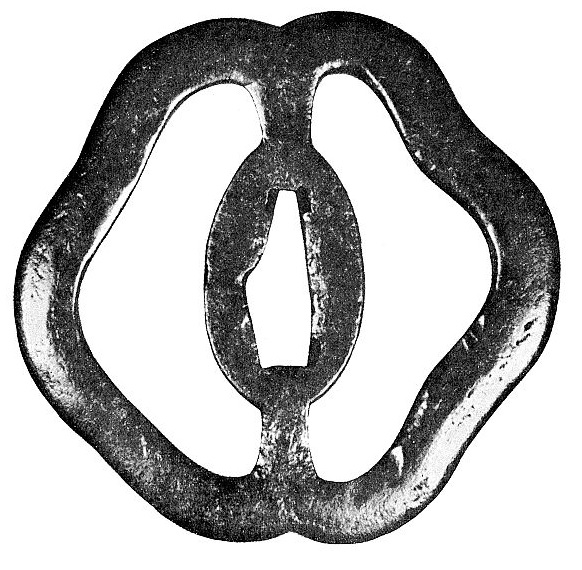
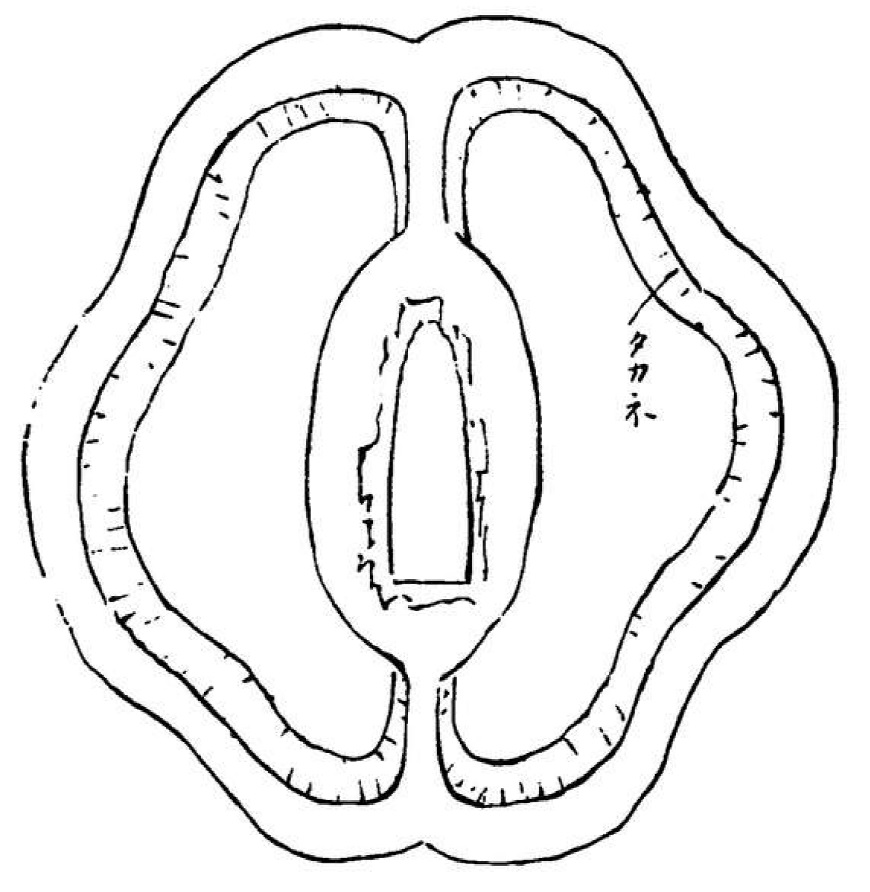
WadaSukashi1

Picture 1: Wada-sukashi tsuba

First, what are Wada-sukashi at all? Wada-sukashi belong to the group of symmetrical ô-sukashi that occupy a majority of the left and right surfaces of a tsuba. That means the general term for such an openwork design is sayû-ô-sukashi (左右大透し, lit. “left and right ô-sukashi”). For example, also the famous namako-sukashi (海鼠透し) design comes under that category and it seems that such large and symmetrical ô-sukashi designs originated in Higo in the first place. Another way to describe Wada-sukashi tsuba in a neutral way would be futatsu-mokkô otafuku-gata, i.e. “two-segmented mokkô-gata in otafuku shape.” So why Wada-sukashi? Numata Kenji (沼田鎌次) writes in his two-volume Tsuba-Kodôgu Gadai Jiten (鐔・小道具画題事典, Yûzankaku 1998) the following:

“It was custom since olden times for the Hosokawa family to name these tsuba that way and thus the term was locally in use in the Higo area but the origins and the reasons of this naming are unclear. So the meaning of ‘Wada’ is unclear. As seen in the picture, both the shape and the sukashi design of the tsuba actually don’t have any specific highlights and are hard to grasp but there is something in the quality of the iron and the way the niku is distributed that attracts ones attention. So they belong to the realm of the so-called mysterious tsuba and more and more people get attracted by their hidden charme. This tsuba shown here is according to tradition a work of Hosokawa Sansai.”

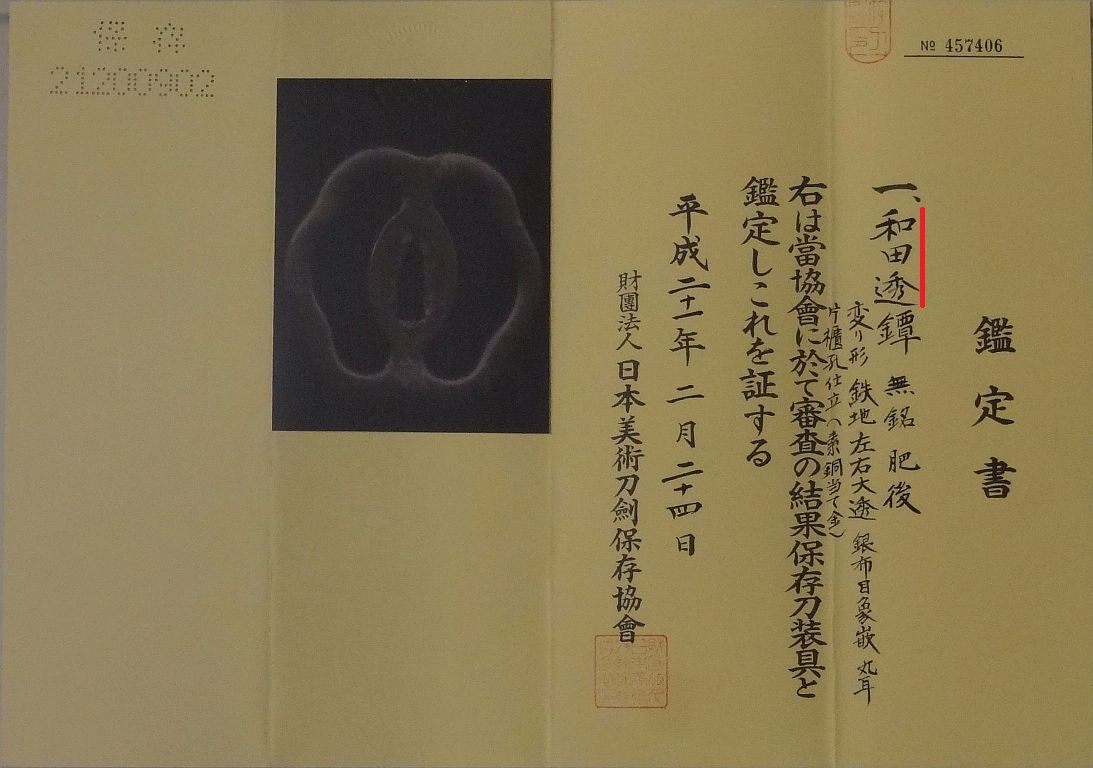
So starting with Numata, every reference you consult for Wada-sukashi says that the meaning of this term is unclear but interesting is, that the term is quasi accepted as it is and for example also the NBTHK issues papers that say straightforward Wada-sukashi (see picture 2). Now when one reads this term, you think first of all of the common family name “Wada” but after doing some research, I was not able to come up with any historic member of any of the Wada branches that was somehow in a master-vassal relationship to the Hosokawa. Also none of the Higo-kinkô lineages was from the Wada family and it seems anyway odd to name this rather plain sukashi motif after a person, except for if this person was the inventor of this design. Next thing to check is to see if Wada is a place name and refers to some town or region in former Higo province but again, no result.

Picture 2: NBTHK hozon paper to Higo, work described as “Wada-sukashi tsuba” (和田透鐔)

So what remains when “Wada” neither refers to a family nor to a place name? Time for the dictionaries and a neutral, i.e. hiragana search for the term wada (わだ), and lo and behold, both the Ôbunsha Zen’yaku Kogo Jiten (旺文社全訳古語辞典, Ôbunshas’ Dictionary for Classical Japanese) and the dictionary Kôjien (広辞苑) contain an (almost identical) entry on wada. According to these dictionaries, the term wada was written with the character (曲) and means “curved terrain,” e.g. “inlet.” Both sources quote a poem from the Man’yôshû as major reference for the use of this old term which goes:

Sasanami no Shiga no ohowada yodomu tomo mukashi no hito ni mata mo ahame ya mo.

(ささなみの志賀の大曲淀むとも昔の人にまたも逢はめやも)

“The water with its gently rippling waves on the great inlet at Shiga is still, so how could we meet the people of the past?”

This poem is by the Asuka poet Kakinomoto no Hitomaro (柿本人麿・柿本人麻呂) who was the most prominent of the poets included in the Man’yôshû and who is ranked as one of the Thirty-six Immortans of Poetry. Hitomaro wrote this very poem when he was travelling along Lake Biwa and passed the former capital of Emperor Tenchi (天智天皇, 626-672) who had installed his court at what is present-day Ôtsu (大津) at the southern end of Lake Biwa, i.e. the area which Hitomaro refers to as “great inlet” (ohowada). Only five years after Tenchi had made Ôtsu imperial capital, Emperor Tenmu (天武天皇, 631-686) attacked that court, seized power, and relocated the imperial capital back to Asuka. Now Hitomaro was serving Tenmu’s successor, Empress Jitô (持統天皇, 645-703) and writing in a sentimental manner (“how could we meet the people of the past?”) about the former enemies of his then quasi employer was a sensitive thing (“water is still” is a metaphor for “standstill” or “no progress” in a wider sense). But Jitô was actually Tenchi’s daughter and maybe his poem was welcomed by her rather than seen as poetical attempt to long for the regency of the past.

WadaSukashi4

Picture 3: The Wada-sukashi tsuba shown in the Higo Kinkô Roku which is attributed to Hayashi Matashishi. The note reads tagane (タガネ), i.e. it is worked off along the inner edges in tagane-sukashi manner as seen for example on some Akasaka-tsuba.

The Man’yôshû and all the other anthologies of this caliber were classics and every person and bushi of good breeding knew them so to speak inside out. Hosokawa Sansai was born into a family that was for generations deeply involved in cultural matters (more on that here) and was accordingly educated. What I now think is that maybe the curved, somewhat narrowing openings of the sayû-ô-sukashi tsuba in question might have reminded Sansai of inlets but as he was a man of vast reading, he just did not name them irie (入り江) what is the so to speak “normal” term for “inlet.” He was probably more thinking in terms of the old classics and thus referred to an inlet by the poetical term wada (わだ・曲). Well, we don’t know anything about how and when this term was written down when it comes to tsuba but the later and present-day way of writing of this sukashi design with the characters (和田) for wada does not make any difference. There are namely the so-called Man’yôgana (万葉仮名), an ancient writing system that employs Chinese characters to represent Japanese language. That means, most of the old classics can entirely be written in Man’yôgana and the above quoted poem of Hitomaro that starts with “Sasanami no Shiga…” could also be found like this (with the term wada highlighted):

左散難弥乃志我能大和太與杼六友昔人二亦母相目八毛。

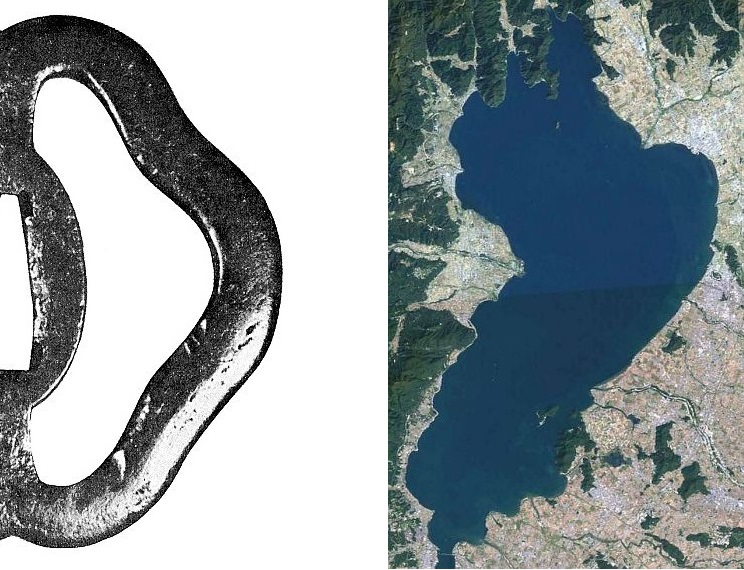
In short, the Man’yôgana allowed poets to use phonetic homonymous kanji characters for the Japanese hiragana syllables, i.e. the kanji are used for their sounds and not their meanings. There was no standard and different kanji could be used for each sound so wa could have been written with the characters (和・丸・輪) and da/ta with the characters (太・多・他・丹・駄・田・手・立) and any combination was possible to represent wada. Well, most common Man’yôgana replacements for wa and da/ta were (和) and (太・田) and that is in my opinion how the sukashi design that reminded of inlets, wada (わだ・曲), was eventually written (和田). Please note, it does not necessarily mean that Sansai or whoever from the Hosokawa family had the Man’yôshû and Hitomaro’s poem in mind when seeing or trying to see something in these tsuba. It is as mentioned just that he or they were thinking in poetical terms and named them wada instead of irie. When thinking of inlets along the coast of Higo, the Shirakawa that runs along Kumamoto Castle, the Midorikawa to the south, or the Kumagawa with its small Mugi Island at the gates of Yatsushiro Castle come to mind, alhough I am not sure how these regions looked like at the beginning of the 17th century. Or Sansai really thought of Lake Biwa when seeing Wada-sukashi tsuba and remembered Hitomaro’s poem? I guess we will never know but for the time being, the approach with the old poetic term for “inlet” makes more sense to me than too look for a person or place named Wada to find out the backgrounds of the naming of this motif. In other words, the sukashi design of Wada-sukashi tsuba resembles as much inlets (or even lake Biwa with a little imagination, see picture 4) as namako-sukashi resemble sea cucumbers. And maybe after writing the old term wada with Man’yôgana over several centuries, the connection to the initial reference “inlet” got lost.

WadaSukashi5

Picture 4: Wada-sukashi next to Lake Biwa.

WadaSukashi3

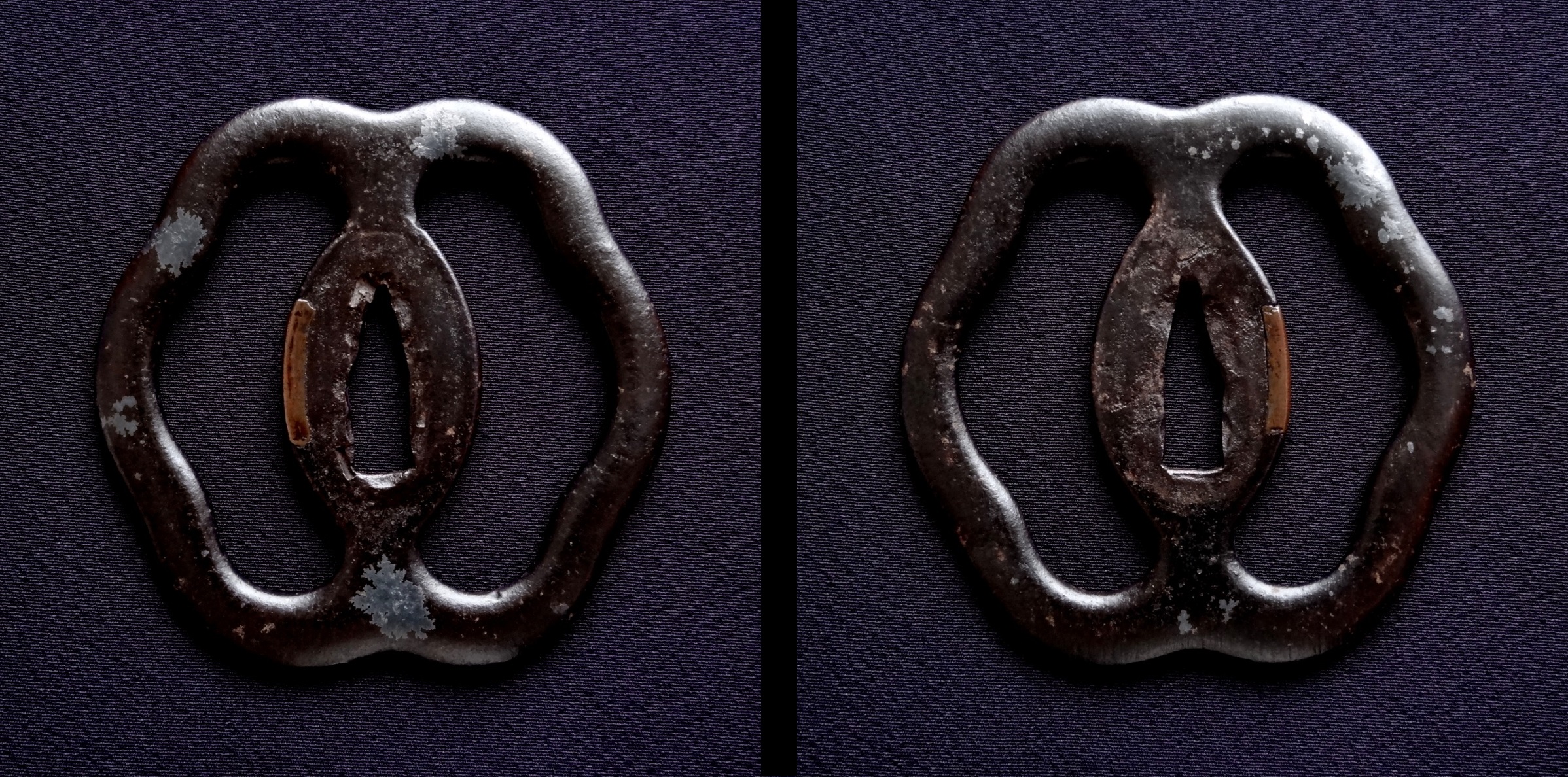
Picture 5: Both sides of a Wada-sukashi tsuba that papered straightforward to “Higo.” Please note the delicate silver nunome patches and the subtle file marks at the bottom mokkô indentation that is so often seen on Higo-tsuba (i.e. namako-sukashi) of that interpretation.

So far my thoughts on this topic and last but not least I want to introduce in picture 5 the fine Wada-sukashi tsuba that goes with the above shown paper. Also I want to sincerely thank its owner for putting many pictures of his Higo-tsuba collection at my disposal and for stimulating the question on why Wada-sukashi tsuba are actually called Wada-sukashi tsuba.

A very brief history of the dissemination of sword knowledge (and my humble place therein)

For many centuries, writing about swords was strongly determined by someones social and educational background. That means one just did not sit down on his veranda and start to write about swords, at least not when he had a textbook or something like that in mind. As stated in the introductory chapter to my book Genealogies and Schools of Japanese Swordsmiths, it all started with subjective reports that circulated based on (a warriors) personal experience of the sharpness and durability of a blade, accompanied by stories about auspicious or unfortunate incidents or moments one had with a certain sword. This laid the foundations, back then very superstitious in character, for a first kind of sword “appraisal.” As the sword was soon elevated to the symbol of the Japanese warrior, it is only natural that texts were written on it quasi “right away,” but another important factor is that the Japanese sword already reached technical perfection in the early 13th century, i.e. in the early to mid-Kamakura period. That means we are facing here an interplay of the factors of a perfect weapon and an aesthetically pleasing object that created an environment which was ideal for the highest-ranking scholars and most influental persons of their time to pull out their brush and write a line or two on swords. At the beginning, the transmission of sword knowledge was linked to certain individuals and depended very much on where their literary estate went after their death. Later, the ruling class employed, on a hereditary basis as it was obligatory back then, sword experts and appraisers but what brought along a sphere of secrecy. That means it is of course only natural that a family tried to keep its knowledge secret and protect it from getting into the hands of outsiders and potential competitors.

Apart from the more and more systematization of sword knowledge, this situation prevailed rather unchangedly until the Edo period, or to be precise, until the mid-Edo period. That means, the first tentative sword publications were low in circulation numbers – of course also due to the fact that copies were basically handwritten – and not meant to be handed out to everyone. So when you were not somehow acquainted with one of the then experts or had other connections, e.g. being ordered to get involved with swords by your lord or master, there was no way to accumulate sword knowledge on a broad scale and on your own. Things changed a little with the Momoyama-era boom of book publishing using woodblock printing and experimenting with printing techniques that came from the Korean mainland and the Christian missionaries. With the peaceful Edo period, the upper bushi class had now time to devote themselves to the study of sword blades and many proved their knowledge in kantei contests. I said “upper” bushi class because collecting swords was from a financial point of view practically impossible for a lower ranking samurai. But with the transition to the 18th century, something like “sword as a hobby” had become rooted in both bushi and educated (and of course richer) bourgeoise. This demand in sword literature had the effect that some of the handed-down knowledge of the experts was made accessible to a greater but selected audience and the woodblock printing was now at a point where individuals could afford to open their own presses. But still, sword literature was very much traditional and the majority of all Edo-period publications consisted more or less of copying over and over again the same content that had been systematically compiled for the first time in the Momoyama period.

A major change took place with the social transformation of the Meiji Restoration. Quasi at one blow, the feudal aspect of the sword vanished. Well, the sword was still very much associated with the former warrior class and the subject was a highly traditional one but now, the sword was made available to the general public, for example through the first sword exhibitions. Up to that time, John Q. Public has not been able to see a Rai Kunitoshi, a Nagamitsu, or an Awataguchi Yoshimitsu, just to drop a few prominent names. This was also the time when the first sword clubs were founded and the first “civil and independent” sword experts emerged (although as a matter of course trained by the former warrior class-employed experts). This all, i.e. a better than ever overview of the entire sword world, entailed that now some of the old classics were questioned and had to be revised and as more of the family secrets were disclosed to the public, experts were now able to tackle the subject in an objective, systematic, and scientific approach. That in turn brought along on the one hand a certain “disillusionment” (for example some of the old attributions had to be revoked and traditional active periods of smiths had to be dated much later than thought), but on the other hand also very fruitful discussions among experts. At the same time, we are talking about the bakumatsu and subsequent Meiji era, Japan opened the ports of Nagasaki, Hakodate and Yokohama to foreign traders who soon arrived in great numbers. Swords and sword fittings and Japanese art in general were exported on a large scale and objects of all levels of quality reached Western collections, thus nihontô enthusiasm got ignited among connoisseurs abroad and the first tentative books on Japanese swords (and sword fittings) were published in Europe and the USA.

Big jump over several decades and wars to Workd War II. One of the side-effects of Japan loosing WWII was that thousands of Japanese swords were taken back home by US soldiers which formed the basis of many of the future non-Japanese collections. As all swords were considered as weapons by the occupying forces and thus in danger of being destroyed, something had to be done to preserve this unique national heirloom. Most of the then Japanese experts agreed that this “something” was best achieved by raising the Japanese sword to the status of art work, what many works of the great masters definitely are anyway. This brought along a re-evaluation of the Japanese sword, both in Japan and abroad, and the prospering decades after WWII brought another social change, namely insofar that everyone who had a halfway decent job was now able to take up the one or other hobby, and some chose collecting Japanese swords and/or sword fittings. Also travelling, both domestic and abroad, was now pretty much an option for the middle class and so sword enthusiasts and upcoming experts visited Japan to deepen their knowledge and to learn first-hand more about what they have. Soon the second wave of sword publications since the time Japan had opened its borders reached Western readers.

This phase lasted rather unchangedly until about the Japanese economic bubble collapsed in the early 1990s and the advent of the Internet somewhat later in the very same decade. Collectors all over the world were now facing an equalization and “investors” a certain disenchantment. What meant the wind out of the sails of many dealers who had been thriving over the last three or four decades meant a new momentum for collectors as now, i.e. with the Internet, the Japanese sword market was virtually open to everyone and without intermediaries. As the economy was still thriving in the West, it was bought to a fare-thee-well and that again gave fresh impetus to non-Japanese sword publications. Well, Japan had experienced a collapsing bubble but all standard works on sword and sword fittings had been written decades before. So except from the one or other now down-to-eath dealer and collector who was sitting on a pile of objects unsellable to the price he had puchased them just a few years ago, not much had happened in Japan from a scholastic point of view.

I was very much a child of that time, i.e. being part of, and growing with, a flourishing new Internet nihontô community. So I only briefly witnessed the last stages of so-to-speak “classical sword collecting” in the West. When I had bought my first sword in the mid-1990s at the age of 18, I made a decision that should later change my career path, and that was to study Japanese (starting only two years after my first sword purchase).  In the following ten years or so a feeling had grown in myself, but which had been there right at the beginning, that was a dissatisfaction with the available non-Japanese study material. Of course many excellent treatises and articles had been written by both Western collectors and experts but hardly any of them made it into easily accessible, all-embracing publications. For comparison, each time I went into a well sorted Japanese bookstore, there was almost always half of a shelf or so just about nihontô and related books. This alone was already pretty awesome but when visiting antiquarian or second hand, or better, specialized bookshops, it was like being in a researchers heaven. All you ever wanted to know and much more was just sitting there, waiting to be read (and translated). And now my studying of the Japanese language began to pay off. Sooner or later it became obvious to provide assistance with translating descriptions and papers and things like that, first only sporadically but pretty soon on a broad scale, what subsequently incorporated longer and longer texts and in the end even books.

Now a little more than a decade has passed since that time (and about two decades after I have started my Japanese studies), what brought along en route going into business for myself. Parallel to this, the internet has left behind infancy and things are getting serious and another significant change in society is happening right in front of our eyes. As far as the Japanese sword is concerned, the aforementioned process of equalization is abating. Almost every collector now knows how to buy, and almost every dealer now knows how to sell over the net. And whilst the wild worldwide buying and selling across all levels of quality is still going on and information is shared freely, this information is kind of spread in a shotgun approach and mostly linked to the objects sold. My initial aim was to make information available on a broad basis and in general, i.e. not linked to a certain object or artist. That meant quasi an “unbiased” provision to non-Japanese readers of what had been available in Japan for a long period of time. In other words, working on equality from the point of view of reference material. Looking back, I have accomplished a bit of that but looking forward, there is still so much out there that needs to be translated to get even close to something like the just mentioned equality of reference material. Apart from that I have also realized that all work done so far was only kind of a first phase because this “unbiased” approach in providing reference material in turn leaves the task of working on certain details like inconsistencies and contradictions that I did not recognize as such in the first place due to the sheer amount of information. And this is where nihontô 2.0 comes into play: We in general and as nihontô community in particular find ourselves for the very first time in the position to point out and work on things spot on, together, and virtually with no delay. This nihontô 2.0 thing is both exciting and a great opportunity we should not miss and it is what I my made the motto of my second working phase.

Well, there is no way back from the point we have reached now and I am convinced that “real” books will become obsolete in the future (although I like “real” books very much myself). Also translation programs are getting better and better so probably what I do will become obsolete in the near future too. But I think this will not happen right away so there is still work for me out there 😉 Now the Japanese sword is a highly traditional thing but that does not automatically mean that access to it has to remain totally traditional too. Not talking about handling and things like that, just access to information. So – and at this point big hint over the ocean – the faster we all accept and embrace the new technology (which is irreversible anyway) the better. And the faster we can get over this changeover, the faster we can focus again on the subject itself. So where is the journey going? As indicated, with the Meiji-era educational reform and the establishment of universities, a thorough systematic and scientific approach towards the Japanese sword had started and over the subsequent century, almost all references (both historic documents and publications as well as swords that serve as a reference for a smith or school) have been “unearthed” and I doubt that any more groundbreaking discoveries will be made in this respect. In other words, the golden age of new discoveries (the aforementioned century from about 1870 to 1970) that had lead to so many fruitful discussions and certain rewritings of sword history is probably over. That means, the questions we can’t answer today will probably remain unanswered. For example, it is rather unlikely that a blade pops up where Rai Kunitoshi states in the signature that the smith who signs with a niji-mei, i.e. Niji-Kunitoshi, is a different guy. Or a signed and sealed late Kamakura period documents that tells us who Masamune really was. Sure there will be some slight adjustments in the future but I guess that’s it.

As for my part, I will now go over to elaborate on individual aspects and on individual artists but after that is done I guess there has to be another encompassing phase, that means with the then undoubtedly very much superior digital possibilities, all that stuff that has been written by others and my humble self in the meanwhile has to be united into a large, cohesive whole that leaves as few questions as possible unanswered or no reference/source out. Imagine a 3D database that contains tons of blades and fittings with an interface that feels very much like looking at the real thing, combined with on the spot answers to your questions. Well, that’s all still up in the air. The next imminent phases in the dissemination of sword knowledge are surely exciting ones and this is all comming pretty fast compared to all the relative “slow” historic decades from the Kamakura to the Meiji era. Finally, I should like to say that I am both pround and happy to be a part of this thing, the “new age of nihontô knowledge,” and I hope that one day I am able to raise from a mere provider to a real scholar…

From the life of a rural Edo period swordsmith

田舎鍛冶の生活

*

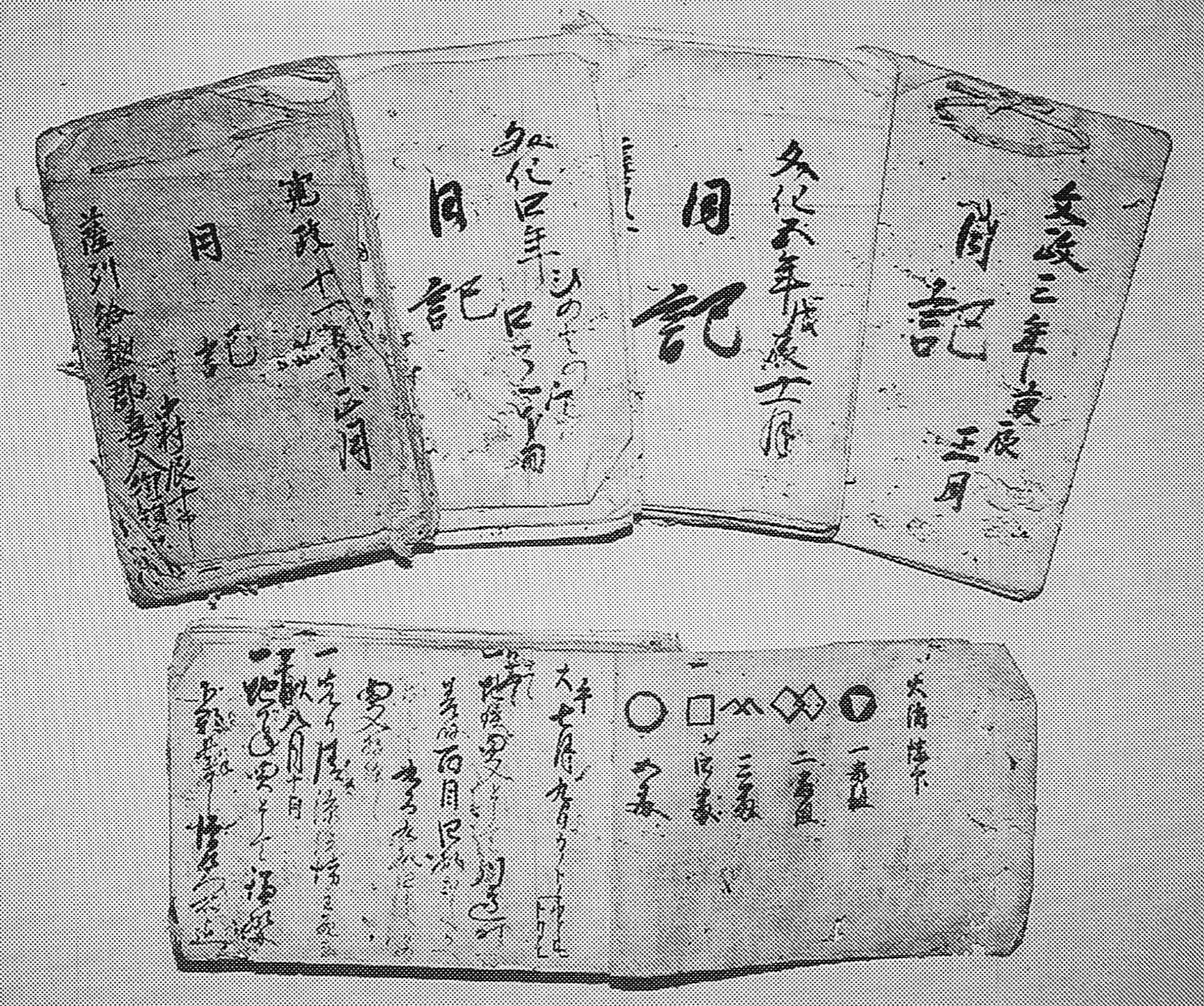
Whilst checking my archive for historic sword orders in another context, I came across an article published by Fukaminato Kyôko (深港恭子) – editorial member of the documentary archives section of the Reimeikan Kagoshima Prefectural Center for Historic Material – in Tôken Bijutsu No 543 (July 2001). This article contains very interesting information that I want to share with my readers as it gives a good insight into the life of a rural Edo period swordsmith, a facet of the Japanese sword that is still hardly addressed in relevant sources. The information Fukaminato forwards goes back to the collection of historic documents that was handed down within the local Nakamura family (中村), in particular the diary of the swordsmith Kiyotomo (清巴), but one after another.

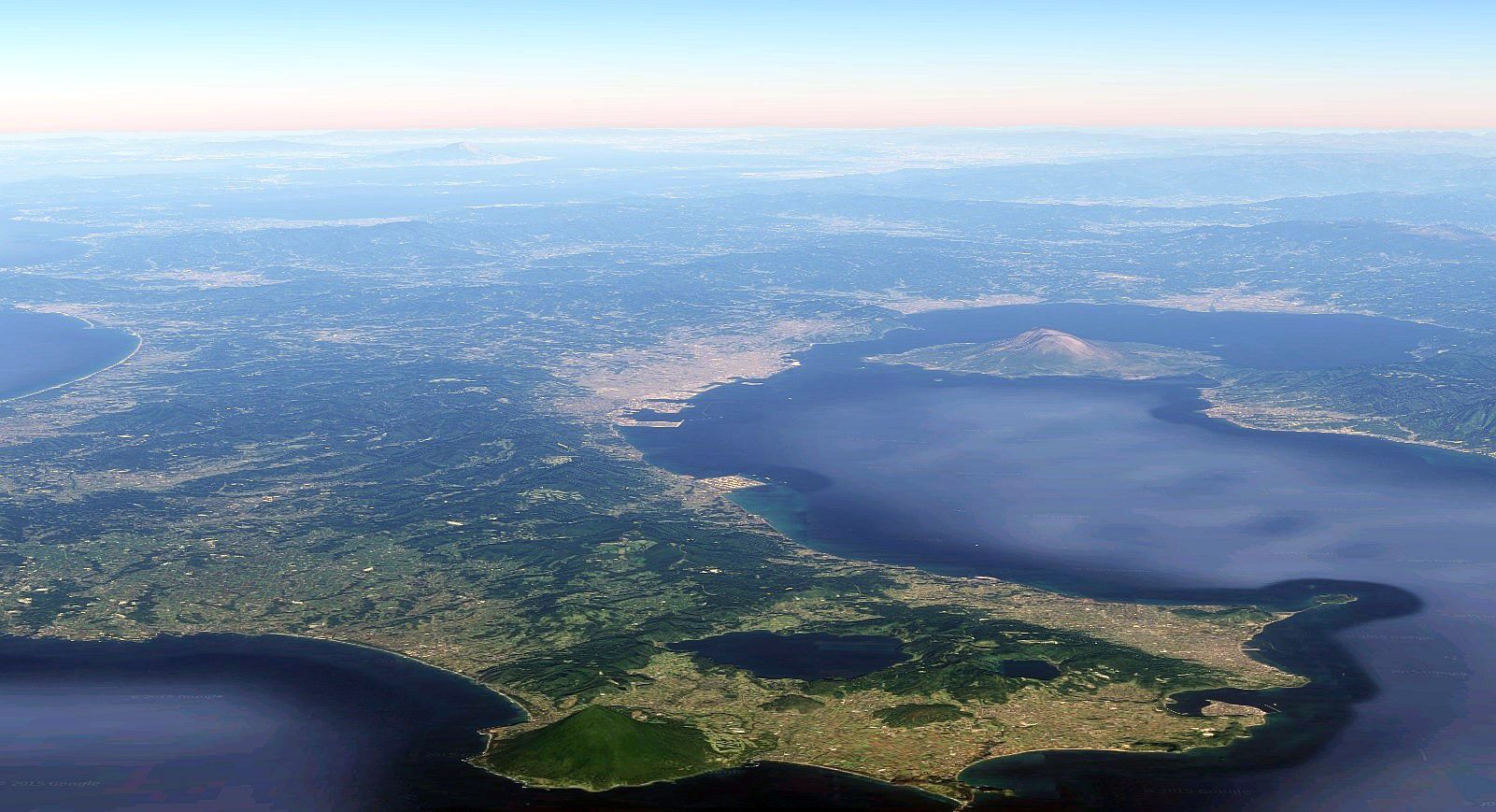
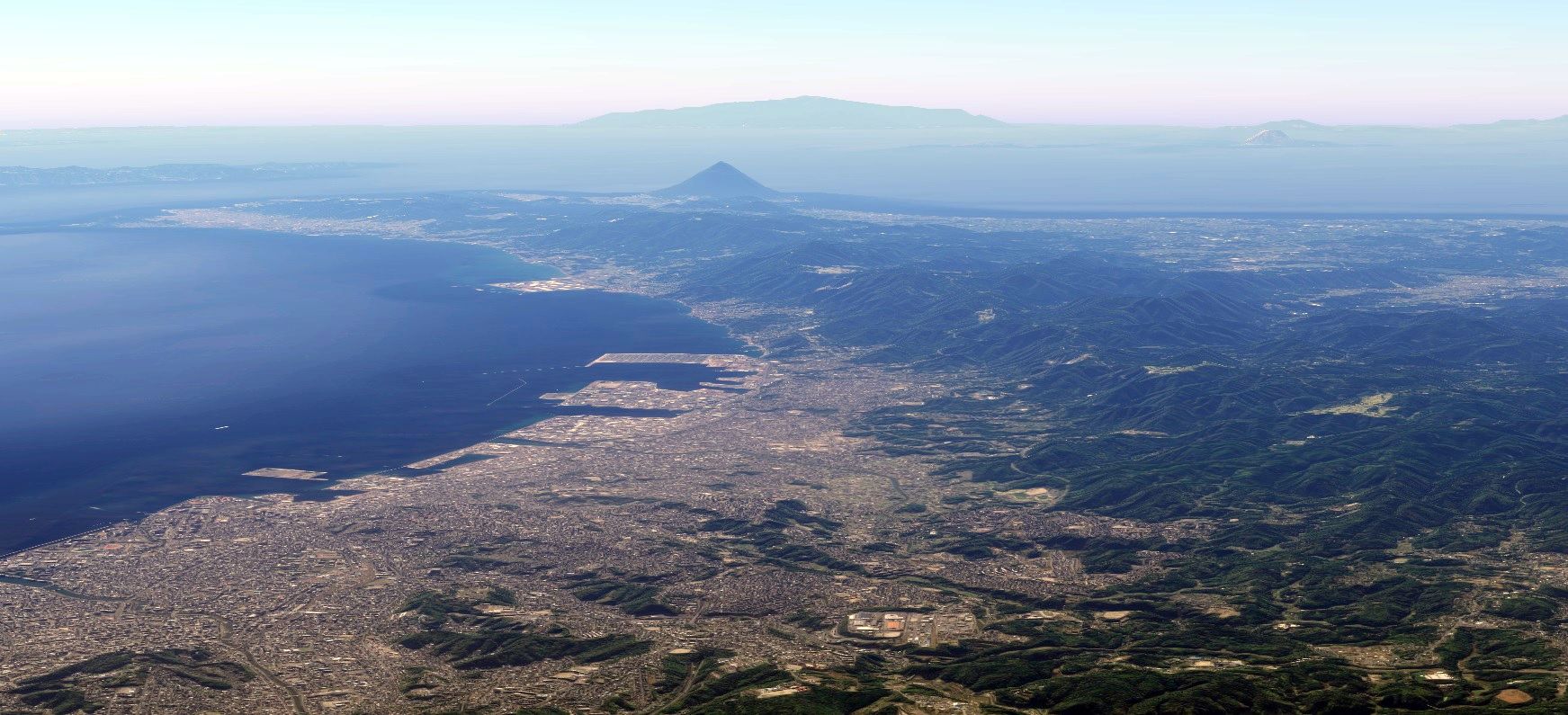
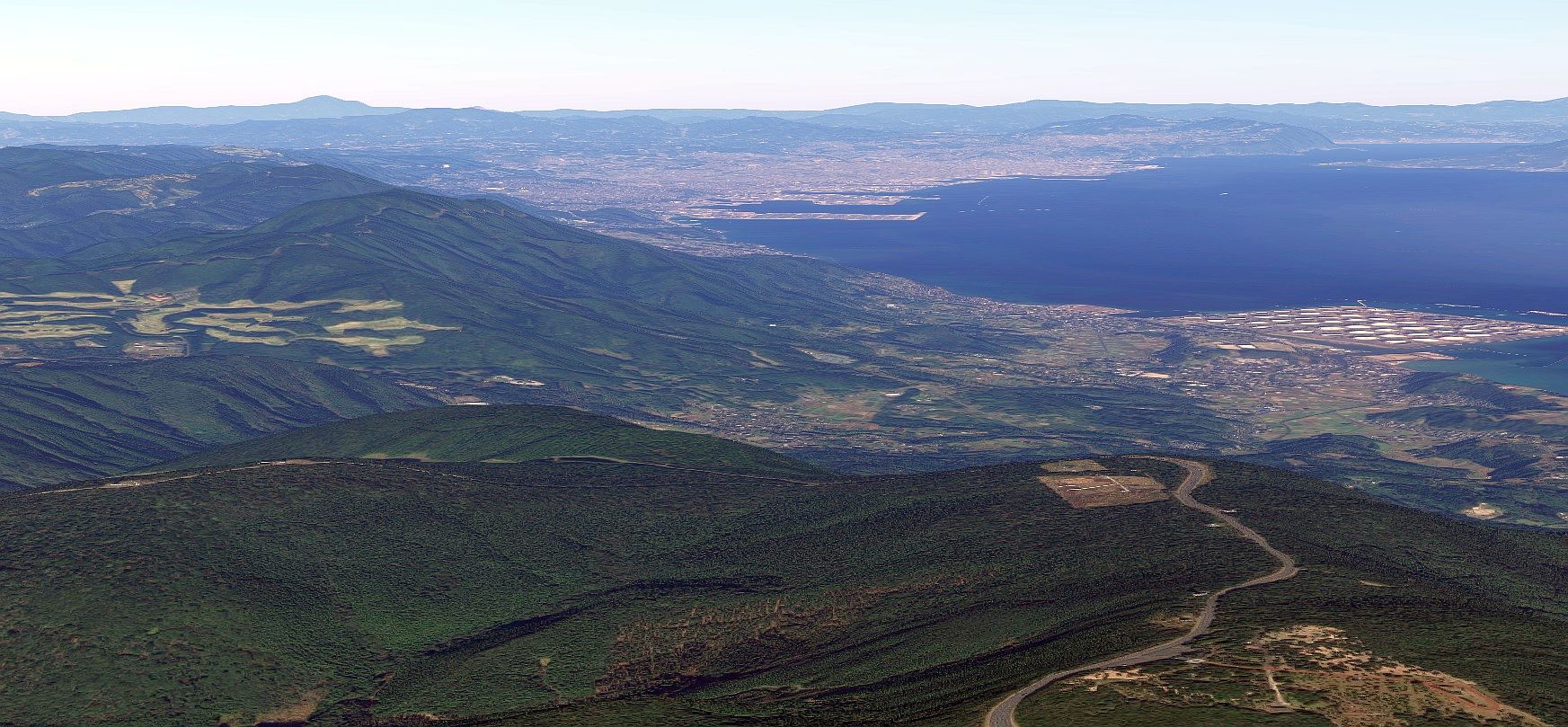
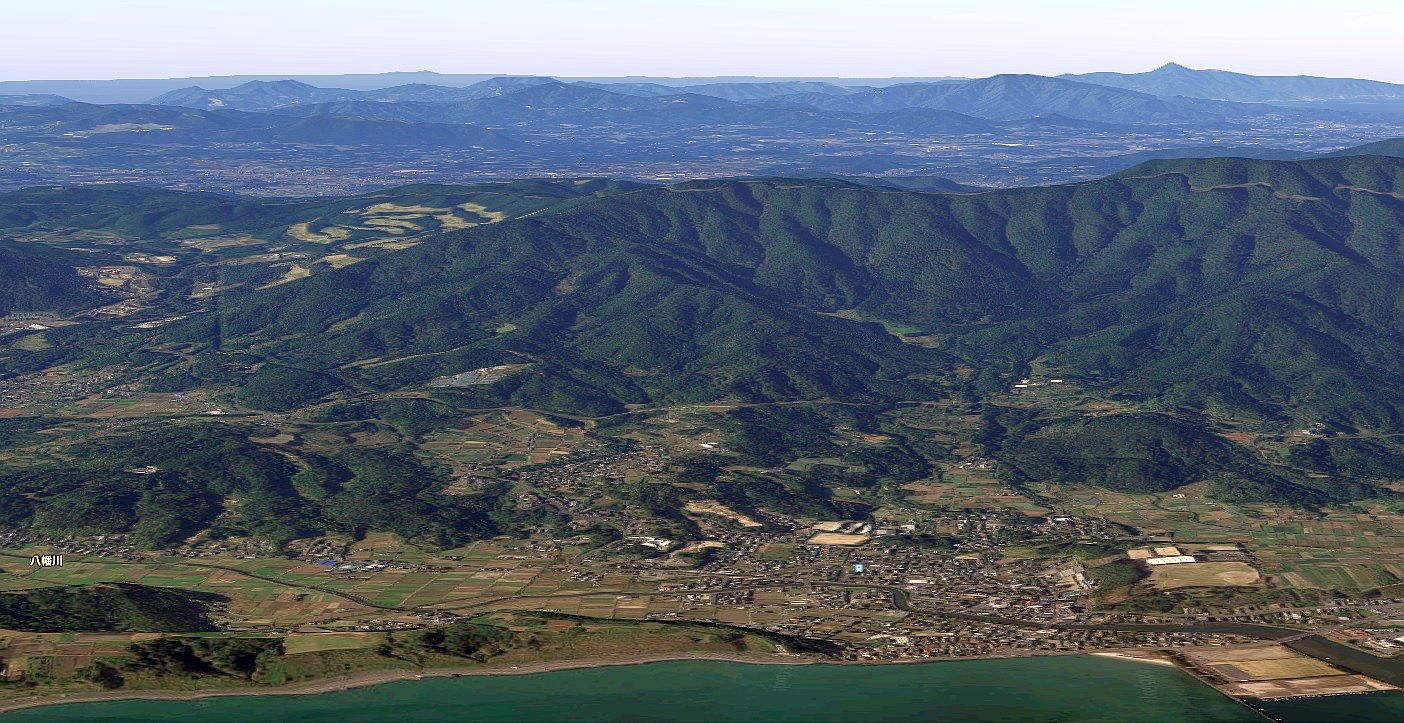
The Nakamura family of swordsmiths is said to go back to the Muromachi-era Satsuma smith Kiyotomo (清友) who was active in the early decades of the 16th century and who had been a student of the Osafune-trained master Kiyosuke (清左). I want to skip the genealogy right after Kiyotomo and start in the early Edo period. Suffice it to say, the Nakamura smiths worked in a hereditary manner for the Kimotsuki family (肝付) who were retainers of the Shimazu clan and who were in control over Kiire (喜入) which was estimated with an annual income of 5,500 koku. Administrative center of the Kiire territory was the small town of the same name that is located about 15 miles (25 km) to the south of Kagoshima (and which was merged with expanding Kagoshima in 2004). See pictures below to get an idea of where the Nakamura family worked. They were actually not that far away from Kagoshima but as they were not employed by the Shimazu family, i.e. the Satsuma fief, and in view of the declining sword order situation at the time of Kiyoyasu (清保) and his son Kiyotomo (清巴), I address themhere as rural swordsmiths.

Map1

Picture 1: The southwestern tip of Kyûshû with the Sakurajima volcano to the east of Kagoshima. Kiire somewhat to the south is easy to recognize due to its huge coastal oil storage facilities. © Google Earth.

Map2

Picture 2: The view from Kagoshima south towards Kiire. © Google Earth.

Map3

Picture 3: From Kiire north towards Kagoshima. © Google Earth.

Map4

Picture 4: The town of Kiire and mountains beyond as seen from the seaside. © Google Earth.

This family of swordsmiths might not be on everyone’s lips by the name Nakamura but it gave rise to the famous master Ippei Yasuyo (一平安代, 1680-1728) who was, as everybody knows, one of the winners of the sword forging contest held by shôgun Tokugawa Yoshimune (徳川吉宗, 1684-1751) in the sixth year of Kyôhô (享保, 1721). But our journey starts somewhat later, with the aforementioned Kiyotomo (清巴, 1784-1867), whose extant diaries cover (with a short interruption between the years 1796 and 1799) the time from Kansei seven (寛政, 1795) to Bunsei nine (文政, 1826). That means he started to write a diary at the age of eleven and stopped when he was 42 years old, or rather that is what is extant. He lived to the venerable age of 83, so we are facing about the first half of his life. Well, times had changed by then, of course also for swordsmiths, and the most famous child of the family, Ippei Yasuyo, had lived about a century ago. Incidentally, Yasuyo was the son of Yasusada (安貞) who was the son of Kiyosada (清貞). Kiyosada in turn was, if you start counting with Kiyotomo (清友), the 7th generation Nakamura main line. “Our” Kiyotomo (清巴) was the 13th head of the family (click here for a brief genealogy of the Nakamura family). The vast majority of the diary is about fulfilling certain official duties, annual events, temple or shrine visits, and reports on being sick and sword-related entries are actually rather rare. This is on the one hand only natural as these diaries were meant as, well, personal diaries, and not as minute business records but on the other hand, we find therein records on the production of farming tools like sickles and axes they made mostly on the basis of annual contracts and what neighboring towns he, his father, and his uncle went to deliver them. Actually, there are only two entries found in Kiyotomo’s diary that explicitly mention sword orders: One blade made for a private customer and a wakizashi that was ordered by his employer, the Kimotsuki family. However, we learn that Kiyotomo received from his employer in the tenth month of Bunsei one (1818) an order for 78 forked karimata arrowheards to be used in a yabusame event. The order said that 24 of them should come with an ornamental inome-sukashi and that those were paid 100 mon (文, copper coins) each. For the less elaborate arrowheads without an opening, Kiyotomo received 72 mon. So the whole order earned him about 6,300 mon, i.e. a little more than 1 ½ ryô. That’s about it when it comes to “samurai equipment” as all extant records, i.e. not only the diaries, and the utmost rarity of extant blades of Kiyotomo, his father Kiyoyasu, and his grandfather Kiyonari point towards the fact – and Fukaminato sees it that way too – that the Nakamura were merely making a living as smiths for agricultural and other tools by the start of the 19­th century. We learn from the diary that Kiyotomo bought the raw material iron from local sources like Kawanabe (川辺), Shinmaki (新牧), and Yukimaru (雪丸), all mining areas located in the mountain ranges to the west and south of Kiire. But from other Nakamura documents we know that at the glory days of the family, i.e. at the time Ippei Yasuyo’s uncle Kiyoyuki (清行) and grandfather Kiyosada (清貞) had been active, i.e. around Genroku (元禄, 1688-1704), and when sword orders were plenty, expensive and high-quality steels like Shisô Steel (宍粟鉄) from the upper reaches of the Chigusagawa (千草川) in Harima province and Izuha Steel (出羽鉄) from Iwami province were imported via a specialized Ôsaka-based trader named – nomen est omen – Tetsuya Gorôbei (鉄屋五郎兵衛).

 KiyotomoDiaries

Picture 5: Kiyotomo’s diaries.


Back to Kiyotomo. He writes in his diary that he became a page to the Kimotsuki when he was 16 years old and had to do service at their facilities on the ninth, 19th, and 29th day of each month. But he expressed the wish to end this duty and quit only two years later. Fukaminato assumes that his termination of the job might be connected to some health reasons as the diaries are full of reports of being ill but he must had been in the need for extra money because just three months after he had quit his page job, he started to work one evening a month as a clerk for the local Yamano family (山野). Before I finally introduce something indeed sword-related, I think it might also be interesting to let you know about the three major ceremonies or celebrations in the annual life of an Edo-period swordsmith that are also found in Kiyotomo’s diaries. The first was the so-called saiku-hajime (細工始め), the first craftwork of the New Year made on the second day of the first month. Blacksmiths make for example in a ceremonious manner a small sickle at that day and decorate with it the front pillar of the house or workshop. Next was the Kanayama-matsuri or fuigo-matsuri (金山祭・鞴祭), the Kanayama or Bellows Festival respectively, held each year on the eighth day of the eleventh month. And shortly later, on the 28th day of the eleventh month, the so-called kajiko (鍛冶講) ceremony was held where smiths presented offers to their protective deity Kanayamahiko (金山彦).


What about swords? As mentioned, extant works of Kiyotomo, Kiyoyasu, and Kiyonari are very rare. What we find in the Nakamura archive is an undated sword order from a certain Nomoto Suke’emon (野本助右衛門) that is addressed to a not further specified Nakamura Sei’emon (中村清右衛門, first name also reads Kiyo’emon). Well, Sei’emon was the hereditary first name of the Nakamura main line and thus born by several smiths, e.g. by the 6th gen. Kiyomitsu (清光), the 7th gen. Kiyosada (清貞), the 9th gen. Kiyofusa (清房), the 10th gen. Kiyomasa (清方), and the 12th gen. Kiyoyasu (清保), and also not much is known about the orderer Nomoto Suke’emon. So Fukaminato leaves this question to which Nakamura generation this order is addressed open but the order that I will introduce in the following shows the name Shirao Kinzaemon (白尾金左衛門). I did some research on this person and found out that his name appears on a list of retainers that followed in death lord Shimazu Mitsuhisa (島津光久, 1616-1694), the second Satsuma daimyô, by committing junshi (殉死). As the sword order states “like at the sword made for Shirao Kinzaemon,” I think we can narrow down Nomoto’s order to the time of the 7th gen. Kiyosada (清貞) and let me explain why. Kiyomasa was not yet born when Shirao committed junshi and his predecessor Kiyofusa was only 27 years old. Kiyofusa’s father Kiyoyuki would come theoretically into question but he did not bear the first name Sei’emon and when we assume that Shirao did not order his sword from a very young Kiyofusa, we arrive at Kiyosada who was a contemporary of Shimazu Mitsuhisa. So even if the records just mention “Nakamura Sei’emon” in this respect, I will take for granted for the time being that Kiyosada received this very order but will just refer to “the smith” in the following.

NakamuraSwordOrder1

Picture 6: Nomoto Suke’emon’s sword order.


調文 
刀壱振 但かうぶせ作 
一 長サ弐尺四寸五部 一 本ハヽ壱寸弐部但先ニ◯部をとる 
一 重ねしのきの上ニ而四部 一 むねのあつミ部 
一 切先横手ゟ上壱寸弐部 但はる出たる切り先ニして刃しゝをつよく 
一 切先刃之かゑりひきへ、白尾金左衛門殿江作被遺候刀之 
切先之ことく、かゑりを御作可被下候 
一 刃ミだれ刃 但大刃ニ無之様ニ 
一 そり三部半 但そり過たるハ承知不申上候間、三部半ゟ四部迄間ニそりを御作可被下候、◯◯もそり不申 
様頼存候 
一 中子長八寸 
右調文之通御作調可被下候、 
萬事頼申候、以上 
野本助右衛門 
十二月廿日 
中村清右衛門殿
Chûmon
Katana hitofuri tadashi kôbuse saku
• nagasa 2 shaku 4 sun 5 bu • motohaba 1 sun 2 bu tadashi saki ni ? bu o toru
• kasane shinogi no ue ni shikamo 4 bu • mine no atsumi 2 bu
• kissaki yokote yori ue 1 sun 2 bu tadashi haridetaru kissaki ni shite ha shishi o tsuyoku
• kissaki-ha no kaeri hiki e, Shirao Kinzaemon dono e saku-okusare sôrô katana no kissaki no gotoku, kaeri o gyosaku kudasarubeshi-sôrô
• ha midareba tadashi ô-ha ni kore naki yô ni
• sori 3 bu han tadashi sori sugitaru wa shôchi môshiagezu sôrô-aida, 3 bu han yori 4 bu made-aida ni sori o gyosaku kudasarubeshi-sôrô, ?? mo sori mosazu-yô tanomizonji-sôrô
• nakago nagasa 8 sun
Migi no chûmon no tôri gyosaku totonoe kudasarubeshi-sôrô, banji-tanomu môshi-sôrô, ijô
Nomoto Suke’emon
jûnigatsu nijûnichi
Namakura Sei’emon dono
Order
One katana in kôbuse.
• nagasa 74.2 cm • motohaba 3.6 cm and at the tip ? cm
• kasane at the shinogi 1.2 cm and at the back 0.6 cm
• as for the kissaki, from the yokote upwards 3.6 cm and with a pronounced fukuraplease make the kaeri like on the kissaki of the sword you made for Shirao Kinzaemon
• the ha should be a midareba but not too wide
• sori 1.0 cm, please inform me in the case the sori is noticeable deeper but everything between 1.0 and 1.2 cm is fine and you can leave it that way without further notifying me
• nakago length 24.2 cm
Please make the sword according to these points, everything else I leave in your hands.
Nomoto Suke’emon
20th day of the twelfth month
to Mr. Nakamura Sei’emon

Very interesting is also the correspondence after the order was placed. Just eight days later, the letter is dated with the 28th day of the twelfth month, Nomoto inquires about his order as he has heard from a certain Iwanaga (岩長) that his blade turned out to have a not further specified kizu and how this might have an effect on the delivery. Reason for that is not Nomoto panicking but we learn from other letters that it is him who has to make arrangements with the polisher and all the other artists involved making a koshirae and that all this has to be done in a certain time frame as he wants to have his sword finished at the latest by the seventh month of the coming year when he has to proceed to Edo. He informs the smith about that in a letter dated with the twelfth day of the first month. So we learn that it was not necessarily the smith who did all this arrangements necessary to deliver a completed sword to the client. It is possible that this was the case at forges operating in the larger castle towns with an arranged infrastructure between all the craftsmen themselves (see pictures below), or more likely, there were agents doing all this for the clients. But from the fact that Nomoto makes kind of pressure right at the beginning of his sword being made, we can assume that seven months was just enough time to make arrangements with the togi-shi, habaki-shi, saya-shi, tsukamaki-shi, and so on, that means coordinating the entire process on the basis of the time each craftsman estimates for doing his job, taking into account his order situation and so on. Well, it would be interesting to know how it happened that Nomoto was informed about that kizu and that just about a week after the order was placed. Maybe the smith, i.e. Kiyosada, was handling this order with priority and started to work on the blade the very same day he received the order. Or he and Nomoto had been in touch before and Kiyosada had things prepared, e.g. already did some foundation forging, and just waited for the “official” order to come in to forge out from there the sunobe and so on. Because when we deduct the time for mailing, i.e. one day for the letter from Nomoto to the smith and one day for the letter or the personal talk of Iwamoto to Nomoto, six days sound pretty short for forging a blade. From another case found in the Nakamura archive we learn that such kizu must had been quite common. There is an undated letter extant where the blade was returned to the smith after the polisher had discovered a kizu, that means it the flaw was not visible with the foundation polish done by the smith himself. This letter too is undated and just addressed to Nakamura Sei’emon but the name Shirao Shirôbei (白尾四郎兵衛) appears on it and after some research I found in a Shimazu-related document a Shirao Shirôbei Kuniyoshi (白尾四郎兵衛国芳) in an entry from the fourth year of Enkyô (延享, 1747), mentioning him as yari fighting instructor. So if this is our man, then probably the 10th Nakamura generation Kiyomasa (清方, 1698-1782) was the smith. Also a wakizashi ordered by their employers, the Kimotsuki, to be granted to an unnamed young “man” at a genpuku ceremony had to be returned from the polisher as a kizu was revealed. This is mentioned in a document from Hôreki three (宝暦, 1753) and so here too Kiyomasa is meant. But Kiyomasa was not a nobody. He even studied in Kyôto with Iga no Kami Kinmichi (伊賀守金道) and received the honorary title Ise no Kami (伊勢守).

ShokuninA

Picture 7: Smith and polisher.

ShokuninB

Picture 8: saya-shi

This makes me think that even for a (rural but) renowned master like Kiyomasa, turning out a flawless blade was not taken for granted, also taking into account that he surely put extra effort into a blade made according to an official order from his employer. It was just a more or less common thing in this “league” and no whatsoever “harsh words” from any of the clients are found in these documents. Surely, we are not talking about the greatest masters of their time where customers paid a fortune to get one of their blades, and bearing in mind the humble order situation for a mid to later Edo period rural swordsmith, I think we should duly respect their work even if their blades might not be able to keep up with the high expectations we place today in art swords. So although rural, the Nakamura smiths were still held in high regard by local samurai as Nomoto writes in another letter that he places his order with Kiyosada (a blade of him can be found here) because really badly forged, “amateurish” blades are made in and around Kagoshima whose cutting edges are chipping even when cutting soft targets. Further he writes that this sword should accompany him for the rest of his life, so no wonder when he was much concerned about everything, also having in mind the humble salary of a simple hanshi (藩士) that I addressed in an article I wrote a while ago (download here)…

I hope I was able to provide with this article an interesting insight into the life of a rural Edo period swordsmith and another one is in work that has a historic sword order as a basis.

KANTEI 2 – JIGANE & JIHADA #3

2.3 Utsuri


I have forwarded some thoughts on utsuri here and I want to avoid going too much into metallurgical details with this kantei series. Well, utsuri means “reflection” and refers to a misty and more or less visible reflection in the ji (and sometimes also higher in the shinogi-ji) which is thought to be a hardening effect. The reflection can “shadow” (kage) the hamon, thus also terms like ha-kage (刃景), ha no kage (刃の景), or kage-hamon (景刃文) were in use in earlier times. The dark area between this reflection and the hamon below is called antai (暗帯) and according to the pattern of its appearance, we distuinguish between several different forms of utsuri which allow conclusions on the school (or sometimes even on the smith). Utsuri can be prominent, utsuri ga azayaka ni tatsu (映りが鮮やかに立つ) or utsuri ga senmei ni tatsu (映りが鮮明に立つ), or faint, awai utsuri ga tatsu (淡い映りが立つ) or asaku utsuri ga tatsu (浅く映りが立つ). That means the term tatsu (立つ) means in this context merely that utsuri “is present” and not that it “stands out” as in hada ga tatsu (i.e. “standing-out hada”).

Utsuri is very much a feature of the Bizen tradition and the Facts and Fundamentals of Japanese Swords makes a good point by saying “when you see utsuri there is a 70 percent chance it is a Koto-Bizen work.” Please note that when it comes to utsuri, the term used is an umbrella term that refers to a “whatsoever reflection” on the ji. That means not everything called utsuri is technically and metallurgically the same. In other words, the midare or bô-utsuri seen on Bizen, and the dan-utsuri seen on Aoe blades are quasi “real utsuri” and technically different from appearances like jifu-utsuri, shirake-utsuri, and tsukare-utsuri (疲れ映り) which are addressed as utsuri too due to their reflection-like appearance. Anyway, to see utsuri, a blade has to be in a good polish and you have to examine it under a proper light source. So when you lift up the sword and it is time to check the jigane, focus on the area where the hamon starts and let your eyes wander upwards whilst slowly changing the ange of the blade. Others suggest to hold the blade with the outstretched right arm behind the light source and with the tip facing left and the cutting edge down. But this only works when you have space of course and not at a kantei session where people are handling blades next to each other at a rather close distance. In the following I want to describe in alphabetical order the most common utsuri forms.

bô-utsuri (棒映り) or sugu-utsuri (直映り): A straight utsuri that appears first on hira-zukuri Bizen blades from the end of the Kamakura period (and on shinogi-zukuri Bizen blades somewhat later, towards the end of the Nanbokuchô period). We associate the early bô-utsuri on tantô very much with the Osafune main line and masters like Kagemitsu (景光) and Kanemitsu (兼光) and their direct students whilst the somewhat later bô-utsuri on tachi (or katana) was mostly applied by Ôei-Bizen (応永備前) smiths (e.g. Morimitsu [盛光], Yasumitsu [康光], Moromitsu [師光]) and the smith from the Kozori (小反) group.

 utsuri-bo

botan-utsuri (牡丹映り): Isolated roundish utsuri patches that follow in shape the underlying mokume or itame forging structures. This feature is associated with Osafune Kanemitsu and his direct students like Tomomitsu (倫光) and it is said that botan-utsuri is actually an appearance that occurs when certain areas are polished too much.

utsuri-botan

chôji-utsuri (丁子映り): Basically a midare-utsuri that shadows a chôji hamon. This term, which is actually a subgenus of midare-utsuri, is not that much in use as it is anyay hard to tell if a flamboyant midare-utsuri seen for example on a Fukuoka-Ichimonji blade is still midare or already chôji.

dan-utsuri (段映り): This term is used when more than one utsuri reflection is seen on a blade, for example a and a midare-utsuri, and this feature is usually seen on Aoe blades.

utsuri-dan

utsuri-dan1

herakage (箆景・ヘラ影) or herakage-utsuri (ヘラ影映り): This term is used to refer to a peculiar utsuri seen on Ko-Niô blades, e.g. by the earlier generations Kiyotsuna (清綱). It appears as about 1 cm long shirake patches that look like spatula (hera) traces, thus the name. The term was introduced by the Hon’ami family which referred in their publications to this kind of reflection as “Niô no herakage.”

jifu-utsuri (地斑映り): – If jifu spots appear all over the blade and form kind of a pattern, the term jifu-utsuri is used, following the aforementioned definition of utsuri as a reflection on the ji. Jifu-utsuri is a rare feature and hardly seen on any blades made later than the Nanbokuchō period. It is for example typical for Ko-Bizen (古備前), Un group (雲), and Aoe (青江) works.

midare-utsuri (乱れ映り): Midare-based utsuri that predates by far bô-utsuri. That means, smiths first produces midare-utsuri and that for quite a while until the Osafune main line smiths changed certain approaches in workmanship and produced towards the end of the Kamakura period a straight bô-utsuri. Please note that a midare-utsuri can also appear on a blade in suguha, that means it is not necessarily a “strict reflection” of the hamon. The Bizen smiths continued to produce midare-utsuri until the mid-Muromachi period but with the then shift towards mass production, it becomes pretty rare whilst it appears at the same time at other schools, like Sue-Seki (末関) and Bungo Takada (豊後高田). With the transition to the shintô era, utsuri again appears on works of smiths that revide the classical Bizen-Ichimonji style, i.e. at the Ishidô school (石堂) in particular and smiths like Tatara Nagayuki (多々良長幸), Tsunemitsu (常光), Tameyasu (為康), Heki Mitsuhira (日置光平), Korekazu (是一), and the Fukuoka-Ishidô smiths Koretsugu (是次) and Moritsugu (守次). But also the early shintô era successors of the Osafune Sukesada (祐定) lineage were able to produce again utsuri. In shinshintô times, midare-utsuri is of course seen at smiths who worked in Bizen style, e.g. Taikei Naotane (大慶直胤), Koyama Munetsugu (固山宗次), Tairyûsai Sôkan (泰龍斎宗寛), and Chôunsai Tsunatoshi (長運斎綱俊).

utsuri-midare

utsuri-midare1

utsuri-midare2

nie-utsuri (沸映り): When ji-nie forms a concrete pattern, we speak of nie-utsuri. Nie-utsuri only appears on blades in nie-deki or ko-nie-deki and is a typical feature of the Rai school (来). But also great Keichô-shintô and early shintô masters like Horikawa Kunihiro (堀川国広) and Dewa no Daijô Kunimichi (出羽大掾国路) were able to reproduce nie-utsuri. And it is even seen on some blades of Taikei Naotane (大慶直胤).


shirake-utsuri (白け映り・白気映り): In the case whitish shirake areas form utsuri-like patterns, we speak of shirake-utsuri. This feature is associated with swords from Mino but also from Kaga province and other more rural schools like Kongôbyôe (金剛兵衛) and Tsukushi Ryôkai (筑紫了戒) but sometimes it is hard to say if it is just shirake or already a shirake-utsuri. So you might find blades of smiths and schools that are known for shirake being described as showing a shirake-utsuri, for example the Enju (延寿), Naminohira (波平), and Mihara (三原) schools.

 utsuri-shirake

tsukare-utsuri (疲れ映り): This is again one of those utsuri that is not really an utsuri in the sense of a midare and bô-utsuri. It describes tired (tsukare) areas in the steel that can appear in a reflection-like manner, mostly after nugui is applied with a new polish.