Copper for the kinkô artists

A few days ago I had to do some research on iron mining and the production of ferric oxide in relation to ancient Japanese place names of Mino province. In the course of this research I stumbled upon Edo-period copper production and as I am of course also interested in the old kinkô craft, I was curious about how the old kinkô artists got their raw materials. Well, as I am quite busy at the time I focused just on copper and more details on other metals might follow in the future.

giessen

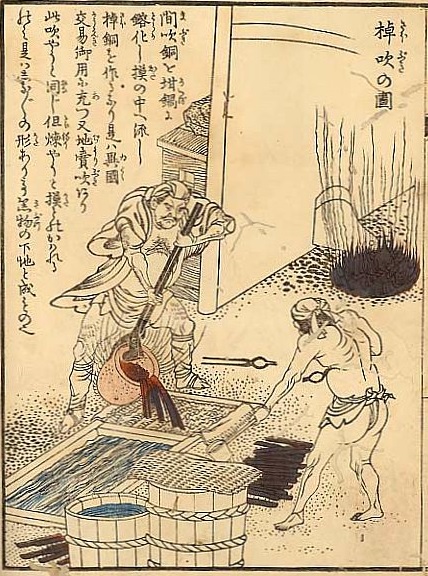
Picture 1: Casting of the saodô

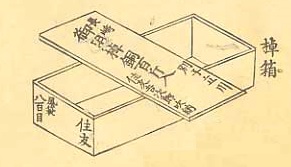
One of the largest copper mines was in Besshi (別子) in Iyo province on Shikoku. The mine was discovered in the third year of Genroku (元禄, 1690) and opened one year later by the Sumitomo family (住友), yes the Sumitomo family which was one of the most significant zaibatsu in the early decades of the 20th century. From the mine the raw copper (sodô, 粗銅) was shipped along the Seto Inland Sea to the Ôsaka Bay and via the Nagahorigawa (長堀川), a river which became a road in 1964, up to the Unagidani district (鰻谷) of Ôsaka. There the raw copper was processed to refined copper (seidô, 精銅) and casted according to the intended use. The Besshi copper mine was very lucrative for the bakufu as it exported thousands of tons to China and Holland via Nagasaki. Accordingly, a distinction was made in Ôsaka between the bakufu export copper (goyô-dô, 御用銅) and the copper distributed and sold on the domestic market. In concrete terms, the casters of Unagidani (see picture 1) casted basically three forms of refined copper: The saodô (棹銅, lit. „pole copper), teidô (丁銅, lit. „block copper“) and marudô (丸銅, lit. „round copper“). The saodô poles (see picture 2) were the form for the export and it was strictly forbidden to sell them at the domestic market. They measured about 23 cm, had a diameter of about 1,5 cm  and weighed about 250 ~ 300 g. For the export, 200 of them were put into special boxes of 100 kin (斤, ~ 60 kg) (see picture 3). These boxes were shipped from Unagidani to Nagasaki. The teidô plates (see picture 4) were used for the production of tiles or tools like pick hammers. The marudô (see picture 5) in turn was the form which was used by the kinkô artists, kettle makers and the like.

Well, that´s enough on that subject for the moment and more articles will follow next week when I have more time.

copperbar1

Picture 2: saodô pole

box

Picture 3: Storage box for 60 kg of saodô copper poles

teido

Picture 4: teidô plate

marudo

Picture 5: Two marudô of different size

About the goban-kaji

In my recent article on Kamakura-sugata I have referred to the retired Emperor Gotoba (後鳥羽天皇, 1180-1239, r. 1184-1198) and his so-called „goban-kaji“ (御番鍛冶) project. The list of all the different goban-kaji is otherwise available and I do not want to quote it here again. This time I would like to take a look at the circumstances under which the goban-kaji worked. First to the old sword script „Kanchi´in-bon mei-zukushi“ (観智院本銘尽) of which the oldest extant copy dates to the 30th year of Ôei (応永, 1431). Therein we find a list of magistrates (bugyônin, 奉行人) and twelve swordsmiths which has the long title „Gotoba´in-miu ni meshinukaseru kaji jûnika-getsu ketsuban-shidai“ (後鳥羽院御宇被召抜鍛冶十二月結番次第). The title translates as: „Fixed sequence of certain swordsmiths for twelve months which were invited to the residence of the retired Gotoba.“ Most of the listed magistrates were historically documented figures and confidants of Gotoba. Before we continue it has to be mentioned that the goban-kaji and magistrate list differs from historical sword publication to historical sword publication. It is assumed that the magistrates had a kind of executive or supervising function because at that time it was very common for the Japanese court bureaucracy to assign posts for each and everything. This would also explain why there was a magistrate for every month. That means it was rather a honorary thing than an actual executive post as it would have surely been no problem if one or two court aristicrats were in charge of the smiths over the whole year. Incidentally, Sai´on-ji Kitsune (西園寺公経, 1171-1244), the first magistrate on the list, raised an objection to Gotoba when he learned that the retired emperor planned to recruit an army. He was thereupon arrested but later released when the Jôkyû Disturbance was over. And Asukai Masatsune (飛鳥井雅経, 1170-1221), the magistrate for the ninth month, was by the way an ancestor of the poet Asukai Masaaki (飛鳥井雅章, 1611-1679) which I have mentioned in the next to last article on Hosokawa Yûsai and the kokin-denju.

 Gotoba

Picture 1: Emperor Gotoba.

Well, the place where all the forging took place was called „onba-dokoro“ (乳母所, lit. „place of the nurses“). Two sword polishers were employed there for the whole year. Places like the onba-dokoro and for example the so-called „waka-dokoro“ (和歌所, lit. „place for waka poetry“) were officially subordinate to the facilities of an abdicated emperor, the so-called „in“ (院). Each smith who was invited received a set of white and plain ritual clothing (jô´e, 浄衣), a short-sleeved kimono (kosode, 小袖) and a light summer kimono (katabira, 帷子) when he arrived at the in. When he had to leave the palace area he was ordered to wear a formal hitatare (直垂) and matching kobakama (小袴). Apart from that he was provided with the charcoal and all the tools he needed to do his job. When the goban-kaji project started, Gotoba was not even 30 years old. We know from contemporal historical records like the „Gukan-shô“ (愚管抄) and the later early Muromachi-period „Masu-kagami“ (増鏡) that Gotoba was not happy that at certain times, like for example at a Buddhist requiem mass in 1207, so many bushi gathered at the in practicing archery just to kill time. Also the aristocrats complained that the bushi were of no use there as all they did was devoting themselves day and night to their arms and martial arts. It is also mentioned that they showed their swords to one another and some of them even made primitive and basic appraisals. We can assume that this was not what Gotoba wanted, as he had a more noble approach to swords. In short, the in was a busy place with all the annual events but the goban-kaji had their sacred onba-dokoro where they were able to retreat and work with the young and ambitious ex-emperor. Well, there is also the known list of his goban-kaji during his exile on the island of Oki called „Oki ni oite teichi bankaji no shidai“ (於隠岐定置番鍛冶之次第). This list is found in the volume „Keizu-hidan-shô“ (系図秘談抄) of the seven-volume sword publication „Kokon-mei-zukushi“ (古今銘尽) and does not appear in documents from before the Muromachi period. So most historians agree that the list must be fictitious as Gotoba was strictly watched and guarded by the bakufu in his exile and was surely not allowed to have several swordsmiths working there for him.

Finally I want to clarify some terms concerning the swords made in the process of the goban-kaji project. First the well-known term „Kiku-Ichimonji“ (菊一文字). It is just used for blades which actually bear a kebori carving of a chrysanthemum on their tangs and which were made by the Ichimonji smiths on the goban-kaji list. Kiku-Ichimonji are often mixed-up with the so-called „kiku-gyosaku“, „kiku-gosaku“ or „kiku-onsaku“ (菊御作, see picture 2). The latter term refers namely to blades which were actually tempered by Gotoba and which might also bear a chrysathemum on the tang. Synonymously also the terms „gosho-yaki“ (御所焼) and „gyo-seisaku“ (御製作) were in use for such blades whereas „gosho“ (御所) means „imperial palace“. But some historical documents also quote occasionally the terms „gyosaku“ (御作) and „gosho-kitae“ (御所鍛). It is important to bear in mind the context. Very similar terms like „kiku-zukuri“ or „kiku-saku“ (菊作 or 菊造) refer namely in most cases to sword mountings which show fittings with a chrysanthemum motif. So one has to be careful when translating old entries on swords.

 kikugyosaku1

Picture 2: jûyô-bunkazai, tachi, nagasa 78,1 cm. Detailed picture here.

kikugyosaku1-nakago-1

Picture 3: Tang of the blade from picture 2.

kikugyosaku-nakago1-1

Picture 4: Tang of another kiku-gyosaku.


Hosokawa Tadaoki´s hot temper and his Higo-koshirae

I want to stay with the Hosokawa family a little longer. The aesthetical aspects of Higo-koshirae are discussed quite often and I also dedicated them a chapter in my recent publication Koshirae – Japanese Sword Mountings. In this article, I want to deal with the rather brutal context of some of the well-known Higo mountings. But first some words on Tadaoki´s childhood. He was born on the 13th day of the eleventh month Eiroku six (永禄, 1563) as oldest son of Fujitaka and Jakô (麝香, 1544-1618), the daughter of Numata Mitsukane (沼田光兼) who was the castellan of Kumakawa (熊川城) in Wakasa province. His youth names were „Kumachiyo“ (熊千代) and later „Yoichirô“ (与一郎). Two years after his birth his father Fujitaka was involved in continuous fightings on behalf of the Ashikaga-shôgun and Tadaoki was put in the care of the Hosokawa-retainer Nakamura Shinsuke (中村新助) who lived in a small and inconspicious house outside of Kyôto. It was a life of hiding and when Fujitaka returned from the fightings, Tadaoki was already five years old. Regarding his hot temper there exists an anecdote for the third year of Genki (元亀, 1572) when a dispute arouse between Hosokawa-retainers from the Ueno (上野) and the Arakawa family (荒川). It is said that Tadaoki, nine years old at that time, sided with the Arakawa and drove out the Ueno. Fujitaka was quite angry about that and one year later Tadaoki was put in the care of his uncle Gyokuhô (玉峯) who was a priest at Kyôto´s Eigen´an (永源庵). However, it is unknown if this has something to do with the Ueno-Arakawa dispute but we do know that his temper must had been that hot even as a young boy that the chronists found it necessary to record it.

His first battle took place in Tenshô five (天正, 1577) when he was fifteen years old. It was in the course of Oda Nobunaga´s subjugation of Kii province. Tadaoki, back then still under the name „Yoichirô“, accompanied the campaign against Kaizuka (貝塚) in Izumi province where they were fighting against troops of the Saiga-ikki and followers of the Negoroji. Shortly later he and his younger brother Okimoto (興元, 1566-1919) were the first to arrive at the rebelling Kataoka Castle (片岡城) in Yamato province. For his achievements during the severe fightings for the castle the young Yoichirô received a letter of acknowledgement from Nobunaga. Well, to go into battle at the age of fifteen was not uncommon for his time but he did especially well and Nobunaga confirmed his vassal-status by granting him the character for „Tada“ from his son Nobutada (織田信忠, 1557-1582). Well, already three years before these fightings Nobunaga suggested that Tadaoki should be married with Akechi Mitsuhide´s (明智光秀, 1528-1582) daughter Tama (玉, 1563-1600) but his father Fujitaka refused because – according to the Hosokawa chronicles – of his son´s „too strong character“ (gôkyô ni suguru, 剛強に過ぐる). However, we all know that the wedding took place, just somewhat later, namely in Tenshô seven (1579), and we also know that Tama was the famous Gracia. By the way, at the time of the marriage Tadaoki received from Nobunaga the kuyô family crest. There exists the anecdote that this was because some years before, Tadaoki or rather Yoichirô had seen this crest on a kozuka of Nobunaga and told him that he liked it a lot.

     TadaokiPortrait1

Picture 1: Portrait of Hosokawa Tadaoki by Ôbuchi Genkô (大渕玄弘) made five years after his death.

So far the early years of Tadaoki until his marriage. That his hot temper did not stop even in his later years and after being a renowned tea master and student of Sen no Rikyû (千利休, 1522-1591) can be learned from the nicknames of some of his sword mountings. First the famous so-called „Kasen-koshirae“ (歌仙拵, see picture 2). Tadaoki had retired in Genna six (元和, 1620) and handed-over the leadership of the Hosokawa family to his son Tadatoshi (細川忠利, 1586-1641). Twelve years later he moved to Yatsushiro Castle (八代城) where he wanted to spend his last years with tea and the arts. But he was somehow worried about that the politic of his son did not make progress. So he made an example, called for Tadatoshi, and executed 36 criminals with his own sword, a number which reminded him of the so-called „Thirty-six Immortal Poets“ (sanjū-rokkasen, 三十六歌仙), a group of poets from the Nara and Heian periods. So the mounting got the nickname „Kasen-koshirae“. The blade itself is a work of Kanesada (兼定, No-Sada), who was famous for making blades with superior sharpness (see picture 3). Picture 4 shows the so-called „Nobunaga-koshirae“ (信長拵). Well, this one got its name from the blade it mounts and has nothing to do with Tadaoki´s hot temper. But I want to present it here for the sake of completeness as it is very similar in interpretation to the Kasen-koshirae. Nobunaga, the maker of the blade, was active around Ôei (応永, 1394-1428) in Kaga province. Family records of the Hosokawa say that Tadaoki defended his life with this blade during the battles of the Genki (元亀, 1570-1573) and Tenshô eras (天正, 1573-1592). However, as his first battle was as mentioned in Tenshô five (1577), the former can be dismissed but if the transmission is nevertheless true, than he used that blade in his first actions on the battlefield. By the way, it is said that Tadaoki had these subtle and tasteful koshirae made on the basis of instructions of his tea master Rikyû.

 kasen

Picture 2: Kasen-koshirae, overall length 88,0 cm

Kasen-blade-kl

Picture 3: katana, mei „Nôshû Seki-jû Kanesada saku“ (濃州関住兼定作), nagasa 61,0 cm

nobunaga

Picture 4: Nobunaga-koshirae, overall length 91,8 cm

Nobunaga-blade-kl

Picture 5: wakizashi, mei „Nobunaga“ (信長), nagasa 48,3 cm

kishuza

Picture 6: Kishuso-koshirae

The so-called „Kishuso-koshirae“ (希首坐拵, see picture 6) has its name from the fact that Tadaoki killed with the sword an impolite and disrespectful Daitokuji-monk (大徳寺) called „Kishuso“. The blade itself is a work of the local Higo smith Fujiwara Nobusada (藤原宣貞) and has a nagasa of 56,5 cm, that means it is an ô-wakizashi. And last but not least there is the nagamaki-naoshi wakizashi by the 2nd generation Samonji (左文字). It is called „Shisô-ken“ (晴思剣) and has its name from killing a spy disguised as tea servant (chabôzu, 茶坊主), on which Tadaoki held a grudge for several years. The legend says that Tadaoki´s mind (, 思) brightened (shi, 晴) when he slayed this person. Therefore the name „Shisô-ken“.

Often a sword got its nickname from killing this or that warrior in a battle or cutting through helmets, armors, horses or whatever. And koshirae were often named according to their famous wearer, to their magnificent interpretation or fittings they were equipped with. But Tadaoki did not pick the swords with the Kasen-koshirae or Kishuso-koshirae in the morning with killing someone later that day in mind or going into a battle. These were his everyday swords and accordingly mounted in a tasteful and expensive manner. And this demonstrates us on the one hand how hot his temper was and on the other hand that he was truly a warlord born and raised in the turmoils of the Sengoku period.

Why Hosokawa Yûsai did not want to give up Tanabe Castle

In my first volume „Legends and Stories around the Japanese Sword“ I have elaborated on the famous sword „Kokindenju-Yukihira“ (古今伝授行平). To recapitulate: Shortly before the Battle of Sekigahara, Hosokawa Yûsai Fujitaka (細川幽斎藤孝, 1534-1610) held with about 500 men Tanabe Castle (田辺) in Tango province for the Tokugawa. When Ishida Mitsunari (石田三成, 1560-1600) deployed for the final move against Ieyasu, he layed siege to Tanabe with 15.000 men. Now Yûsai was less frightened of losing the castle or his live than the transmission of the anthology „Kokin-waka-shû“ (古今和歌集). It was tried two times to talk Yûsai into surrendering because everybody realized that resistace was useless and a peaceful surrending of the castle the best way. But Yūsai was stubborn. The court definitely expected the death of Yûsai and because they did not want the loss of his „kokin-denju“ (古今伝授, more on that later), they officially issued an imperial order to hand out all the documents. Thus an envoy was sent to Tanabe which consisted of the aristocrats Sanjônishi  Saneeda (三条西実条, 1575-1640), Nakanoin Michikatsu (中院通勝, 1556-1610), and Karasumaru Mitsuhiro (烏丸光広, 1579-1638), who were famous poets themselves. Yûsai obeyed and surrended the castle two days before the Battle of Sekigahara after being besieged for two months. In the end Yûsai was relieved too that his kokin-denju kowledge of the „Kokin-waka-shû“ was in safe hands and presented for good measure Mitsuhiro with his beloved tachi of Yukihira which got thereupon the nickname „Kokindenju-Yukihira“.

yukihira3-kl

koshirae-kl

Picture 1: kokuhô „Kokindenju-Yukihira“, mei: „Bungo no Kuni Yukihira saku“ (豊後国行平作), nagasa 79,9 cm, sori 2,9 cm; below the koshirae to the blade which is said to go back to the time of Hosokawa Yûsai.

So far the circumstances about the surrender of Tanabe Castle and the origins of the nickname of the sword. In this article I want to explain why Yûsai was so anxious about knowing the kokin-denju in safe and first and foremost in the right hands. To understand his concerns we have to go back in time. The „Kokin-waka-shû“, or short „Kokin-shû“, is an imperial anthology of Japanese waka poetry from the Heian period, or to be more precise from the early 10th century. The important thing was that it was compiled at imperial request and that it contains Japanese poetry. With this, the court started to move away from the then prevailing Chinese culture. The anthology contains  more than 1.000 poems, depending on the textual transmission. Already towards the end of the Heian period it became custom to discuss on readings and hidden meanings of the poems whereas interpretations were also often kept secret by a certain school of poetry. With the Kamakura period the court entrusted the conservative aristocratic Nijô family (二条) of poetry with the transmission of the „Kokin-waka-shû“. However, the Nijô family itself split up into the Kyôgoku (京極) and Reizei (冷泉) branches which became the strongest rivals of the Nijô main line teachings of poetry. Simplifying, the transmission, the denju (伝授) of the „Kokin-waka-shû“, became a major issue of all these branches stressing their exegesis being the only one which understands all the deep meanings and nuances of the poems.

Sometime in the early Nanbokuchô era, the then Nijô head transmitted the „Kokin-waka-shû“ secrets to the poet Nikaidô Sadamune (二階堂貞宗, 1289-1372), better known under his monk name „Ton´a“ (頓阿). Ton´a in turn was a descendant of the Fujiwara-regent Morozane (藤原師実, 1042-1101). Via Ton´a and his students, the Nijô-transmission reached eventually the military leader and passionate poet Tô Tsuneyori (東常縁, 1401~1484). Tsuneyori was namely a distant descendant of the famous poet Fujiwara no Teika (藤原定家, 1162-1241) and transmitted the „Kokin-waka-shû“ to important figures of his time like shôgun Ashikaga Yoshihisa (足利義尚, 1465-1489). It has to be mentioned that the „Kokin-waka-shû“ and its secret comments transmitted orally and written via the denju ceremony was still deeply interwoven with aristocracy. But the transmission to a military leader like Tsuneyori shows the changes of times, namely the rise of the buke warrior aristocracy into the highest circles of culture. Another person Tsuneyori honoured with the transmission of the „Kokin-waka-shû“ was the monk and poet Sôgi (宗祇, 1421-1502). This denju took place in the year 1471. But with Sôgi, the secret teachings again split up. He initiated namely the aristocrat Sanjônishi Sanetaka (三条西実隆, 1455-1537) and the poet Shôhaku (肖柏, 1443-1527). Well, Shôhaku in turn initiated later when he had moved to Sakai the wealthy merchant Hayashi Sôji (林宗二, 1498-1581). This was contrary to the attitude of the aristocrats and terms like „palace transmission“ (gosho-denju, 御所伝授) and „Sakai transmission“ (Sakai-denju, 堺伝授) were introduced.

Now we come back to Yûsai. The then holder of the secret denju of the Sanjônishi family was Saneeda (三条西実枝, 1511-1579), the grandfather of the aforementioned Saneeda (三条西実条). When it was time for the former Saneeda to initiate his heir, his oldest son Kinkuni (三条西公国, 1556-1588), the latter was too young and so he transmitted the teachings to his waka student Hosokawa Yûsai. But on the very day of the initiation, the course for Yûsai´s later reaction when Tanabe was besieged was set. Yûsai swore namely: „I will not pass on these denju secrets to any other person and I take the full personal responsibility for preserving the teachings of the Sanjônishi family!“ However, he eventually broke the first promise when he later initiated the poet Matsunaga Teitoku (松永貞徳, 1571-1654). It was a great honor for the bushi Yûsai to receive a „palace transmission“ from Sanjônichi Saneeda and with this he was able to trace back his line of poetry to the Nijô family, namely in an official sense, which made him a great authority in poetry of his time. Well, we know the outcome of the siege and Yûsai initiated apart from Kinkuni´s son Saneeda also prince Hachijōnomiya Toshihito (八条宮智仁, 1579-1629), the younger brother of the then emperor Go-Yôsei (後陽成, 1571-1617). And when Toshihito later initiated emperor Go-Mizunoo (後水尾天皇, 1596-1680) in the year 1625, the latter decided that the aristocratic „palace transmission“ of the Sanjônishi family should henceforth only be transmitted from emperor to emperor.

yusailetter-kl

Picture 2: Letter of Hosokawa Yûsai confirming his transmission of the Sanjônishi line of the kokin-denju to prince Toshihito on the 29th day of the seventh month Keichô five (慶長, 1600).

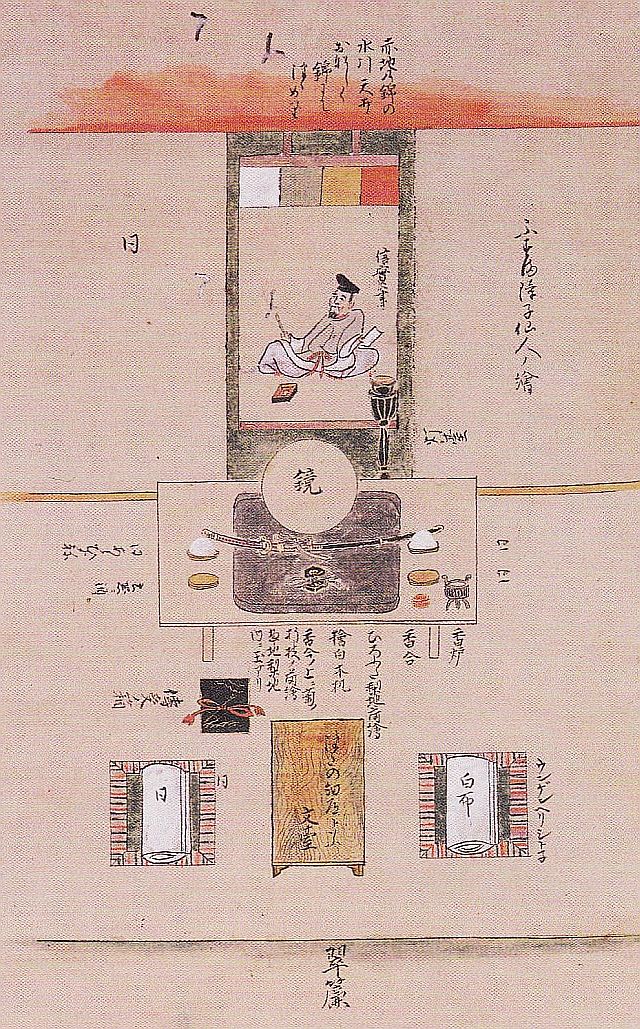
Well, Go-Mizunoo made some exceptions. For example he initiated the poet Asukai Massaki (飛鳥井雅章, 1611-1679) and this initiation is of special interest as the aristocrat Takatsukasa Kanehiro (鷹司兼煕, 1660-1725) made later a drawing of it, that means the altar erected for the ceremony (see picture 3). On top we see a portrait of the famous poet and aristocrat Kakinomoto Hitomaro (柿本人麻呂, 662-710) as object of veneration who is mentioned in the preface of the „Kokin-waka-shû“ as „divine poet“. We see salt, a mirror, a sword and other things which show us that the kokin-denju had become a kind of religious ceremony placing emphasis on the mystical and secret nature of the teachings. So Yûsai was not only trying to preserve just a collection of old poems but a system of aristocratic transmission which when being lost meant the loss of centuries of forming and growing of Japanese poetry and culture. And he was well aware of his role…

altar-kl

Picture 3: Drawing of Takatsukasa Kanehiro of the altar used during the kokin-denju ceremony.

For more details on the „Kokin-waka-shû“ see also Anne Commons, Hitomaro: Poet as God, Brill Academic Pub 2009

The Musashi-Masamune – One blade, four oshigata

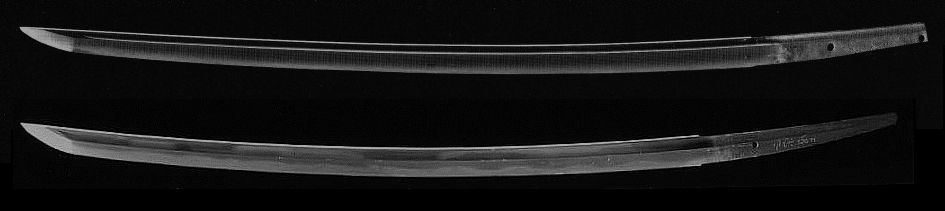
Some time ago I had to do some research on the meibutsu Musashi-Masamune (武蔵正宗) but apart from the interesting story of its later history which I will introduce here too, I was surprised to find four different oshigata drawings to that blade. But first the history. The „Kyôhô-meibutsu-chô“ (享保名物帳) – a list of all noted swords (meibutsu, 名物) in the country commissioned by the eighth Tokugawa-shôgun Yoshimune (徳川吉宗, 1684-1751) – lists the sword under the mentioned name “Musashi-Masamune”. Well, there are basically two theories on the origin of that nickname. One says it comes from the fact that the sword was once worn by the most famous swordsman of all times, Miyamoto Musashi (宮本武蔵, 1584-1645). But in records of the Kii branch of the Tokugawa family we find a protocol where it is mentioned that the sword was presented to the Edo Tokugawa main line, i.e. the family of the shôgun. Edo was located in Musashi province and this is the other origin of its nickname. Also internal records of the Hon´ami family (本阿弥) of appraisers and sword polishers from the early Edo period say that the piece was once owned by the Kii-Tokugawa branch. However, this does not rule out that it somehow came from Miyamoto Musashi into the possession of the Kii-Tokugawa but as long as no more documents are discovered, we just have to end our speculations at this point.

Of particular interest is as mentioned the later history of the sword. When the Meiji Restoration was in full swing, Tokugawa Iesato (徳川家達, 1863-1940), the adopted son of the last Tokugawa-shôgun Yoshinobu (徳川慶喜, 1837-1913) and the first Tokugawa head after the feudal system was abolished, studied in Great Britain from 1877 to 1882. When he came back to Japan, it was a big concern of him to thank Yamaoka Tesshû (山岡鉄舟, 1836-1888). Tesshû had been the elite bodyguard of his adoptive father Yoshinobu but played also a major role in negotiating with Saigô Takamori (西郷隆盛, 1828-1887) for the peaceful surrender of Edo Castle to the imperial forces. So Iesato presented Tesshû the Musashi-Masamune what was in his eyes a worthy gift for the great swordsman. But Tesshû insisted on having just done his duty and, modest as he was, did not feel comfortable to own such a famous meibutsu. Thus he passed it on to the statesman Iwakura Tomomi (岩倉具視, 1825-1883) who had visited the US and Europe some years before Iesato in the course of his famous Iwakura Mission. So Tesshû felt that Iwakura had done much more for the new state than himself. Iwakura now entrusted his close friend Kagawa Keizô (香川敬三, 1841-1915), a former retainer of the Mito fief, with the blade to have it examined and appraised by Hon´ami Chôshiki (本阿弥長識, ?-1893). The origami issued by Chôshiki mentions the date „third day of the first month Meiji 16 (明治, 1883)“. Thereupon it was decided that the essential conversation with Tesshû should be written down to preserve it for posterity. The sinologist Kawada Takeshi (川田剛, 1830-1896) was ordered to compose a text in classical Chinese and Iwaya Ichiroku (巌谷一六, 1834-1905) was chosen to write it down in Chinese block script. Iwaya was at that time one of the three major calligraphers of Japan. The other two were Kusakabe Meikaku (日下部鳴鶴, 1838-1922) and Nakabayashi Gochiku (中林梧竹, 1827-1913). Later the family of Tomomi had to sell the sword but it was bought by another Iwakura branch as namely duke Iwakura Tomohide (岩倉具栄, 1904-1978) appears in the certificate for the designation as jûyô-bijutsuhin from 1937. After World War II it was finally sold by the Iwakura and purchased by the businessman  and publisher Fujisawa Otsuyasu (藤澤乙安) who died in 2000. Otsuyasu´s adopted son Motoo (藤澤玄雄) finally donated the Musashi-Masamune to the NBTHK.

   Portraits

Picture 1: The persons around the Musashi-Masamune. From left to right: Tokugawa Iesato, Yamaoka Tesshû, Iwakura Tomomi, Kagawa Keizô, Iwaya Ichiroku, Iwakura Tomohide, Fujisawa Otsuyasu

Well, there was some discussion about this blade at the time it was submitted for jûyô-bijutsuhin and later. Some remained sceptical about its authenticity as they assumed that there are no blades by Masamune extant which show an ô-kissaki and a wider mihaba. But this approach was later refuted as there are well some works from his later artistic period which show where the development was going, namely right into the Nanbokuchô period (see picture). Incidentally, Masamune is dated around Karyaku (嘉暦, 1326-1329), i.e. at the edge from the Kamakura to the Nanbokuchô period.

 masamune-musashi1

Picture 2: Musashi-Masamune (top) compared to the Ikeda-Masamune (池田正宗) (bottom)

Masamune3-kl

Picture 3: oshigata of the Musashi-Masamune

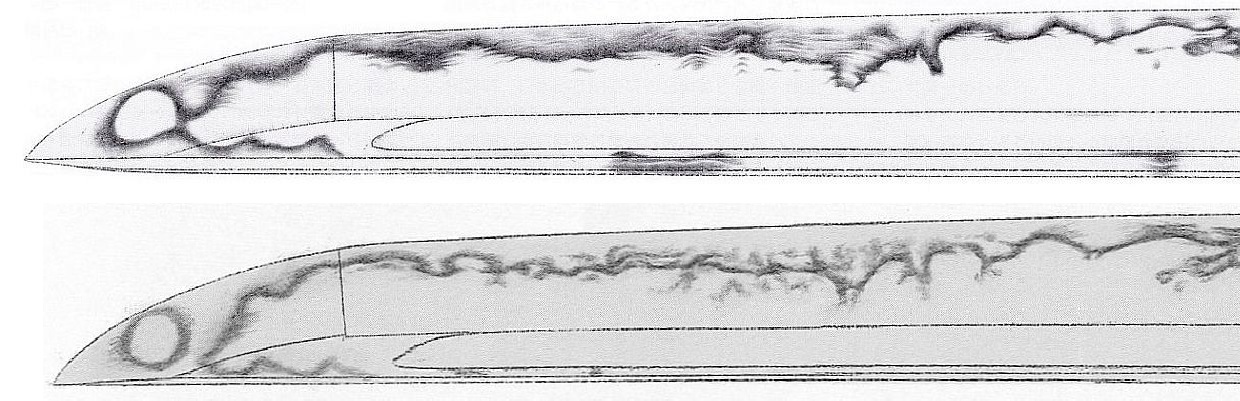
The Musashi-Masamune measures 74,0 cm in nagasa, has a sori of 1,2 cm, a motohaba of 2,91 cm and a moto-kasane of 0,53 cm. The kissaki measures 5,53 cm. The workmanship with its abundance of ji-nie and chikei is as typical for Masamune as the vivid notare-hamon with its brilliant nie, the kinsuji and the sunagashi, and the bôshi with the peculiar isolated area of unhardened steel. By the way, the bôhi ends noticeably before the ko-shinogi. In the following I want to present four different oshigata to the Musashi-Masamune (three for the omote side and another one for the ura side).What attracts attention is the course of the yokote but this might go back to the hand of the draughtsman. The individual oshigata might not be in perfect scale to each other but I want to demonstrate the reader how different a blade can be „read“. All these oshigata were drawn by experts who knew what they were doing. Drawing oshigata can namely be highly subjective depending on factors like how familiar the draughtsman is with the smith and his works, the condition of the polish (especially on a freshly polished blade some hataraki might be emphasized stronger and a blade „calms down“ over the years), or the draughtsman´s condition on the that day. I now invite the reader to get a picture of his own about the subtle differences in the condition of the hamon, hataraki and bôshi.

 MasamuneKissaki

Picture 4: Kissaki and monouchi of the Musashi-Masamune (omote side). The uppermost oshigata belongs to the lower oshigata of the ura side in picture 5.

MasamuneKissaki1

Picture 5: Two oshigata from the ura side.

The difficulties in classifying Kamakura blade shapes

At kantei sessions or sword meetings, it is usually not the biggest problem to identify a blade as a Kamakura blade on the basis of its shape, the sugata (leaving well-made utsushimono out of consideration). We all know more or less the changes in Kamakura-era sugata and are able to tell the basic characteristics of each phase. Just to repeat, blades of the transitional period from Heian to Kamakura get a hint wider, loose their noticeable taper a bit and show a slightly larger kissaki. Half a century later, a period we call mid-Kamakura, the increase in length and width proceeds continuously. That means a mid-Kamakura tachi is noticeably more magnificent than its early Kamakura or late Heian predecessor. Also the sori shifts more from a koshizori to a toriizori and we can see sometimes plenty of hira-niku and a variant, the hamaguriba. But at about the same time a blade shape appears which is even bigger, shows less taper, and ends in a stubby kissaki which we classify as ikubi-kissaki. From the end of the Kamakura period onwards, the length still increases, the kissaki gets larger and the koshizori fades into the background. This trend eventually ends up at the exaggerated Nanbokuchô-sugata which reaches its climax in the eras Enbun (延文, 1356-1361) and Jôji (貞治, 1362-1368).

Let us take a look on the political changes. Towards the late 10th and early 11th century it was about that only the force of arms had the ability to exercise power and thus the officials of the state government gradually started to fill local civil posts with men who professionally carried out military and administrative functions. This was the hour of birth of the bushi (武士). The actual military „aristocracy“, the buke (武家), emerged when members of the kuge (公家) – i.e. from families like the Fujiwara, Minamoto and Taira – began to go on their own initiative into the provinces to solve problems by taking over the supreme command of the bushi. Subsequently, the buke were not only able to maintain peace in the lands away from Kyôto but started to participate in the court power struggles, so to speak as supporters of their „court family members“.It was not long before one of these upcoming new classes had enough power to have a great influence on matters at the imperial court. The first who tried to expand his powers into this direction was Taira no Kiyomori (平清盛, 1118-1181) but his strong military influence policy immediately faced strong opposition from the court aristocracy. The result of this opposition against the Taira was the Genpei War (源平) from the years 1180 to 1185 in which Minamoto no Yoritomo (源頼朝, 1147-1199) turned out to be victorious. He made the village of Kamakura (鎌倉), far away from the capital Kyôto, his administrative centre because it had previously served him as military headquarter during the Genpei War. But Yoritomo overlooked to take care of his succession which ended up after his death in a power struggle amongst his earlier retainers of which his widow Masako (政子, 1157-1225) and her family, the Hôjô (北条), won. Masako´s father Hôjô Tokimasa (北条時政, 1138-1215) re-structured his political offices in a way that he was officially allowed to act as regent to the shôgun. By this clever move the Hôjô were the actual rulers of the Shôgunate until the end of the Kamakura period. The buke of that time were members of the military aristocracy, or the gentry if you like, but their life was considerably different from that of their counterparts in Kyôto. Much time and energy was used to defend and administer the lands. Their life was closer to the peasantrys´ and weapon training was a major point on the agenda. But because they actually had the executive power, they decided themselves that their feudal system was the best and only way to rule the country.

Thus the change in sword shape in the transitional period from Heian to Kamakura has also to be seen in the context of the strenghtening and more self-confident upcoming buke class. As they now „did their own thing“ in Kamakura, swords were made after their taste. One of the first tests for the new Hôjô regency was when the retired Emperor Gotoba (後鳥羽天皇, 1180-1239, r. 1184-1198) tried in 1221 to overthrow the bakufu and re-install imperial rule. Fourteen years earlier, Gotoba had then been abdicated for nine years, the ex-emperor invited the greatest master smiths of his time to his residence to work on a project called „goban-kaji“ (御番鍛冶). The majority of the invited smiths came from Bizen, or to be more precise from the Fukuoka-Ichimonji school. Two were from Kyôto and the remaining three from Bitchû. The goban-kaji were quasi hired to produce the best sword possible, also in mind to equip later Gotoba´s army to overthrow the bakufu. But of course also aesthetical approaches played a role, although back then the smiths were rather captive of the method form follows function.

Well, except the incident with Gotoba, the Hôjô were able to maintain a government which provided peace for some decades. Things changed when more than half a century after Gotoba the Mongols invaded in 1274 after some years of political back and forth with Kublai Khan. So the bakufu was not entirely unprepared as repeated envoys had officially declared Kublai´s intention. But although Kyûshû was on alert, the samurai troops did not know how to deal with such a large force, also because of the fact that their last major fighting took place as mentioned one generation earlier. We all know the outcome of the first and second invasion of 1281 and it is assumed that the decrease in niku and kasane and the increase in length of the kissaki of blades made after that time is indirectly connected to the experiences the warriors gained fighting the Mongols. Incidentally, the bakufu had their Kyûshû troops until 1312 on alert to be prepared for another invasion. I said „indirectly“ because the first noticeable increase in kissaki length and decrease in width and niku might only be seen three or four decades later. Somewhat before the first Mongol invasion, the then regent Hôjô Tokiyori (北条時頼, 1227-1263) had summoned around Kenchô (建長, 1249-1255) the master smith Awataguchi Kunitsuna (粟田口国綱) from Kyôto and a bit later Saburô Kunimune (三郎国宗) und Ichimonji Sukezane (一文字助真) from Bizen to come to Kamakura to establish a local sword centre for the buke. Their efforts layed the foundation for the development of the Sôshû tradition and the increasing grandeur of later Kamakura-era blades goes also to a certain extant back to their successors.

Half a century after the last Mongol invasion another emperor tried to overthrow the bakufu and restore old imperial power, namely Go-Daigo (後醍醐天皇, 1288-1339). But his short and fruitless revolt in 1331 ended with his banishment and a kind of division to a pro and a contra Go-Daigo faction. Hôjô enemies, like the Ashikaga (足利), were on the side of Go-Daigo. Their head, Ashikaga Takauji (足利尊氏, 1305-1358), conquered Kyôto for Go-Daigo whilst his ally Nitta Yoshisada (新田義貞, 1301-1338) caused the downfall of Kamakura and destroyed the Hôjô. However, Go-Daigo wanted to restore the old imperial government and reunite it with the military powers of the bakufu. But this was not what the buke wanted and so many of them turned against the emperor. When Go-Daigo granted the title of shôgun to his son, prince Morinaga (護良, 1308-1335), and conferred many military offices to court aristocrats, Takauji took over control in 1336 and recaptured Kyôto from Go-Daigo. In response to this, Go-Daigo and his men took refuge in the mountains of Yoshino (吉野) to the south of Kyôto from where they still laid claim to the throne. The resulting conflicts would last 60 years, a period which went down in history as the Nanbokuchô period. But Go-Daigo´s revolt was not the only reason for the downfall of the Kamakura-Shôgunate because the Hôjô themselves were already heading for their end. When no new land was conquered after the Mongols were defeated, the Hôjô regents were unable to reward the participating warriors. And this anti-Hôjô mood prevailing in the early years of the 14th century eventually played into the hands of Go-Daigo. In the meantime, also temples and shrines demanded rewards from the military government because they claimed that their prayers and Sutra readings were the cause of the „divine assistance“ in the form of the famous kamikaze.

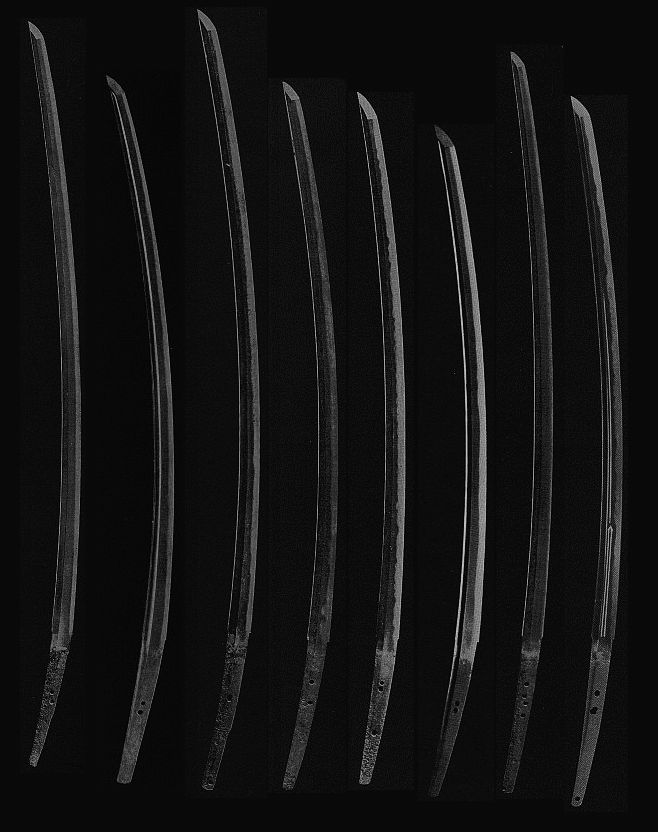
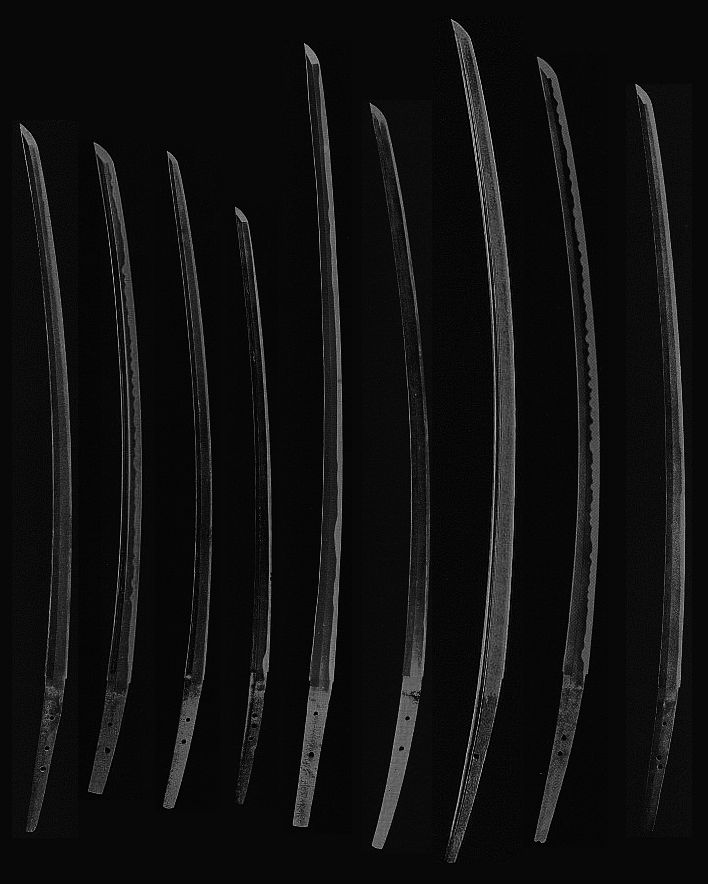
Well, our problem now in differentiating Kamakura-sugata is the lack of extant works. Ubu Kamakura blades, i.e. unshortened blades in their original condition, are rare and most of them we can study today were made by noted smiths and for a high-ranking clientel. This restriction in data cannot be emphasized enough. That means we have to distinguish between war swords (hyôjô no tachi, 兵仗太刀) and ceremonial swords (gijô no tachi, 儀仗太刀) and this differentiation is as important as the realization that we are facing just the tip of the iceberg. To visualize the complexity of the „problem“: Blades from that time can be made to be worn as ceremonial sword by courtiers (kuge), as war sword for courtiers (nodachi, 野太刀, not to be confused with the overlong field swords of the same name), as war sword of the military aristocracy (buke), as treasure sword for both buke or kuge, or as war sword for the common warriors. The blades of all these swords show more or less subtle differences according to their use. Also it is easy to understand that when we are referring to the big names in the then sword world, their works were surely not made for lower ranking warriors. Though I have to say, at the risk of repeating myself, all we have is a small window through which we can peek into the Kamakura-era sword world. In this sense I want to present the reader such a small window, or even a small window seen from the other end of the room. From these pictures (they are as good as possible true to scale) we learn how different a tachi-sugata can be even in the limited time frame of early, mid or late Kamakura period. Note: All these blades are ubu or just a bit suriage.

SUGATAa

Picture 1: Late Heian to early Kamakura period (from left to right)

1. Mikazuki-Munechika (三日月宗近), late Heian period, nagasa 80,0 cm

2. Ko-Hôki Aritsuna (有綱), late Heian period, nagasa 83,4 cm

3. Gojô Kuninaga (五条国永), late Heian period, nagasa 78,8 cm

4. Awataguchi Kunitomo (粟田口国友), Kenkyû (建久, 1190-99), nagasa 75,8 cm

5. Ko-Bizen Tomonari (友成), Ninpyô (仁平, 1151-1154), nagsa 80,0 cm

6. Ô-Kanehira (大包平), Genryaku (元暦, 1184-1185), nagasa 89,2 cm

7. Naminohira Yukiyasu (波平行安), Hôgen (保元, 1156-1159), nagasa 73,9 cm

8. Bungo Yukihira (行平), Genkyû (元久, 1204-1206), nagasa 80,1 cm

9. Ko-Aoe Sadatsugu (貞次), Genryaku (元暦, 1184-1185), nagasa 77,1 cm

10. Niô Kiyotsuna (清綱), Genkyû (元久, 1204-1206), nagasa 79,7 cm

11. Ko-Aoe Tametsugu (為次), Jôgen (承元, 1207-1211), nagasa 78,8 cm

SUGATA-1a

Picture 2: Early to mid Kamakura period (from left to right)

1. Ko-Ichimonji Norimune (則宗), Jôgen (承元, 1207-1211), nagasa 78,2 cm

2. Hôju (宝寿), Jôô (貞応, 1222-1224), nagasa 74,8 cm

3. Bizen Yoshifusa (吉房), Jôei (貞永, 1232-1233), nagasa 81,4 cm

4. Fukuoka-Ichimonji Yoshihira (吉平), Kenchô (建長, 1249-56), nagasa 73,8 cm

5. Saburô Kunimune (三郎国宗), Shôgen (正元, 1259-1260), nagasa 72,7 cm

6. Rai Kuniyuki (来国行), Shôgen (正元, 1259-1260), nagasa 69,6 cm

7. Rai Kunitoshi (来国俊), dated Shôwa four (正和, 1315), nagasa 78,2 cm

8. Rai Kunitoshi (来国俊), Kôan (弘安, 1278-1288), nagasa 75,5 cm

SUGATA-2a

Picture 3. Mid to late Kamakura period (from left to right)

1. Nagamitsu (長光), dated Shôô two (正応, 1282), nagasa 75,1 cm

2. Daihannya-Nagamitsu (大般若長光), nagasa 73,6 cm

3. Nyûsai (入西), dated Einin five (永仁, 1297), nagasa 71,5 cm

4. Senjû´in Sukemitsu (助光), Shôan (正安, 1299-1302), nagasa 64,4 cm

5. Senjû´in Yoshimitsu (吉光), dated Shôan two (正安, 1300), nagasa 84,6 cm

6. Unji (雲次), dated Shôwa four (正和, 1315), nagasa 78,8 cm

7. Enju Kunitomo (延寿国友), Shôchû (正中, 1324-1326), nagasa 89,1 cm

8. Bizen Sukemitsu (助光), dated Genkô two (元享, 1322), nagasa 82,1 cm

9. Aoe Yoshitsugu (吉次), dated Gentoku two (元徳, 1330), nagasa 77,3 cm

Arita Sadatsugu´s revival of old traditions

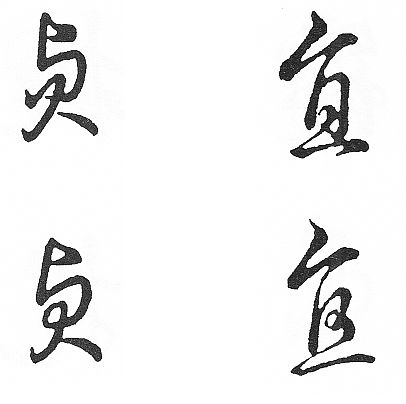
Nagato province, also known as „Chôshû“, became in the course of the Edo period one of Japan´s greatest production sites of tsuba. There are several reasons for this but a major one was that the local fief, the Chôshû-han of the same name ruled by the Môri family (毛利), considered them as a lucrative source of income, whereas the focus was more on quantity and easy-to-grasp designs for the masses. That does not mean that there were no outstanding masters among the Chôshû-tsuba craftsmen but usually they are not the pinnacle of top-class collections. Now I want to draw attention to one of the outstanding but nevertheless widely unknown Chôshû-tsuba artist Arita Gen´emon Sadatsugu (有田源右衛門貞次). Well, there is some confusion about his name as some sources like the „Kinkô-tanki“ (金工鐔寄) for example which was published in 1839 list him under the name „Naotsugu“ (直次). But already the tôsôgu expert Fukushi Shigeo (福士繁雄) points out in issue 614 of the NBTHK magazine „Tôken-Bijutsu“ (March 2008) that he is in the possession of thee pictures of works of Sadatsugu which are all signed with „Sadatsugu“ and that „Naotsugu“ is just a mistake of the author of the „Kinkô-tanki“ because the more abbreviated the characters for „Sada“ (貞) and „Nao“ (直) are written or chiselled, the more similar they get (see picture 1). However, we know that Arita Sadatsugu was a student of Tomonobu (友信), the second son of the 4th Nakai-generation Tomotsune (中井友恒, ?-1779). Incidentally, the Nakai were an old-established lineage of tsuba makers for the Chôshû fief. And basically that´s it. Not much more is known about Arita Sadatsugu.

 sada-nao1

Picture 1: The characters „Sada“ (left) and „Nao“ (right) in different forms of abbreviations.

Let us now turn to the workmanship of Sadatsugu. Before we have to deal again with the historical context. In the early and mid Muromachi period, the easternmost region of Honshû was ruled by the Ôuchi family (大内) which was eventually overpowered by their former retainers, the Môri. The Ôuchi had established a fertile ground for what art historians call the „Ôuchi Culture“ (Ôuchi-bunka, 大内文化). It all started with the 9th generation of the family, Hiroyo (大内弘世, 1325-1380), who based his new stronghold Yamaguchi (山口) as regards urban development on the model of the capital Kyôto. His descendants too supported arts and craftsmanship and with the adaption of the later Kitayama and Higashiyama culture, a unique mixture of mainlaind, Christian and Kyôto trends arouse. In this course, Shôami (正阿弥) and other Kyôto-based tsuba artists were invited. After Sekigahara, the lands of the then locally dominating but anti-Tokugawa Môri family were reduced to the provinces of Nagato and Suô and turned into the Chôshû fief with Hagi as its centre. The local tsuba craftsman Umetada Hikobei Masatomo (埋忠彦兵衛正知, 1601-1688) had studied in Kyôto directly under the Umetada school, probably under Shigeyoshi (重義) and not under the famous Myôju (明寿) as stated in most of the old publications. It is said that he came originally from Kawachi province and was a rônin before he was employed by the Môri. As Kawachi is close to Kyôto, it is possible that the contact to the Umetada school existed before he settled in Hagi. However, the works of Masatomo and his successor Nobumasa (宣政, 1642-1720) – who changed his family name later from „Umetada“ to „Okada“ (岡田) – do not show the Umetada style pursued by Myôju but rather a mix of Shôami and later Umetada styles. (A good example of a more faithful Kyôto-style tsuba of the Okada school can be seen here.)

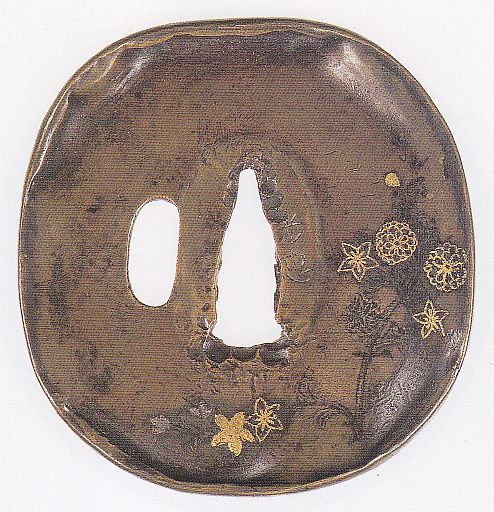
Back to Sadatsugu. To tell you right away, we do not know why Sadatsugu decided to revive the classical styles of the Shôami and Umetada school but we know from extant pieces that he was very successful in that, at least from an artistic point of view and not from the name recognition. I want to start with a work of Sadatsugu which is truly interpreted in the Umetada-style of Mitsutada (光忠) who in turn worked in a sphere what might be best described as of Kyô-Shôami-influence and foreshadowing of Myôju. Mitsutada´s strong point was brass, formed to an uneven surface with more or less accentuated uchikaeshi areas along the rim and an unobtrusive and thus highly tasteful coloring decorated with modest nunome-zôgan applications. In view of the understanding of how far Sadatsugu was able to copy Mitsutada, I want to start with presenting some „originals“.

 mitsutada1kl

Picture 2: Brass tsuba signed „Mitsutada“ (光忠). We see a suggested fan, a jakago and some waterside vegetation.

mitsutada2kl

Picture 3: Brass tsuba signed „Mitsutada“ (光忠) which also shows jakago and waterside vegetation.

mitsutada3kl

Picture 4: Brass tsuba signed „Mitsutada“ (光忠) with chrysanthemums and bellflowers.

And now to Sadatsugu. The picture below shows how faithfully he copied Mitsutada, from the surface, the rim, the coloring and the ornamentation, although the shape is somewhat different and reminds with some goodwill a bit of Kaneie (金家). Also the composition of just suggested sections of a landscape – in this case on some bank as we see drying nets (kanmô, 干網), returning wild geese, and on the other side so-called „jakago“ (蛇籠, gabions filled with rocks) – is very much in the sense of Mitsutada. And as we have seen in the sample images above, the jakago is a recurring element of Mitsutada. Please note also how carefully and sparingly Sadatsugu applied the gold nunome-zôgan accentuations.

 sadatsugu5

Picture 5: Mitsutada-copy of Sadatsugu signed „Chôshû Hagi-jû Arita Gen´emon – Sadatsugu saku“ (長州萩住有田源衛門・貞次作)

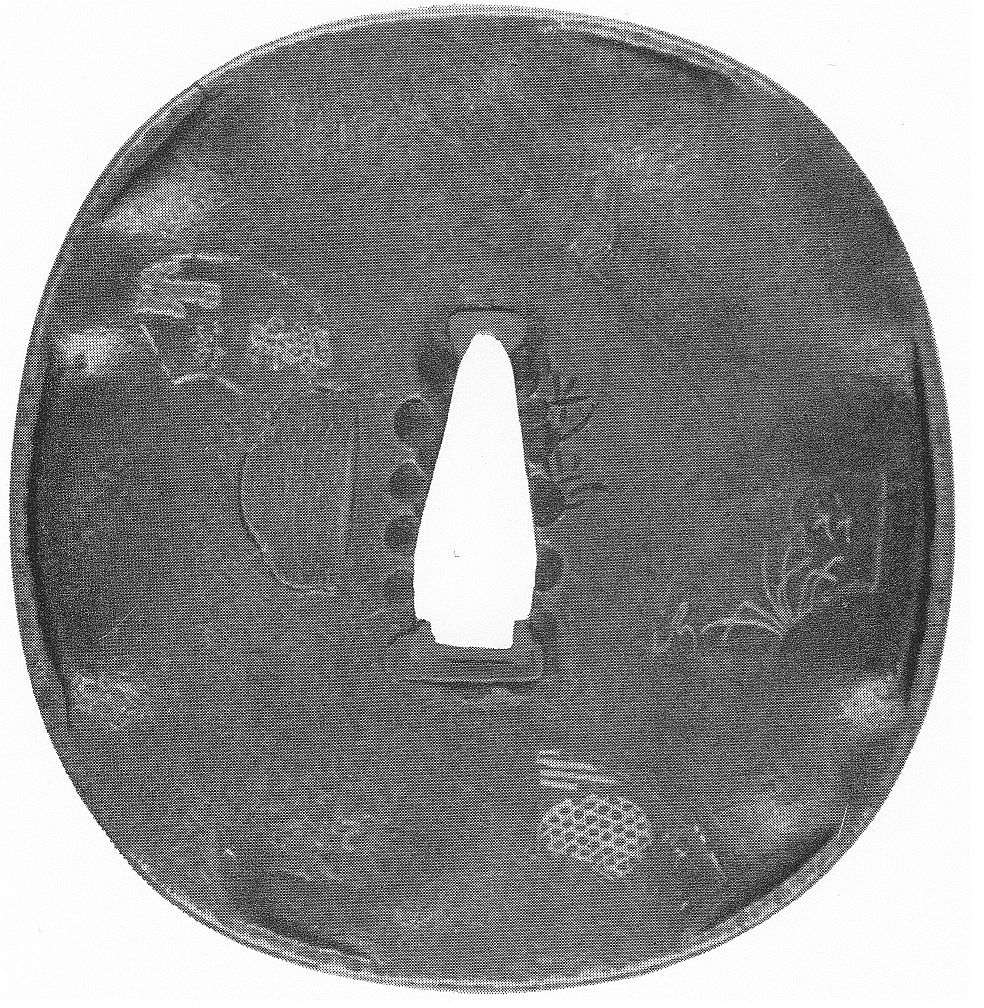
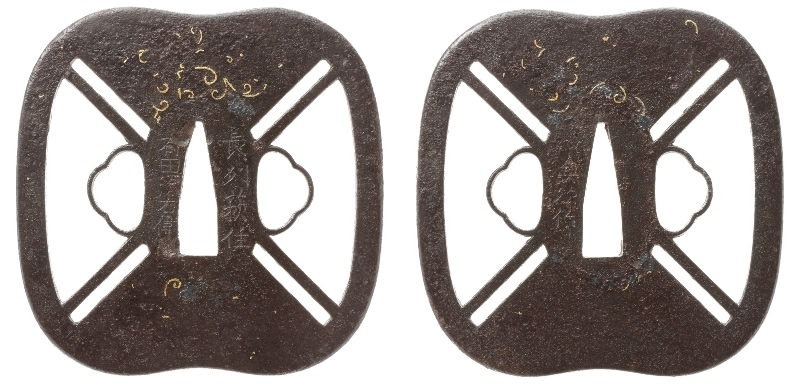
The next piece too has not much of the typical Chôshû-style. Its rounded-off angular shape tends to a twofold mokkô-gata. We see two large symmetrical sukashi which are accentuated by hikiryô-like beam elements and some golden karakusa and koboku-zôgan (zôgan in the form of withered wood) and some remnants of ginzôgan. Although the iron differs, we can see apart from the overall Shôami approach also some Higo influence, whereas the early Higo master were influenced by the Shôami style themselves.

 sadatsugu

Picture 6: Tsuba signed „Chôshû Hagi-jû Arita Gen´emon – Sadatsugu saku“ (長州萩住有田源衛門・貞次作)

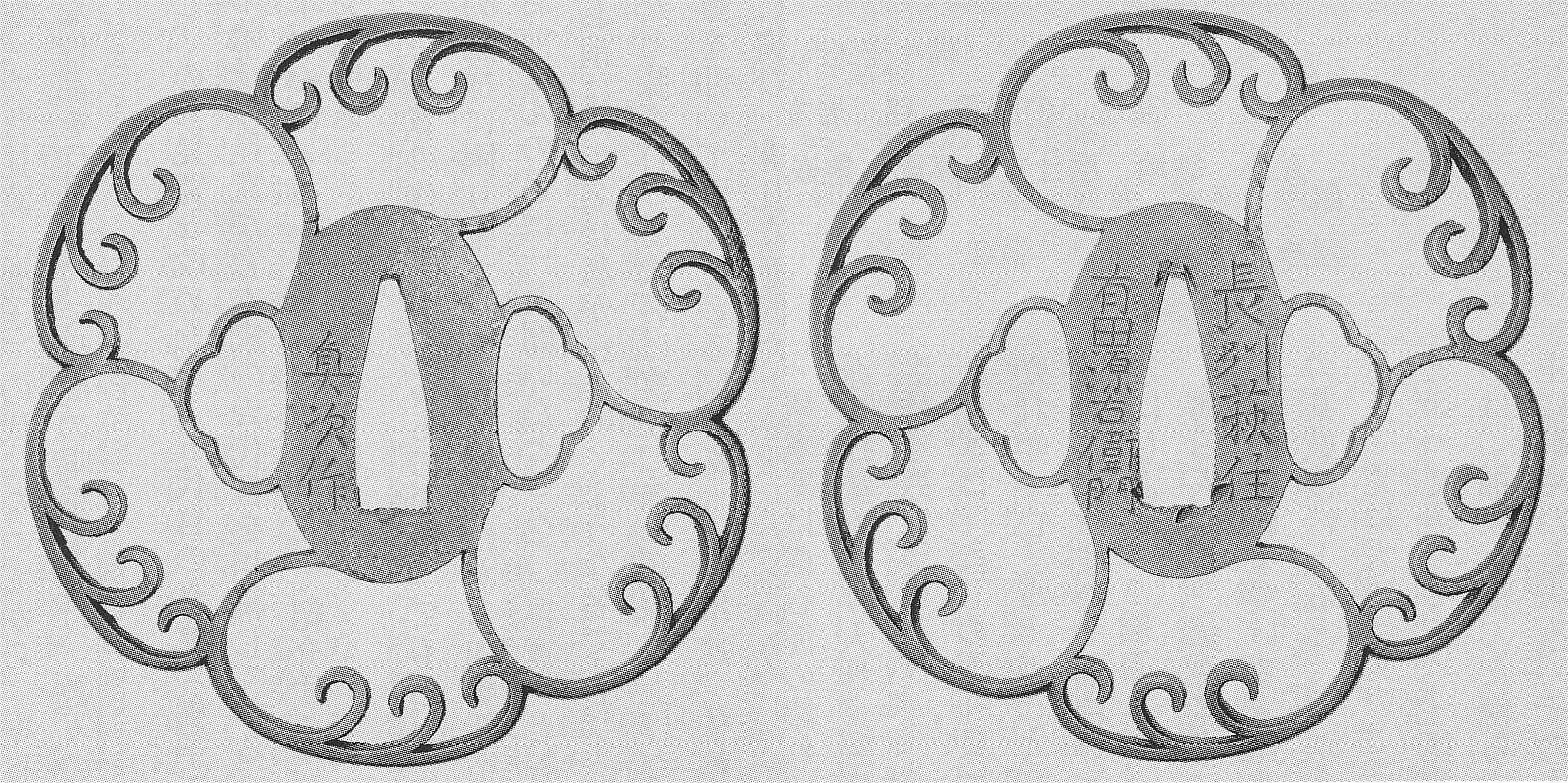
And the last tsuba of Arita Sadatsugu I would like introduce here is again in a completely different style. Waves arranged in rotational symmetry by the use of large sukashi openings form the motif, whereas the rotation underlines the movement of the rolling waves. The contours result in a sixfold mokkô-gata. The entire interpretation is elegant and graceful. It reminds of Kyô-sukashi or even older Heianjô-sukashi but the younger time of production is apparent. Again we are facing a work of Sadatsugu where he moves away from mainstream Chôshû-tsuba of his time and this is what makes this and the other pieces so interesting, at least for me.

 Sadatsugu2kl

Picture 7: Tsuba signed „Chôshû Hagi-jû Arita Gen´emon – Sadatsugu saku“ (長州萩住有田源衛門・貞次作)

How honorary titles were conferred

As it is widely known, honorary titles of swordsmiths did not come with any special rights or functions. They were as the name suggests „honorary“ titles and I don´t want to elaborate on this context in this article. When I started my studies on swords, I was well satisfied with the knowledge that certain swordsmiths had honorary titles. Period. Later I had to do some historical research on old Japanese court and feudal titles and in a nutshell it can be said that the topic is extensive and very complex. Anyway, I would like to explain how it was actually handled that a swordsmith received his honorary title because I think this might be a new information for most collectors.

I want to start with the first generation Iga no Kami Kinmichi (伊賀守金道, ?-1629) of the Kyôto Mishina school. Sometime before the Battle of Sekigahara, Tokugawa Ieyasu ordered 1.000 tachi from Kinmichi and as he performed to the full satisfaction of his customer, Ieyasu managed it that the court bestowed him the title „Nihon-kaji-sôsho“ (日本鍛冶惣匠), lit. „Master Swordsmith of Japan“ or „Head of all Swordsmiths of Japan“. With this he also got the permission the engrave the imperial chrysanthemum onto his tangs and the title was not just a honorary title but came with certain rights and with a concrete function. Apart from that, Kinmichi also had the honour to forge a sword for the then emperor Ôgimachi (正親町天皇, 1517-1593). The right or rather function connected to this title was that the Kinmichi line acted now officially as liaison at court for matters concerning honorary titles of all swordsmiths. Incidentally, it was only the second generation Kinmichi who actually started to sign this title onto his sword tangs and the third generation changed the characters of „sôsho“ from (惣匠) to (宗匠). The title itself is thought to be a hommage to the post of „Nihon-kaji-sôchô“ (日本鍛冶惣庁) granted by the retired emperor Gotoba (後鳥羽院, 1180-1239, r. 1183-1194) to Bizen Nobufusa (信房) when the latter worked as goban-kaji for him.

All this is well known and so I want to come to the actual procedure about how a smith received his title. Well, the starting point varies. Often when a smith reached a certain level of craftsmanship he approached to the fief with an application and said that it was time to receive the title of his father or predecessor, or that the conditions were met that he received a title for himself or that an existing title was „upgraded“ (i.e. from „Daijô“ [大掾] to „Kami“ [守] for example). But the initiative could also come from the side of the fief, that means they suggested that the time and conditions were right for a honorary title. Another possibility was that a smith had a certain patron or wealthy customer who beared for him the costs of the procedure. However, when the decision to obtain a honorary title was made, an application was sent to the office of the Kinmichi line and a certain fee was paid. But it was also often the case that smiths submitted their application when they were for whatever reason in Kyôto (the place where the Kinmichi office was located). The Nihon-kaji-sôsho now collected and sorted the applications and brought them into a form which was presented to the liaison officer at court, the so-called „benkan (弁官). The latter forwarded the list to the geki (外記), the so-called „Outward Secretary Office“. From there the shôkei (上卿), the executive secretary of the „Bureau of Records“, handed it over to the kurôdo-dokoro (蔵人所), the „Imperial Bureau of Archivists“. The kurôdo-dokoro was in charge of the emperor´s personal storehouse which included the imperial archives. It is also translated as „Chamberlains´ Office“ and „Repositors´ Office“ but with the Edo period more the term „Imperial Bureau of Archivists“ is appropriate. Head of the kurôdo-dokoro was the kurôdo of the same name who acted apart from his post of chief archivist also as personal secretary of the emperor.

When finally the emperor approved (chokkyo, 勅許) an application for granting a honorary title, he notified the kurôdo orally. The latter made now a written memo of this approval. This written memo is called „kuzen-sho“ (口宣書) and it had to be handed back to the shôkei. If this was for whatever reason impossible – i.e. not the right time or day or the shôkei was out of business – the kurôdo made a fair copy of the memo which is called „kuzen´an“ (口宣案). The details on this are insofar important as I want to present such an extant kuzen´an later. These fair copies are very interesting for historians because they were often preserved in the imperial archives whereas the original, i.e. the actual approval or granting document which was handed over to a craftsman or artist got mostly lost. We all can easily imagine how such a paper got dirty, damaged or destroyed in a forge or workshop over the years, decades or even centuries. The shôkei forwarded the kuzen-sho or kuzen´an to the geki where the actual document was issued. As smiths sometimes submitted the application whilst in Kyôto, it was fairly common to visit the old capital when they got the notification that their request was granted to receive it personally from the geki Outward Secretary Office or from the Nihon-kaji-sôsho office.

As mentioned, I want to present such an extant kuzen´an. It is the fair copy of the granting of the honorary title „Musashi no Daijô“ (武蔵大掾) to the swordsmith Miyoshi Nagamichi (三善長道). It goes from right to left and consists of six lines. The part on the left side is an additional memo of the kurôdo for the geki officer. I translate the document line by line:

naga2

口宣案
上卿 正親町大納言
萬治元年八月十三日 宣旨
三善長道
宜任陸奥大掾
蔵人頭右大辨藤原資熈奉

kuzen´an
shôkei Ôgimachi Dainagon (1620-1703)
13th day of the eighth month Manji one (1658), by imperial decree
Miyoshi Nagamichi
granting of the title Musashi no Daijô
presented by the head of the kurôdo office Udaiben Fujiwara no Sukehiro

And the memo on the left side reads:

此口 宣写鍛冶三好藤四郎道長受領望ニ付、従奥州會津住上洛、今川刑部大輔許ヨリ予方ヘ状給、即此仁持来而頼申之間、以右大弁資熈朝臣令入魂。道長御堂殿御名字也。依有其憚、令請合、打反改長道ト小折紙差上、即勅許也。

„One certificate goes to the applicant, the smith Miyoshi Tôshirô Michinaga from Aizu of Mutsu province who visited Kyôto for this. The application was submitted by Imagawa Gyôbu no Suke (今川刑部大輔). The certificate shall be handed over to the latter. [Note: It is assumed that Imagawa was some kind of official of the Aizu fief who accompanied Nagamichi to Kyôto.] In confidence, the Udaiben Sukehiro. The dear applicant is called ´Michinaga´ like the former regent Godô [Fujiwara] no Michinaga (御堂長道, 966-1028) and thus I suggest with the issuing of this certificate a name change to ´Nagamichi´. With this [document] the smith has the Emperor´s permission to do so.“

About the correct translation of certain sword signatures

Over the years and with the growth of knowledge among collectors, the translation of signatures on swords has considerably improved. However, there are some citations of mei going round whose translation is correct but whose grammar of the quoted Japanese inscription is not. Some might call me nitpicking but my intention is to draw up an article which serves as a guideline for others who have to translate sword signatures. First of all it has to be mentioned that the vast majority of all signatures on swords are inscribed in the kanbun syntax (漢文), the Classical Chinese notation. But one has to know that they were read in the Japanese way, that means the reader reproduced the signature in his mind or in words in the proper Japanese grammer. As a basic introduction, the Wikipedia article on kanbun provides a decent overview.

Well, let us begin with the most common cases, namely the mention of „made by“ or „forged by“.  In a signature, this is inscribed as (国広作之), (国広造之) or (国広鍛之) for example. Now in earlier years, such signatures were translated character by character, i.e. as „Kunihiro saku kore“, „Kunihiro tsukuru kore“ and „Kunihiro kitau kore“ respectively. It would be harsh to say the citations are incorrect but at least they are from the point of view of grammar. The correct reading is namely „Kunihiro kore o tsukuru“, „Kunihiro kore o tsukuru“ (yes, the same tsukuru reading) and „Kunihiro kore o kitaeru“ respectively, whereas in the latter case, also „Kunihiro kore o kitau“ is possible.

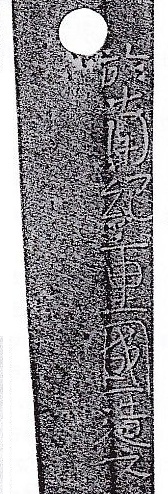
Also often found are inscriptions which mention where a blade was made, for example (於南紀重国造之). Frequently, such a mei of Shigekuni is translated as „Oite Nanki Shigekuni tsukuru kore“ but correct is „Nanki ni oite Shigekuni kore o tsukuru“. The character oite (於) marks that what follows refers to a place where something took or takes place. In Japanese, the term oite stands at the end and is marked with the particle ni (に), i.e. „… ni oite“, „at …“. So the reader has to be familiar with Japanese grammer to put the characters quoted in kanbun in the correct order. In texts, sometimes hints are given in the form of so-called kaeri-ten (返り点), little marks at the side of characters which lead the reader to the order of characters as they would be written when noted in Japanese. This is not the case at sword signatures and the reader/translator of a mei has to become familiar with the correct syntax. But it is not as difficult as it seems because mostly always the same phrases were used. That means when you see the character oite (於), try to figure out what place name follows (which can consist of one or more characters). Also oite does not necessarily have to be at the beginning of a signature. For example Hinin-Kiyomitsu from Kaga often signed with „Kashû-jû Fujiwara Kiyomitsu Kasamai ni oite kore o tsukuru“ (加州住藤原清光於笠舞作之), „made by Fujiwara Kiyomitsu from Kaga province in Kasamai.“

Another frequently found term in sword signatures is motte (以) which means „with, by, by means of“. It is used with the particle o (を) and comes like ni oite at the end of the word it refers to. For example (以南蛮鉄). This translates as nanban-tetsu o motte, i.e. „[made by] using/processing nanban-tetsu“. Or for example (以南川砂鉄鍛之), „Minamigawa no satetsu o motte kore o kitaeru“, „forged by using satetsu from the Minamigawa [a river in Kumamoto Prefecture, former Higo province]“.

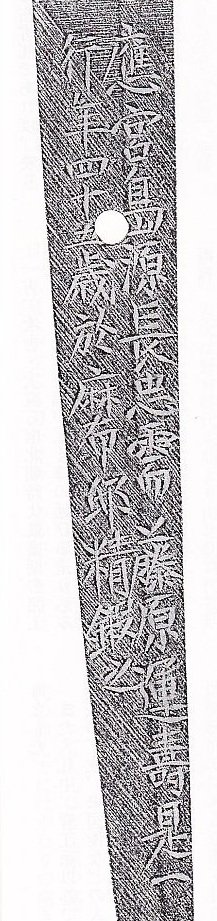
Now it´s getting harder. A bit tricky are namely inscriptions where the swordsmith mentions his customer. For example (応山田太郎需造之). Here the two characters (応) and (需) intereact, where the former means „to respond to“ (kotae[ru]) and the latter „demand, request“ (motome[ru]). Fully translated the inscription reads „Yamada Tarô no motome ni kotae kore o tsukuru“, „made by request of Yamada Tarô“ or „made according to an order of Yamada Tarô“. [Note: The character (応) is often signed in the old variant (應).] The character (需) could also be replaced by (好). The latter reads „konomi“ and means „wish, liking“. Thus a signature (応山田太郎好造之) is translated as „Yamada Tarô no konomi ni kotae kore o tsukuru“. Well, it is left to the translator or reader to decide how literally such an inscription is translated. Strictly it would mean „made according to the liking/wish/preference of Yamada Tarô“ but which is in effect equal to an order as the smith mostly did not forge a blade (for free) just because the customer likes it (although sword presents and donations by smiths are of course also known). [Note: Apart from „kotae(ru), the character (応) can also read „ôjite, that means the signatures quoted above can also be translated as „Yamada Tarô no motome ni ôjite kore o tsukuru“ or „Yamada Tarô no konomi ni ôjite kore o tsukuru“.]

mei-Nankimei-Korekazu

Picture 1: mei “Nanki ni oite Shigekuni kore o tsukuru” (於南紀重国造之)

Picture 2: mei “Miyajima Minamoto Nagatada no motome ni kotae/ōjite Fujiwara Unju Korekazu (応宮島源長忠需藤原運寿是一, „made for Miyajima Minamoto Nagatada“), “gyōnen 45-sai Azabu-tei ni oite kore o seitan” (行年四十五歳於麻生邸精鍛之, „carefully forged at the age of 45 in the Azabu residence“)

About shintô-gotetsu inscriptions on Myôchin works

   At the moment, I am working on an armor-related translation and again came across a quite mysterious inscription, namely „shintô-gotetsu-ren“ (神道五鉄錬). The first time I had to deal with such an inscription was in March 2010. I did some research but it turned out that really not much is known about it. For the time being, all I was able to find was an entry in Inada and Koop´s Japanese Names and How to Read Them: A Manual for Art Collectors and Students, first published in 1923 by the Eastern Press Ltd. Therein on page 330 we read: „shintô-gotetsu-ren (phrase implying ´carefully forged iron´).“ Well, this is not really satisfactory but better than nothing and when you let your thoughts run free, you can imagine that the phrase means something like „five times folded iron“ somehow connected with shintô purification, thus „carefully forged“ in the end.

   By the way, the mentioned first shin-gotetsu-ren inscription I had to deal with was on a Jakushi-tsuba but which is slightly different as it reads „shintô-gotetsu-tan“ (神道五鉄鍛). This tsuba is depicted in the catalogue of Aotsu Yasuyoshi´s (青津保壽)  tôsôgu collection published by the Municipal Museum Sukagawa (須賀川市立博物館) in 2000. By the way, I did a translation of the index of this catalogue for a fellow comrade who owns a copy. Only seven months later I had to deal with very same tsuba, namely this time it was introduced by Fukushi Shigeo in part 186 of his series „Tôsô-tôsôgu shogaku-kyôshitsu“ (Tôken-Bijutsu 10-2010 No. 645, see picture 1). However, except quoting it, Fukushi did not elaborate on the mei of the piece. Once again I was unable to provide a better translation. Then in Februar 2012 I was asked for help regarding a Myôchin-tsuba of the 26th Myôchin-generation Munemasa (宗政, ?-1796). As you might already assume, it was signed with the supplement shin-gotetsu-ren.

jakushi-kl

Picture 1: suna-kuguri-ryû no zu tsuba (砂くぐり龍の図鐔, dragon slithering through the sand), mei: „Shintô gotetsu-tan Kiyô-jû Jakushi“ (神道五鉄鍛崎陽住若芝) – „Ryû´unken Koretaka“ (龍雲軒是高), 8.2 x 7.8 x 0.46 cm.

   Now one year later and with the armor-related translation, the matter didn´t let me rest and again I started some research. Incidentally, the term appears on an armor signature of Sendai-Myôchin Sadatoshi (定利). This time I made a find although I am not 100 % sure if I really found the „solution“ to this puzzle. What I was found were teppachi (鉄鉢), begging bowls for mendicant priests. (see picture 2). They were made of iron or clay, kept very simple, and in use at least since the Nara period. There was the custom that monks should repair them as many as five times when damaged so that they could be reused for a long time. This earned them the name „gotetsu-bachi“ (五綴鉢), lit. „five-times-repaired bowls“, or „gotetsu-teppachi“ (五綴鉄鉢). The writing with the characters (五鉄) could either mean that it was an abbreviation of the term gotetsu-teppachi (鉢), or the smiths just replaced the character for „repair, bind“ (tetsu, 綴) with the character for „iron“ (tetsu, 鉄). Well, I am a bit sceptical about the prefix „shintô“, i.e. Shintoism, as mostly Buddhist monks are known for being mendicants. But this might be explained by the practice of syncretism of Buddhism and Shintoism (shinbutsu-shûgô, 神仏習合) whereas collecting alms might have also played a role for Shinto priests. Extant gotetsu-bachi are very rare, especially older ones, as they were used up and eventually thrown away. So it is not too far-fetched to assume that smiths collected and processed them. Maybe certain smiths started to mention the fact that they are reusing old iron from a time-honoured begging bowl and it is likely that they found some religious customers who jumped at such works. Thus shintô-gotetsu-ren or shintô-gotetsu-tan means in my opinion „forged from an old begging bowl“. Interesting is that not only the Myôchin smiths used that phrase but also the Jakushi tsuba artist Koretaka (是高) who was the 7th and last Jakushi generation. He died in 1878 at the age of 65. I would be happy if someone could provide me one day with a shintô-gotetsu piece by another non-Myôchin artist.

gotetsubachi

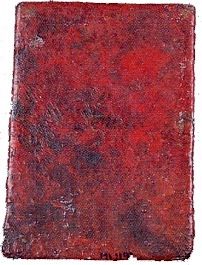
Picture 2: gotetsu-bachi from the Nara period, jûyô-bunkazai, © National Institutes for Cultural Heritage. Details can be found here.


Some examples of Myôchin-tsuba bearing that phrase (just look for [神道五鉄錬]):

http://www.jttk.zaq.ne.jp/souhoudou/images/img202.jpg

http://www.tokensibata.co.jp/touken/:83R:83s:81%5B%20:81%60%20token.html

http://blog.goo.ne.jp/tsuba_001/e/fab8bff2a87f7f9d4145266da38cd3ed