Update: Donate button

My dear readers. This blog is now almost a year old and I hope I was able to provide some interesting and/or new insights into the world of Japanese swords and sword fittings. For those who want to support this blog and me a little, I have set up a donate button at the very bottom of the page. This new feature will have no influence on the length, quality and intervals between articles. It is, as mentioned, just for those who want to say thank you, either for a helpful entry or for the site as a whole, as I am investing every week a considerable (working) time into this blog finding interesting stuff and presenting it in a comprehensive form. So if you want to support your blogger by buying him a coffee or beer, or maybe even a Japanese book for new input;), this is your chance. Thank you very much for your attention and assistance! I will be back Monday with an article on the origins of Akasaka-tsuba.

Bow

The Yakuôji School

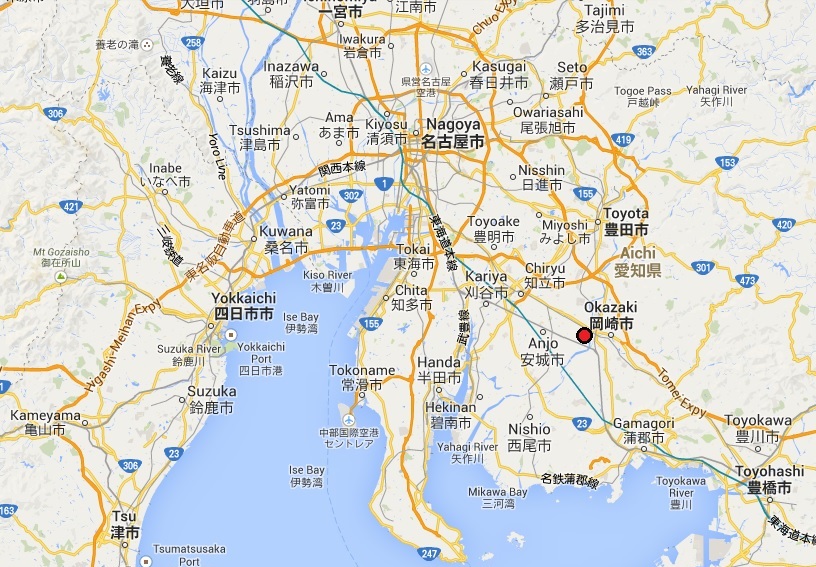
Whilst working slowly but steadily on a project on Japanese swordsmiths schools, I would like to use this opportunity to write something on one of these schools on which info is very rare and which are usually left out in most publications. This time I want to talk about the Yakuôji school (薬王寺) from Mikawa province, a province which was not a “big player” when it comes to famous kotô era swordsmiths but which gained fame as it was the birthplace of Tokugawa Ieyasu. Mikawa (三河・参河, also called “Sanshû”, 三州・参州) was what is today eastern Aichi Prefecture, was located along the Tôkaidô, and bordered on Owari, Mino, Shinano, and Tôtômi. According to the records, the Yakuôji school was located in or around the town of Yahagi (矢作) in the provinces Hekikai district (碧海郡) (see picture 1). Before we continue I would like to point out that most of the information used for this article goes back to the studies of Kondô Hôji (近藤邦治) from the Gifu branch of the NBTHK, published in Tôken-Bijutsu 570 (July 2004). Also I would like to point out that I use “Yakuô-ji” for the temple, and “Yakuôji” without hyphen for the school.

 YakuojiYahagi

Picture 1: The red dot marks where once Yahagi was located ( © 2014, Google, ZENRIN)

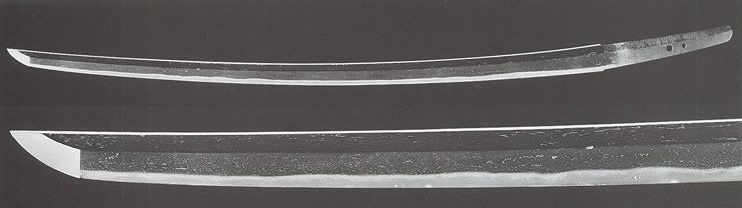
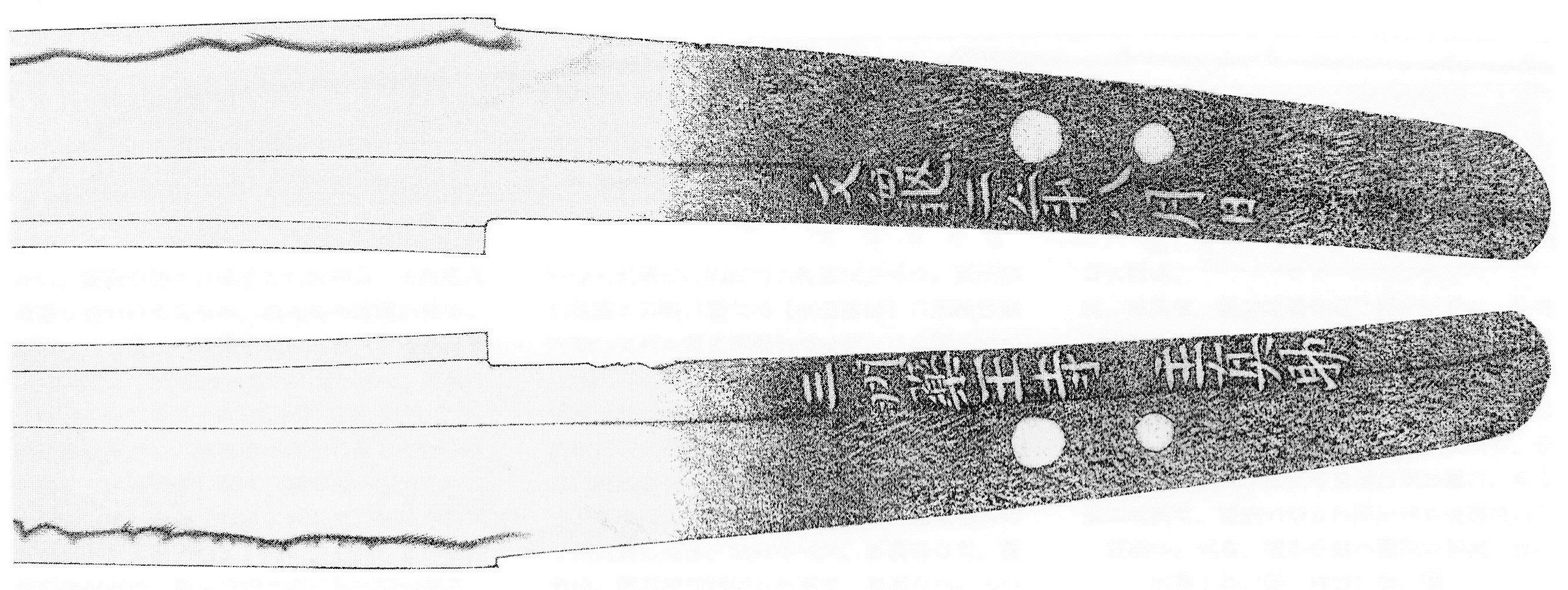
First of all, let´s take a look at the origins of the name of the school. “Yakuô-ji” means “Temple of Yakuô”, i.e. of the Bodhisattva Bhaishajya-rāja (jap. Yakuô-Bosatsu, 薬王菩薩), the Bodhisattva of medicine and healing. It is said that this name was used for the first time for a temple by the Nara-period Buddhist priest Gyôki (行基, 668-749). However, there are no pre-Heian records on Gyôki´s temple extant and the first document which mentions the existence of his Yakuô-ji is the Honchô-monzui (本朝文粋) which was compiled in the mid 11th century. About two hundred years later, to be more precise in Kemu two (建武, 1335), the temple was destroyed in the course of the fightings of Nitta Yoshisada (新田義貞, 1301-1338) and Kô no Moroyasu (高師泰, ?-1351) at the Battle of Yahagi River. A document preserved in the local Shinmei-jinja (神明神社) from Tenshô 15 (天正, 1584) says that what was left from the Yakuô-ji was used right after the fightings to construct the Renge-ji (蓮華寺) which is located just about 2 km to the northwest of Yahagi. So according to this document, the Yakuô-ji lived quasi on as Renge-ji. But the records of the Renge-ji tell us something else, namely that the Yakuô-ji was rebuilt to the south of temple ruins in Kyôroku two (享禄, 1529) and that this new temple was renamed “Renge-ji.” However, it is rather unlikely that the ruins were left to lie fallow for two hundred years and then “out of nothing” it was decided to erect the Renge-ji through which also the former Yakuô-ji lived on. Also there is a blade extant which is dated Bunki two (文亀, 1502) and signed “Sanshû Yakuôji” (三州薬王寺) (see picture 2). That means the already about thirty years before Kyôroku two there were Yakuôji smiths which used the name of the initial temple in their signatures. Incidentally, it is not uncommon for relocated or rebuilt and thus renamed Japanese temples that their former name or a local “nickname” was for centuries continuously in use aside from the new name of the temple.

 Yakuoji2

Yakuoji2mei

Picture 2: katana, mei: “Sanshû Yakuôji shu Shinsuke” (三州藥王寺 主真助, “made for lord Sinsuke”) – “Bunki ninen hachigatsu hi” (文龜二年八月日, “on a day of the eighth month Bunki two [1502]”), nagasa 69,1 cm, sori 2,0 cm

So far, so good, but what do the sword-related records say? From the Kotô-mei-zukushi taizen (古刀銘尽大全), the Honchô-kaji-kô (本朝鍛冶考), and the Kôsei kotô-meikan (校正古刀銘鑑) we gain basically two Yakuôji genealogies (see PDF below), namely one going back to Kaneharu (兼春) from neighboring Mino province who moved around Ôei (応永, 1394-1428) to Mikawa, and one going back to Nakahara Kunimori (中原国盛), who is said to be a descendant of Bizen Saburô Kunimune (備前三郎国宗) and who was active around Ôei too. The first smiths of these lineages who used the name “Yakuôji” in their signatures were the Eishô-era (永正, 1504-1521) Sadayoshi (貞吉), and the Shôchô-era (正長, 1428-1429) Suketsugu (助次), and this in turn is a further indication for the fact that the Yakuô-ji existed before Kyôroku two (1529) and that the erection or rebuilding of the Renge-ji did not mark the revival of the Yakuô-ji after two hundred years. The earliest extant dated blade from the Mino-based lineage is from Kaneharu and from Bunshô two (文正, 1467), i.e. not from Ôei as the genealogies suggest. As for Nakahara Kunimori, there is the theory that his family name “Nakahara” goes back to Bizen Saburô Kunimune´s temporary stay in Nakahara in Mikawa province. Others say that “Nakahara” was already Kunimune´s family name and that he actually stayed in Yahagi when forging in Mikawa province because there was no place called “Nakahara” in old Mikawa province. Another interesting thing is that all the smiths after Kunimori had names of famous Yamashiro smiths, i.e. Awataguchi Kunitsuna, Kuniyoshi, Yoshimitsu, and Heianjô Yoshinori. Similarily, we find two more famous name, Sadayoshi who bears the name of Sa Sadayoshi (左貞吉), and Sanemori, who bears the name of the famous Ôhara Sanemori (大原真守) from Hôki province who supposedly signed with “Ohara” (小原). Incidentally, there is a town called “Obara” written with the same characters which is located upstream of Yahagi River but it is unclear if we are talking here about the same place (it is not uncommon that place names had different pronunciations, e.g. “Aoe” was also pronounced and quoted as “Aoi”). So there is the chance that we are facing here one of the pretty common “genealogy embellishments,” i.e. schools and smiths tried to “pimp” their genealogy by referring to famous ancestors. But there are several signed Yakuôji blades extant and it is hard to imagine that most of them are gimei to support genealogic claims. So as so often, the two presented genealogies give basic clues and have to be taken with a grain of salt, although it seems, from the basis of extant signed blades, that the Mino-based Kaneharu lineage is more sound.

 YakuojiGenealogy

As mentioned, the sources point towards Ôei (応永, 1394-1428) as starting point of the Yakuôji school and we know that many of these smiths signed just with “Yakuôji”, that means without any individual smiths name. The most famous temple-affiliated swordsmiths where those of the Yamato Senju´in (千手院) and Taima (当麻) schools which also occasionally just signed with their school´s name which was also the name of the temple they were working for. It remains to be seen if the Yakuôji smiths belong to the same category of temple-affiliated swordsmiths (kônin-kaji, 候人鍛冶) as the Senju´in and Taima smiths. Also a religious background is possible as it was the case at the Gassan smiths (月山) who signed their swords with the name of the local holy mountain and used that name later even as family name. Well, at the beginning Muromachi period it was no longer common for temples to maintain swordsmiths but a religious background is not that off. We all know that long before praying for winning a battle or wealth for one´s family, people are first of all praying for recovery when they are ill and for health if they arent´t. As mentioned, Yakuô is the Bodhisattva of medicine and healing and so it is safe to assume that a temple where Yakuô is worshipped always has its followers, even if the temple was relocated and renamed. And a blade signed quasi “from the temple of the Bodhisattva of medicine and healing” has surely an auspicious connotation and goes well as a gift or lucky charm.

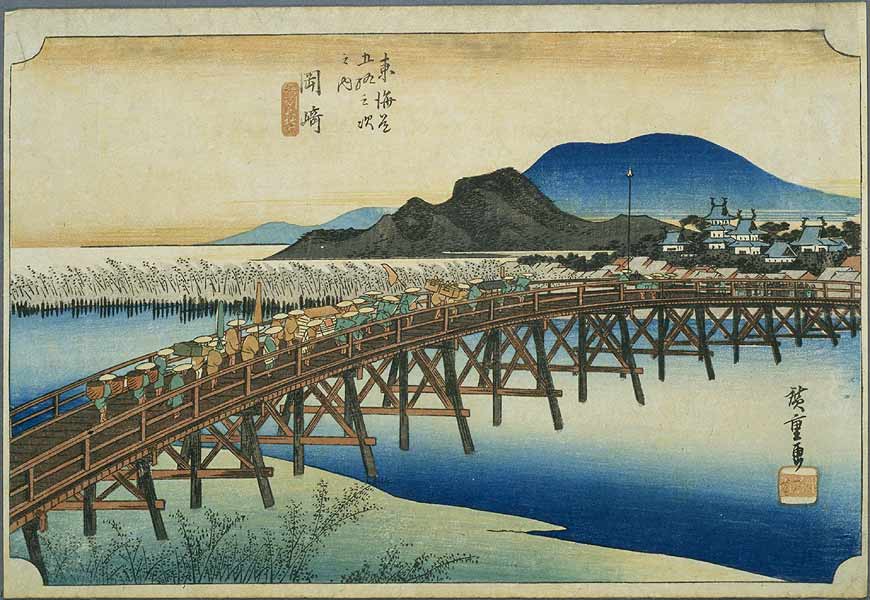
Let us come back to the local history. In Muromachi times, Yagami was a station of the Tôkaidô but but when the Hideyoshi-retainer Tanaka Yoshimasa (田中吉政, 1548-1609) was granted with the lands in Tenshô 18 (天正, 1590), he enlarged the local Okazaki Castle (岡崎城) and made it his main stronghold. Also he had the Tôkaidô improved and thus slightly relocated so that it goes now through his newly erected Okazaki castle town, making it the new local station of the main route instead of Yagami. But the Yakuôji smiths were in that area long before that time, i.e. the booming new castle town can´t be used to explain the origin of the school. Also the school predates Ieyasu´s conquering of Mikawa province in the 1560s and the establishment of his Mikawa-bushi (三河武士), a group of loyal retainers from Mikawa. Apart from that we have anyway no records that these Mikawa-bushi and their men wore and ordered specifically locally made Yakuôji blades.

 YakuojiOkazakiStation

Picture 3: Okazaki as station of the Tôkaidô by Utagawa Hiroshige (歌川広重, 1797-1858)

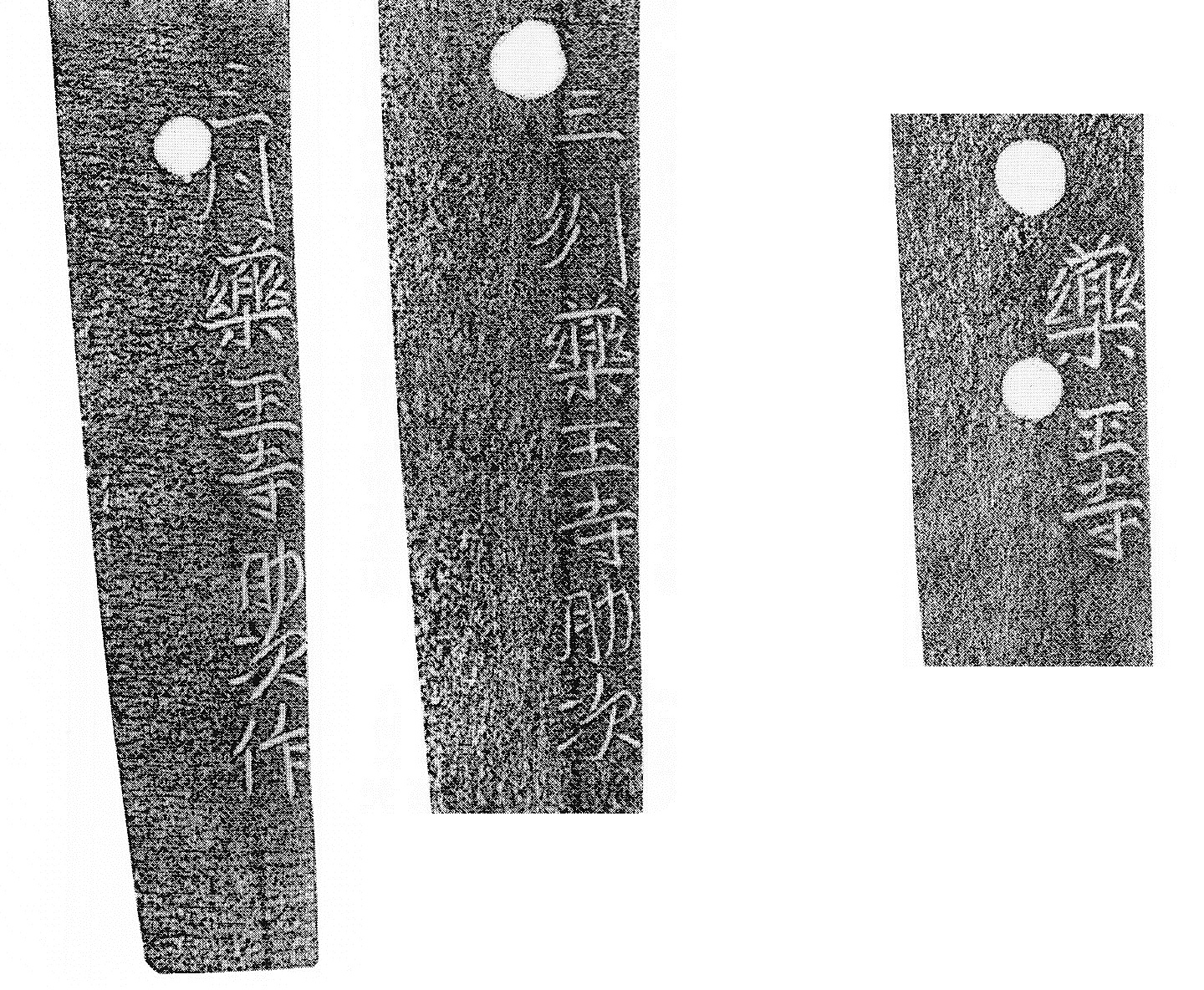
With all that in mind, let´s see what we can learn on the origins and affiliation of the school from extant blades. There are works in nie-loaden gunome-chô with tobiyaki which suggest a connection to the Sue-Sôshû style. Many blades have their tangs finished with characteristic kata-sujikai yasurime, a feature which is peculiar to Mino-Senju´in smiths. Others in turn show Muramasa characteristics like a tanagobara-style nakago. The vast majority of the extant and individually signed Yakuôji blades go back to the Suketsugu smiths (助次) what makes some experts think that the school actually started with the 1st generation Suketsugu. And when we compare blades of the Suketsugu smiths which bear the prefix “Yakuôji” with blades which are just signed “Yakuôji”, we learn from the similarity in signature style (in particular the characters for “Yaku” and “ji”) that a certain amount of the latter go actually back to the hands of Suketsugu smiths (see picture 4). Anyway, most experts agree that the Yakuôji style is closest to the Sue-Seki style but interpretations in suguha-chô look more classy and show more Yamato characteristics.

 Yakuoji4

Picture 4, signature comparison: Left two blades by Suketsugu, right a blade just signed “Yakuôji.”

Another interesting hint for possible affiliations of the Yakuôji school can be found in the Kôzan-oshigata (光山押形), namely an oshigata of a blade signed “Yakuôji Ôtomo Sukeyoshi” (薬王寺大友助吉) (see picture 5). Incidentally, the last character for “yoshi” was obviously somewhat weak what resulted in the listing of smiths like Ôtomo Sukeshichi (大友助七) or Ôtomo Sukehito (助士, also quoted as “Sukenori,” “Sukekoto,” or “Suketada”). Ôtomo was a neighborhood of Yahagi and according to the Bunka (文化, 1804-1818) and Bunsei era (文政, 1818-1830) local history Mikawa-sôshi-roku Yahagi-sonki (参河聡視録矢矧村記) by Kamo Kyûsan (加茂久算), a certain Ôtomo group of armor and swordsmiths was active in the western part of Yahagi until about Tenshô (天正, 1573-1592) and Keichô (慶長, 1596-1615) whose helmets were called “Yahagi-bachi” (矢矧鉢). Please not that “Yahagi” (矢作) is quoted in that reference with the characters (矢矧). So when we use the aforementioned oshigata of the Kôzan-oshigata as piece of evidence, than everything points towards that the Ôtomo smiths were a branch of the Yakuôji school.

 Yakuoji5

Picture 5: From the Kôzan-oshigata.

Kondô now speculates in his article that the Ôtomo formed a major part of the Yakuôji school and that they used the Yakuô-ji or a fictitious (or bribed) monk in the temple´s administration as a way to sell sword blades at the side. The smiths´ guild had on the one hand certain privileges and also the permission to offer their works on the free market but on the other hand, they were strictly regulated and monitored so that they did not sell products at the side for which they did not have the license. But if this is true, it must had happened parallel to the actual swordsmiths like the Suketsugu family which fully signed their works and made them thus instantly retraceable. Well, Kondô brings into play the Nagasone school (長曽祢) of armorers which also made tsuba, harness, locks, small bells, or nails at the side and even signed them. But I guess they either had the permission to do so, or their sidelines were overlooked and tolerated as no swords, i.e. weapons were made. And in my opinion, we must not overlook the quality factor. All the Yakuôji blades presented by Kondô in his article are pretty high-quality or at least of decent quality. That means it needed a considerable amount of training and practice, even for an armorer, to turn out sword blades in that quality. So there must had been quite a “hidden enterprise” behind that business model just to sell sword blades at the side. But with the demand for swords throughout the Muromachi period we must bear in mind that the sword business was probably very lucrative. So if you were a (black)smith back then, temptation was surely great to make and sell sword blades at the side.

My personal opinion is that the Yakuôji school was founded by smiths emigrating from Mino province as a “mass exodus” from this center of sword production was a well-known phenomen of the Muromachi period. But as the Yakuô-ji was not one of those very influental and powerful temples, I doubt that smiths worked directly for it, so maybe the vicinity of the temple had some kind of infrastructure that made smiths settle after leaving their home town in favor of Mikawa. And yes, Mikawa and Yahagi were promising as the Tôkaidô passed through it. As for the Ôtomo armorer connection, this might be (if at all) a rather limited phenomenon as the meikan records list just Ôtomo Sukeyoshi and hardly any other blades apart the one depicted in the Kôzan-oshigata are known from that school/group. (However, this lack of data might go back to the under-the-counter sales suggested by Kondô.)

Sword-related Japanese Sayings

With my first article in the new year and back from my holiday, I want to take a look at some Japanese sayings still in use which have their roots in sword-related vocabulary. Some of the sayings might not be that common and I would be happy if someone (native speaker) can come up with a few more. So please enjoy the following list which is in alphabetical order:

daijôdan ni furikabutte (大上段に振りかぶって) – Literally “to raise the sword in the overhead position,” which is regarded as the most aggressive position in swordsmanship, it means also “fearless,” “daring”, “keen” or “reckless” and the like.

denka no hôtô o nuku (伝家の宝刀を抜く) – This term means literally “to draw the precious family treasure sword.” As the literal translation suggests it is today either used to say “to use extreme methods” or to “one´s last resort”, or also to say “to play/pull one´s trump card.”

fuda-tsuki (札付き) – see origami-tsuki

futokoro-gatana  (懐刀) – The futokoro-gatana (written with the characters [懐剣] also pronounced as kaiken) referred to a plainly mounted tantô worn in the belt or hidden (mostly by women) in the fold (the futokoro) of a kimono.  Due to this wearing close to the body when it can easily and swiftly be drawn in case of an emergency, the term was soon applied to a confidant or right hand man, or also to a secret advisor.

ittô-ryôdan ni suru (一刀両断にする) – Literally “cutting in two with one sword stroke”, this saying means also “to use decisive (drastic) measures” or “to make a clear decision.”

jigane ga deru (地鉄が出る) – Literally “the steel appears,” for example when a blade is polished so often that the shingane appears or the jigane shows more unrefined areas. As a saying, it means “to reveal one´s true character.”

kaitô ranma o tatsu (快刀乱麻を断つ) – Literally this term means “to cut through felted hemp threads with a sharp blade.” The saying is about equivalent to the English “to cut the Gordian knot.”

kireaji ga ii (切れ味がいい) – This term means literally “having a good/sharp cutting edge” or just “sharp.” But it is also like the ambigious English word “sharp” in the context of “sharp tongue”. “ For example, kireaji no ii bunshô o kaku (切れ味のいい文章を書く) means “to write in an incisive style.”

menuki-dôri (目貫通り) – Literally this term means “menuki avenue”. Menuki are, when on unwrapped tantô same-covered hilts, are the most eye-catching of all sword fittings so a menuki avenue refers to the most eye-catching place of a town or the center of its main street. But there is also another explanation of the etymological origins of this saying, namely by the term iki-uma no me o nuku (生き馬の目を抜く), “to steal a living horses eye” with the meaning is “sharp practice,” “to catch a weasel asleep”. However, it is unclear how this saying (menuki in the meaning of “eye stealing/pulling” in the context of being swift or sneaky) explains the use of the menuki in menuki-dôri to refer to the most eye-catching place of a town or the center of its main street.

mi kara deta sabi (身から出た錆び) – This saying means literally “rust from the sword blade itself” and refers to a blade which keeps rusting due to improper or no maintenance. It is nowadays used to refer to the natural consequences of one´s act, to reap what you sow, to get what one deserves, or to pay for one´s mistakes.

moto no saya ni osameru (元の鞘に収まる) – This term referred originally to the fact that each sword is different in terms of sori (and shape) and requires an individually made saya. Literally the saying means “fits like the original saya” if a blade fits by chance into another saya. Nowadays the term is used to refer to an old love which is renewed or when a married couple reconciles after a time-out.

mukashi no tsurugi, ima no na-gatana  (昔の剣今の菜刀) – This saying means literally “once a sword, now a vegetable knife” and refers to a once outstanding person or thing has turned into a John Doe or to something that just lies around and collects dust respectively. The English pendant to this saying would be “Hares may pull dead lions by the beard.”

namakura (鈍) – This character means originally “dull sword” but was also used to refer to a good-for-nothing or coward. But it also has pretty much the same ambiguous meaning as the English “dull”, although in this context mostly the on´yomi don” of this character is used.

nuitara saigo (抜いたら最後) – This term means literally “drawing the sword because this is the end” and is like the English “as if there were no tomorrow.”

nukisashi-naranu (抜き差しならぬ) – This term means “unable to either draw or resheath one´s sword.” So the saying is used to expressed “to be in a jam” and it is though to go back to the “problem” with a too rusty sword: Did it rust in the saya, you can´t draw it, and did it rust out of its saya, you can´t resheath it.

origami-tsuki (折紙付き) – Literally this term means just “(blade) comes with an origami”. It is now used to say that something comes with a guarantee, or applied to a person that he or she is recognized. But also a person with a bad reputation can be referred to by a saying from the sword world, namely fuda-tsuki (札付き), i.e. “(blade) comes just with a fuda (and not with a regular origami).” Please refer to my book The Honami Family for further details on the differentiation of origami and fuda.

saigo no dotanba de (最後の土壇場で) – This term means “at the last elevated area” and referred to place of execution (dotanba, 土壇場) where also swords were tested on criminals. As saying it means “at the very last moment” or “at the eleventh hour,” i.e. the last chance of a delinquent to say something standing or lying tied up on the elevated earth mound before the executioner did his job, testing a sword blade at the same time.

saya-ate (鞘当て) – Literally “hitting saya”, this term refers to the (inevitable) duel resulting from hitting saya of inattentive samurai passing each other. Today the term is used to refer to a rival in general or a rival in love, with the context in mind that hitting someone´s saya, intentionally or unintentionally, ended always in a duel or at least in rivalry.

seppa-tsumaru (切羽詰まる) – This term means “tight like a seppa” and refers to “be at one´s wits end”, “to be cornered”.

shinken ni (真剣に) – Literally “with a real sword” (not a bokken or a shinai), this term means just “seriously” or “in all seriousness.”

shinogi o kezuru (鎬を削る) – This term means literally “to scrape your shinogi” and referred to a fierce sword duel as a Japanese swordsman usually tries to parry an opponents blade with the shinogi or the mune and not with the cutting edge of his sword. Nowadays the term shinogi o kezuru is used in general to a fierce fight where sparks fly.

sori ga awanai (反りが合わない) – This term means “the sori of a sword does not match (with a certain saya)” as each sword has a different curvature and shape and needs thus an individually made scabbard. So sori ga awanai means today “to be unable to cooperate”, “they cannot agree,” or “they fight like cat and dog.”

tantô-chokunyû (単刀直入) – This term means literally “entering (the enemy lines) alone an just with one´s sword.” It is now used to express things like “to speak buntly,” “to ask point-blank”, “without beating about the bush” and the like.

tsuba-zeriai (鐔迫り合い) – The term means “to push each others sword guard,” that means a sword duel has gone close combat and the duellists standing tsuba to tsuba, both trying to push forward. So this saying stands for two opponents or competitors at the moment right before the decisive move for one of them to win.

tsuke-yakiba (付け焼き刃) – The term means literally “add a tempered edge”, namely to a dull or crudly made blade, i.e. when a swordsmith improved such a dull or crudly made blade by attaching a new cutting edge of higher-quality steel. As a saying the term refers to “overnight knowledge,” “pretension,” “affectation,” or someone “semi-skilled.”

yaki-naoshi (焼き直し) – As we know, this term refers to the process of retempering a blade which had lost its hardened edge for whatever reason. The verb “to retemper” is yaki-naosu (焼き直す). But the term means also “plagiarism,” “imitation” and “copy”, or “to imitate,” “to copy” or “to crib” in its use as verb.

yari ga futte mo (槍が降っても) – Literally “even though it is raining spears”, this saying means “no matter what happens.”

Some kind of end-of-the-year review

I am heading to the US on Monday, December 9th, and will stay there until January 12th. I will let this blog rest for this time and hope that my readers remain loyal to me and look forward to a new year of interesting insights into the world of Japanese sword and swordfittings (and related subjects of course).

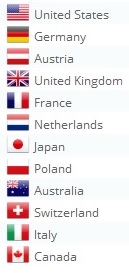
I use this opportunity to express my sincere thanks to all my readers and buyers of my books! Now let´s do a bit statistics. The blog is now on since February and the average traffic per day is about 150 views. The five most read articles so far were in descending order: The Musashi-Masamune – One blade, four oshigata, Some thoughts on utsuriFrom the life of Unno Shômin, The swords of the Tokugawa-shitennô, and The difficulties in classifying Kamakura blade shapes. The top twelve of views are from the following countries, although the rank of Austria might not count as it goes probably back to a large extent to my very own test clicks. So a big thank you to my US and German readers! And I am also kind of proud that Japan is amongst the first seven (or six if you don´t count Austria;).

stats

As for the plans for next year, there will be a great standard work published towards the end of spring which is done in cooperation with two sword societies, but more details will be revealed when the time comes.

Another upcoming reference work is the A-Z of Japanese Swordsmiths Schools. This work goes back to a customer inquiry I got in early summer this year. I was asked to compile a kind of detailed encyclopedic list on all swordsmith schools as they are nowhere found in a comprehensive manner, i.e. not just the major schools we all know but all schools, from A-Z, (e.g. also such “exotic” schools like Tokujira, Yakuôji, Asago-Taima, Ganmaku and the like which are hardly addressed in the usual references). Well, the project was initially for private use and was about to fail because of the costs. So my customer (who prefers to remain anonymous) and I decided to make it a public project (with a little funding from the initiator). And for this, it will be much more detail as originally planned and will contain genealogies and examples of workmanship.

Another publication on my list is a third supplement to my Kantei volumes as I have gathered oshigata for about further 400 pages. Apart from that I would greatly welcome any suggestions!

Again thank you for following my blog and early happy holidays to all of you!

PS: Although this blog is on rest, you can reach me at any time via mail.

On the simplification of Japanese characters

In common practice, the issue with the simplification of Japanese/Chinese characters is mostly brushed aside as like “taken note of” but it is not that easy, at least not for me as translator. Many people interested in the Japanese sword are aware of the fact that a simplification of characters exist and that older characters with (too) many strokes were at a certain point in time simplified by removing some strokes. The simplification itself is not the main topic of this article as I want to focus more on my problem as translator with dealing with them, but I nevertheless want to start with a general overview of the whole subject of simplification of Japanese/Chinese characters.

In postwar Japan, i.e. in 1946, the Japanese Ministry of Education issued the so-called “list of kanji for general use” (tôyô-kanji-hyô, 当用漢字), a reform of the Chinese characters so far in use in Japanese written language. This was an official thing like the various spelling reforms of the English language which means schools, governmental documents, newspapers and the like had to follow the tôyô-kanji-hyô. The initial list contained 1.850 characters, some of them simplified. The simplification process was basically done in two ways: Either the right-hand radical which indicates the on´yomi (Sino-Japanese reading) was replaced with another character of the same on´yomi with fewer strokes, or an entire complex compound of a character was replaced by a simpler one. But the simplified characters were no complete new creations as many were based on widely used handwritten abbreviations (ryakuji, 略字) of the prewar era. For example the character for hiro(i) (廣, expansive, wide) was replaced by the character (広) but which was already “unofficially” in use in earlier times to abbreviate the relativ large number of strokes. But there was also another way of simplification, namely by orientating on the on´yomi. For example for the old character i (圍, enclose), the inner part (韋) – which determines the on´yomi – was replaced by the radical (井) which doesn´t mean the same as (韋) but which also reads i. So i (圍) became (囲). In 1981, the tôyô-kanji list was replaced by the Ministry of Education by the jôyô-kanji (常用漢字) which are known to everybody who learns Japanese. The initially 1.850 tôyô characters were extended by 95 which in turn were just recently once more extended by 196 in 2010 (also five characters were removed).

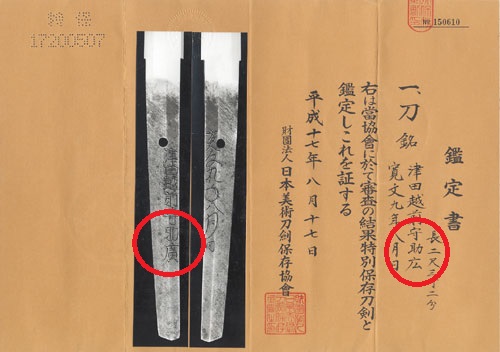
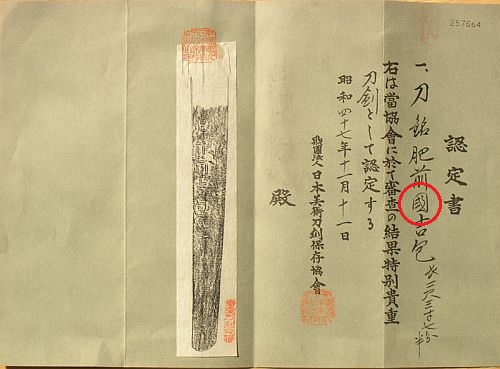
So far, so good. The “problem” now is that we mostly dealing with more or less ancient texts and inscriptions and they require a certain sensibility. At the beginning I was talking of common practice and this common practice is to use by default the simplified version of characters. Most of the recent publications, or at least those published since the 1970s, handle it this way. That means, a signature like “Sagami no Kuni Hiromitsu” chiselled with the characters (相模國廣光) is usually quoted as (相模国広光). Also the NBTHK uses the simplified characters when issuing papers even if the blade itself is signed with old unsimplified characters (see picture 1). However, we occasionally also find old kichô papers which make use of the old characters (see picture 2).

  Simpl1 Picture 1: tokubetsu-hozon paper for a Sukehiro which quotes the characters (助広) although the blade is signed (助廣).

OLYMPUS DIGITAL CAMERAPicture 2: tokubetsu-kichô paper from 1972 which quotes the character for “Kuni” (国) in the old way (國).

So is there a “correct” way to deal with these simplifications in translations? Basically yes, because strictly speaking, we must follow the spelling reform. But as we find ourselves in the field of antiques, we are quasi somewhat “special”. That means in a “totally correct” way, the original inscription/signature should be reproduced with the very same characters it shows and it might be extended by a simplified circumscription in parenthesis or as footnote. This is fine for a native reader for whim the thing is more or less clear. He knows that he is facing simplified characters when reading a paper or a book which mentions signatures for examples. Also (of course depending on the experience and depth of study) he basically knows the unsimplified version of the characters and knows thus how the blade is actually signed. So if a native reader reads in a book a line with a reference to the signature “Sagami no Kuni Hiromitsu” (相模国広光), he knows that the blade, as being several hundred years old, should show the characters (相模國廣光). By the way, there are of course exceptions where even medieval craftsmen made use of simplified characters. For a Western reader or collector however, the thing is far more difficult as he might be unable to associate an unsimplified signature with the quote in a publication. Because of that, I am frequently addressed that my translation does not match the signature they have or that I made a mistake. So we are back at what is the best way to handle this issue. Mostly it is namely impractical to add comments or footnotes to each and every quote/translation. Also rather impractical is to add a note to every translation like “be aware of the fact of the simplification of characters”. Well, I did point out the use of simplifaction or rather the presence of unsimplified characters in my previously published Kantei volumes for example to avoid confusion as the presented oshigata right next to the translation shows clearly the old characters. For the future, I must admit that I will follow the spelling reform and use the simpified characters, and that I will point out potentially confusing situations with unsimplified and simplified characters separately.

Below I want to present as a reference a small list of unsimplified characters and their simplified variant which might occur on sword or kodôgu signatures:

(佛) Butsu (仏)

(臺) Dai (台)

(傅) Den (伝)

(藝) Gei (芸)

(刄) Ha (刃)

(濱) Hama (浜)

(邊) Hen (辺)

(榮) Hide, Ei (栄)

(寶) Hô, Takara (宝)

(惠) Kei, E (恵)

(劍・劔・劒・剱・釼) Ken, Tsurugi (剣)

(縣) Ken (県)

(國) Kuni (国)

(舊) Kyû (旧)

(圓) Maru, En, Kazu (円)

(當) Masa (当)

(繩) Nawa, Tsuna (縄)

(應) Ô (応)

(鷗) Ô (鴎)

(來) Rai (来)

(龍) Ryû, Tatsu (竜)

(實) Sane (実)

(眞) Sane (真)

(齋) Sai (斎)

(澤) Sawa (沢)

(聲) Sei (声)

(關) Seki (関)

(對) Tai (対)

(體) Tai, Karada (体)

(瀧) Taki (滝)

(耀) Teru (輝)

(鐡) Tetsu (鉄)

(鐵) Tetsu (鉄)

(壽) Toshi, Ju (寿)

(儔) Tomo (俦)

(豐) Toyo (豊)

(與) Yo, ataeru (与)

(豫) Yo (予)

(餘) Yo (余)

Complete Kantei Volumes

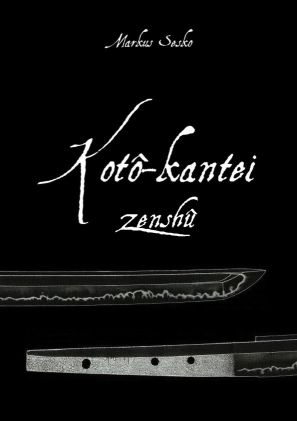
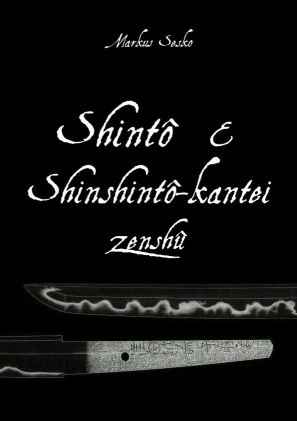
As I am on holiday soon (Nov 17-27) and in the US from Dec 9 to around Jan 12, this is now the time to finish projects and comply with requests of my readers. I got many mails to summarize all the Kantei volumes and the two supplements and the two books introduced in the following are a compliance to this request. That means I compiled a Koto-kantei Zenshu and a Shinto & Shinshinto-kantei Zenshu, containing all previously introduced blades in a sorted manner. On far more than 700 pages, about 600 blades are described in detail and with a kantei in mind and I was told by many of my readers that these books are a must have for any collector and nihonto student. Also the table of contents found at the end of this entry speak for themselves.

As this is going to be a Christmas offer, both new Zenshu volumes are in hardcover and offered for the price of each $ 129.00. That means you even save $ 69.00 compared to getting the four previously published Kantei volumes for $ 327.00. So if you were hesitating so far, this is probably the best chance to get these references. Also please note the Lulu voucher code CORNUCOPIA which gets you 20% off until Nov 15th 23.59, i.e. midnight today!

The Koto-kantei Zenshu (772 pages, 8.25 wide x 10.75 tall) is available here.

The Shinto & Shinshinto-kantei Zenshu (716 pages, ibid.) is available here.

CoverKotoSmallCoverShintoSmall

KotoZen-Contents

ShintoZen-Contents

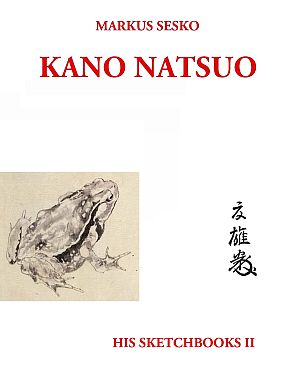
Kano Natsuo – His Sketchbooks II

Due to the huge feedback, I also decided to make available all eight of Natsuo´s non sword fittings-related sketchbooks (Shasei-jô, 写生帖). Seven of them are numbered – Shasei-dai 1-7 (写生第壱・七) – and one sketchbook bears just the title Shasei. The book comes of course in the same layout as the first book on Natsuo.

8.25 wide x 10.75 tall, full color, hardcover, 312 pages – $ 129.00

Available here.

eBook is available here.

NatsuoCoverSketch

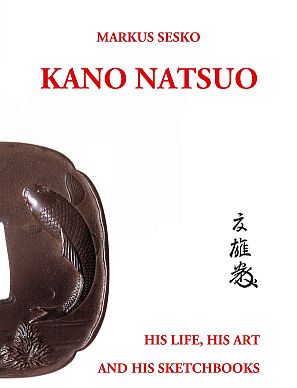
Kano Natsuo – His Life, his Art and his Sketchbooks

Out now, the most comprehensive, non-Japanese book on Natsuo. Even though the kinko artist Kano Natsuo is on everyone´s lips when it comes to conversations about late Edo period sword fittings surprisingly little material is available outside of Japan, in neither a comprehensive or in a published form. With this publication I try to provide a remedy by introducing an outline of his career, his personality, his art, his students and his works (34 pieces on more than 50 pages). And, as a reference, I have republished all four of Natsuo’s sketchbooks on sword fittings (Kengu-shitazu-soko). Thus I hope that with this publication I can contribute to the understanding and appreciation of this great artist in the West and that the reader enjoys browsing through Natsuo´s sketches.

8.25 wide x 10.75 tall, full color, hardcover, 250 pages – $ 129.00

Available here.

eBook is available here.

NatsuoCover

NatsuoPreview

A Natsuo motif on a Kajihei blade

In the first year of Genji (元治, 1864), Natsuo´s firstborn son saw the light of day. The first year of Genji was the year of the “wood rat” (kinoe-ne, kôshi or kasshi, 甲子) which in turn was the very first year of the sexagenarian circle and was thus very auspicious, and so he named his son “Kinekichi” (甲子吉, lit. “lucky one from the year of the wood rat”). Natsuo describes those times in his Tsuisô-roku (追想録, “Records of Recollection”) published in Meiji 15 (明治, 1882) as follows: “The number of orders and of the people (he meant his subcontract workers like, for example, Tomekichi [留吉], Hikota [彦太] and Kakuzô [恪蔵]) increased, and that now with Fuyu and Kinekichi the house became too small and so after five or six years we moved to the second block of Chôjamachi (長者町) in Edo´s Shitaya district (下谷, about 3 km to the north of the old house in Kanda-Sakuma, 神田佐久間町).” Well, Kinekichi was raised and trained to become Natsuo´s successor one day. He used the craftsman´s name “Fuyuo” (冬雄) but did not have time to step out of the shadow of his father as he died in the eleventh month of Meiji 20 (1887) at the young age of 24.

 Kajihei1

Picture 1: Daikokuten no zu futatokoromono (大黒天の図二所物)

mei, kozuka: Bunkyû kinoe-ne shoshun kore o tatematsuru (文久甲子初春上之, “finished in early spring of the year of the rat of the Bunkyû era [1864]”) – Sohaku Natsuo + kaô (素璞夏雄); mei, menuki:    kinoe-ne haru no hi Natsuo – Tôbu ni oite kore o tsukuru + kaô (甲子春日夏雄・於東武造之, “made in Edo on a spring day in the year of the rat [1864] by Natsuo”); kozuka of shibuichi, polished finish, shakudô suemon, back side in sogetsugi; menuki of pure gold, katachibori, shakudô suemon, silver suemon

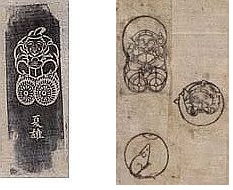
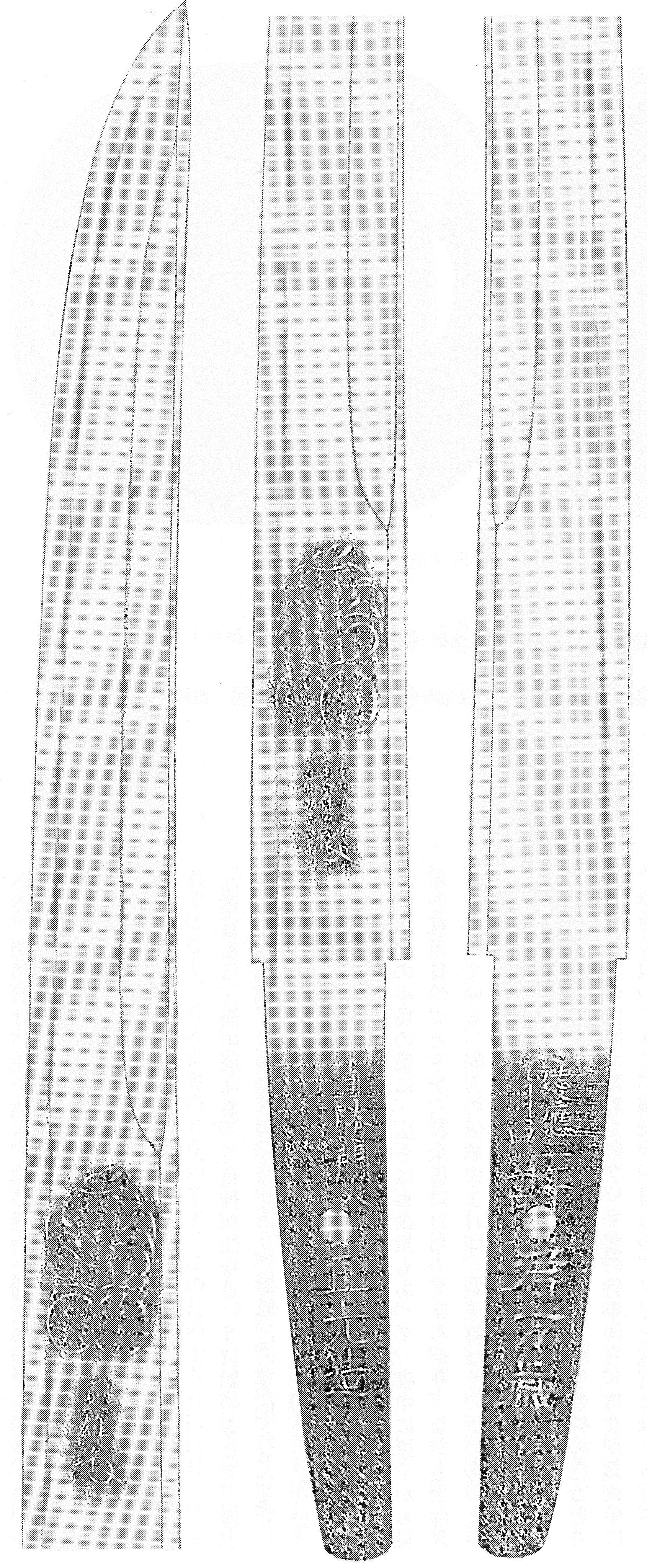
In the same year kinoe-ne, Natsuo made a futatokoromono set (see picture 1) consisting of a kozuka and a pair of menuki, depicting Daikokuten (大墨天) and a rat, as it was the year of the rat and as the rat is regarded as messenger of Daikokuten. So maybe Natsuo picked this motif of one of the Seven Lucky Gods as auspicious sign for this happy event of being blessing with a son in that very year. Another fascinating aspect of this motif is that Natsuo even made a Daikokuten painting at the same time which is still extant and mounted as hanging scroll (see picture 2). Also we find in one of his sketchbooks a rubbing of a Daikoku which he had engraved to the kogatana blade of a kozuka (see picture 3). And this Daikoku carving and its signature in turn were engraved by the swordsmith Hosoda Heijirô Naomitsu (細田平次郎直光) onto one of his tantô. Interesting is that Naomitsu – who is better known under his pseudonym “Kajihei” (鍛冶平), the name under which he focused on forgeries of shintô, shinshintô and also of kotô blades after the ban on swords in 1876 – decided for himself to add Natsuo´s kaô under the signature which is not there at the original carving on the kozuka blade.

 kajihei2

Picture 2: The hanging scroll.

 Kajihei3

Picture 3: The rubbing of the Daikoku engraving on a kozuka from one of Natsuo´s sketchbooks (left) and the sketch for the Daikokuten-futokoromono (right).

Well, Naomitsu alias Kajihei was a student of Jirô Tarô Naokatsu (次郎太郎直勝, 1805-1858), the son-in-law and successor of the famous shinshintô swordsmith Taikei Naotane (大慶直胤, 1778-1857). There was a certain connection between Natsuo and the Naotane lineage of swordsmiths. One of his students namely, Tsukada Hideaki (塚田秀鏡, 1848-1918), was the adopted son of Hata Naoaki (畑直鏡), who in turn was a student of Jirô Tarô Naokatsu. Also we know from Natsuo´s records that a blade of Naomitsu´s master Naokatsu showed a Daikokuten engraving similar to this one. So it is rather likely that this blade is an hommage to both Naokatsu and Natsuo as it is fully signed by Naomitsu and we can thus probably rule out that it was intended as whatever forgery. This is also supported by the fact that it was made in Keiô two (1866), i.e. ten years before the ban on swords and Naomitsu´s “career” as forger Kajihei. Another interesting allusion to Natsuo´s Daikokuten carvings is Naomitsu´s explicite use of the kinoe-ne day in his signature. The kinoe-de day is an auspicious day every sixty days in accordance with the sexagenary circle. Incidentally, the kinoe-ne day was the eighth day of the ninth month Keiô two.

 kajihei4

Picture 4: tantô, mei: “Naokatsu-monjin Naomitsu tsukuru – Keiô ninen kugatsu kinoe-ne no hi – kimibanzai” (直勝門人直光造・慶応二年九月甲子日・君万歳, “made by Naomitsu, a student of Naokatsu, on the kinoe-ne day of the ninth month Keiô two [1866], year of the rat – Long Live the Emperor”), nagasa 23,0 cm, kanmuri-otoshi-zukuri

So this blade gives on the one hand an interesting insight into the career of Naomitsu before he focused on forgeries, and on the other hand also an interesting insight into the time when Natsuo´s first son Fuyuo was born. This futatokoromono and the blade of Naomitsu are featured in my upcoming book Kano Natsuo – His Life, his Art and his Sketchbooks.