The other day, I posted on my IG (@swordtranslator) one of the only five surviving signed works by Norimune (則宗), who is regarded as the founder of the prestigious Fukuoka-Ichimonji (福岡一文字) School, and who was active 800! years ago, being traditionally dated around Jōgen (承元, 1207–1211). The blade I posted is the one that is in the Imperial collection (gyobutsu), which was once presented to Emperor Meiji (明治天皇, 1852–1912) by the Asano (浅野) family, and which is completely ubu.
So, for the sake of completeness, I thought I post the other four signed works of Norimune here, plus, of course, also the gyobutsu, which shall be introduced first. That said, please enjoy the line-up, and may this brief post serve as a reference for Fukuoka-Ichimonji Norimune for the one or other in the future.

Picture 1: Gyobutsu, tachi, mei: Norimune (則宗), nagasa 78.2 cm, sori 2.7 cm, ubu, former heirloom of the Asano (浅野) family.
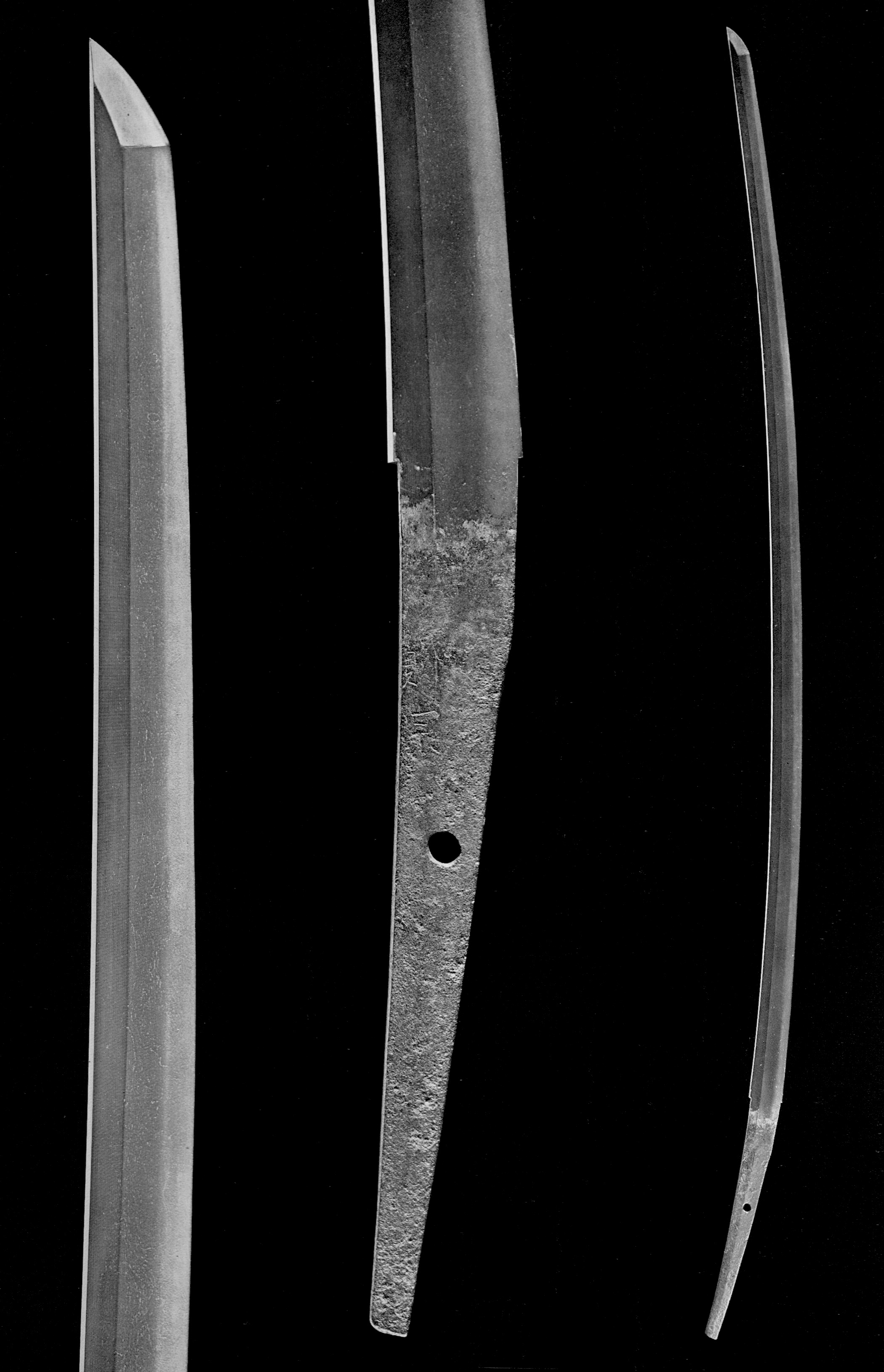
Picture 2: Kokuhō, tachi, mei: Norimune (則宗), nagasa 78.5 cm, sori 2.6 cm, ubu, collection of Hie Shrine (日枝神社), once presented to said shrine by Tokugawa Tsunayoshi (徳川綱吉, 1646–1709).

Picture 3: Jūyō-Bunkazai, tachi, mei: Norimune (則宗), nagasa 80.1 cm, sori 3.3 cm, ubu, collection of Okayama Prefectural Museum, former heirloom of the Tsuchiya (土屋) family.

Picture 4: Jūyō-Bunkazai, tachi, mei: Norimune (則宗), nagasa 69.7 cm, sori 2.3 cm, suriage, collection of Mitsui Memorial Museum, former heirloom of the Tsuchiya (土屋) family.

Picture 5: Tokubetsu-Jūyō Tōken, tachi, mei: Norimune (則宗), nagasa 72.3 cm, sori 2.3 cm, ubu, private collection.
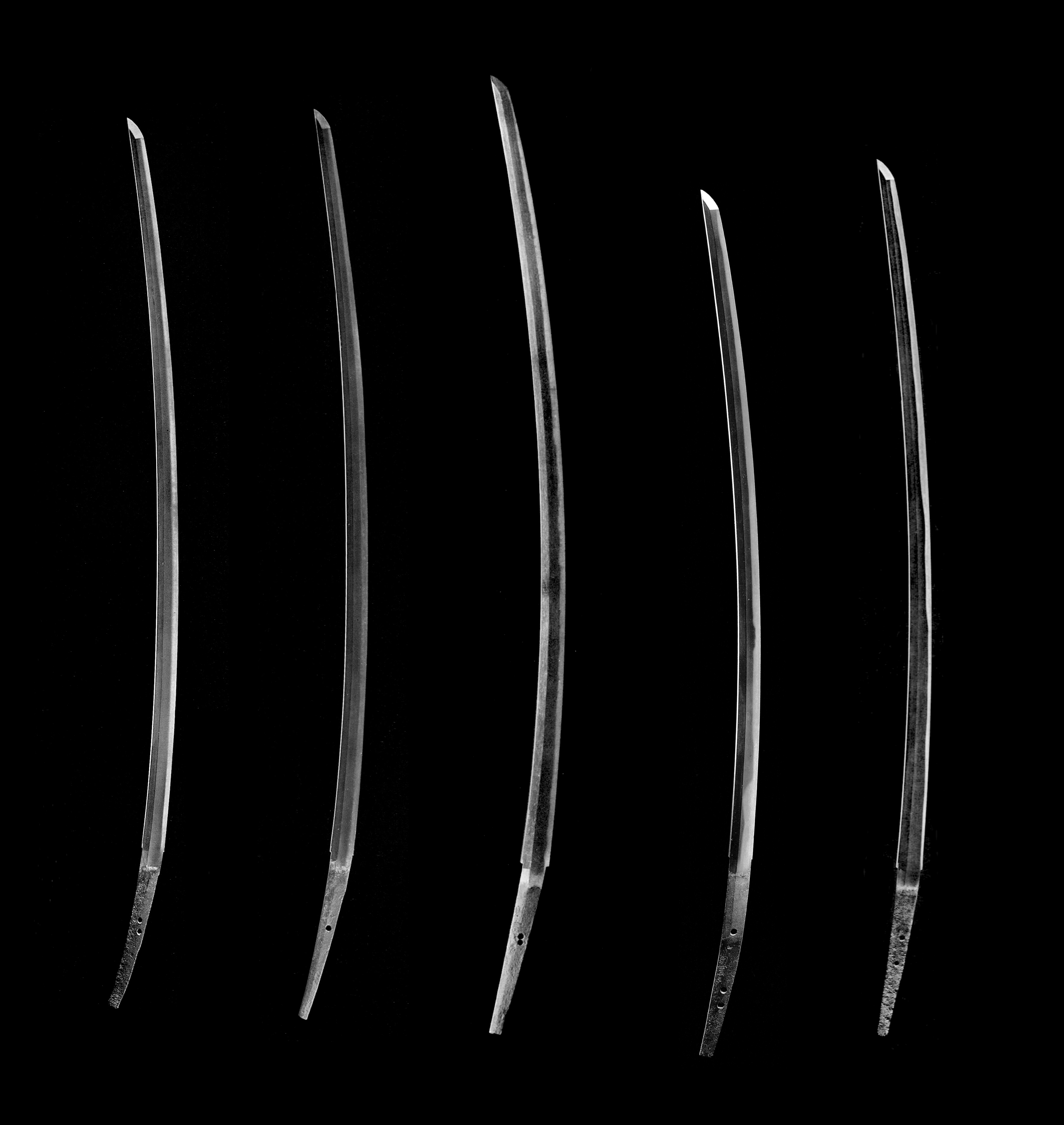
The picture above shows, roughly in proportion, a juxtaposition of these five blades (Picture 1~5, from left to right). Wouldn’t that be a once-in-a-lifetime display at a study meeting? 😇
But there is slightly more… Well, there is a leather-covered (kawazutsumi) tachi-koshirae designated as a Jūyō-Bunkazai (picture 6), which holds a blade signed “Norimune,” but which is described in the designation with the suffix mei ari (銘アリ), roughly meaning “inscribed,” rather than “signed.” In other words, the signature is possibly not authentic, or has not yet been authenticated (the sword was designated as a Jūyō-Bunkazai in 1950, by the way, and is owned by the Atago Shrine [愛宕神社], Kyōto).

Picture 6: Jūyō-Bunkazai, kawazutsumi tachi-koshirae, overall length 106.0 cm, Muromachi period, blade inscribed “Norimune.”
 Markus Sesko