Hankei and his school

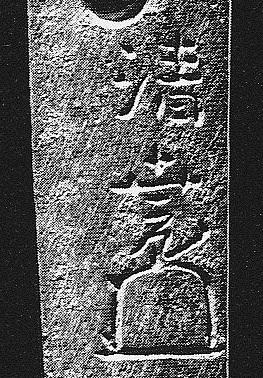
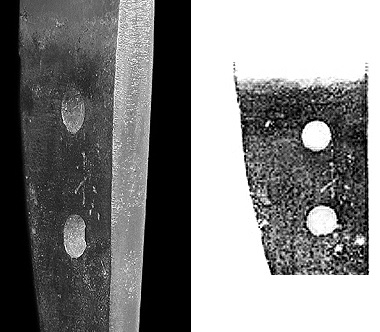
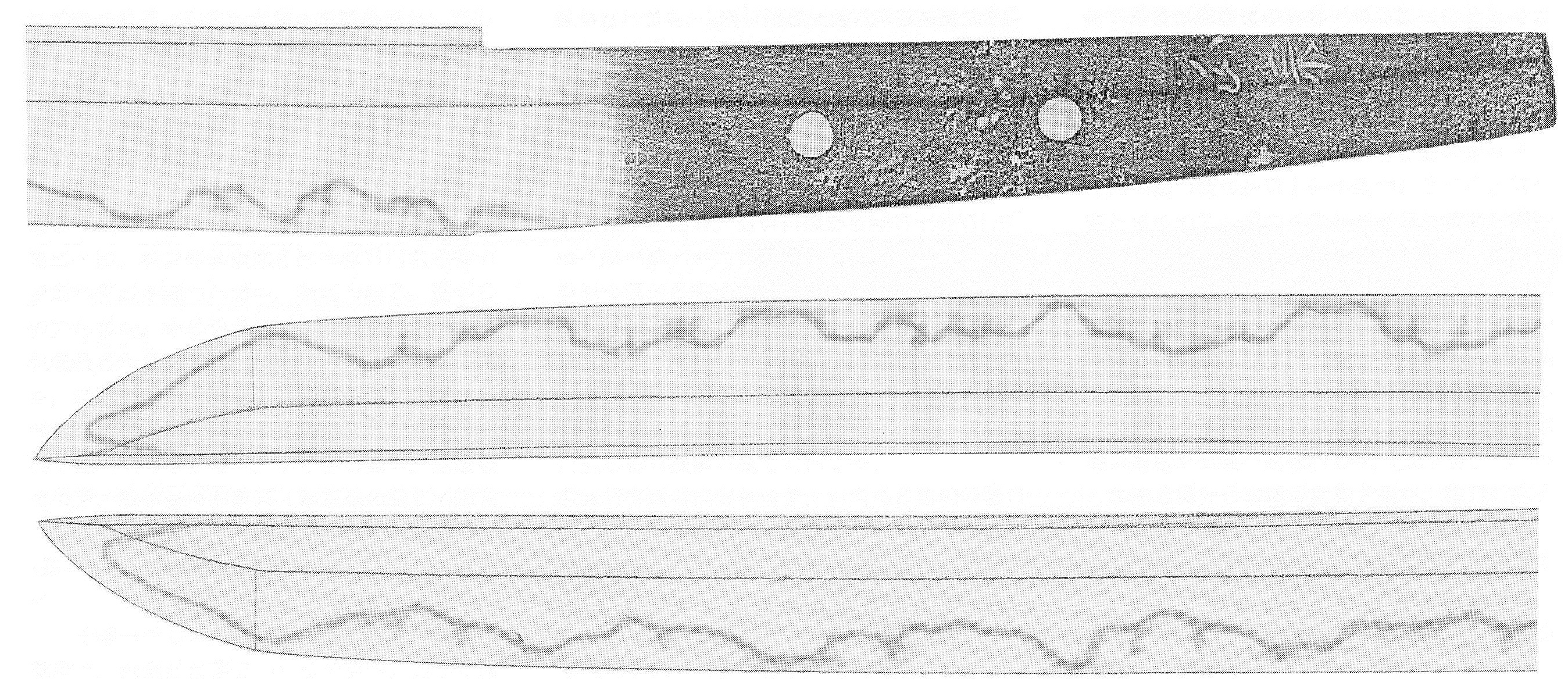
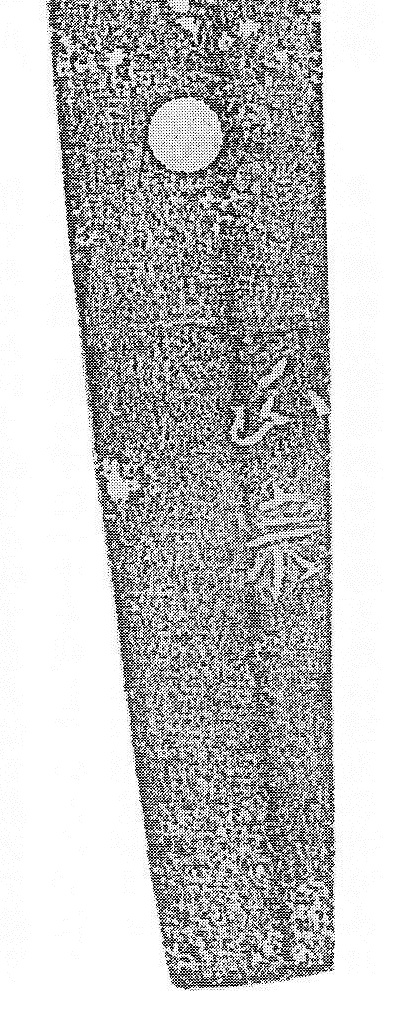
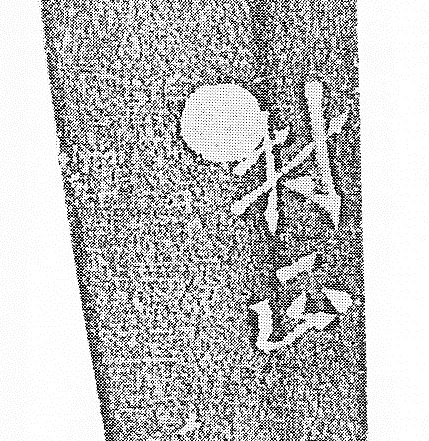
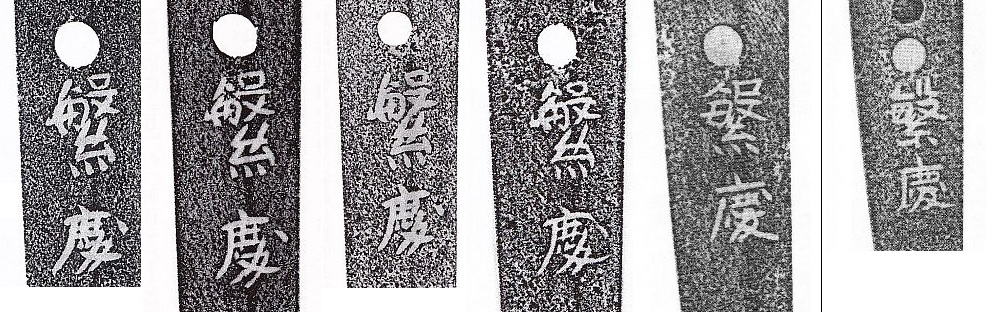
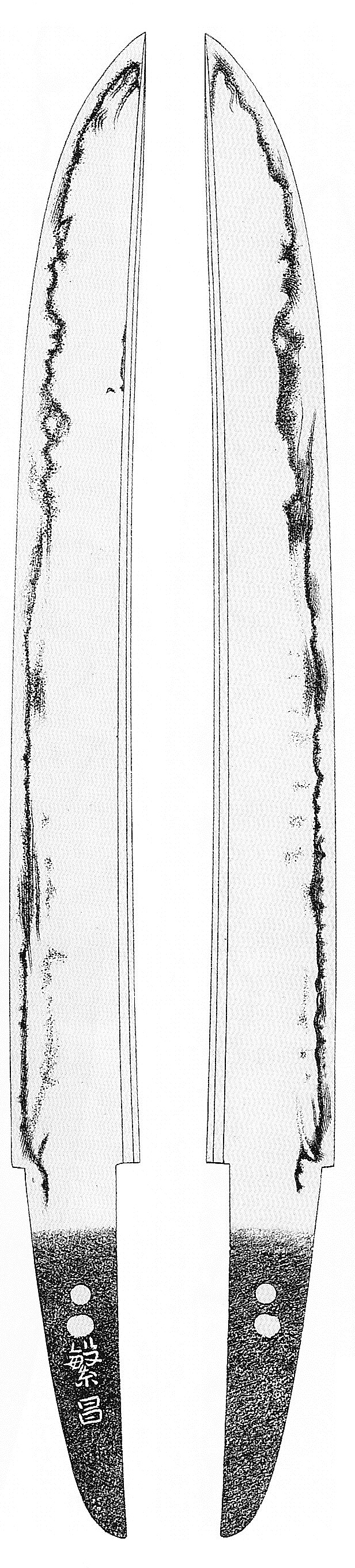
At our last NBTHK-EB meeting in Nuremberg in March, our topic was utsushi in the widest sense. One of the blade presented was a jûyô-katana by Hankei (繁慶) (picture 1) and in our discussion on how the term “utsushi” can be defined, it was addressed that Hankei had his very own approach to the Sôshû tradition. At his time, we are talking about the Keichô-shintô era, a focus was again on the great Sôshû masters and katana-size Nanbokuchô-style blades was quasi the ultimate goal, i.e. a wide blade with an elongated kissaki and a shallow sori which emulates an ô-suriage tachi of the heyday of the Nanbokuchô era. Hankei, his civilian name was Noda Zenshirô (野田善四郎), originally came from Mikawa province which was also the home province of Tokugawa Ieyasu. It is assumed that he first moved to Sunpu (駿府) to work there as a gunsmith, the profession he had inherited from his father. Ieyasu had established a gunsmith center in Hachiôji (八王子) in Tenshô 18 (天正, 1590) what was Hankei´s second station. There he learned from the gunsmith Agari Sôhachirô (胝惣八郎) who also came from Mikawa and who already worked for Ieyasu at that time. With his studies under Agari, Hankei signed with the name Kiyotaka (清堯). By the way, there are teppô with the mei Kiyotaka extant which bear date signatures from Keichô 15 to 20 (慶長, 1610-1615). Those made exclusively for the Tokugawa family are signed “Nihon Kiyotaka + kaô” (日本清堯) (picture 2) and it is very interesting that there are even swords extant with the very same signature and kaô (although extremely rare) (picture 3).
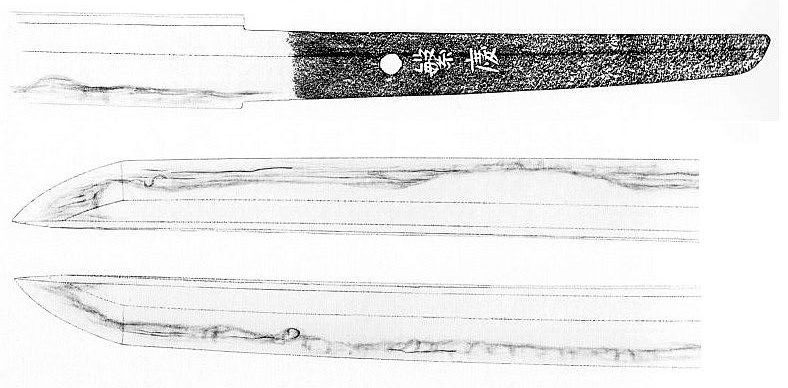
 Hankei1

Picture 1: katana, mei “Hankei”, nagasa 69.6 cm, sori 1.35 cm

Hankei2

Picture 2: jûyô-bunkazai hinawajû, mei “Nihon Kiyotaka + kaô”, overall length 148.5 cm, dated eleventh month Keichô 16 (1611)
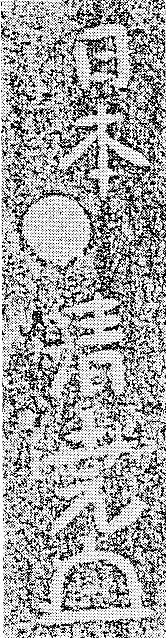
 Hankei3

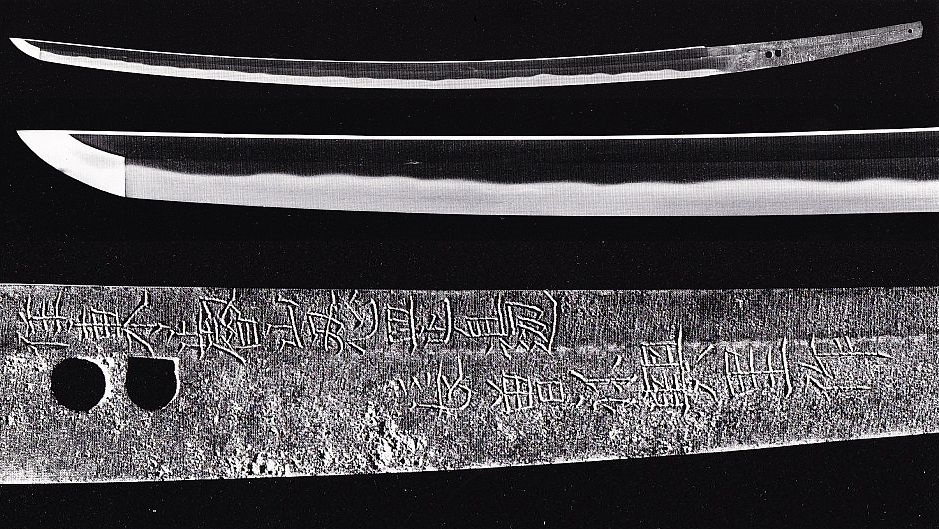
Picture 3: “Nihon Kiyotaka” mei on a sword blade

 Hankei4

Hankei4a

Picture 4: katana signed “Kiyotaka + kaô” and detail of the mei

So Ieyasu eventually retired to Sunpu in Suruga province in the seventh month Keichô twelve (1607) and as we know, he invited his most trusted swordsmith to accompany him, the 1st generation Yasutsugu (康継) and Nanki Shigekuni (南紀重国). But also Kiyotaka/Hankei accompanied Ieyasu to Sunpu and most experts agree that it was this meeting of his great talent with the specially invided bakufu-employed swordsmiths that brought the decision that he should better switch from gunsmith to swordsmith. Also it is safe to assume that Kiyotaka/Hankei learned the necessary techniques on the spot from the two aforementioned smiths and as he was already a renowned gunsmith and used to work with steel, changing jobs did not take him that long. When we namely assume that he went to Hachiôji at the age of 25, he was around 50 at the time in Sunpu. Well, Ieyasu died shortly later in Genna two (元和, 1616) and Kiyotaka/Hankei returned again to Hachiôji, i.e. to Edo. The name change to “Hankei” took place after his moving to Edo and it is generally assumed that this happened between the fifth year of Genna (1620) and the first year of Kan´ei (寛永, 1624). So when we again take our assumption that he arrived at Hachiôji about the age of 25 as a basis, he was in his late fifties or about to turn sixty at the time he changed his name. “Hankei” by the way is a very auspicious name and means literally about “prospering/flourishing joy.”

So Hankei shared about the same fate as Kotetsu although forty or so years earlier. Also Kotetsu had his origins in a different but kind of related craft, namely the craft of armor making, and he took changed his profession around the age of 50. However, I assume that Kotetsu had slightly different reasons for becoming a swordsmith. At his time, the demand for newly made armour had drastically dropped. As mentioned in an earlier article, Sekigahara happened 40 years earlier, Ôsaka had fallen more than 30 years ago, and the last great armed conflict – the Shimabara Rebellion from 1637 to 1638 – was at its tenth anniversary. Hankei in turn worked still in a sphere that we define today as Momoyama Culture. In other words, ten or fifteen years after Sekigahara nobody knew that the new bakufu would bring a longstanding peace. And with all the relocations of daimyô and the reorganization of the hierarchic feudal structure, wait and see was the order of the day. That means there was no drastic drop in the demand for firearms that would have forced Kiyotaka/Hankei to look for a new job. But we can agree that both smiths, Kotetsu and Hankei, were highly talented and great personalities as otherwise they would have disappeared from the scene and/or their swords would have been classed into the “also ran” category, i.e. as well-eant swords made by a former armorer or gunsmith respectively. But back to the Momoyama Culture. I have already mentioned that the then fashion in swords inspired Hankei to his style. It is namely very interesting to see that Hankei did not just copy the great Sôshû masters as faithful as possible (of course there are als such works) but took what he understood as Norishige style, who is assumed as being his greatest inspiration, and interpreted this style in a way which can only be described as very strong in character. He made blades with an acute mitsu-mune and a rough itame mixed with masame and hada-ware which appears with plenty of ji-nie and thick chikei as so-called hijiki-hada (鹿尾菜肌・羊栖菜肌・ひじき肌) what has to be undertood as reminiscence of Norishige´s also very peculiar matsukawa-hada. His hamon is usually based on a hiro-suguha or notare, is hardened in nie-deki, and is mixed with gunome-ashi. The nie are thick but not that sparkling. Many sunagashi occur which makes the hamon look partially like as if it is entirely composed of sunagashi. The habuchi is unclear, that means it is often hard on Hankei blades to define an exact line between the ha and the ji. This is for example the case at the ura side´s monouchi of the blade shown in picture 1, and at the kantei at Nuremberg, this area reminded me kind of a sudareba at a glance. Also very typical for Hankei are his characteristic tang with the deeply notched machi and the so-called yagen-jiri, and the thickly chiselled signature. We don´t know when Hankei died but it is assumed that he lived at least to about mid Kan´ei (1635~40). As for his signature, we distinguish roughly between two categories, namely the so-called ro-mata (ロ又) from the height of his career, the the so-called ru-mata (ル又) signatures from his later years. The names refer to the interpretation of the right part (攵) of the upper radical (敏) which can be chiselled like the katakana syllable ro (ロ) plus the character mata (又) below, or like the katakana syllable ru (ル) plus the character mata below (see picture 5).
 Hankei5

Picture 5, signature comparison: ro-mata left, ru-mata right

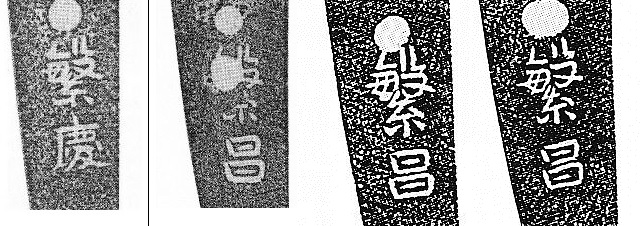
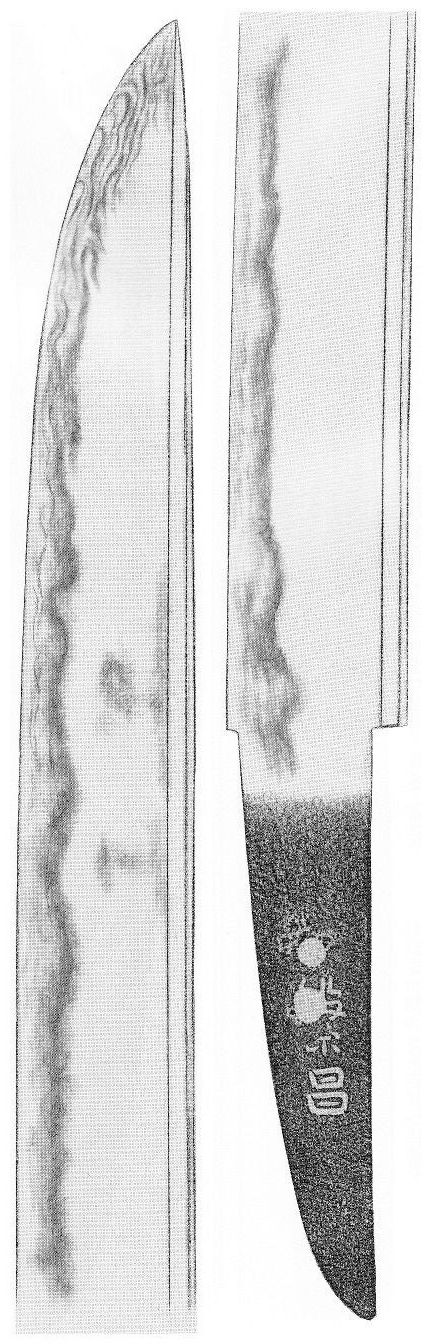
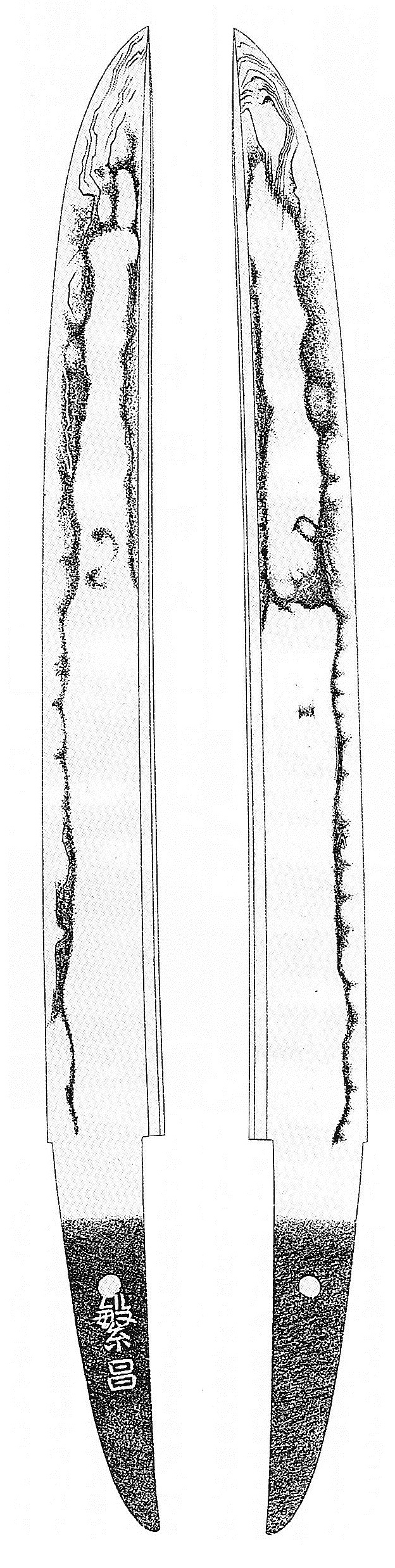
Now to Hankei´s students and here too, we have some similarities to Kotetsu. Apart from Kotetsu´s adopted son Okimasa (興正) namely, there are only very few works from both schools extant, what concerns for example Kotetsu´s direct students Okihisa (興久) and Okinao (興直), and Hankei´s direct students Hanjô (繁昌) and Masayoshi (正慶). Thus it is assumed that the personality of the great master was so overwhelming that none of the students had the time and chance or was “brave enough” to work on his own and produce fine blades in larger numbers. But also other factors play a role here. As for Hankei, he was a bakufu-employed swordsmith so after his death, there were maybe some reasons for the Tokugawa to not continue the employment with any of the students what meant practically the end for the school. As for Kotetsu, his students were facing different times and so maybe the decreasing demand for swords did not allow them to continue their school into post Jôkyô and Genroku times who knows. In this sense I would like to use the opportunity to introduce some of the rare Hankei-student works and thus the article´s title “Hankei and his school.” First Hanjô (繁昌) as his blades are closest to Hankei. We know that he came originally fromAnzai (安西) in Suruga province and went to Edo where he entered an apprenticeship with Hankei. As I have pointed out that Hankei had returned to Edo after Ieyasu´s death, it is safe to assume that also Hanjô arrived at Edo after the second year of Genna (1616). Interesting is that Hanjô signed his character for “Han” in the ru-mata manner, that means he continued the signature style of the late Hankei and so the theory was forwarded that Hanjô was actually a late signature of Hankei. But this approach is no longer followed as we can see some slight differences in workmanship, for example that Hanjô did not stick so much to Norishige but more on the great early Sôshû masters in general. However, followers of the one person-theory explain this by stating that Hankei maybe moved away from Norishige again towards the end of his career. Also we must bear in mind that in some sources (Tôkô-taikan, p. 512) we read that some of Hanjô´s works are superior to Hankei and that his interpretations are a bit more calm with lesser hada-ware and hijiki-hada, all indicators for the more mature workmanship of an artist. Anyway, the workmanship of Hankei and Hanjô is as mentioned pretty close and I haven´t handled any Hanjô work yet. But what you can learn from oshigata and descriptions is that Hanjô added a pronounced yakikomi at the hamachi.
Hankei6

Picture 6, signature comparison: ru-mata Hankei left, Hanjô right
Hankei7

Picture 7: tantô, mei “Hanjô”, nagasa 28.2 cm, only very little sori, hira-zukuri, mitsu-mune
Hankei8 

Picture 8: tantô, mei “Hanjô”, nagasa 29.7 cm, sori 0.1 cm, motohaba 2.86 cm (measured with the mune), hira-zukuri, mitsu-mune
 Hankei9

Picture 9: sunnobi-tantô, mei “Hanjô”, nagasa 33.1 cm, sori 0.4 cm, motohaba 3.42 cm, hira-zukuri, mitsu-mune

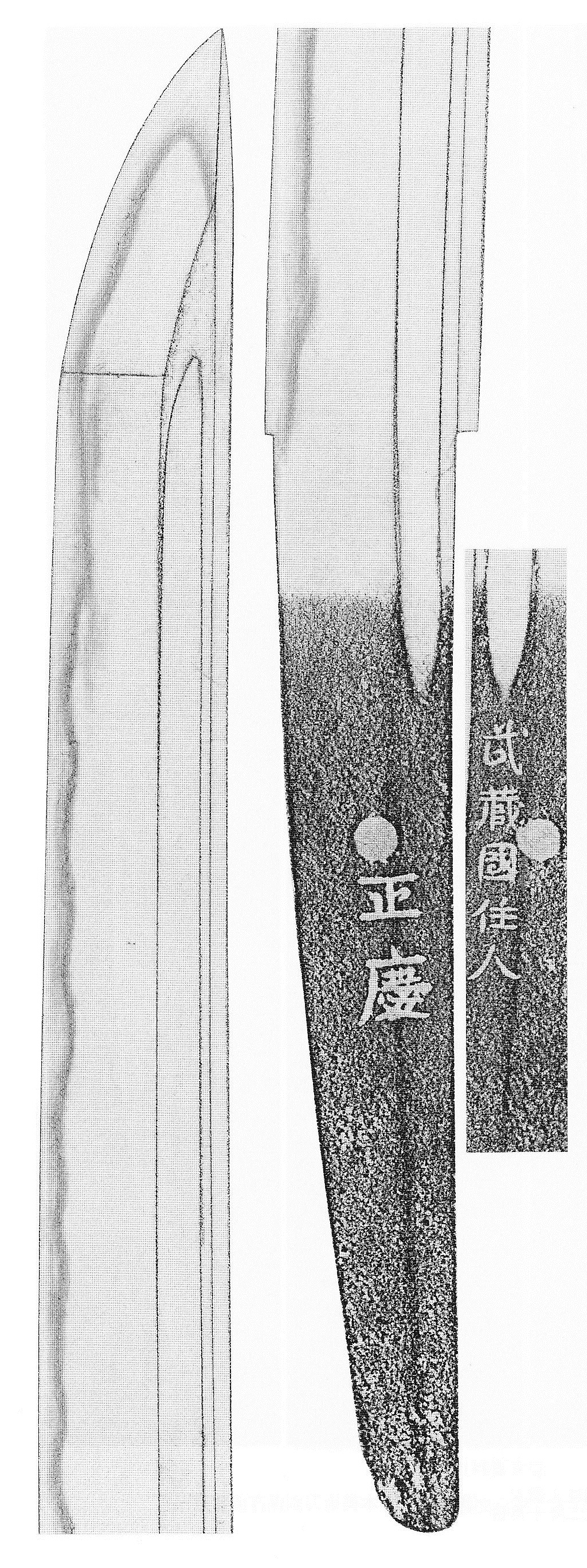
Another Hankei-student we know is Masayoshi (正慶). He is listed as “Masayoshi” but with the Sino-Japanese reading of Hankei´s and Hanjô´s names in mind, his characters might read as “Shôkei.” It is said that Masayoshi came like Hanjô from Anzai in Suruga province. The blade introduced in picture 9 does have plentiful of ji-nie and many thick chikei but the hijiki-hada is not that prominent as at Hankei. The hamon bases on a shallow and early Sôshû-inspired notare and with the sugata and the elongated kissaki, we see again the typical Nanbokuchô or rather Keichô-shintô style. But please note that Masayoshi´s wakizashi comes with an iori-mune instead of a mitsu-mitsu.
Hankei10

Picture 10: wakizashi, mei “Musashi no Kuni-jûnin – Masayoshi”, nagasa 48.2 cm, sori 0.9 cm, shinogi-zukuri, iori-mune

The horimono-shi Nagasaka Yûhôken

Whilst working Shintô & shinshintô-kantei volume, I came across a wakizashi by Tsuda Echizen no Kami Sukehiro (津田越前守助広) (No. 254.641, detail of the horimono shown in picture 1) with a kurikara horimono on the omote side of which is assumed that it was not cut by Sukehiro himself but by the horimono-shi Nagasaka Yûhôken (長坂遊鵬軒). This assumption inspired me to do some research on Yûhôken as the reasons for this assumption were not explained any further. Soon in turned out that this was one of the cases where not much info is available. As stated in Haynes (H 12357), I was at least able to find out that Yûhôken carved horimono on Ôsaka-shintô blades.

 Nagasaka

Picture 1: kurukara detail from the blade of Tsuda Echizen no Kami Sukehiro

Nagasaka5

Picture 2: mei “Awataguchi Ikkanshi Tadatsuna Nyûdô – Shôtoku gonen nigatsu kichijitsu – horimono Ikkanshi nanajûyon-sai kore o horu – Yûhôken nanajûsan-sai kore o horu” (粟田口一竿子忠綱入道・正徳五年二月吉日・彫物一竿子七十四歳彫之・遊鵬軒七十三歳彫之).

The major reference for Yûhôken´s active period is a blade by Awataguchi Ikkanshi Tadatsuna (粟田口一竿子忠綱) dated Shôtoku five (正徳, 1715) which states in its mei that Tadatsuna was 74 years old at that time and Yûhôken who engraved the horimono 73 (picture 2). From the differences in signature style and from the syntax it seems that both Ikkanshi Tadatsuna and Yûhôken engraved the horimono at a later point in time to the blade, otherwise Tadatsuna would have recorded his engraving as hori-dôsaku in my opinion. Maybe the owner of the blade or maybe his son or grandson approached Tadatsuna and Yûhôken again years later to add fine horimono to the family heirloom. My theory on the later horimono is based on the fact that we know dated blades from Ikkanshi Tadatsuna to Kyôhô twelve (1727). So if he was already 74 in Shôtoku five (1715), he must had been 86 in Kyôhô twelve. Well, possible but rather unlikely, unless the last known dated blade is a daisaku. However, the blade in question tells us that Ikkanshi Tadatsuna and Nagasaka Yûhôken were of the same age.

Nagasaka1

Picture 3: wakizashi by Tsuda Sukenao

Now to another blade of an Ôsaka-shintô master with a horimono of Yûhôken. It is a wakizashi from Tsuda Sukenao which is shown in picture 3 and which is signed the following way: “Tsuda Ômi no Kami Sukenao – Jôkyô yonnen hachigatsu – horimono Nagasaka Yûhôken saku – Genroku rokunen yongatsu jûsannichi hitotsu-dô Nagasaka Bunzô setsudan” (津田近江守助直・貞享二二年八月・彫物長坂遊鵬軒作・元禄六年四月十三日一胴長坂分蔵切落), “Tsuda Ômi no Kami Sukenao in the eighth month of the fourth month of Jôkyô (1687), horimono by Nagasaka Yûhôken – Nagasaka Bunzô cut with the blade through one body on the 13th day of the fourth month Genroku six (1693)”. Details of the horimono can be seen in picture 4. The interpretation of the kurikara is pretty detailed and unique. Take a look for example at the roundish, wide open eyes, the thickish toes which remind more of paws than claws, and the way the body of the dragon winds in a very vivid way around the sword. Usually the windings of the dragon go in a more uniform way around the ken. Also the lines of the hatahoko are very fluid and represent the fluttering of the standard in the wind pretty good.

Nagasaka2

Picture 4: horimono detail from the blade of Sukenao

Another very rare horimono interpretation of Nagasaka Yûhôken can be found in a blade of the Ôsaka-shintô smith Ise no Kami Kuniteru (伊勢守国輝) (picture 5), very rare because it shows a dragon winding around a bamboo and not around a sword! I haven´t seen any other blade with such a horimono yet. Yûhôken states in his signature that he engraved the horimono when he was 70 years old. So we learn that he was well booked in his late years and surely highly respected as great horimono master amongst the local clientel. Speaking of local clientel, we have to become aware of the then differences in Japan´s “metropolises.” I have already mentioned several times that it took some decades after Sekigahara until Edo got off the ground, at least in terms of art and craftsmanship. As we know, the New Sword, the shintô, was born in Kyôto, but rather soon some of the great early shintô masters felt drawn to Ôsaka.Back then, Edo´s produced very little everyday goods so Ôsakaserved first and foremost as a trans-shipment centre for goods collected and produced in Kyôto and shipped to the new capital. With the introduced sankin-kôtai system, soon a constant stream of goods was necessary to entertain the individual fief residences and this forced the establishment of ware and treasure houses. Quite quickly Ôsakabecame the new trade, economy and banking centre of the country. The first highlight of this new style of the Ôsaka-shintô was achieved around Kanbun (寛文, 1661-1673) whereas we can see a noticeable difference in fashion trends. On the one side Edo with the simple and reserved, practically-oriented workmanship, and on the other side the nouveau rich clientele of Ôsaka with their weakness for luxury and ostentation. And this difference in trends is not only reflected in the workmanship but also in the supplements to blades. The Ôsaka merchant-based clientele was tending towards a fine finish with elaborate horimono whereat the mostly warrior-based Edo clientele was much after the results of cuttings tests as we know them in large numbers on blades of Yamato no Kami Yasusada (大和守安定), Izumi no Kami Kaneshige (和泉守兼重), Kazusa no Suke Kaneshige (上総介兼重), or Kotetsu (虎徹). Of course there were also horimono engraved on Edo-shintô blades like by the Shitahara school or cutting tests performed with Ôsaka-shintô blades but the basic trend is obvious.

Kuniteru

Picture 5: katana by Ise no Kami Kuniteru

Nagasaka4

Picture 6: imono detail from the blade of Kuniteru

Nagasaka9

Picture 5: signature comparison of Nagasaka Yûhôken

All in all I think the luxury of Ôsaka during the Genroku years is best seen in the blades of Ikkanshi Tadatsuna. His predecessor, the 1st generation Tadatsuna, had died in Enpô four (延宝, 1676) and was thus not prone to engraving horimono but Ikkanshi reacted to the demand of his days and proudly mentioned on the tang of his swords via hori-dôsaku (彫同作) and horimono-dôsaku (彫物同作) that he did the horimono himself. And it is this emphasis on horimono what I mean with “luxury of Ôsaka during the Genroku years.” The somewhat earlier Ôsaka-shintô smiths like Kunisada (国貞), his son Inoue Shinkai (井上真改), father and son Kunisuke (国助), and the two generations Sukehiro (助広) placed namely more emphasis on the fineness of the steel and the interplay of nie and nioi rather than on engravings and other “knicknacks.” They all were active when the Ôsaka nouveau rich was still on the rise. But at the time of Ikkanshi Tadatsuna, this top class was already established and thus there was probably a striving for more to express their wealth. I.e. a fine jigane and a perfectly tempered hamon was no longer enough. Elaborate horimono and fancy koshirae were now sought after. But it has always been that way: Sometimes a super sports car is not enough, it needs a super sports car with diamonds all over…

Announcement

Tired of working with loose indexes and/or translations to meikan when checking a signature on a sword fitting? Tired of troublesome looking for signature examples in more or less limited references to compare them with a signature you have? You want to get a feel for a signature when thinking of submitting a kodôgu to shinsa? That means does the mei in question look promising at all? Found a signature but not sure who´s the guy? If you answered “yes” to any of those questions, then my next publication might be right for you. After consultation with several collectors for whom I was comparing signatures to sort out items for shinsa, I decided to publish my own humble kodôgu signature archive gathered over the years. It consists of about 5,000 pictures of signatures from about 3,000 artists. I am now in the process of bringing all the data to a proper format. There will also be an eBook version of course, so you can bring the archive on your tablet to sword shows and dealers and compare signatures on the spot. I will keep you informed on the progress of the project.  Thanks for your attention.


The whale as motif on sword fittings

The earliest records of whaling, i.e. active whaling and not the consumption of stranded whales, go back to the Nara-period Man´yôshû (万葉集) which refers to it as isana-tori (いさなとり). Tori comes from toru (取る・捕る) and means “to catch” and isana (いさな・勇魚) is an old word for whale which means literally “brave fish.” But today it is thought that large-scale whaling was not carried out before the 12th century. At that time, whales were mostly caught by driving them into smaller bays which were closed with nets and killing them with hand thrown harpoons or longer lances. The Kujira-ki (鯨記), a work on whaling written in the first year of Meiwa (明和, 1764), says that greater whales were caught by harpooning for the first time in the last decades of the 16th century in Mikawa province by groups of 6 to 8 boats. Apart from that there are records extant that Miyoshi Yoshioki (三好義興, 1542-1563) fixed shôgun Ashikaga Yoshiteru (足利義輝, 1536-1565) a whale dish in his residence in Eiroku four (永禄, 1561). And it is said that the Tosa sengoku-daimyô Chôsokabe Motochika (長宗我部元親, 1539-1599) presented Hideyoshi with a caught whale in Tenshô 19 (天正, 1591). According to records, the organized group whaling system, the kujira-gumi (鯨組), was established by a certain Wada Chûbei Yoritomo (和田忠兵衛頼元, 1555-1628) in the eleventh year of Keichô (慶長, 1606) in Taiji (太地) on the Kii peninsula. Yes, it is the same Taiji which is in the news since some years for its annual dolphine drive hunt. Yoritomo installed whale spotting stations along the shore which launched boats to catch the whales with harpoons and lances. First successes with the new Wada whaling enterprise had Yoritomo´s eldest son Kin´emon Yoriteru (金右衛門頼照), and Yoriteru´s second son Kaku´emon Yoriharu (角右衛門頼治, 1623-1699), who took later the family name Taiji (太地), promoted the increased use of nets. He suggested that instead of harpooning whales in open waters, a lot of smaller boats should drive the whale to shallows where another group of whalers hard prepared nets to hold back the whale and make him tired whilst the others harpoon it.

 Whale1

Picture 1: Inshore whaling in Taiji.

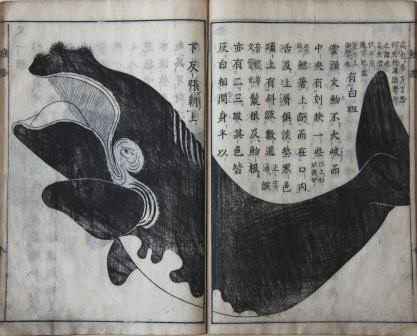
In the Edo period, whaling was put under direct control of the fiefs, that means the aforementioned kujira-gumi were not bakufu controlled. The whalers held kind a special position as they were paid by their fiefs via an annual salary just like samurai. Incidentally, one whale earned the whalers a profit of about 4 ryô what corresponds to about the annual income of an average lower ranking retainer of one of the fiefs. From Takano Chôei´s (高野長英, 1804-1850) letters to Phillip Franz von Siebold we know that about 300 whales were caught per year. But experts calculate the number of caught whales from Kyôhô (享保, 1716-1736) to the bakumatsu era as about 20.000. By the way, the Geishi (鯨志), the first book just on whaling published in Hôreki ten (宝暦, 1760) by Katoriya Ji´emon (楫取屋治右衛門), classifies whales as fish.

 whale2

Picture 2: The Geishi.

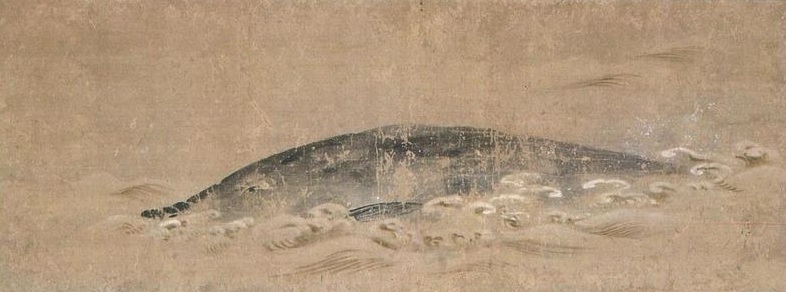
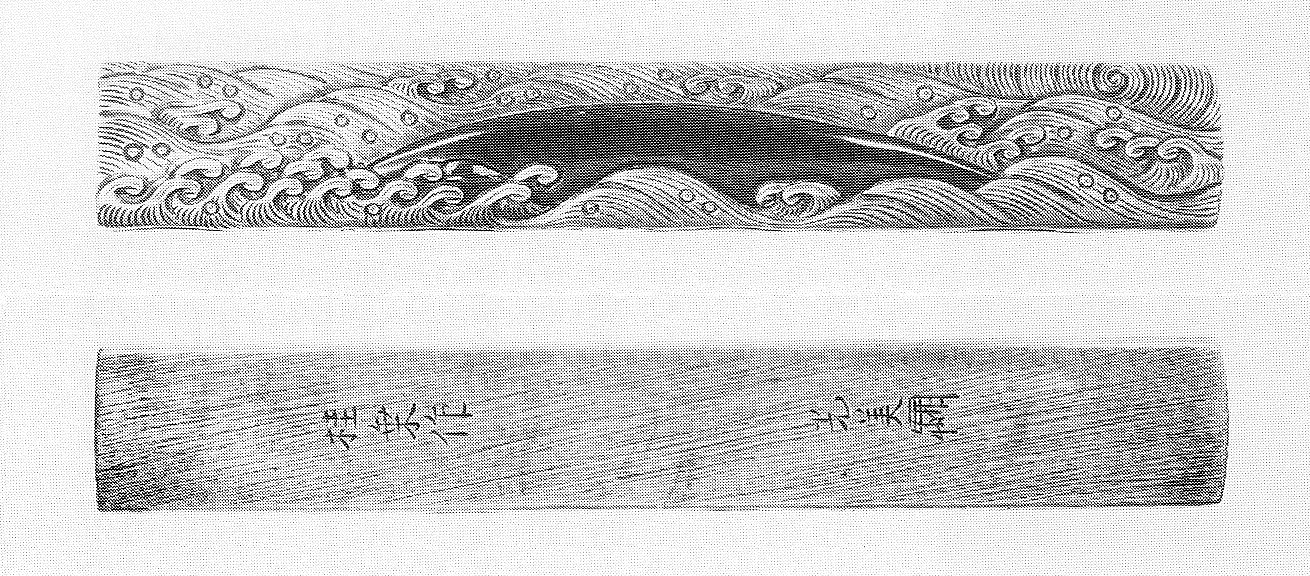
Now to the sword fittings with whale motif. Well, let me say right away that whale motifs are surprisingly scarce although the animal itself is quite majestic and a lot of things were made out of it over so many centuries. Also I haven´t seen or heard of any sword fitting with whale motif from before the Edo period and it seems that the adoption of this animal started rather with wale-related puplications in the mid-Edo period like the aforementioned Geishi. In other words, it was in my opinion more the diffusion of knowledge on whaling that made sword fittings artists think of adapting this motif. Also painters were not so much into whales, apart from the more scientific depictions in relevant publications on fish and animals. Famous for example is Itô Jakuchû´s (伊藤若冲, 1716-1800) whale and elephant screen of which the detail of the whale is shown below.

whale3

Picture 3: Detail from Itô Jakuchû´s whale and elephant screen, dated 1795.

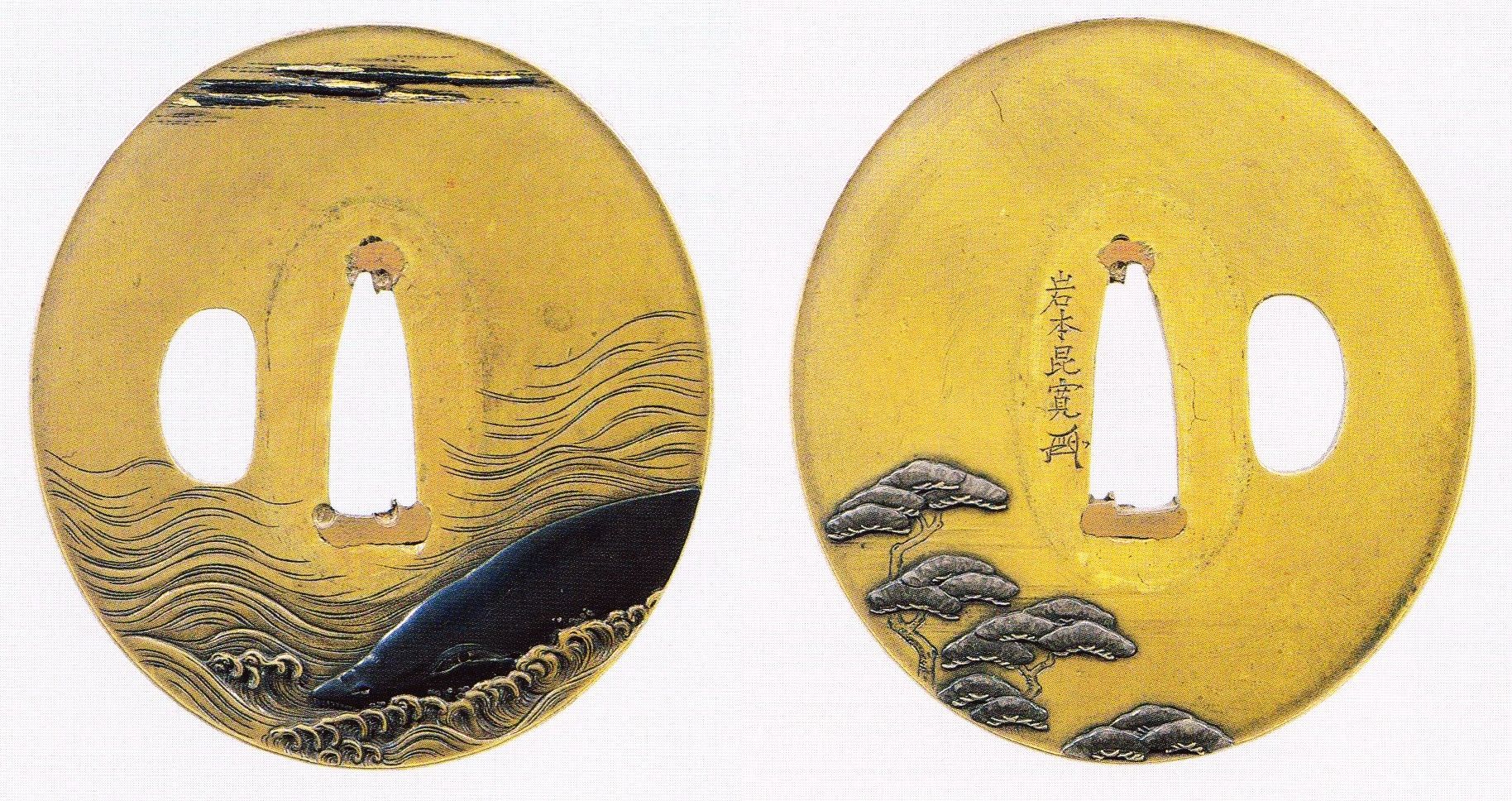
And the most famous whale motif is probably found on a tsuba of Iwamoto Konkan (岩本昆寛). Konkan made much use of empty space, on both sides of the tsuba, which represents on one hand the vast expanse of the ocean and on the other the vast expanse of the sky. The whale has surfaced to breath; the upper part of his large body is visible between the waves. For the whale, a large black shakudô inlay was used. The interpretation of the eye (please note that the whale has almond eyes) gives it a gentle appearance but the silver sawtooth-like teeth are a bit frightening. The sukidashibori and kebori waves are excellently done and give a good feeling of perspective and the cloud bank is truly interpreted in the typical way of Konkan. We have here motion and silence and boldness and elaborate detail combined as is usual for the Konkan school, as if it would be the easiest thing in the world. Konkan was born in the first year of Enkyô (延享, 1744) and died in Kyôwa one (享和, 1801), that means he was 16 years old when the Geishi was published. Please complare Konkan´s interpretation with an early whale painting by an unknown artist.

whale5

Picture 4: jûyô-tsuba, signed “Iwamoto Konkan” + kaô

whale4

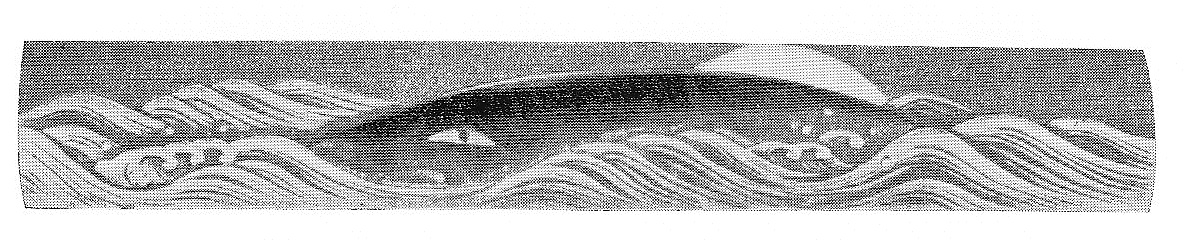
The kozuka shown below is a work of the 14th Gotô generation Keijô (後藤桂乗, 1750-1804) and attributed so by his successor Shinjô (真乗) alias Mitsuyoshi (光美). It is of pure silver and worked in sukidashi-takabori. The whale is of shakudô-zôgan and there are some gold iroe accentuations. Also Keijô´s whale is almond eyed and was truly active at the same time as Konkan.

whale6

Picture 5: kozuka, signed “Keijô saku – Mitsuyoshi + kaô” (桂乗作・光美)

Another whale motif can be found on a futatokoromono of Yoshioka Inaba no Suke Terutsugu (吉岡因幡介照次, 1761-1849) consisting of a wari-kôgai and a kozuka (please click on the small preview picture below to see it a Hajime Zenzai´s highly recommendable blog). Interesting here is that a whaling scenery is depicted as we see a harpooner on the back of the kozuka. The whale os of shakudô and shows a real large almond eye highlighted in gold. And that detail of a whale put to an extreme on a kozuka can be found at another blog entry of Hajime san (please click on the small preview picture below). And a tsuba with whale motif can be found here.

whale7

whale8

whale9

Picture 6: kozuka with whale motif in shakudô-nanako with motif in suemon-zôgan

So all of these are mid to late Edo period works and I would be very pleased if someone could provide me with any pre-Edo sword fitting with whale motif to round off this article.

On the eve of one of Japan´s most famous historical incidents

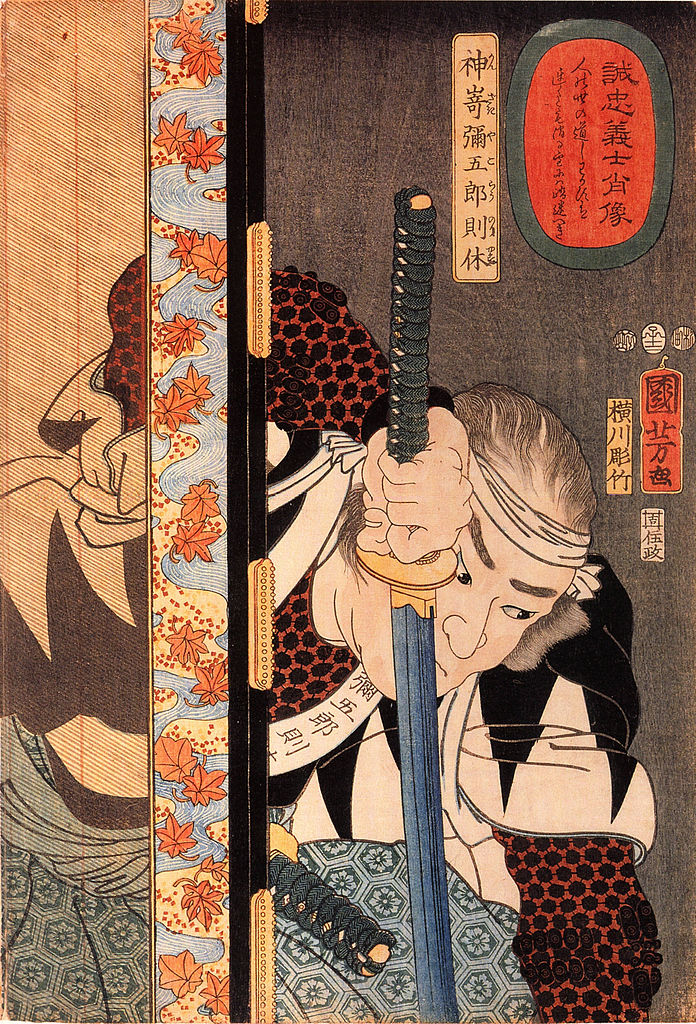
We all know the story of the infamous  forty-seven rônin and a lot has been written on this topic and so I don´t want to rehash that here. Everything started when Asano Naganori (浅野長矩,  1667-1701), the daimyô of the Akô fief (赤穂藩) of Harima province, attacked and wounded the court official Kira Yoshinaka (吉良義央, 1641-1703) in Edo Castle on the 14th day of the third month Genroku 14 (元禄, 1701). After Naganori was compelled to commit seppuku, his retainers became masterless rônin but planned over two years a revenge which went down in history.

 KanzakiNoriyasu1

Picture 1: Kanzaki Yogorô Noriyasu

This time I want to introduce a tantô ordered by one of the forty-seven rônin only two years before Naganori assaulted Yoshinaga. The rônin in question is Kanzaki Yogorô Noriyasu (神崎与五郎則休, 1666-1703) who was born in Tsuyama as son of Kanzaki Mitsunori (神崎光則, ?-1717) who was a retainer of the Mori family (森), the daimyô of the Tsuyama fief (津山藩) of Mimasaka province. It is not entirely clear how it came that the Kanzaki left Tsuyama and ended up in Akô but what we know is that at the latest by Genroku six (1693), Noriyasu became a reatiner of the Asano, the daimyô of the Akô fief. His annual salary was 5 ryô plus a stipend to support three persons. This was pretty low but as mentioned, his family was not in a hereditary lord-vassal relationship and so he was treated as shinzan (新参, “novice”, “new into service”). But he was known for his refined taste and poetry and was counted with Ôtaka Tadao (大高忠雄, 1672-1703), another one of the forty-seven rônin, and Kaya no Shigezane (萱野重実, 1675-1702) as one of the Three Famous Poets (sanbagarasu, 三羽烏) of the Asano retainers. Apart from that he became a student of the famous Confucian philosopher Ogyû Sorai (荻生徂徠, 1666-1728). So he eventually managed it to get the post of kachi-metsuke (徒目付), a post responsible among others for taking care that everything goes smooth when the daimyô visits Edo Castle during his sankin-kôtai turn and also doing night watch in the castle. This post earned him additional 5 koku.

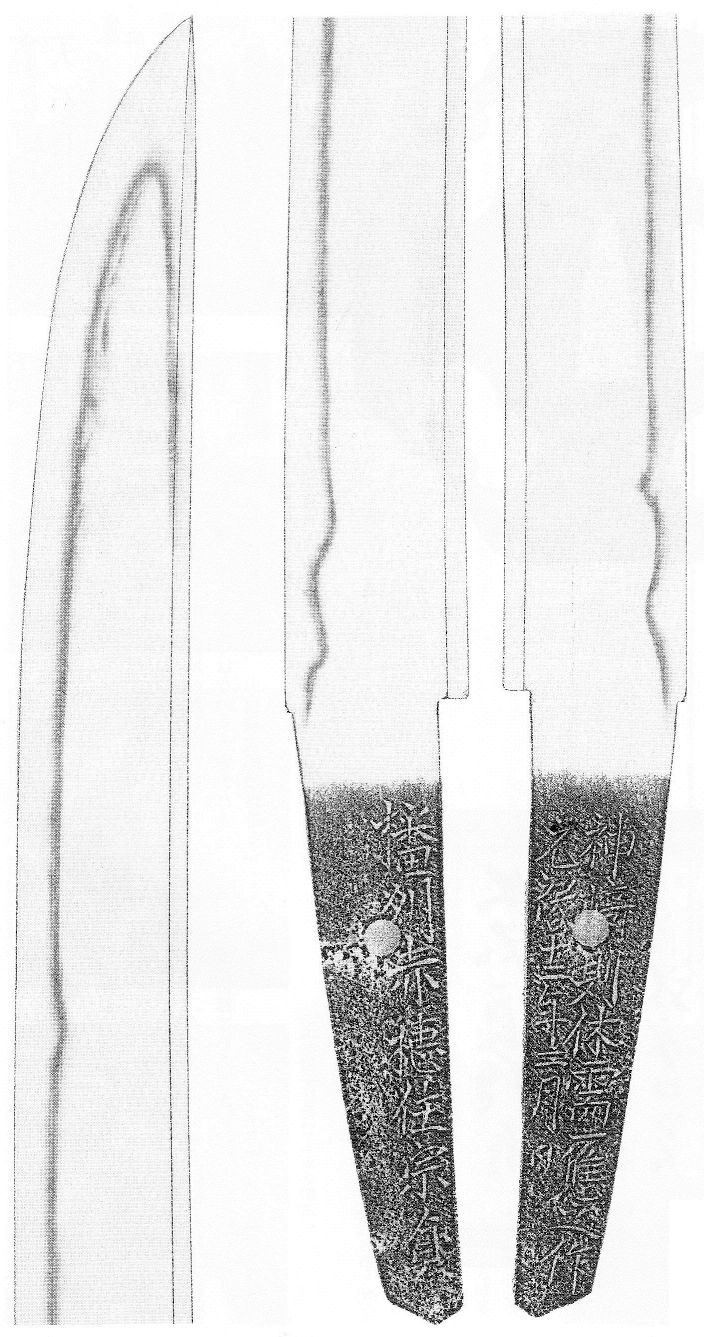
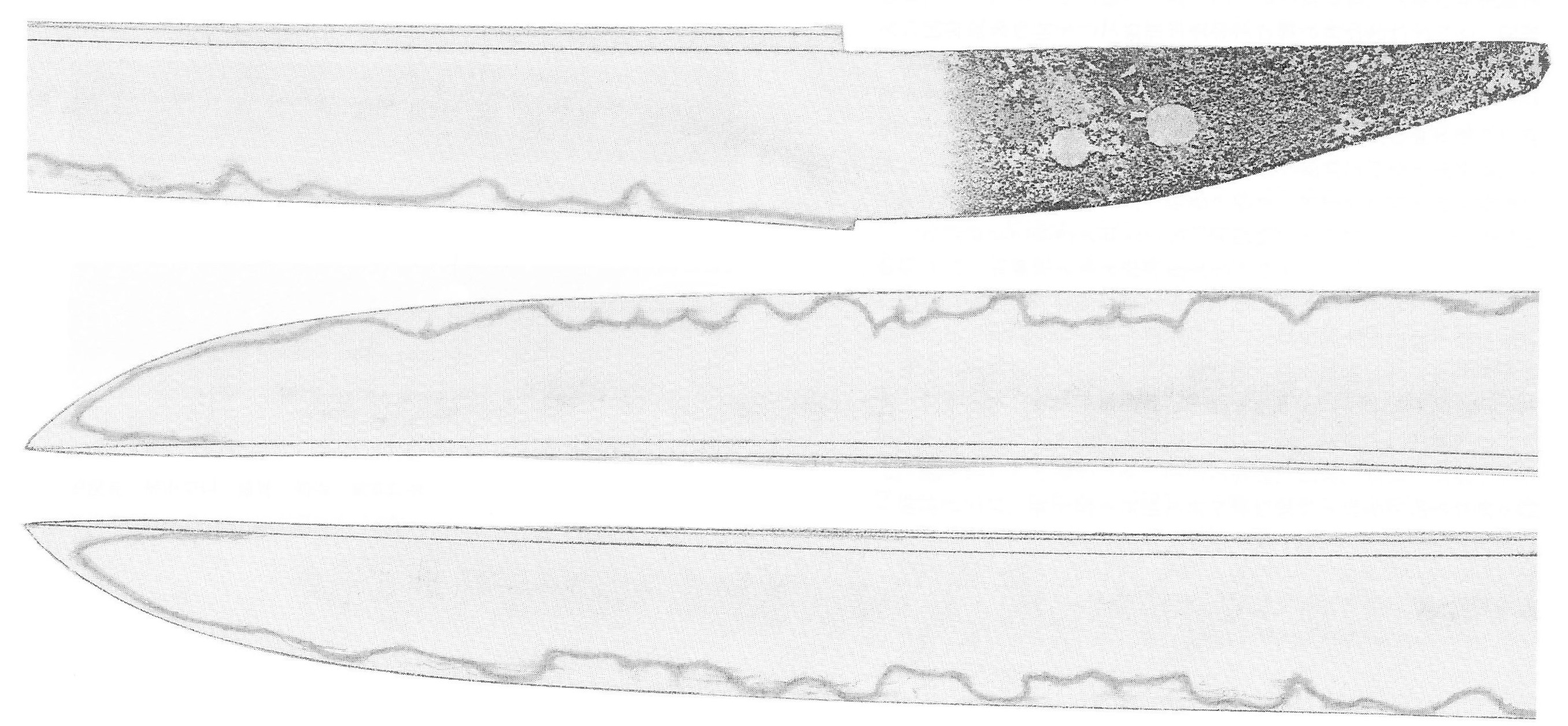
So this post eventually allowed him to place an order for a fine blade at the local Akô smith Munesada (宗貞). Picture 2 shows the blade in question, as mentioned a tantô, measuring 29.0 cm in nagasa and showing a sori of 0.45 cm. It bears the following signature: “Banshû Akô-jû Munesada – Kanzaki Noriyasu no motome ni ôjite kore o saku – Genroku jûninen nigatsu hi” (播州赤穂住宗貞・神崎則休需應之作・元禄十二年二月日, “made by Munesada from Akô in Harima province on orders of Kanzaki Noriyasu on a day in the second month Genroku twelve [1699]”).  So the blade was ordered when everything went just fine in Akô and Noriyasu had enough money at the side to commission Munesada with such a work. And Munesada was no nobody. He had studied under the famous master Tsuda Echizen no Kami Sukehiro (津田越前守助広) in Ôsaka. The blade comes in its original chiisagatana-koshirae with a black-lacquered, diagonally ribbed saya, a red-lacquered hilt wrapping on red-lacquered wrinkled shibokawa, and an unsigned iron tsuba in tatemaru-gata showing a matsubishi lozenge design in brass and silver zôgan. But this tantô was not used by Noriyasu at the vendetta in Genroku 15 (1703). At that time records say he wore a katana by Hiromitsu (広光) measuring 2 shaku 5 sun (~ 75.5 cm) and a mumei wakizashi measuring 1 shaku 8 sun (~ 54.5 cm).

KanzakiNoriyasu2

Picture 2: hira-zukuri tantô made by Munesada for Kanzaki Noriyasu

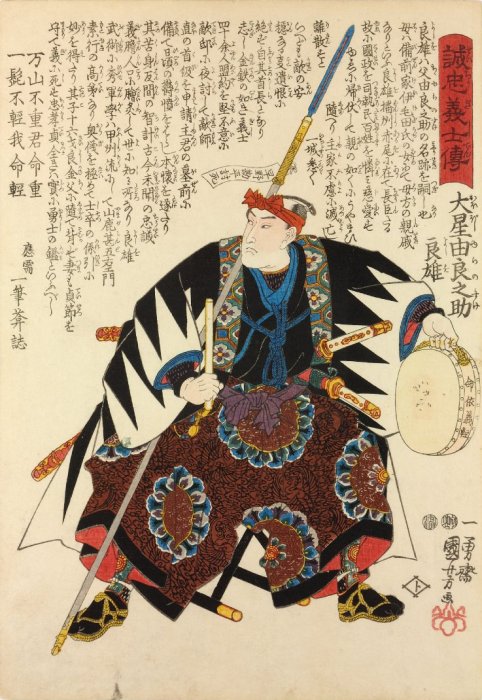
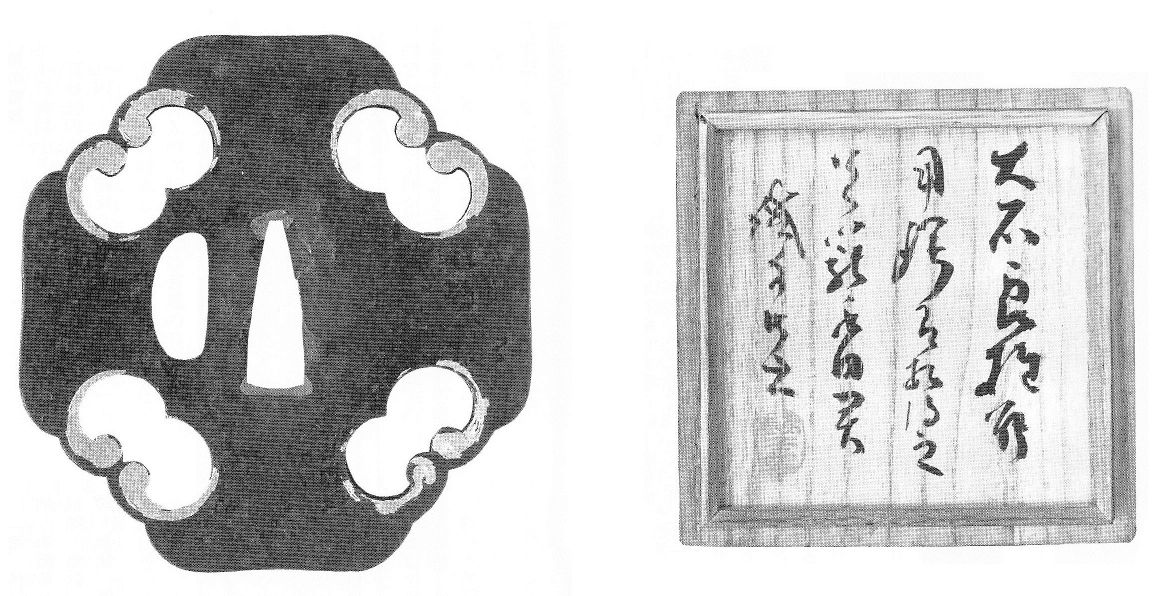
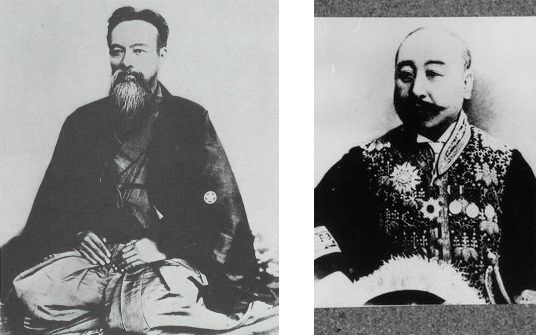
And while we are on the subject, I want to introduce a tsuba which was supposedly worn by Ôishi Yoshio (大石良雄, 1659-1703), the karô elder of Asano Naganori and the later leader of the forty-seven rônin. It bears the inscription “Ôishi Yoshio kore o mochi” (大石良雄持之, “owned by Ôishi Yoshio”) which was added later via a kiritsuke-mei. It has an uncommon mokkô-gata shape and shows four sukashi framed by gold nunome-zôgan elements in the form of two facing tomoe. Two tomoe were namely the family crest of the Ôishi. The tsuba is attributed to the early Harima branch of the Umetada school (埋忠). But not less interesting is the hakogaki of its tsuba box. It was namely written by the famous swordsman Yamaoka Tesshû (山岡鉄舟, 1836-1888) and goes: “Ôishi Yoshio shoyô tsuba ari aieru kore Koteda-kimi ni teisuru – Tesshû-koji” (大石良雄所用鍔有相得之呈籠手田君・鉄舟居士, “Acquired this tsuba from the possessions of Ôishi Yoshio and present it to Mr. Koteda – the [Buddhist] layperson Tesshû”). The name Koteda refers to the polititian Koteda Yasusada (籠手田安定, 1840-1899) who was one of the best fencing students of Tesshû.

KanzakiNoriyasu3

Picture 3: Ôishi Yoshio

 KanzakiNoriyasu4

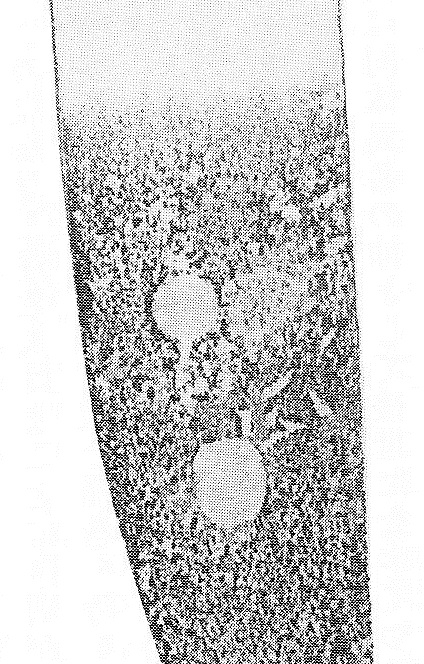
Picture 4: tsuba of Yoshio and its hakogaki

 KanzakiNoriyasu5

Picture 5: Yamaoka Tesshû (left), Koteda Yasusada (right)

The Muramasa ban and signature alterations

As you might know, there are many Muramasa blades where one of the two character for “Muramasa” (村正) was removed or altered. In most cases the character for “Mura” was removed and, for example, the character “hiro” or “mune” was added underneath “Masa” to obtain “Masahiro” (正広) or “Masamune” (正宗) respectively. This practice is called kaisan/kaizan (改鏨, lit. “change of chiselling´s”) or kaizan (改竄, lit. “to altger, to falsify, to fake”) and I want to demonstrate it with the help of concrete examples. But beforehand, let me introduce the reasons for this practice, namely as described in my Legends and Stories around the Japanese Sword 2. What is well known in the sword world is that blades by Muramasa were considered to be cursed or unlucky by the Tokugawa family. So in the following and before we come to the kaisan examples I would like to shed a little more light on the circumstances and introduce the various cases which were the basis for this superstition.

It all started with Tokugawa Ieyasu´s grandfather, Matsudaira Kiyoyasu (松平清康, 1511-1535), the 7th generation of the Mikawa-Matsudaira line (三河松平) and lord of Okazaki Castle (岡崎城). The arch rivals of the Matsudaira were the Oda (織田) of neighbouring Owari province and so, in Tenbun four (天文, 1535), Kiyoyasu decided to attack Moriyama Castle (守山城) which was held by Oda Nobumitsu (織田信光, 1516-1556). When the Matsudaira army of about 10.000 men set off, a rumour started to circulate that Abe Sadayoshi (阿部定吉, 1505-1549) – a retainer of the Matsudaira – was secretly communicating with the enemy. Kiyoyasu did not listen to these rumours but Sadayoshi tried to prove his loyalty and called for his son Yashichirô Masatoyo (弥七郎正豊, ?-1535). It was also assumed that Sadayoshi feared that Kiyoyasu had already sent a squad to execute him and so he gave his son the order: “As a sign of my loyalty it would be best if you kill me to dispose of this matter once and for all!” Masatoyo was not able to get a wink of sleep after receiving even the written order from his father. When morning finally broke he heard neighing horses and thought the bailiffs were faster than him and that the execution was already in progress. He jumped out of his bed, grabbed his sword lying next to his cushion and started running so that he was even able to somehow fulfil his father’s wishes and to protect the honour of the family. On his way to Sadayoshi´s room he came across Kiyoyasu and drew his sword as in trance: “If you had trusted my father, then he would have stayed alive!” Instantly he delivered a blow towards Kiyoyasu and the latter yelled: “Masatoyo, have you turned completely mad?!” The strike severed his earlobe. When Kiyoyasu turned around to escape the situation he was fatally hit by Masatoyo´s second blow. With a smooth and clean cut his blade entered Kiyoyasu´s right shoulder and left the body at the left hip. Upon this Masatoyo was killed by Kiyoyasu´s companion Uemura Ujiaki (植村氏明, 1520-1552). In the course of the investigations on this case it was found out that Masatoyo’s blade was a work of Muramasa. It was an oversized ô-katana with a nagasa of 81,8 cm. This incident is one of the earliest known written accounts which mentions the supreme sharpness of Muramasa´s blades. Extant works from the 1st generation Muramasa date from about the Bunmei (文明, 1469-1487) to the Eishô era (永正, 1504-1521). His year of birth and death is unknown but the 1535 incident took place either shortly after his death or even during his lifetime.Incidentally, the oldest extant dating of a Muramasa blade is from the first year of Bunki (文亀, 1501).

Well, the misfortunes of the Matsudaira family connected to Muramasa blades continued with Kiyoyasu´s son Hirotada (松平広忠, 1526-1549). On a balmy spring night he was woken up by the vibrations of the steps in the hall that he felt on his cushion. He opened his eyes and was able to catch a glimpse of a shadow. Immediately he grabbed his sword and shouted: “Scoundrel, stop!” When he heard more steps and tried to run in that direction he noticed that he had no more control of his legs. He looked down and recognized in fear that his clothes were blood-soaked. Hirotada was able to follow the figure into the garden. At that time, the aforementioned Uemura Ujiaki was on guard duty on the veranda. “Stop that man!”, was Hirotada´s order. After a moment of shock realising that his lord was in danger he drew his sword and chased after the man and killed him. The dead body was examined and they saw that he had only one eye, which was actually a good starting point for further investigations. It turned out that the man was a certain Iwamatsu Yasuke (岩松八弥) and that he was obviously completely drunk that evening. These were so to speak mitigating circumstances but some of Hirotada´s retainers said that he was an assassin sent by the enemy and that the intoxication was part of the plan to obscure the backgrounds. But the high level of alcohol had probably saved Hirotada´s life. However, Iwamatsu was a retainer of the Matsudaira who had lost an eye in battle and who was known for his ferocity. He also had a remarkable list of taken heads. When they removed the handle from his sword – it was a wakizashi – the signature “Muramasa” was revealed.

The misfortunes with the Muramasa blades also passed on to Hirotada´s son Tokugawa Ieyasu. After his father’s death, the seven years old Ieyasu – his name then was Matsudaira Takechiyo (松平竹千代) – was sent as a hostage to the Imagawa family (今川), who were military governors of Suruga province and the arch rivals of the Matsudaira in terms of supremacy in that area. One day, using the kozuka of his katana, he injured himself. The cut was not that deep but unnaturally painful. He cleaned the blood from the blade and could not believe his eyes: It was signed “Muramasa.” So his grandfather was killed by a Muramasa sword, his father almost, and now it was his turn. Ieyasu strongly believed that this was no coincidence and this became firmly fixed in his mind.

Years later Ieyasu married Tsukiyama-dono (築山殿, 1542-1579) to strengthen the bond between the Matsudaira and the Iwamoto. Tsukiyama-dono was the daughter of the Iwagawa-retainer Sekiguchi Chikanaga (関口親永, 1518-1562) and the younger sister of Imagawa Yoshimoto (今川義元, 1519-1560). But when Ieyasu engaged in an alliance with the Imagawa’s arch rivals, the Oda, the family of his wife was not particularly happy. By the way, Ieyasu needed the Oda to fight against the Takeda (武田). In the chaos of the war back then, Oda Nobunaga raised the suspicion that Tsukiyama-dono and her first son with Ieyasu, Matsudaira Nobuyasu (松平信康, 1559-1579), were in cat hoods with the Takeda. As a “logical” consequence and in order not to endanger the alliance with Nobunaga, Ieyasu ordered the execution of Tsukiyama-dono and the ritual suicide (seppuku, 切腹) of his son Nobuyasu. Tsukiyama-dono was executed by Ieyasu´s retainer Nakano Shigemasa (野中重政) on the 29th day of the eighth month of Tenshô seven. The time for Nobuyasu came somewhat later, on the 15th day of the ninth month of that year. His second (kaishaku, 介錯) was his close friend Hanzô Moritsuna (服部半蔵守綱), but when he raised his sword he burst into tears. So the Imagawa-samurai Amagata Michioki (天方通興), who was actually the official witness of the ceremony, stood in. In this function, he was only armed with a wakizashi at that moment and, have a guess, the blade was a Muramasa!

This strengthened Ieyasu’s paranoia: His grandfather, his father, himself and his son were either killed or injured by Muramasa blades. So he called for his chamberlain and, according to transmission, ordered that works of this smith should disappear from the face of earth once and for all. After Sekigahara, the victorious side of the Tokugawa made a full investigation of the battle in order to carry out the correct rewards and punishments. In one of these investigations, the deeds of Oda Nagataka (織田長孝, ?-1606) were assessed. Nagataka was the son of Nobunaga´s brother, the famous tea master Oda Urakusai Nagamasu (織田有楽斎 長益, 1548-1622). In a battle Nagataka had killed the enemy commander Toda Shigemasa (戸田重政), namely in close combat by entirely piercing his helmet with a yari. The yari remained completely intact and was shown upon request to Ieyasu. “A truly masterly spear”, he said, but he dropped it and cut his hand. “Ha! Must be a Muramasa”, Ieyasu said jokingly and the present Urakusai replied with a serious face: “Yes, it is indeed a work of Muramasa.” “You know that blades by that smith are unlucky for the Tokugawa, don’t you!” “If so, I will never ever wear a sword from Muramasa again”, promised Urakusai, broke the shaft of the spear into two halves and threw it aside. Incidentally, another transmission says that Nagataka cut through the shaft of the yari with his wakizashi.

But the misfortunes with Muramasa blades continued even after Ieyasu´s death. Tokugawa Tadanaga (徳川忠長, 1606-1633) for example, the younger brother of the third Tokugawa-shôgun Iemitsu (徳川家光, 1604-1651), committed suicide with a Muramasa-tantô. But not out of mysterious or unexplainable reasons. Already in the eighth year of Kan´ei (寛永, 1631) he was placed under house arrest because of improper behaviour – he had killed a (according to other transmissions several) vassal(s). One year later he spread unfounded rumours concerning the then punishment of Katô Tadahiro (加藤忠広, 1601-1651) by the bakufu. For this, all his land was confiscated and the Tokugawa government suggested that he should commit seppuku. On the evening of the sixth day of the twelfth month of Kan´ei ten (1633) he ordered his page to bring sake and prepare dinner. When the latter returned to the chamber of his lord he saw him sitting completely dressed in white and leaning forward a bit. But when he took a closer look he saw that the white of his dress was mixed with red. He came closer and realised that Tadanaga was dead and that his Muramasa-tantō was stuck halfway in his throat.

As indicated before, Ieyasu placed a quasi “Muramasa ban” but it seems that this was not so strictly monitored by the bakufu. Even in the list of Ieyasu´s estate, the Sunpu-owakemono (駿府御分物), we find a Muramasa blade and in the sword chronicles of the Mito-Tokugawa family we find  two katana and three yari by this smith. Another example. The Kyôto sword polisher Imamura Yukimasa (今村幸政) kept record of all the blades he had inspected and polished. In this Rekikan-kenshi (暦観剣志) protocol we find, for the Bunka era (文化, 1804-1818) alone, ten Muramasa blades given to him for a new polish. That means it was actually not that strictly forbidden to own or carry around Muramasa blades. But we can safely assume that they did not like to see an ally or a close retainer wearing a Muramasa sword because things might turn against them because of their “harmful power.” It is also known that the Tokugawa did not accept a Muramasa as an appropriate sword present.

So if you were owning a signed Muramasa in feudal times and wanted to avoid all potential hassle with the Tokugawa family, you either sold the sword or had the signature removed or altered. And now we are back at the practice of kaisan. At blade No 1, the top character for “Mura” was “brutally” removed by hammering, and at blade No 2, the top character for “Mura” was subtly removed, the area was adjusted to the surrounding patina, and the character for “mune” was added below to get the mei “Masamune.” It is of course easier to remove the upper character and add another one below the lower, second one but we also know of kaisan measures to get “Muratada” (村忠), “Muramune” (村宗), or even “Hiromasa” (広正). Approach number 1, i.e. just removing one character and leave the mei as it is, was the more common one but the question is now, why then not remove the entire signature? Some assume that removing the entire signature was quasi only a last resort, but when we bear in mind how ruthlessly signatures were removed over the centuries, I doubt this approach. That means if you had a signed blade of a smith who was considered let´s say “difficult” by the bakufu authorities and others had removed far more “unspectacular” signatures without any hesitation, it would be odd “to do everything” just to keep a “difficult” signature. Well, Muramasa was and is known for executing his characters in a very peculiar manner (see picture 4). And that means when just one character was left after kaisan, an appraiser, polisher, or person familiar with swords would have had no problems bringing in line the workmanship of the blade and the peculiar character for “Mura” or “masa” and recognize that he is handling a Muramasa. So maybe removing just one character was a kind of compromise, i.e. deleting the “difficult” name on the tang but preserving everything necessary to judge the blade easily as shôshin Muramasa.

 Muramasa1

Muramasa1-mei

Picture 1: tantô, mei “Masa” (正), nagasa 26,0 cm, sori 0,15 cm, hira-zukuri, mitsu-mune

Muramasa2 

Muramasa2-mei

Picture 2: sunnobi-tantô, mei “Mura” (村), nagasa 31,8 cm, sori 0,6 cm, hira-zukuri, mitsu-mune

Muramasa3

Muramasa3-mei

Picture 3: katana, mei “Masamune” (正宗), nagasa 71,0 cm, sori 1,8 cm, shinogi-zukuri, iori-mune

 Muramasa4

Picture 4: peculiar shôshin Muramasa mei

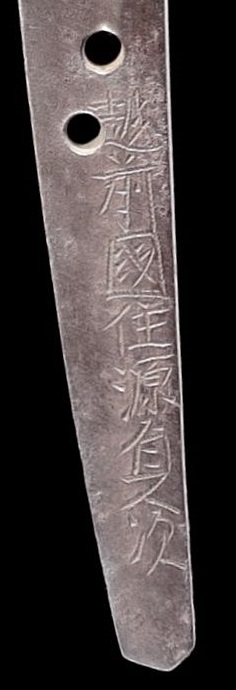
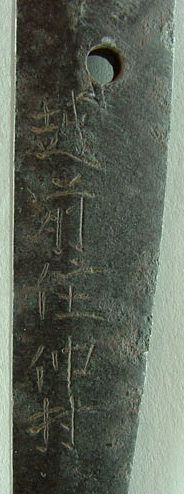
But the practice of kaisan did not only concern Muramasa blades. Another example is the signature “Echizen no Kuni Shimosaka Sadatsugu” (越前国下坂貞次). In Japanese, characters of the place “Shimosaka” (下坂) can also be read as kudari-zaka what means “decline, decay, ruin” and so on. That means for a native, the mei (越前国下坂) might read “Echizen province is going down the tubes.” So for example, signatures were changed from “Echizen no Kuni Shimosaka Sadatsugu” (越前国下坂貞次) to “Echizen no Kuni-jû Minamoto Sadatsugu” (越前国住源貞次), i.e. the “Shimosaka” (下坂) part was enlarged with some chisellings to get “jû Minamoto” (住源) (see picture 5). And signatures like “Echizen-jû Shimosaka”, often added by Echizen smiths on the ura side of the tang, were sometimes changed to “Echizen-jû Masasaka” (越前住正坂) or the last two characters were removed to leave only “Echizen-jû”.

 Muramasa5

Picture 5: mei “Echizen no Kuni Shimosaka Sadatsugu” altered via kaisan to “Echizen no Kuni-jû Minamoto Sadatsugu”.

 Muramasa6

Picture 6: Here “Echizen-jû Shimosaka” was altered to “Echizen-jû Nakamura” (越前住仲村).

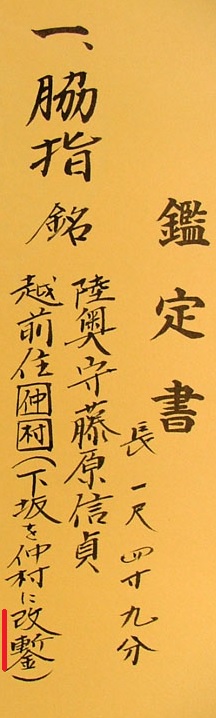
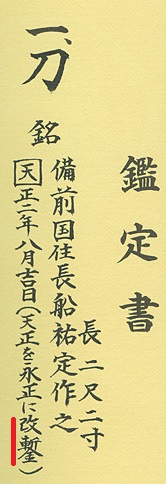
But please note that kaisan are not considered as gimei. Swords with such signatures get papers and the signature does not have to be removed, i.e. kaisan-mei are not considered as wrong but as altered signatures and are explicitly mentioned in the paper (see picture 7). Tanobe sensei says that a good way to detect kaisan is to look lengthwise at a signature, i.e. with the tip of the tang not pointing down but to the right or left. He describes it as altered parts seem so to “hang/float somehow above the tang” and don´t align with the rest of the mei.

 Muramasa7

Picture 7: The paper says: “Echizen-jû ´Nakamura´ (Shimosaka o Nakamura ni kaisan) [越前住仲村 (下坂を仲村に改鏨) ]

 Muramasa8

Picture 8: Paper which points out that the date signature “Tenshô” (天正) was altered via kaisan to get “Eishô” (永正) to make the blade seem older.

The reading of the characters for Mino province

This time I want to introduce an aspect of signature readings which is probably not widely known. We all agree that the alternative notation (濃州) of Mino province (美濃) is read “Nôshû” but Kondô Hôji (近藤邦治), the president of the Gifu branch of the NBTHK, presented in Tôken-Bijutsu 613 an interesting view on a different reading of this notation which I would like to share with you. By the way, loyal readers of my blog will have noticed that I often come back to Kondô san, and indeed, his articles are of particular interest to me as they very match my own approach, namely providing additional and elsewhere usually not found insights into the world of the Japanese sword. In this sense let me take this opportunity to thank Kondô san for his great work!

First of all let me refer to the use of the suffix shû (州) to refer to provinces. The name goes back to the historical political divisions of China established during the Han Dynasty (漢朝, 206 BC – 220 AD) and were introduced in Japan with the ritsuryô system and its definition of administrative units and geographic regions, i.e. provinces. The ritsuryô was based on the philosophies of Confucianism and Chinese legalism as the Nara-period empire tried to replicate China´s rigorous political system from the then “in charge” Tang Dynasty. In Japan, the provinces were referred to as kuni (国), e.g. Bizen no Kuni (備前国), but with the introduction of the Chinese system, official texts tended to use the Chinese notation which was composed as a rule of the first character of the Japanese naming by adding the suffix shû, e.g. Bizen no Kuni became “Bishû” (備州). Incidentally, this ritsuryô system of the official definition and naming of provinces (ryôseikoku, 令制国) was actually in effect until the Meiji period. There were also exceptions to the aforementioned rule of taking the first character, for example for the Chinese-style notation of Ôsumi province (大隅) the second character sumi/gû (隅) was traken to create “Gûshû” (隅州). Mino province is such an exception as it used the second character for the Chinese style notation too but we know from Heian and Kamakura-era documents that in very olden times, also the notation “Mishû” (美州) existed for Mino.

Kondô now found out that the reading “Nôshû” for Mino province was not common before the late Edo period. A very important factor for us to know how certain names were pronounced in olden times is the practice of furigana, reading aids of smaller kana syllables written next to a kanji character. As for sword-related publications, the Ôseki-shô (往昔抄) from Eishô 16 (永正, 1519) is the oldest one to show furigana for signed Mino blades. Well, the famous Kanchi´n-bon mei-zukushi (観智院本銘尽) from from Ôei 30 (応永, 1423) ist a century older but does not show any Mino-related furigana. On the other hand, Bizen province for example is noted therein with the furigana “Hinsen” (ひんせん) or “Binzen” (びんぜん) what is a further indication of different readings of provinces in olden times. But back to the Ôseki-shô. Therein we find four Mino blades whose signatures start with (濃州), i.e. “Nôshû”, but all four are accompanied by the furigana aids “Jôshû”, noted in the old hentaigana (志やう志う). And in the Shinchô-kôki (信長公記), the chronicle of Oda Nobunaga compiled about a hundred years after the Ôseki-shô, Mino province is also quoted with the furigana “Jôshû”, although noted as (ぢょうしう). And even late Edo period textbooks for the education of children of samurai and commoners still quote the Chinese-style (濃州) notation of Mino province with the furigana “Jôshû” (じやうしう), for example the Tôkun-warai shintai-sei (童訓往来新大成) from Bunkyû two (文久, 1862).

Our reading “Nôshû” used today seems to have appeared around Kaei (嘉永, 1848-1854). For example there exist collections of warrior portraits of Utagawa Kuniyoshi (歌川国芳, 1798-1861) of which some Mino-related titles are furigana-aided “Jôshû” (じょうしゅう), and others “Nôshû” (のうしゅう). And it is now assumed that the quick acceptance of “Nôshû” goes back to the ambiguity of the readings of the Chinese-style notations of the provinces. The reading “Jôshû” in spoken Japanese can namely also refer to Yamashiro province (城州), Kôzuke province (上州), and Hitachi province (常州). This ambiguity of the Japanese language also resulted in colloquial but so-to-speak grammatical incorrect names to refer to certain smiths. For example if one wants to refer to Nagamitsu (永光) and doesn´t want to be confused with the famous Osafune Nagamitsu (長光), he says “Eimitsu” using not the Japanese but the Sino-Japanese reading ei for the character naga (永). The same applies to Norimitsu (法光) who is often referred to as “Hômitsu” or Rai Tomomitsu (来倫光) to as “Rinmitsu.” And the most famous example is probably Chôgi (長義) whose characters are, read Japanese-style “Nagayoshi”, rather ambiguous. So I hope this short discourse on ancient Japanese readings was of interest and if you ever travel back in time, say “Jôshû” and not “Nôshû”. 😉

Hashitomi (半蔀)

With this post I want to start a little series on easy to miss hidden symbolisms on sword fittings. The series will be continued on an irregular basis, depending on when I come across such a hidden symbolism or an ambiguous motif worth being introduced and described in detail. The series surely is not meant to be smart aleck even if I will point out “wrongly“ papered fittings or descriptions from time to time. Well, I put the term wrongly in quotation marks as a description of a motif according to what you see is of course not wrong, even if the artist meant something different, hidden. But more on that later. Aim is on the one hand to provide a little reference for those who own sword fittings with an unclear and/or ambiguous motif, and on the other hand to sensitize collectors for hidden symbolisms. And with hidden I mean really hidden, i.e. in this series I will refrain from introducing widely known hidden symbolisms like cherry blossoms on running water referring to the Yoshinogawa subject and the like.

Our first easy to miss hidden symbolism is a motif called hashitomi (半蔀). Hashitomi is the title of a Nô play which is said to go back to Naitô Tôzaemon (内藤藤左衛門). It is a complex reference to the Yûgao chapter (夕顔) of the Genji-monogatari in which Genji has a short and sad romance with an lady of the same name Yûgao. Yûgao had once been the mistress of a noble officer but whose wife was against this affair and so she had gone into seclusion with their her and the nobleman´s daughter but where she was suddenly possessed by an evil spirit and died. Genji was informed about that background only after their affair. Now in the Nô play Hashitomi, a monk living in the Unri´in temple (雲林院) in Kyôto´s Kitayama is praying to console the spirits of flowers offered to Buddha every day. At the evening of that day, a mysterious lady appears and offers a single but magnificent white flower, a moonflower, yûgao in Japanese. The monk is curious but the lady does not tell him her name, only vaguely where she lived in Kyôto. When the monk learns later from a villager about the story of Genji and Yûgao, he decides to visits the area described by the lady and finds a lonely and old-style house with open shutters (hashitomi, 半蔀) on which yûgao bloom. And indeed, the lady appears again, but tells the monk now the whole sad story and her deep love to Genji and begs him to pray to console her soul. And whilst she returns behind one of the shutters, the temple bells ring and the monks wakes up and realizes it had all just been a dream.

 HashitomiToban

Picture 1: Drawing from the Tôban-shôkan-kôketsu

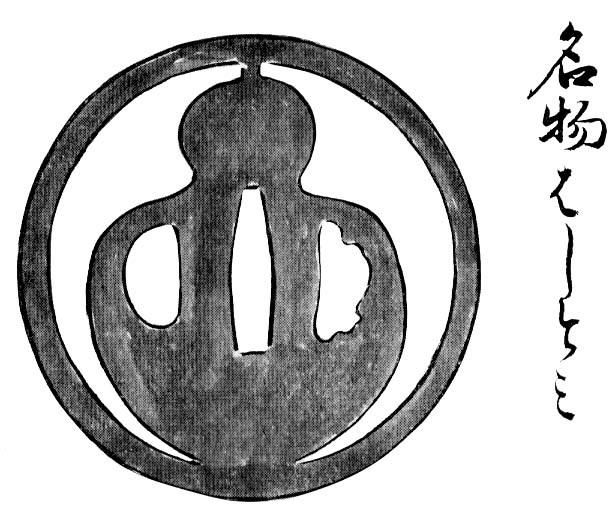
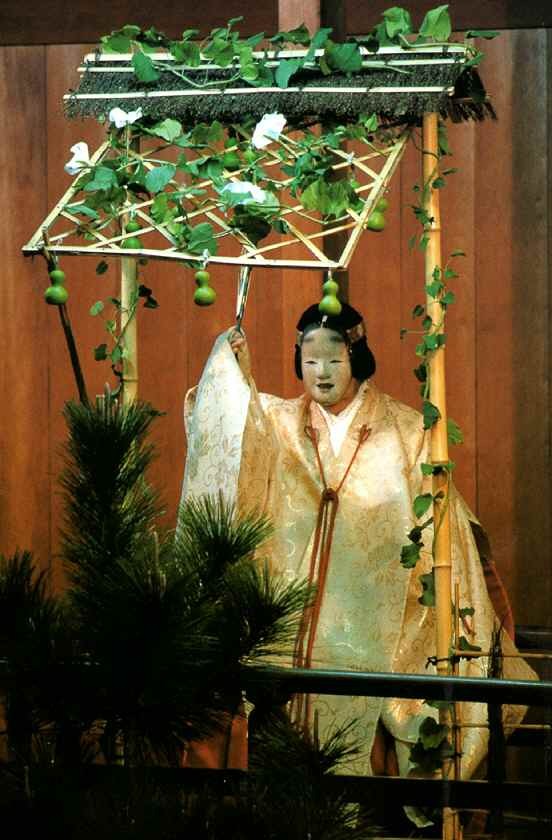
So far the Nô play and now to the hidden symbolism in sword fittings, in our particular case found on sukashi-tsuba which depict centrally a large gourd which takes almost the entire ji. The reference to the Nô play Hashitomi goes namely back to Matsumiya Kanzan´s (松宮観山, 1686-1780) publication Tôban-shôkan-kôketsu (刀盤賞鑒口訣). About in the middle of the book we find a drawing of such a gourd sukashi-tsuba (see picture 1) with the brief description “meibutsu Hashitomi” (名物者しと三), “celebrated Hashitomi [tsuba].” So Matsumiya Kanzan has incorporated a tsuba which was famous at his time under the name Hashitomi. But now why the reference to the Nô play and the tragic love story of Genji and Lady Yûgao? Because the moonflower yûgao is a calabash flower and was often growing as ornamental plant on the aforementioned hashitomi shutters. Picture 2 shows such a stylized/hinted shutter as used in the Nô play Hashitomi and picture 3 the actual shutters. Note that in the case of the shutters themselves, usually the pronunciation hajitomi is used.

 HashitomiGrille

Picture 2: stylized hashitomi

HashitomiHajitomi

Picture 3: hajitomi/hashitomi


But we must bear in mind that not every tsuba with a gourd motif is automatically a hidden reference to the Hashitomi subject. This term is namely in the strict sense only used for tsuba interpreted in the manner of the one depicted in the Tôban-shôkan-kôketsu, i.e. in the manner of the celebrated meibutsu whose whereabouts are unknown. So in conclusion it can be said that a sukashi motif of a central large gourd in sukashi should be referred to as “Allusion to Hashitomi” (Hashitomi rusu-moyô no zu tsuba, 半蔀留守模様の図鐔) Or maybe even more accurate would be a description like “Allusion to the meibutsu Hashitomi” (meibutsu Hashitomi rusu-moyô no zu tsuba, 名物半蔀留守模様の図鐔). But of course it´s really not that bad if the hidden meaning is missed as even the NBTHK papers such tsuba as hisago sukashi-tsuba (瓢透鐔, “gourd/calabash sukashi-tsuba”) as seen here. As mentioned at the beginning, “gourd sukashi” is perfectly correct and fine to describe the motif of such tsuba but it is a nice plus to transport all the hidden symbolism with the naming.

A reference to Kotetsu´s scholastic background

I dealt with Kotetsu´s career in detail in my Legends and Stories around the Japanese Sword 2 and also presented at the end of this chapter what we know or what is speculated about his scholastic background. Now I wan´t to introduce a blade from his very early years as a swordsmith which can be seen as a strong indication that he was trained by an Echizen-based master. But first and to get familiar with the great Kotetsu, let me quote the essential parts from my aforementioned publication.

Let us begin with the facts or the historic records respectively. The works Ômi-ochiboshi-shû (淡海落穂集), Ômi-kojin-dan (淡海 故事談) and Kobayashi Zui´ô hikki (小林随翁筆記) write that Kotetsu was born in Nagasone (長曽祢) in the vicinity of the castle town Sawayama (佐和山), in Ômi province. This transmission is also followed by the Hikohan narabi Kingô-ôko kikigaki (彦藩並近郷往古聞書) but which goes somewhat more into detail. Therein we read: “According to a transmission, Kotetsu lived until recent years in Nagasone but came originally from the Northern provinces. The time is around the Kanbun era (寛文, 1661-1673).” Interesting is the wording “until recent years” which implies that this work was written not too long after Kotetsu´s death in Enpô six (延宝, 1678). Unfortunately, all those mentioned records are undated. Some sword-related documents were published shortly after Kotetsu’s death. The Arami-mei-zukushi (新身銘尽),for example, was published in the sixth year of Kyôhô (享保, 1721), i.e. 43 years after his death. Therein we find the information: “According to transmission he once lived in Echizen but originally came from the village of Nagasone in Ômi province. Later he moved to Edo.” The author of the Arami-mei-zukushi, which deals exclusively with shintô blades, was Kanda Hakuryûshi Katsuhisa (神田白龍子勝久, 1680-1760). Katsuhisa was a renowned and busy scholar and chronicler who compiled several 20, 30 and 40 volume publications. He was a friend of the 8th Tokugawa-shôgun Yoshimune, he visited several fiefs for his studies, and talked to many swordsmiths. So it can be safely assumed that his entry in the Arami-mei-zukushi represented the then knowledge on Kotetsu. Kamada Natae (鎌田魚妙) also follows up in his standard work Shintô-bengi (新刀弁疑) from the sixth year of An´ei (安永, 1777) the approach that Kotetsu came originally from Nagasone.

The other, often quoted, approach that Kotetsu came originally from Echizen goes back to extant signatures with the prefix “Hongoku Echizen-jûnin” (本国越前住人). Sword books, like the Honchô-shintô-ichiran (本朝新刀一覧) from the fourth year of Bunsei (文政, 1821) and the Tôken-jitsuyô-ron (刀剣実用論) from Bunsei seven (1824), interpret this prefix wrongly. They confuse namely the term hongoku (本国, “home country/province”) with shōkoku (生国, “country/ province of birth”). In short, hongoku does not necessarily mean that a person was also born in this country but simply that he or she lived or had lived there for a longer period of time. The question is now why Kotetsu signed explicitely with the supplement “Hongoku Echizen,” i.e. “home country/province Echizen”? The most obvious reason would be that Kotetsu considered Echizen as his home country because he had left Nagasone at a very young age. But there might also be another reason. After the Battle of Sekigahara, Ieyasu had entrusted Echizen province to his second son, Yûki Hideyasu (結城秀康, 1574-1607), who made the local Kitanoshô Castle (北ノ庄城) his stronghold and who reverted to the former family name “Matsudaira.” Kitanoshô became Fukui Castle, which also served as a name giver for the surrounding fief. So Fukui was, because of its direct connection with the family of the shôgun, a high ranking fief and smiths like Yasutsugu (康継) were proud to mention in their signatures their relationship with it or their patronage by this Tokugawa branch. And “Echizen” became, for example “Echizen Yasutsugu” (越前康継), an inseparable pseudonym of this master.

The Ômi-kojin-dan writes about the family name “Nagasone”: “The Kotetsu family lived in Nagasone since the time of his great-grandfather and up to Kotetsu all of them used the name of this village ´Nagasone´ as their family name.” The next question which arises is when and why the move to Echizen province took place. A theory says that Kotetsu´s father had supported the troops of Ishida Mitsunari who also came from Ômi. And when he saw that Ishida was going to be defeated at Sekigahara, he fled Nagasone and moved to Echizen to escape eventual punishment by the Tokugawa. Many contemporary swordsmiths shared the same fate. Others assume that Kotetsu´s father had chosen Echizen or rather Kitanoshô Castle because it was, back then, controlled by the Mitsunari-ally Aoki Kazunori (青木一矩, 1541-1600). This means that as he was previously employed by Mitsunari then it would have been easier for him to find a new job with a “sympathiser” of his former lord than trying his luck somewhere else in a hurry. At the same time we can also observe how other Nagasone craftsmen who had made armours, armour parts, swords, tsuba, stirrups (abumi, 鐙) and bridle (kutsuwa, 轡) scattered into the four directions. A metal worker, who signed “Nagasone Masanori Nyûdô Shôsa” (長曽祢当則 入道承佐), for example, made in Kaga´s Daishôji fief (大聖寺藩) tsuba and the swordsmith Nagasone Kawachi no Kami Nagahiro (長曽祢河内守長広) worked in Ôsaka.

 Kotetsu1

Picture 1: wakizashi with the mei “Nagasone Okisato saku” (top) and “Kiyomitsu” (bottom)

Let us return to Kotetsu´s career as a swordsmith. As mentioned in the first volume of the Legends and Stories around the Japanese Sword, the commonly accepted theory says that around the age of 50 he went to Edo to change his profession from that of an armourer to a swordsmith. When we examine all extant blades by Kotetsu we learn that the earliest specimen, i.e. those which are signed with “Okisato” (奥里), have a great deal in common with the tang finish of works by the Kaga smiths like Kiyomitsu (清光) and Yukimitsu (行光). Picture 1 demonstrates this and the peculiar so-called “Kashû-nakago” (加州茎). This gives the impression that he had gained experience as a swordsmith before he moved to Edo and that he maybe was trained by his Kaga relative, the aforementioned Masanori. Well, the exact reasons for Kotetsu´s change of profession are unknown but there exists roughly three approaches. One says that when he faced his 50th birthday, the demand for newly made armour had drastically dropped. Sekigahara happened 40 years earlier, Ôsaka had fallen more than 30 years ago, and the last great armed conflict – the Shimabara Rebellion from 1637 to 1638 – was at its tenth anniversary. That means there was a generation of active armourers who produced items more or less for parades and celebrations for high-ranking samurai, daimyô and the family of the shôgun or repaired extant pieces. The second approach is that Kotetsu was just looking for a new challenge. And there exists a story which gives another reason for his change of profession.

This story says that he had killed a man from Echizen and was on the run. It is said that the man was a samurai from the Fukui fief who had ordered a sword from Kotetsu. When smith and customer met in the forge to talk about the finishing touches, the samurai examined the amost finished blade and complained: “Do you think I can kill anybody with a piece like this? I don´t like it and it isn´t what I expected!” Kotetsu took back the blade and grumbled: “We will see if my blade can kill anybody …” whilst cutting deeply into the left shoulder of the man. It is said that Kotetsu threw away the bloody blade and hastily abandoned the forge whilst the man died on the ground. He fled to Edo and found a safe shelter with the befriended Inaba family (稲葉). The Inaba eventually arranged for Kotetsu to be able to live and work in the vicinity of the Kan´ei-ji (寛永寺) in Edo´s Ueno district (上野). Whether from remorse or as a disguise, the smith shaved his hair and entered priesthood under the name “Kotetsu.” It is unknown if, or to what extent, this story is true but there exist some blades which do show a local connection. Picture 2 shows a katana which is signed “Jû Tôeizan Shinobigaoka no hotori Nagasone Okisato saku” (住東叡山忍岡辺長曽祢興里作, “made by Nagasone Okisato in the vicinity of Shinobigaoka at the Tôeizan”). “Tôeizan” is another name for the Kan´ei-ji. But the catch is that these blades are dated Kanbun eleven (寛文, 1671) and Enpō two and five (延宝, 1675 and 1677), that means they go back to his late artistic period. The Arami-mei-zukushi mentions “at the Honjo-Warigesui canals” as his place of residence. The Shintô-mondô (新刀問答), published by Wakabayashi Tôsui (若林東水) in Kansei eleven (1799), goes further into detail and writes: “[…] lived at the Honjo-Warigesui canals, later in the vicinity of the Ueno pond Shinobazu no Ike (不忍池) and also in Yushima (湯島).” This means that the story is nice but is probably just an urban legend.

 Kotetsu2

Picture 2: katana, mei “Jû Tôeizan Shinobigaoka no hotori Nagasone Okisato saku – Enpô ninen rokugatsu kichijônichi” (住東叡山忍岡辺長曽祢興里作・延宝二年六月吉祥日, “made by Nagasone Okisato on a lucky day in the sixth month of Enpô two in the vicinity of the Shinobigaoka at the Tôeizan”)

The third approach is about a helmet test which is better known in the sword world. One day Kotetsu, the armourer, competed against the Kaga swordsmith Chôbei Kiyomitsu (長兵衛清光), whose blades were famous for cutting through helmets. The whole competition ended in an official showdown with the presence of lord Maeda Toshitsune. After everything was arranged, Kotetsu stepped forward and put his newly made helmet onto a wooden pedestal. Now it was Kiyomitsu´s turn. Specially for the test he had forged a robust katana measuring 2 shaku 5 sun (~ 75,7 cm) which he brought into the overhead position. As he was at exhaling and cutting down, Kotetsu yelled: “Stop! The helmet is not in its perfect position!” Quickly he approached the pedestal and changed the position of the helmet only marginally. But the intended interruption made an impact. Kiyomitsu´s concentration on the cut was disturbed and so he was “only” able to cut  1 sun (~ 3 cm) into the upper area of the helmet bowl. The swordsmith was perplexed, markedly paler, and feared that his face was lost, even his lord rewarded both of them. Back home in his forge Kotetsu said to his adopted son Okimasa and to his two students Okihisa (興久) and Okinao (興直): “Without this interruption, Kiyomitsu would surely have cut through my helmet. This was a shabby and cowardly action on my behalf! From this day on I will retire as an armourer and devote my future life to the craft of sword forging…” It is said that he left Kanazawa, heading to Edo that very same night. As confirmed later, Kiyomitsu also left Kaga that the same night. This was found out when Okimasa fell in love with a prostitute from Edo´s redlight district Yoshiwara (吉原). This prostitute was namely Kiyomitsu´s daughter who had been sold by her father because the latter was no longer able to work because of fear of failure. Now it was Kotetsu´s turn. He tried everything to make up for his failure and so he went to his then customer, the Ikeda family (池田) from Bizen province, and asked for the unusual high advance payment of 300 ryô. When he informed Mitsumasa (池田光政, 1609-1682), the head of the Ikeda, about the reason of his demand, it is said that the lord was so moved that he granted him the advance. With this money Kotetsu was able to ransom Kiyomitsu´s daughter and marry her to his adopted son Okimasa. As so often, there are several versions of this story going round. In one of them, the competing smith was a certain Shima Hyôe Masatsugu (志摩兵衛正次) but such a name is not found in the records of swordsmiths. Others say it was not Kaga Kiyomitsu but either the 1st generation Darani Katsukuni (陀羅尼勝国) or the 3rd generation Kaga Kanemaki (兼巻).

The assumption that Kotetsu changed profession at the age of 50 in Edo goes back to a signature on one of his blades. This mei reads: “Hongoku Echizen-jûnin, hanbyaku ni shitatte Bushû Edo ni kyojū-su, kaji no kôsei o tsukusu nomi” (本国越前住人至半百居住武州之江戸 鍛冶之工精尽爾) which translates as: “After 50 years in my home country Echizen I devote now myself to the craft of sword forging in Edo, Musashi.” Unfortunately, the blade – it is a wakizashi with a nagasa of 45,7 cm and a horimono of the Deva guardians (Niô, 仁王) on both sides – is not dated. But on the basis of comparative studies of other (dated) signatures – especially the interpretations of “Kotetsu” and “Okisato” – we are able to pin down the production date around the second and third year of Kanbun (寛文, 1662~63). If we take the aforementioned first year of Keichō (1596) as his year of birth, we come up with Shôhô three (正保, 1646) for his 50th birthday. The earliest extant blade by Kotetsu with a date – another wakizashi – is from the second year of Meireki (明暦, 1656). That means now that it took him either eight or nine years until he had finally become a swordsmith in Edo, or that the year Keichô one is not correct for his year of birth. Many experts assume that, as an armourer, he only needed one or two years to start up a new career as a swordsmith. This assumption is also backed by a drawing of a helmet by Kotetsu found in Matsumiya Kanzan´s (松宮観山, 1686-1780) Meikô-zukan zokushû (名甲図鑑続編, see picture 3). According to Kanzan, the helmet bears the following signature: “Meireki-gannen kinoto-mi hachigatsu-hi – Nagasone Okisato – Bushû Edo ni oite kore o saku” (明暦元年乙未八月日・ 長曽祢奥里 ・於武州江戸作之, “made by Nagasone Kotetsu in Edo in Musashi province on a day of the eighth month of Meireki one [1655], year of the sheep”). To summarise we can now say that Kotetsu still made helmets in Edo, in Meireki one, but two years later at the latest he also made swords. Thus, when he left Echizen in 1655 at the age of 50 – i.e. around the time he made the above mentioned helmet – then his year of birth can be calculated as Keichô ten (1605).

 Kotetsu3

Picture 3: Drawing from the Meikô-zukan zokushû.

Anyway, all the extant sources and reference pieces do not allow us more precise statements. But it is highly unlikely that it took him, as fully trained armourer, nine or ten years to forge decent sword blades. On the other hand, the obituary record of the Tôkyô´s Myôkanji (妙観寺) where Kotetsu is buried, which lists Keichō one (1596) as his year of birth, is a circumstancial evidence we can´t brush aside that easily. Maybe the answer lies somewhere in the middle. It is namely possible that he arrived in Edo in the mid 1640´s but continued to work there as an armourer. This is namely backed up by an exact copy of an armour by Kotetsu of which the signature was also copied 1:1. This copy was made by the Edo katchū-shi Asai Katsushige (浅井勝重) and the choice of characters for his name allows us to date the original piece to the first year of Kanbun (1661). That means for at least five years Kotetsu still occasionally made armours while he was already working as a swordsmith.

The next big question is who was his master to become a swordsmith? Let me say straight off: This question too is not entirely solved. Suishinshi Masahide (水心子正秀) assumed that it was the 5th generation Ise no Daijô Tsunahiro (伊勢大掾綱広, 1616-1683) who also worked in Edo´s Shitaya district (下谷) for a certain time. But, from the point of view of workmanship, we can´t see any connections between the two smiths. The commonly accepted theory is that Kotetsu´s master was the 1st generation Izumi no Kami Kaneshige (和泉守兼重) who worked in Edo for the Tôdô family (藤堂). Some also say it was Kaneshige´s son, the 2nd gen. Kazusa no Suke Kaneshige (上総介兼重), but this does not match for chronological reasons because the latter smith was active somewhat later than Kotetsu. The 1st gen. Kaneshige came originally from Echizen too and his workmanship is quite similar to Kotetsu´s. However, after Kotetsu gained some fame because of the sharpness of his blades, he was employed by the Nukada fief of Hitachi province. Extant records say he worked for this fief from the third year of Manji (万治, 1660) to the second year of Kanbun (1662). After that he was hired by Inaba Masayasu (稲葉正休, 1640-1684), a hatamoto and the daimyô of Mino´s Aono fief (青野藩). He worked for him until Kanbun ten (1670). Masayasu´s uncle Inaba Masafusa (稲葉正房) was, by the way, a retainer of the Fukui fief, so it is possible that this employment was arranged via this connection. But it has to be mentioned that Kotetsu always worked from the Edo residences of his employers.

According to transmission, Kotetsu died on the 24th day of the sixth month of Enpô six (延宝, 1678), and if Keichō one is correct as his year of birth then he enjoyed a very long life of 82 years. The cause of his death is unclear but some speculate that his exaggregated ambition to forge whenever possible was the result of a psychosis and that he eventually commited suicide by drowning himself in a well in Hirokôji (広小路), in Edo´s Ueno district. But it is possible that the story with the well is a confusion with the swordsmith Inoue Shinkai (井上真改) because, according to transmission, the latter fell completely drunk into a well and died at the young age of 53 in Tenna two (天和, 1682).

 Kotetsu4

Picture 4: wakizashi, mei “Nagasone Okisato – dôsaku kore o horu”

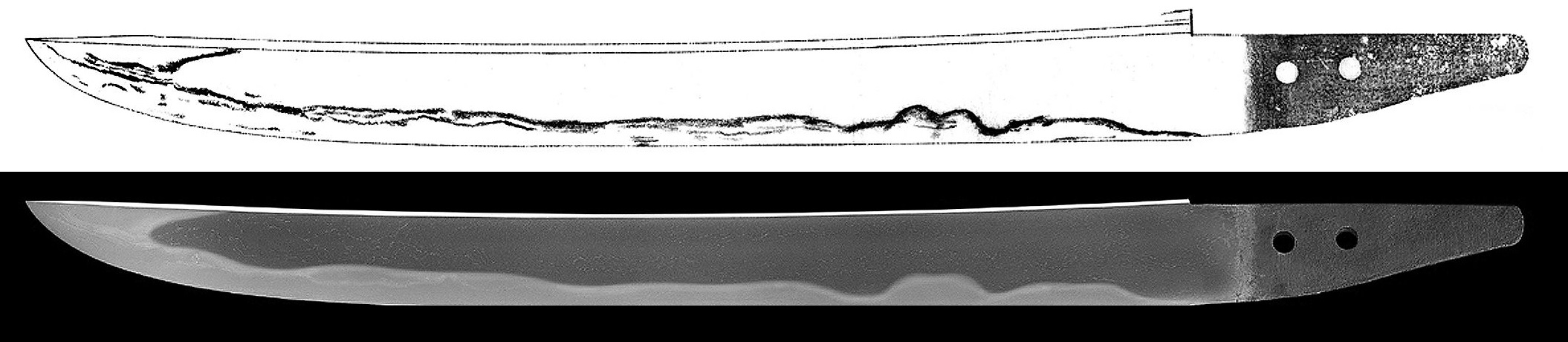
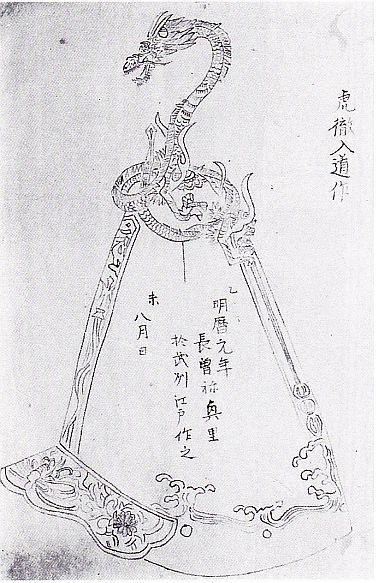
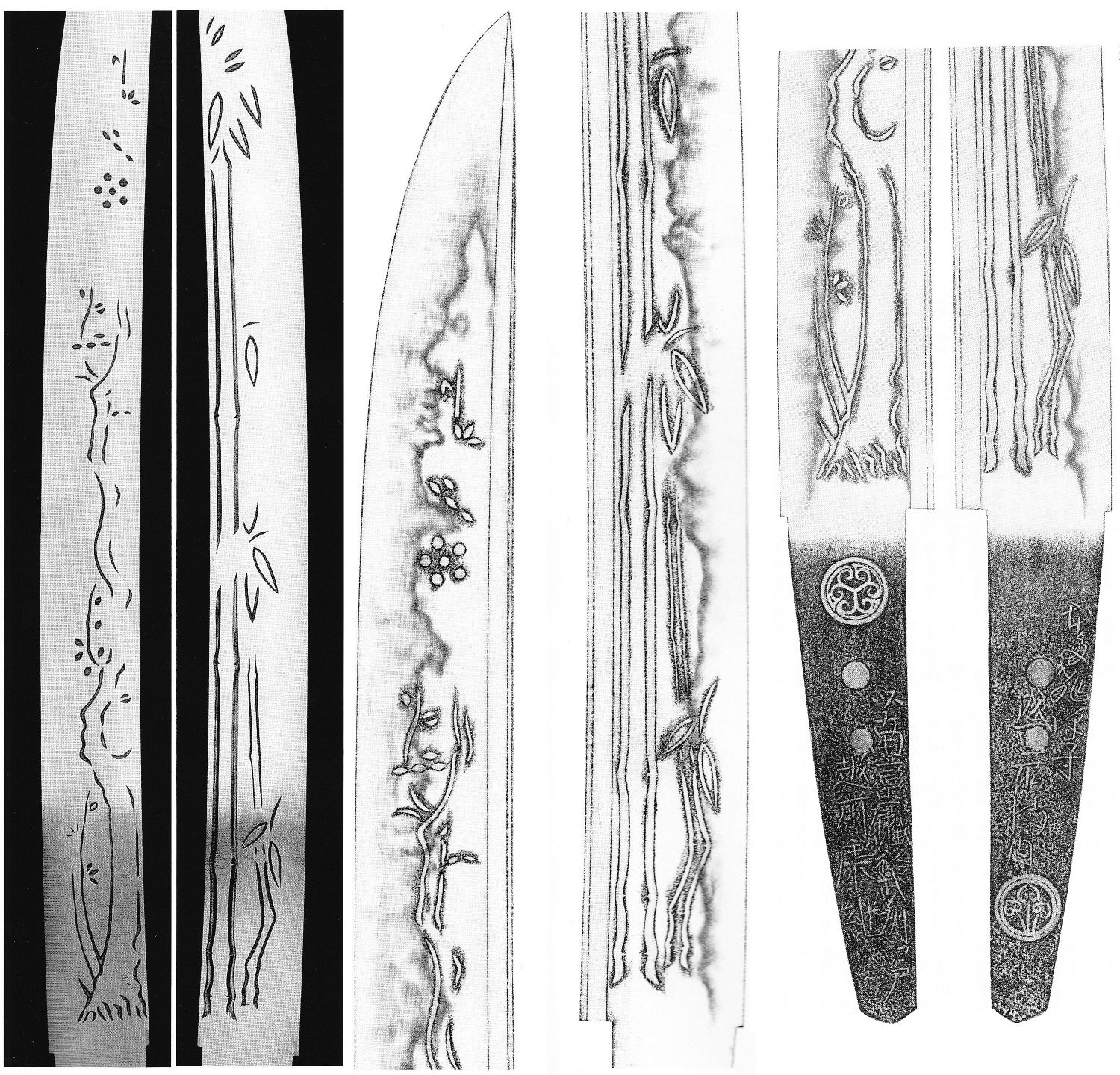
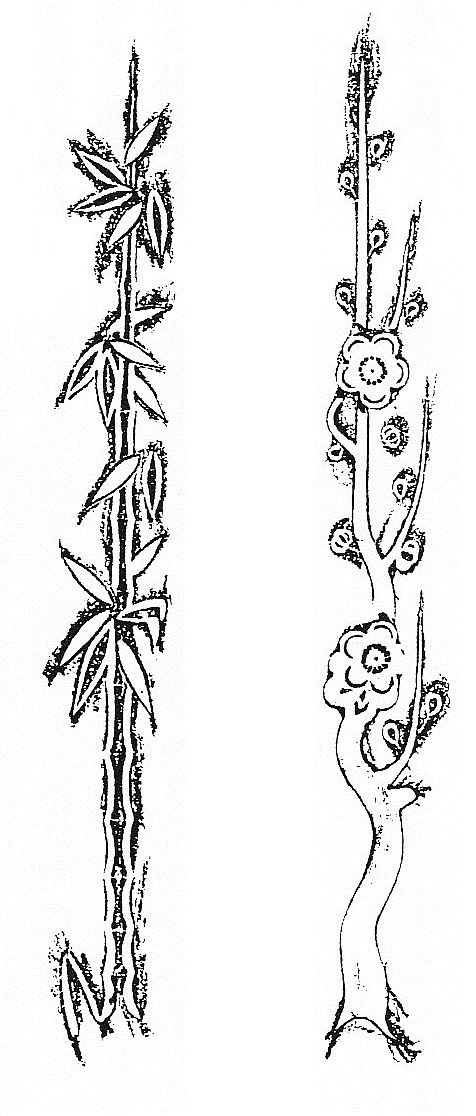
So far the outline of Kotetsu´s career and a brief reference to his possible masters. In terms of interpretation of the jiba, the most obvious similarities can be seen with Izumi no Kami Kaneshige, and early tang finishes suggest a connection to Kaga smiths, but there are many indications pointing towards Fukui, i.e. the capital of Echizen province. And as mentioned at the beginning of this article, I want to present another one, a strong indication that he was trained by an Echizen-based master. This indication is the wakizashi shown in picture 4. It has a nagasa of 55.1 cm and a shallow sori of 0,6 cm, is in shinogi-zukuri with an iori-mune, has a noticeable taper, and a chû-kissaki. It is signed “Nagasone Okisato – dôsaku kore o horu” (長曽祢興里・同作彫之) and from the signature style it can be dated to the Meireki era (明暦, 1655-1658) which means although undated, we have here one of the earliest extant sword blades of Kotetsu. Interesting is on the one hand the very clear jigane and bright habuchi, a feature so typical for him, but far more interesting are on the other hand the horimono. We see on the omote side an engraving of a bamboo and on the ura side of a plum tree. This peculiar combination goes back to Echizen Yasutsugu, or rather to his copy (see picture 5) of the meibutsu Baichiku-Sadamune (梅竹貞宗, lit. “Plum and Bamboo Sadamune”) which was once presented by Tokugawa Ieyasu to Nagasaka Charikurô Nobumasa (長坂茶利九郎信政, ?-1572).

 Kotetsu5

Picture 5: tokubetsu-jûyô, wakizashi, mei “[Aoi-mon] Echizen Yasutsugu” (越前康継) – “Nanban-tetsu o motte Bushû Edo ni oite” (以南蛮鉄於武州江戸, “[forged] in Edo by using nanban-tetsu”) – “Honda Hida no Kami Narishige shoji-nai” (本多飛騨守成重所持内, “owned by Honda Hida no Kami Narishige [1572-1647]”), nagasa 38.6 cm, sori 0.5 cm

 Kotetsu6

Picture 6: Well-known baichiku horimono on an Echizen-mono.

Later on, this utsushimono of master Yasutsugu served his successors and several local, i.e. Echizen-based smiths as model for own but successively more and more similar interpretations of the baichiku horimono sujet with more emphasis on the plum blossoms (see picture 6) which in turn became over time a trademark of Echizen-mono. So in my opinion it is not a coincidence that we find a horimono sujet famous for Echizen blades on a very early blade of Kotetsu It is namely rather unlikely for me that if trained solely by Kaneshige, he added such a horimono just to remind of his Echizen roots and without any scholastic connections to local Echizen smiths. Again, it are mostly such individual pieces which allow us over years and decades to draw bit by bit a clearer picture of the careers of certain smiths.

The Tsunahiro Connection of Suishinshi Masahide

In my Nihon-shinshinto-shi published least year I also addressed Suishinshi Masahide´s (水心子正秀) acquisition of the Sôshû tradition from the 10th generation Tsunahiro (綱広). And I also mentioned an extant blade from the eighth month of Kansei three (寛政, 1791) which is signed with the supplement “Kamakura-jûnin Masamune-masson Minamoto Tsunahiro Sôden no kitae” (鎌倉住人正宗末孫源綱広相伝鍛之, “forged in the Sôshû tradition of the Masamune-descendant Tsunahiro from Kamakura”). But there exists even an earlier blade, or to be more precise a blade from the year before, which demonstrates the relationship of Masahide and Tsunahiro. And starting with this blade, I want to go into greater detail of the Tsunahiro connection of Suishinshi Masahide. So let me introduce the blade in question. It is a katana with a nagasa of 70.3 cm and a sori of 1.3 cm. It is in shinogi-zukuri with an iori-mune, shows an ô-itame with plentiful of ji-nie and chikei, and narrow notare-chô along the lower half which turns into a wide and heavily nie-loaden suguha-based mix of ko-notare and gunome with many yubashiri and sunagashi which make the upper half even appearing as kind of sudareba. Also the bôshi is widely tempered, tends almost to ichimai, but shows some roundish kaeri with nie-kuzure. Interesting of course is also the signature which reads on the omote: “Gorô Nyûdô Masamune masson Minamoto Tsunahiro chakuden o motte Masahide kore o saku” (以五郎入道正宗末孫源綱広嫡伝正秀作之, “made by Masahide in the tradition of Gorô Nyûdô Masamune which had been inherited to Minamoto Tsunahiro”). The ura side is dated “Kansei ninen nigatsu hi” (寛政二年二月日, “a day of the second month Kansei two [1790]”) and bears two more names: “Enshû Yokosuka-shin Mitsuhide” (遠州横須賀臣三秀, “Mitsuhide, retainer from Yokosuka of Tôtômi province”), and “Tsunahiro-chaku Ôgitani-jûnin Yamamura Tadasaburô” (綱広嫡扇谷住人山村直三郎, “Yamamura Tadasaburô, heir of Tsunahiro and resident of Ôgitani [in Kamakura]”).

 Masahide1

Picture 1: gassaku of Suishinshi Masahide and two of his students

Before we continue, let me introduce the basics of Masahide´s career until he met Tsunahiro (for a detailed biography please refer to my Nihon-shinshinto-shi). Hide was born under the name “Suzuki Saburô” (鈴木三郎)  in the third year of Kan´en (寛延, 1750) in Dewa province and worked there as a village blacksmith. It is said that he had learnt the craft of forging from a certain Yoshizawa Sanjirô (吉沢三次郎) from a village close to his. But Masahide had decided early for himself to become a swordsmith and his first station in this goal was Sendai where he became a student of a later generation Kunikane (国包). His smith name was “Takuei” (宅英) at that time. After this initial training he moved to Hachiôji (八王子), in Musashi province, where he learnt from the local Shitahara master Musashimaru Yoshiteru (武蔵丸吉英) who was in turn a student of Musashi Tarô Yasukuni (武蔵太郎安国). With this master-student relationship he changed his name to “Terukuni” (英国) and was hired by the Akimoto family (秋元), the daimyô of the Yamagata fief (山形藩), in the third year of An´ei (安永, 1774) whereupon he changed his name again, namely from “Terukuni” to “Masahide”, and his entire civilian name to “Kawabe Gihachirô” (川部儀八郎). With his employment at the Yamagata fief he was able in terms of money to travel further and further, to take lessons in the Bizen tradition at the Ishidô school (石堂) and as mentioned in the Sôshû tradition under the 10th generation Tsunahiro.

 Masahide2

Picture 2: seishi of Masahide addressed to Yamamura Uhei

The start of master-student relationship to Tsunahiro can be narrowed down to the first year of Kansei (寛政, 1789) because there is a written oath (seishi, 誓詞) extant (picture 2) within the Yamamura family (i.e. the family of the Tsunahiro lineage) which is dated third day tenth month Kansei one and which contains Masahide´s will to learn the Sôshû tradition from Yamamura Uhei (山村宇兵衛), i.e. from the 10th generation Tsunahiro. So Masahide was already 39 years old when he visited the forge of Tsunahiro. That means he was already a fully trained smith by then working for the Akimoto family for about 15 years so his turning up at the forge of Tsunahiro has to be understood as a refinement of his craft. When we take a look at the aforementioned blade, we see at a glance that he had mastered the Sôshû tradition within a year because it is truly interpreted in the magnificently “relaxed” but daring style of the great Sôshû masters. And on the basis of the quality of the work and the production time it is safe to assume that Tsunahiro had initiated Masahide to all family secrets just as if he was his son and heir. Interesting are also the other two names appearing on the tang, Mitsuhide and Yamamura Tadasaburô. The 10th generation Tsunahiro died the very next year, i.e. in Kansei three (1791), and both Mitsuhide and Tsunahiro´s heir Tadasaburô appear later on the list of Masahide´s students. So it is likely that Masahide took care of Tsunahiro´s son and some of his students after the death of the master. Incidentally, Mitsuhide changed his name later to “Kuniyasu” (国安).

 Masahide3

Picture 3: gassaku-katana of Masahide and the 11th generation Tsunahiro

Eight years after this joint work, Masahide worked once again with Tadasaburô on a blade. The latter had already succeeded as 11th generation Tsunahiro. The blade in question (picture 3) is dated “Kansei jûnen nigatsu hi” (寛政十年二月日, “a day of the second month Kansei ten [1798]”) and is signed “Suishinshi Masahide + kaô” on the ura, and “Tôdaijô no kenkô Minamoto Tsunahiro” (東大城之剣工源綱広) on the omote side. The katana has a nagasa of 72.7 cm and a sori of 1.8 cm. It is in shinogi-zukuri with a mitsu-mune and shows a standing-out itame mixed with mokume, thick chikei, and plentiful of ji-nie. The hamon is based on a heavily nie-loaden shallow notare-chô mixed with ô-gunome along the monouchi and apart from that with nie-kuzure, hotsure, kinsuji, sunagashi, yubashiri, tobiyaki, and muneyaki. The bôshi is a rather narrow and slightly undulating sugu-bôshi. So we can see at a glance a straightforward Sôshû-deki.  Interesting is also the prefix of Tsunahiro´s signature. “Tôdaijô no kenkô” means literally “Swordsmiths from the Great Castle in the East”. The castle refers of course to Edo Castle and from the syntax experts assume that this unique term refers to a bakufu employment. Well, the Tsunahiro lineage does not appear in the bakufu records of employed swordsmiths like Yasutsugu (康継), Korekazu (是一), or Hôjôji Kunimasa (法城寺国正) but the aforementioned present-day Yamamura family is also in the possession of records which proof that their predecessors made during the bakumatsu era swords on orders of the koshimono-bugyô (腰物奉行), the bakufu magistrate responsible for everything sword-related. These documents also show that the family had an Edo-mansion granted by the bakufu so everything points towards an official employment by the Tokugawa shogunate even if the contemporary official records lack their name. So the blade in question is also an important reference for the bakumatsu-era employment conditions of the Tsunahiro lineage. Anyway, it was a great honor for a smith to receive orders by the bakufu and so with some imagination it is possible that the following took place.
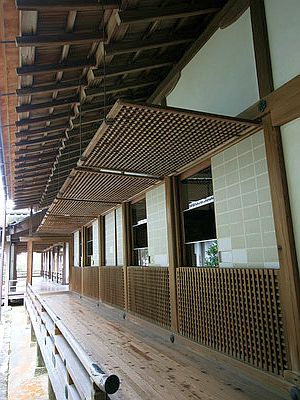
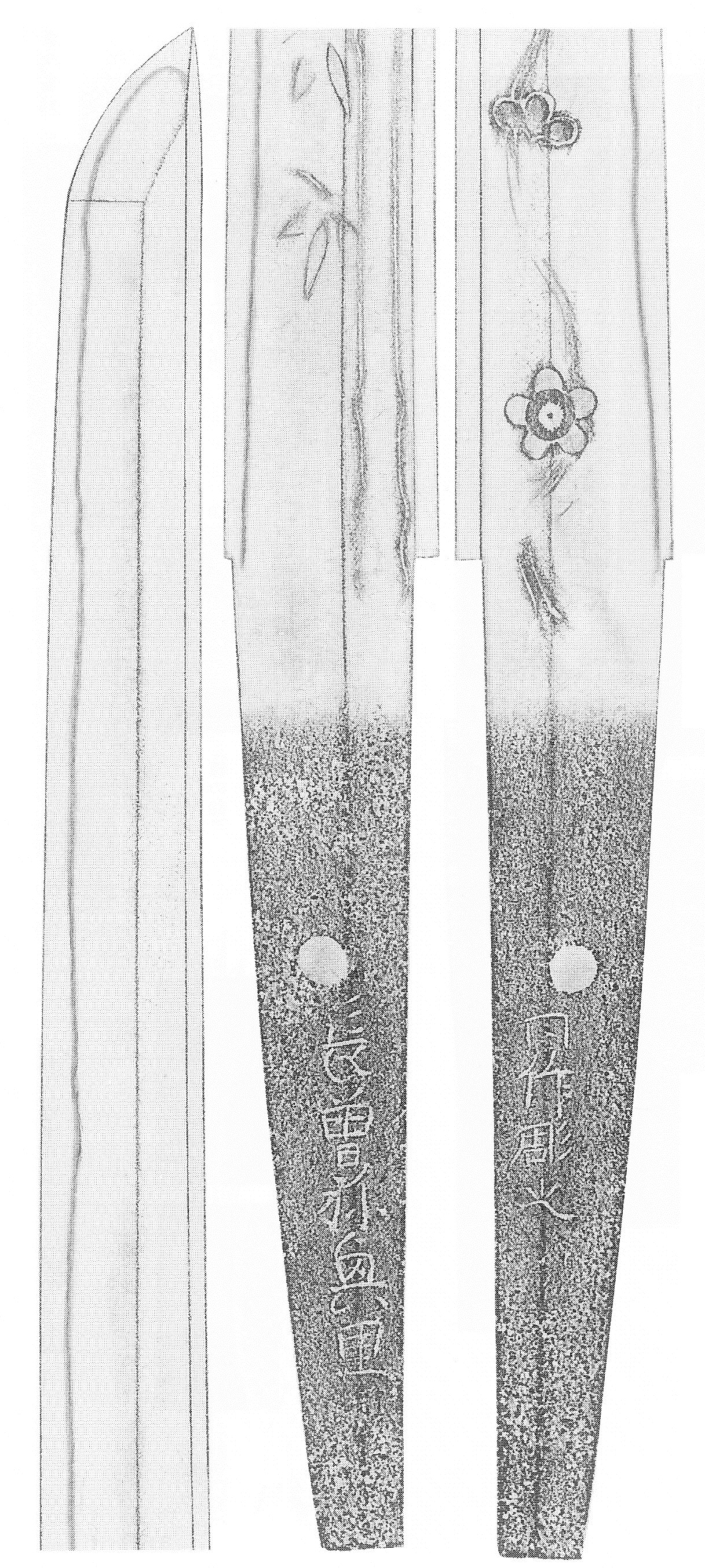
After acting as head of the school and family for eight years, the 11th generation Tsunahiro had finally made himself a name in Edo and was thus informed about the bakufu´s intention to employ him. To celebrate this recognition, he visited once again his former master Suishinshi Masahide who also took care of him after his fathers death to make a special blade which reminds of their connection. And Masahide of course agreed to that because he also owed a lot to the Yamamura family as Tadasaburô Tsunahiro´s father introduced him to the Sôshû tradition, an act which helped him a lot in his professional development of the fukkotô movement. Please note that unlike the Kansei two blade, Masahiro switched here to the ura side of the nakago to place his signature. This shows his respect towards Tsunahiro as being the leading artist of this “project.” And again it is interesting to see what vivid picture of a certain phase of a swordsmith´s career we can draw just on the basis of two swords and their signatures.